

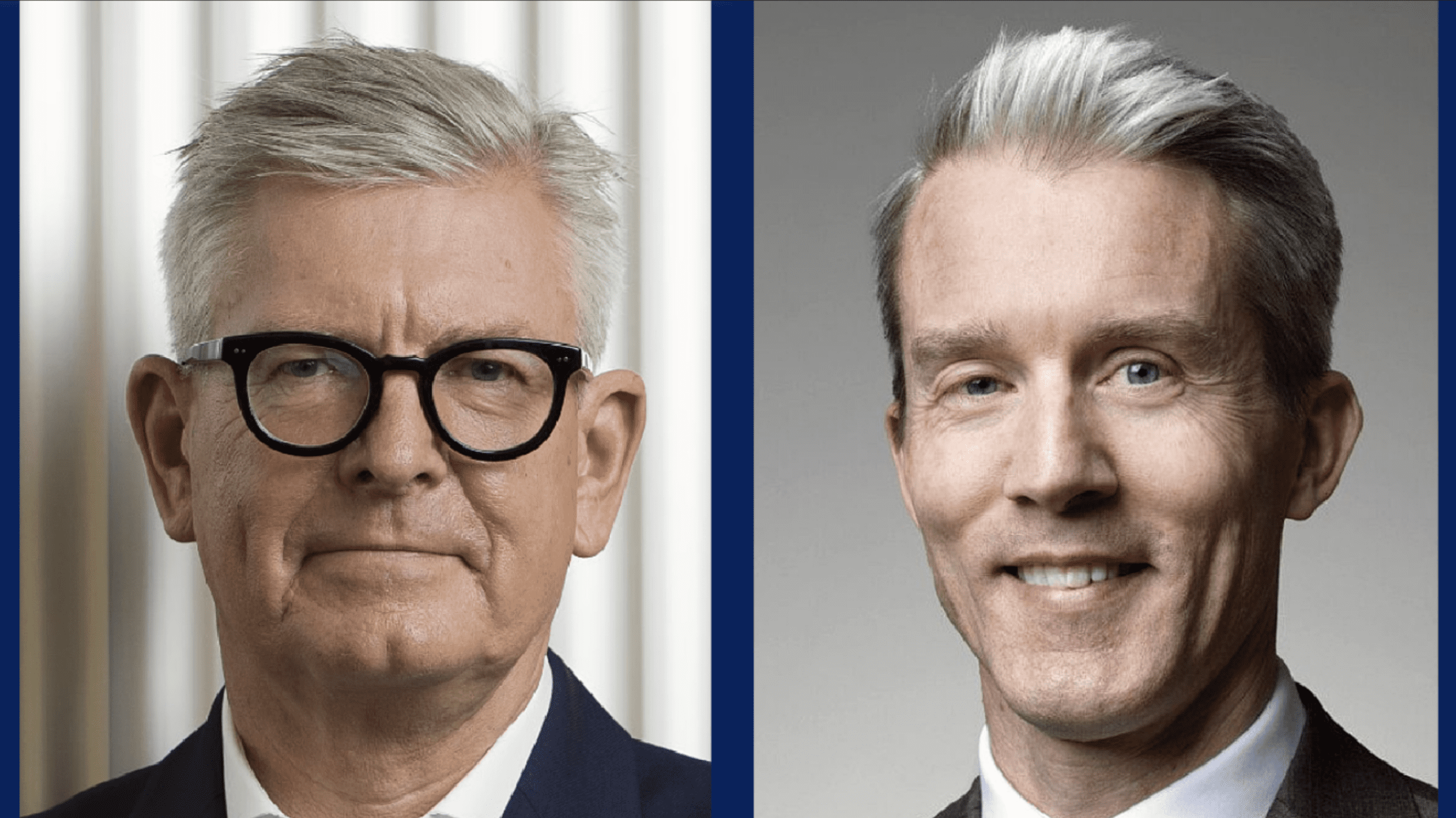
Per Narvinger replaces Börje Ekholm as chief executive at Ericsson, signalling strategic continuity in the Swedish vendor’s focus on 5G execution and operator-led growth – thrown into relief as old rival Nokia continues to pursue a more aggressive AI infrastructure pivot.
Hindsight is a grand thing, and flattering, too; but you could already see Börje Ekholm and Per Narvinger operating in tandem at Ericsson’s booth at MWC in early March – at close quarters, attended together by press minders. Still, news that Narvinger, 18 months in charge of the Swedish firm’s networks business, is to replace Ekholm, nine years as chief executive, comes out of nowhere today. This is a “well prepared and orderly” succession, the company clarified. Ekholm will step down at the end of September, and be an advisor to Narvinger until June next year.
RCR does not usually pay much mind to corporate musical chairs, even at the top of the game; there’s just too much broader strategic intrigue in play. It is the kind of appointment that gets covered in the business press anyway. But Ericsson is a cornerstone outfit in this industry, and its strategy, especially versus old rival Nokia, captures very well the market’s wilder jeopardy: pivot or play on? Ericsson is playing on, dead set on the position that Ekholm has helped to establish for it: as the leading western 5G vendor and, hence logically, as a pure-play 3GPP loyalist.
Which is different to Nokia, of course – which is pivoting in order to rely less on the flat-lining mobile sector, which it has arguably (!) lost to Ericsson, and which is caught between yawning generational 5G and 6G upgrade cycles. Nokia’s new US chief Justin Hotard, recruited from Intel, has instead set the Finnish firm a bold course to hoover-up new business in the buzzy parallel discipline of fiber optical networks, to capitalize on the high-rolling AI interconnect interests of hyperscalers and frontier companies. These companies are not all-out local rivals, as they once were.
Their different characters have forked their different paths. Nokia, so bold for so long with its little private networks business, has been as ruthless to axe such an influential mid-term industrial prospect as it has been to jump both-feet on the DCI bandwagon, plus on some AI-RAN adjacency with $1 billion of Nvidia’s cash. The markets have responded; its shares have soared. The private 5G discussion is anecdotal, but informative: Ericsson, so worried five years ago to upset its carrier customers while Nokia was bypassing them to build the market, is the last big vendor brand left to give a sh*t about enterprise campuses.
It is either classic juggernaut corporate strategy, like Paulie in Goodfellas – who ‘might move slow, but only because he doesn’t have to move for anyone’. Siemens is the same. Or like Apple, which will never be first-to-market. Or else it is just inherent industrial conservatism – which might or might not come from its national character, but probably comes from its leadership position. Either way, its niche mid-term private networks strategy complements its core nid-term public networks business, and confirms its pure-play status. But enough of that.
Narvinger bleeds Ericsson blue; he joined in 1997, and has been with the firm his entire career. “This is a pivotal time,” he says. “As AI continues to industrialize, this will require advanced connectivity.” So what will Ericsson do about it? Nothing, it seems; it will keep (evolve) doing the same. And despite false characterizations about its flatter valuation (versus Nokia’s multiple-driven re-rated fortunes anyway; where Ericsson trades like an earnings-driven and range-bounded cyclical compounder, moving with familiar capex cycles), this is perfectly sound logic.
Its approach is structurally conservative but totally aligned with how telco money is spent. Operators are still deep in the 5G monetization phase, and capex is under pressure and ROI is closely scrutinized. So Ericsson’s focus on mid-cycle 5G optimization, AI-driven RAN efficiency, incremental enterprise exposure via APIs, some future growth and influence with private networks is coupled to proper budget lines, in telecoms and for telecoms. Narvinger’s appointment is consistent with all of this: continuity and leadership in the business it knows.
It is sharpening its execution, and not grasping at reinvention. Narvinger told RCR all of this at MWC in March; the article is worth revisiting. Ericsson is due a break.

