

The new Verizon system uses drone-captured 3D models and automated damage analysis
In sum – what we know:
- Virtual damage assessment – Verizon will use AI to compare pre- and post-storm 3D models of cell sites, allowing engineers to identify specific broken components without physical inspections.
- Multi-layer disaster tech – The system integrates with 2,600 satellite assets and “Multi-Orbit” off-road trailers that can toggle between GEO and LEO satellites for emergency connectivity.
- Compressed recovery windows – By identifying necessary parts and repair sequences remotely, Verizon aims to start the restoration process within hours of landfall.
Verizon is rolling out a new digital twin and AI system ahead of the 2026 hurricane season. The goal is essentially to instantly identify storm damage to network infrastructure in the minutes and hours after a hurricane makes landfall, and get crews to the right equipment faster. The Southeast U.S. is the primary target, which tracks given where most Atlantic storms tend to do their worst.
What’s interesting here is the attempt to replace subjective field reports with objective, virtual damage assessments. The critical window for restoring connectivity after a storm is measured in hours, not days, and historically that window can be eaten up by engineers waiting for floodwaters to recede, debris to clear, and technicians to physically climb towers to figure out what’s broken. Verizon is betting that an AI comparing before-and-after 3D models can collapse that timeline dramatically.
What is Verizon’s AI and digital twin technology?
At its core, Verizon’s new system includes the creation of 3D replicas of Verizon’s network infrastructure, including cell sites, antennas, cables, and the supporting equipment that keeps everything running. The “before” state is captured through tens of thousands of drone missions that build high-resolution baseline 3D models of each site well before any storm is on the radar. When a hurricane hits, specialized post-storm drones fly the same routes and capture “after” imagery of the same locations.
That’s where the AI comes in. Rather than having engineers manually review imagery or wait for technicians to report back from the field, the software automatically compares the two models and pinpoints exactly where equipment has been damaged. Verizon is claiming “pinpoint accuracy,” though what that means in practice (and how often the system gets it wrong) remains to be seen.
If the system works as advertised, it could be pretty helpful. Engineers can prepare the specific replacement parts needed and sequence repairs before crews are even able to physically reach damaged sites. Tower climbs, which are dangerous under normal conditions and outright hazardous after a hurricane, become less necessary. Virtual inspections replace on-site ones, at least for the initial assessment phase. And recovery decisions get made on the basis of actual visual evidence rather than patchy field reports phoned in from crews working their way through a disaster zone.
Storm response has traditionally been an information bottleneck as much as a logistics problem — you can’t fix what you can’t see, and you can’t see much when roads are flooded and cell sites are inaccessible. If the AI can reliably tell engineers what’s broken before anyone sets foot on site, the entire recovery sequence compresses.
Expanded satellite infrastructure
The digital twin system doesn’t operate in isolation. Verizon is pairing it with an expanded satellite fleet that now totals 2,600 assets, including deployable cell sites and mobile satellite link kits. The company is also testing permanent satellite backhaul as a regional failover solution at macro cell sites across the Southeast — essentially a backup path for when terrestrial links go down.
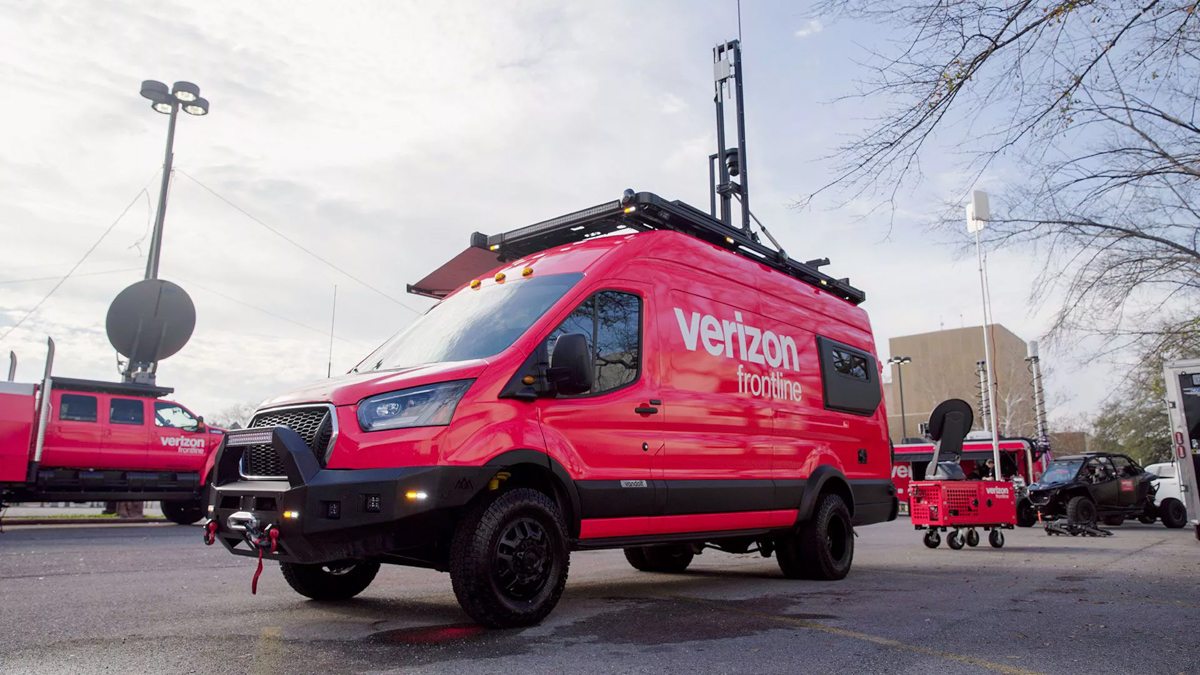
Another headline addition for 2026 is a new “Multi-Orbit Off-Road Trailer,” a high-clearance vehicle purpose-built for disaster zones. It replaces older pavement-bound assets that were never going to make it far into a flooded or debris-strewn area. More importantly, it can toggle between Geosynchronous (GEO) and Low-Earth Orbit (LEO) satellites depending on what’s accessible, and it can spin up localized 5G hotspots for first responders on the ground.
The trailer also plugs into the broader sensor ecosystem Verizon has been building out. That includes solar-powered sonar flood sensors — 50 of them were deployed in New Orleans and fed real-time data during Hurricane Francine in 2024. Mobile solar panel arrays from the Footprint Project, previously used during Hurricane Helene in North Carolina, the Maui wildfires, and Texas storms, provide power and remote monitoring for infrastructure cut off from the grid.
It’s a fairly comprehensive package. The AI damage identification is the flashiest piece, but the whole thing only really works if there’s connectivity and power available to push the data back in the first place.
Digital twins beyond telecom
Verizon isn’t pioneering digital twins for disaster planning — the technology is being adopted across multiple industries. AECOM, for example, has been using AI and digital twins for community flood management, building neighborhood-level models that help residents understand how floodwaters behave in their area and validating those models against real storm events. That kind of work is less about infrastructure recovery and more about community preparedness, but it operates on the same fundamental principle: build a high-fidelity virtual replica, then use it to make better decisions when the real world goes sideways.
What we don’t know
There’s a fair amount Verizon hasn’t disclosed yet. Accuracy metrics and validation data for the AI damage analysis software aren’t public. “Pinpoint accuracy” is a marketing phrase, not a specification. How the system performs in edge cases, like extreme weather, obscured imagery, and unusual damage patterns, also remains undisclosed, as do the potential failure modes and blind spots that will inevitably exist in any AI system deployed at this scale.
None of this is disqualifying. The 2026 hurricane season will be the real test, and that’s when we’ll find out whether the digital twin approach lives up to what Verizon is calling a “massive leap forward in disaster response and recovery,” or whether it turns out to be another layer of technology sitting on top of the same fundamental recovery challenges.
Table of Contents

