

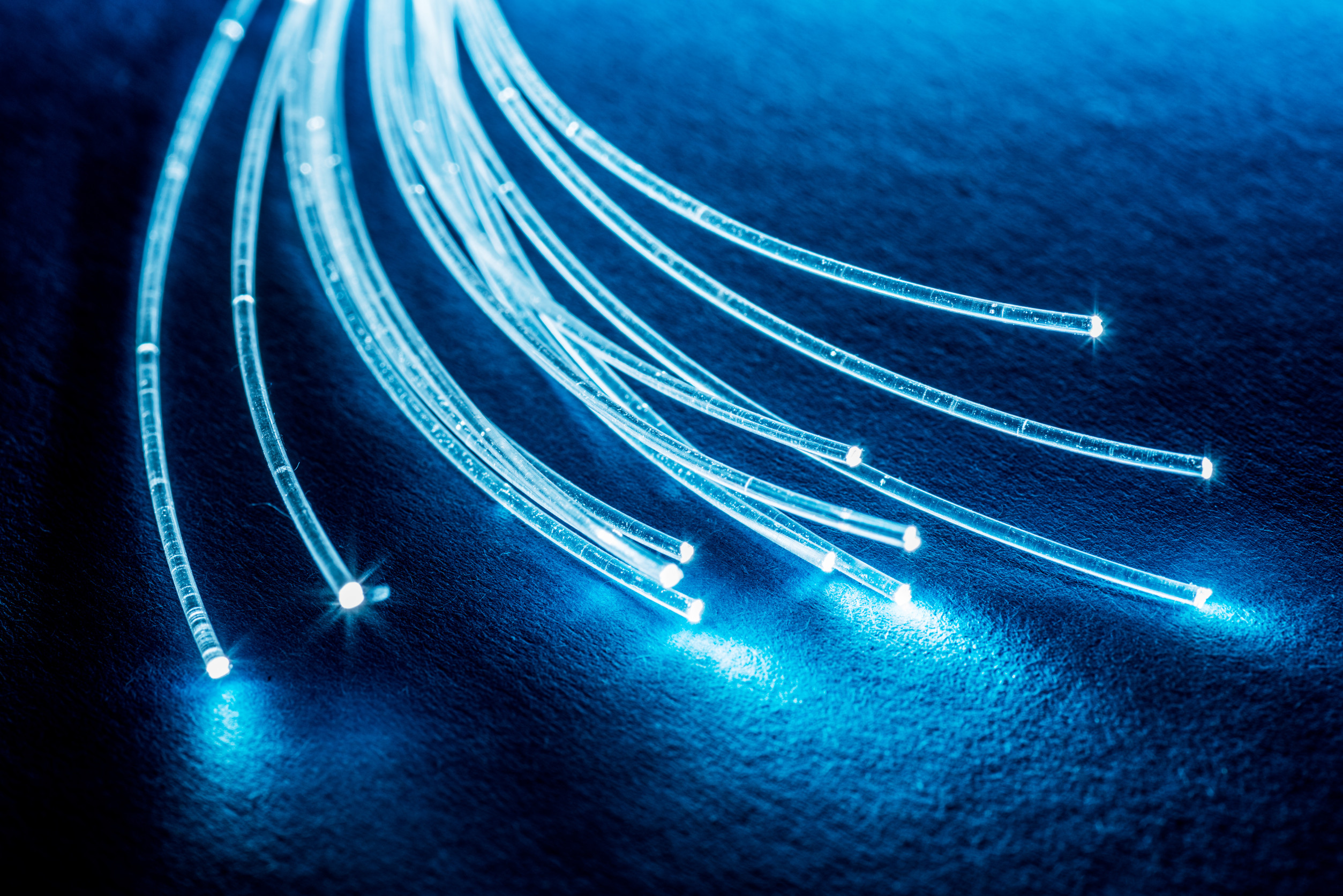
Density, latency, and real-time data movement are now the make-or-break variables in modern data center design
Whether you say “Hey Siri” or ask Alexa to dim the lights, you get the response in a blink — even when millions of people are making the same request at the same time. These seemingly simple experiences are powered by real-time AI models running inside hyperscale data centers. However, what truly enables this speed is the dense web of high-capacity fiber routes, silently carrying enormous volumes of data between these intelligent AI cores. Without these swift, secure, and ultra-reliable connections, the convenience we take for granted would simply not exist.
The global data center market is scaling at a pace we’ve never seen before—projected to cross $517 billion by 2030. But what’s even more interesting is where the spending is shifting. For years, the focus was on racks, power, and cooling. Today, AI has rewritten the priority list.
The pressure points are no longer just compute-heavy; they’re connectivity-heavy — density, latency, and real-time data movement are now the make-or-break variables in modern data center design.
The new bottleneck inside ‘AI-ready’ data centers
Here’s the truth: Legacy cabling and improvised interconnects weren’t built for this moment. AI-ready infrastructure cannot be GPU-rich but fiber-poor. In fact, the real differentiator for AI data centers isn’t just the silicon inside the servers; it’s the fiber architecture underneath them.
In AI environments, fiber becomes the control plane — for scale, resilience, and even sustainability. It is no longer background plumbing; it is strategic infrastructure.
From Compute to Connectivity: fiber as the new Control plane
For decades, organizations have stretched copper-heavy, low-density layouts far beyond their intended limits. But AI has changed the physics of the data center.
AI clusters demand:
- Higher bandwidth
- Lower latency
- Massive east-west traffic
- Ultra-dense interconnects
At this scale, copper hits thermal, distance, and density ceilings very quickly.
Fiber, on the other hand, unlocks architectural flexibility. It dictates how fast you can add capacity, move clusters, or isolate workloads. The game is shifting from ad-hoc patching to engineered fiber plants — testable, and highly resilient. Fiber is the orchestration layer that holds the entire AI fabric together.
In AI-first environments, the question isn’t “How much fiber do we need?” It’s “How fast can the fiber plant scale with the model cycles?”
The backbone behind AI: High-Density fiber connectivity
AI networks don’t exist inside the four walls of a single facility anymore.
Models train in one region, fine-tune in another, and infer across edge and colocation sites.
This creates an invisible — but essential — dependency: high-capacity, inter-DC fiber connectivity across metro and long-haul corridors. This ensures:
- Low-latency redundancy
- Diverse fiber paths
- High-capacity transport between GPU clusters across geographies
If GPU clusters are the brain, inter-DC fiber is the nervous system that keeps the AI organism functioning in real time.
Design for scale and speed
AI infrastructure has gone from bespoke builds to modular blueprints. The operators ahead of the curve are prioritising:
- Pre-terminated fiber trunks
- Standards-aligned connectors
- Consistent, repeatable design blocks
This approach drastically reduces the time to deploy new pods, and even more importantly, the time to reconfigure them. When training and inference workloads swing like a pendulum, the ability to reshape interconnects in days — not months — becomes a competitive advantage.
Modularity also ensures predictability in procurement and design. When every pod looks, feels, and behaves the same, scaling stops being a construction project and becomes an operational motion.
This is the future AI operators are designing toward — and fiber sits at the center of all of it.
Engineering with sustainability at the core
AI data centers consume more power, cooling, and materials than any previous generation. Sustainability cannot be a CSR footnote; it must be a design input.
Engineered fiber-first connectivity contributes directly to ESG performance by:
- Reducing material waste
- Improving airflow and thermal efficiency
- Lowering energy consumption through disciplined cable management
- Minimising rework across the lifecycle
Boards and investors are asking tougher questions about emissions and the total cost of ownership. fiber offers a measurable, quantifiable path to better answers.
Scale, resilience, and ESG all converge on fiber
The race to AI scale will be decided as much by connectivity as by compute. Fiber-first architecture improves deployment speed, enhances resilience, boosts ESG performance, and allows operators to pivot workloads with agility. GPU cycles may define AI performance, but fiber defines AI scalability.
Data center operators who treat fiber as strategic infrastructure — not background plumbing — will be the ones who leap from pilot AI deployments to globally distributed, fully operational AI environments.
The next wave of AI scale won’t be won with more power or cooling alone.
It will be won by those who understand that fiber is the real backbone of AI-ready data centers.
Table of Contents

