

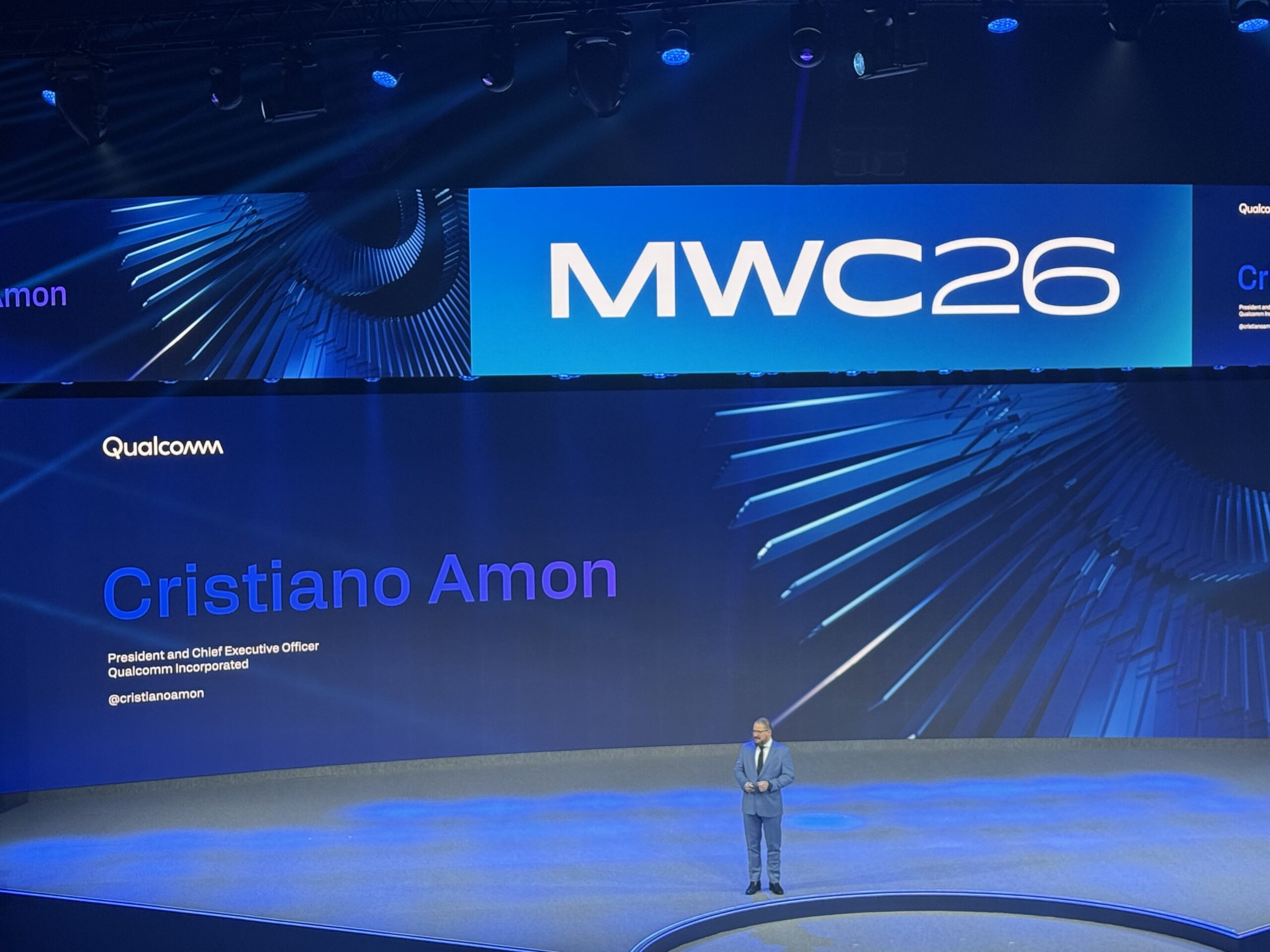
In his keynote session at MWC 2026 in Barcelona, the Qualcomm CEO said 2026 is going to be the year of agents
In sum – what to know:
AI agents – Qualcomm CEO Cristiano Amon predicts the shift from smartphone-centric apps to agent-centric interactions, where autonomous AI systems observe, interpret, and act across multiple connected devices.
AI will drive major mobile traffic growth – Global cellular traffic could grow three to seven times by 2034, with AI expected to account for roughly 30% of network traffic.
6G is being positioned for AI workloads – Next-generation wireless networks will need lower latency, higher capacity, and edge computing integration to support real-time AI services and massive volumes of contextual data, according to Qualcomm.
At Mobile World Congress 2026 in Barcelona, the president and CEO of Qualcomm Cristiano Amonm argued that the next generation of wireless technology will be shaped primarily by the rise of artificial intelligence (AI) and the emergence of AI agents capable of acting autonomously across devices.
In his keynote session at the event, Amon noted that the transition from today’s app-driven mobile ecosystem toward an agent-centric model will require a new generation of connectivity designed specifically for AI-driven interactions.
“And when we think about what we’re doing next, 6G also has a mission, like every generation before,” the CEO of Qualcomm said. “The mission of 6G is going to be the wireless technology for the age of AI and for AI everywhere.”
AI systems are already beginning to change how people interact with computers, he noted, shifting interfaces toward natural language, voice, and contextual awareness. This transformation is expected to accelerate as AI agents become the primary interface between users and digital services.
“2026 is going to be the year of agents,” Amon said. “The agent becomes the center. They don’t only respond to you. They observe, they interpret, they act.”
In this model, digital assistants evolve into persistent agents that operate across multiple devices and environments, rather than being confined to a single smartphone application, according to the Qualcomm executive.
For several years, the smartphone has served as the central hub of the mobile ecosystem, with other devices extending its capabilities. Amon suggested that this architecture will change as AI agents become capable of managing interactions across multiple connected devices simultaneously.
These agents will require continuous context about a user’s environment, location, and activity. That context will increasingly be captured by devices operating at the network edge, including wearables, smart glasses, vehicles, and industrial systems.
The shift toward AI-driven experiences will also generate far larger volumes of data than today’s applications. As users interact with AI systems through voice, images, and real-time environmental inputs, devices will continuously collect and process information.
“The edge generates a lot of data,” the Qualcomm executive said. “You are going to generate a massive amount of data because you are going to start to interact with the computer the way we interact with each other.”
This data is not only important for delivering personalized AI experiences but also for training and refining AI models. Much of today’s AI training relies on publicly available internet data, but future systems will increasingly incorporate contextual data generated directly by users and devices.
That dynamic, Amon argued, reinforces the importance of next-generation connectivity. AI-driven applications will require lower latency, greater bandwidth, and improved network intelligence to support real-time interactions and large-scale data flows between devices, edge infrastructure, and cloud systems.
For the telecom industry, the shift toward AI agents and edge-generated data could redefine the role of wireless networks, positioning future 6G infrastructure as a foundational platform for the next wave of intelligent digital services, the executive said.
“If you actually believe in the AI revolution, 6G will be required,” he added.

