
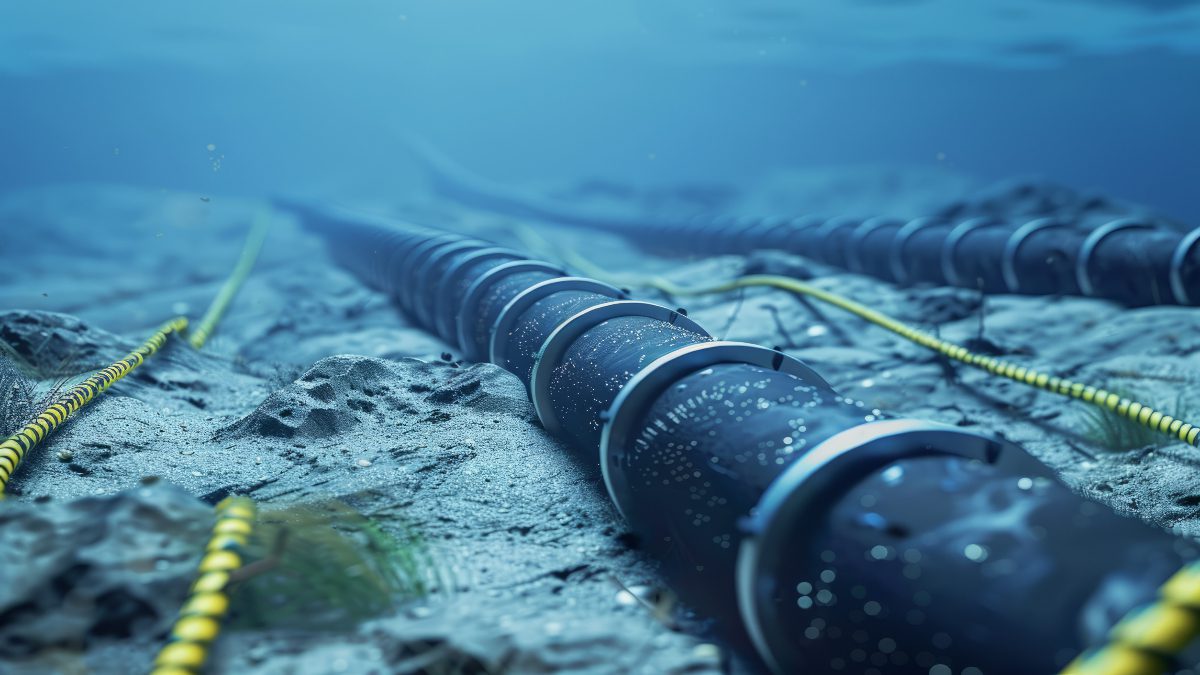
The deployment will support growing demand for cloud services, AI-driven workloads, and high-speed connectivity across the Indo-Pacific
In sum – what to know:
Pacific upgrades – TPN is deploying Ciena’s WaveLogic 6 Extreme and RLS platforms to boost capacity, efficiency, and resiliency across the Echo and Tabua subsea cable systems.
Massive scale – Echo spans over 16,000 km linking the U.S. and Singapore, while Tabua adds 272 Tb/s of total design capacity across U.S., Australia, and Fiji routes.
AI demand – The upgraded network is designed to support bandwidth-intensive cloud and AI workloads, improving latency and connectivity across the Indo-Pacific region.
Trans Pacific Networks (TPN) has selected Ciena’s optical networking technology to enhance capacity and performance across its Echo and Tabua subsea cable systems, strengthening digital connectivity between the U.S. and key Asia-Pacific markets.
Ciena’s WaveLogic 6 Extreme coherent optics and reconfigurable line system will enable TPN to deliver terabit-scale wavelengths while improving power and space efficiency on long-haul routes linking the U.S. with Indonesia, Singapore, Australia, and Fiji. Pioneer Consulting will oversee route engineering, technical assurance, and end-to-end project execution.
Echo, TPN’s flagship system, spans more than 16,000 kilometers, providing a direct express route between the U.S. and Singapore. The newer Tabua cable forms part of Google’s South Pacific Connect initiative and is designed to support large-scale capacity growth across the Pacific.
TPN said the deployment will support growing demand for cloud services, AI-driven workloads, and high-speed connectivity across the Indo-Pacific.
In an interview with RCR Wireless News, Brian Lavallée, senior director, market and competitive intelligence at Ciena, explained how are AI-driven traffic patterns—training, inference, and inter-data-center flows—changing the way subsea cable operators design and light transpacific routes.
“Distributed training over subsea distances has unavoidable distance-related latency challenges meaning that today, most distributed training is over much shorter distances. This means current subsea AI traffic will primarily involve moving large training datasets into AI factories for LLM training, as well as replication of training datasets and associated models in different locations,” the executive said.
The executive also noted that the fundamental economic risk in subsea cable systems is the lifecycle mismatch between the cable itself, which is a 25-year asset, and the transponders, which can evolve every three years. “Using open cable architectures solve this by decoupling the two. Spectrum sharing allows TPN to virtualize the cable’s capacity. Instead of selling fixed bandwidth, they can carve out dedicated ‘virtual fiber pairs’—blocks of optical spectrum—that a customer can manage independently,” he said.
“This helps future-proof the economics because it allows operators to continually leverage the very latest modem technology when and where it is required without touching the deployed wet plant. For instance, when Ciena releases the next generation of coherent optics, TPN or their customers can quickly, reliably, and securely upgrade just the submarine line terminal equipment for more capacity.”