
RCR Wireless
  • News
  • Channels
    • 5G
    • 6G
    • BSS OSS
    • Carriers
    • IoT
    • Network Infrastructure
    • Open RAN
    • Private 5G
    • Telco AI
    • Telco Cloud
    • Test & Measurement
  • Resources
    • Reports
    • Webinars
    • White papers
    • AI Fundamentals
    • Analyst Angle
    • Editorial Calendar
    • Fundamentals
      • 5G NR Release 17
      • AI
        • Telco AI in 2025
    • Podcasts
      • Let’s Get Digital with Carrie Charles
      • Wireless Connectivity to Enable Industry 4.0 for the Middleprise
      • Well Technically…
      • Will 5G Change the World
      • Accelerating Industry 4.0 Digitalization
  • AI Infrastructure
  • Programs
  • Events
  • RCRtv
  • Advertise
  • Subscribe
Saturday, August 8, 2026
RCR Wireless
  • News
  • Channels
    • 5G
    • 6G
    • BSS OSS
    • Carriers
    • IoT
    • Network Infrastructure
    • Open RAN
    • Private 5G
    • Telco AI
    • Telco Cloud
    • Test & Measurement
  • Resources
    • Reports
    • Webinars
    • White papers
    • AI Fundamentals
    • Analyst Angle
    • Editorial Calendar
    • Fundamentals
      • 5G NR Release 17
      • AI
        • Telco AI in 2025
    • Podcasts
      • Let’s Get Digital with Carrie Charles
      • Wireless Connectivity to Enable Industry 4.0 for the Middleprise
      • Well Technically…
      • Will 5G Change the World
      • Accelerating Industry 4.0 Digitalization
  • AI Infrastructure
  • Programs
  • Events
  • RCRtv
  • Advertise
  • Subscribe
Add RCR Wireless as a preferred source on Google
  • Qualcomm 6G Insights
  • Huawei Content Hub
  • Qualcomm – 6G Vision
  • OSS/BSS Channel
  • RCRTech Roundtable: AI Infrastructure
RCR Wireless
RCR Wireless
  • Advanced Mimo
  • Mobile mmWave
  • 5G Positioning
  • Green Networks
  • Metaverse
  • Automotive
  • Industrial and Wide-area IoT
Copyright 2021 - All Right Reserved
Home - Huawei P40 powered by Kirin 990 lacks key 5G features (Analyst Angle)
5GAnalyst AngleDevices

Huawei P40 powered by Kirin 990 lacks key 5G features (Analyst Angle)

by Prakash Sangam March 26, 2020
written by Prakash Sangam March 26, 2020 Share
LinkedinEmail
Share 0LinkedinEmail
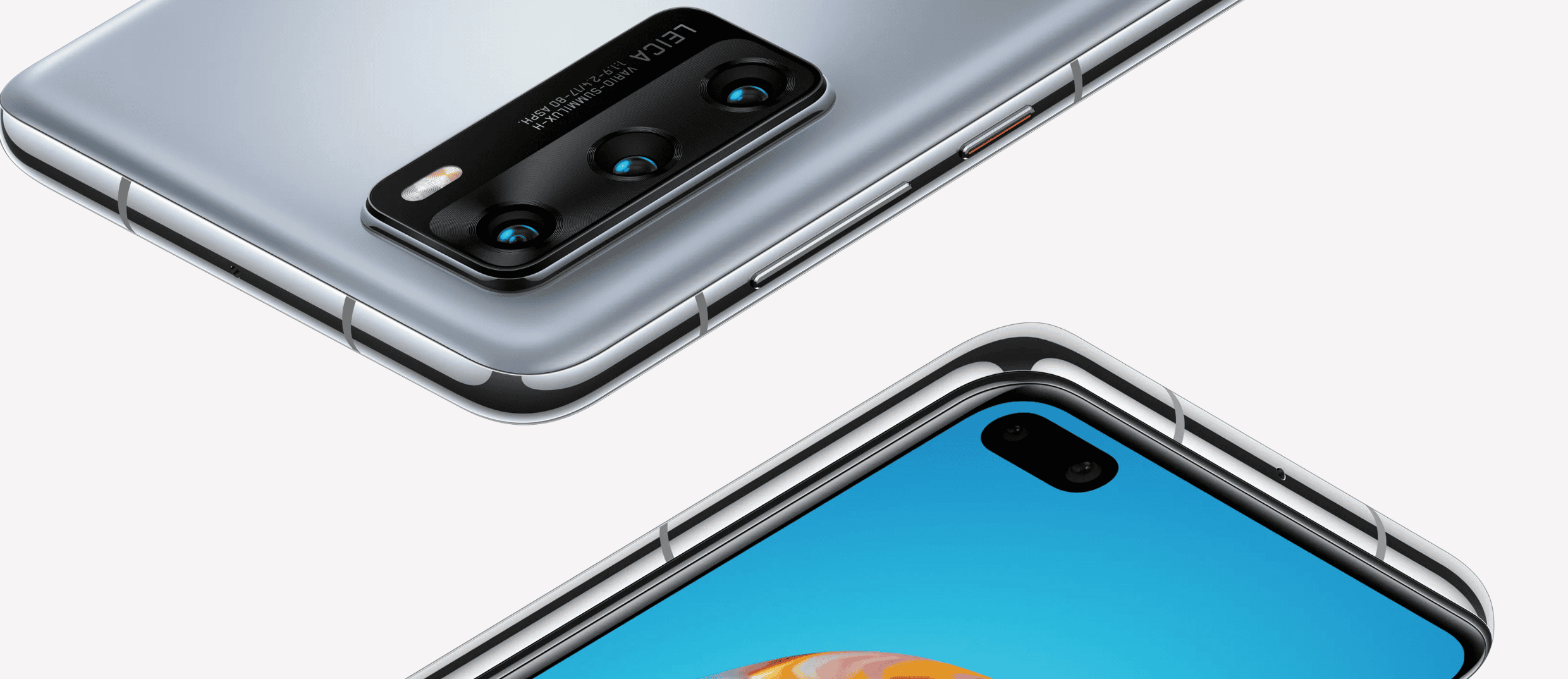
huawei p40
Image courtesy of Huawei.
281

The Chinese telecom giant Huawei unveiled its latest flagship smartphone lineup, the P40 today. Its usual pompous, glitter-filled launch event was sadly replaced by a somber online event because of the COVID19 situation. As one would expect, the P40 lineup, powered by Kirin 990 SoC, has a long list of camera, AI and other features, on which they spent most of the presentation today. My interest, however, is in better understanding its 5G features, which were surprisingly barely mentioned. Although Huawei has been claiming 5G technology leadership, Kirin990 5G lacks some key features and lags behind the market leaders such as Qualcomm Snapdragon 865.  Let me explain why I think so.

Absence of millimeter wave (mmW) support

Kirin 990 still doesn’t support mmW bands. Huawei has never shied away from touting its technology prowess by talking up or demonstrating its leadership in new technology. Despite announcing mmW support for its modem more than a year ago, Huawei is yet to show it working. Conspicuously, there hasn’t even been any proof of concept demos of prototypes either, let alone the smartphone form-factor devices. We don’t know whether they had planned any demos at this year’s Mobile World Congress, but alas it got canceled. Still, if they had anything worth touting, I am sure Huawei would have used the occasion such as the P40 launch or others to show it. Since they didn’t, I am more inclined to believe they are not yet ready.

Some might argue that mmW is not a key feature for Huawei, as that band is not yet deployed in its target markets. However, that is not true. Many of the countries such as Italy and Australia, where Huawei has a significant presence, are planning mmW deployments in 2021. Even other Chinese OEMs are warming up to mmW bands. Additionally, mmW provides futureproofing. As has been accepted across the industry, users have been keeping their phones for longer, up to three years in many cases. The P40s people buy this year will still be using them in 2021 and 2022. However, they will not be able to benefit from the blistering-fast speed and capacity of mmW bands, when deployed. 

From an operator perspective, many are fast realizing that the gigabit speeds people experience in Sub-6GHz deployments today, will be hard to sustain when they start adding up subscribers and traffic starts to rise.  This will especially be true for the operators who are offering both fixed and mobile services. They will quickly use-up the capacity in the sub-6GHz spectrum and start to look at bandwidth-rich mmW bands. 

Lower Sub-6GHz speeds

If you were thinking understanding cellular peak speed claims was difficult, welcome to 5G, where it is even more confusing. Although peak speeds are theoretical, and nobody experiences them in real life, they are still a good indicator of relative performance and user experience. But one must look under the hood to understand them better. 

In speed comparisons, the solutions that support mmW will hands-down beat the ones that don’t. For example, Qualcomm Snapdragon 865’s mmW peak speed is 7.5 Gbps but its Sub-6GHz peak speed is only 5 Gbps. Now let’s look at Kirin 990 5G, which only has Sub-6GHz support. It’s claimed peak speed is 2.3 Gbps, less than half of what Snapdragon 865 offers.

Without getting into too much detail, the higher speeds are achieved through aggregating two 100 MHz 5G carriers. To achieve full peak speed, each carrier will have to support the features that you might have heard even in LTE—256 QAM & 4×4 MIMO. So, now, if 990 is only reaching half the speeds then, either it is only supporting one carrier (no carrier aggregation) or it is not reaching the peak speed on each of the carriers.

Now, most of these claims are just marketing unless demonstrated on actual devices and networks. To that end, I was delighted to see a tweet by Dr. Durga Malladi, 5G GM of Qualcomm about them achieving 3.66 Gbps peak throughput in the lab using Snapdragon X55 modems, that are used in Snapdragon 865. 

Lack of RF integration and advanced features

It goes without saying that tight integration between modem and RF is key for success in 5G. Check out my earlier articles here and here for more details. For mmW it is a bare necessity, without which the device will not even work properly. Considering that Huawei relies on third party RF component vendors such as Skyworks, Qorvo, and others, integration is a difficult proposition. It requires modem and RF providers to divulge their intellectual property (IP) to each other. I suspect this is the reason why Huawei or any other chipset vendor for that matter has not yet been able to support mmW. Tight integration is key for sub-6GHz as well to provide higher performance. 

Additionally, for Sub-6GHz bands, there are other advanced RF features such as Antenna Tuner and Envelope tracker which provide demonstrably better performance in real-life usage scenarios. Antenna Tuner improves signal strength/coverage as well as connection reliability. Envelope Tracker optimizes phone transit power and significantly improves battery life. Since Huawei doesn’t mention any of these things for Kirin 990 or P40, it is safe to assume they don’t offer them. 

Another important feature missing in Kirin 990 and thereby in P40 is Dynamic Shared Spectrum (DSS). DSS allows operators to utilize lower band 4G spectrum for 5G. Considering that 5G spectrum across the globe is primarily mid and higher bands, ranging from 3.5 GHz to 38 GHz, it is extremely crucial to utilize 4G spectrum which in bands as low as 600 MHz, to provide ubiquitous 5G coverage. In the absence of DSS, users will have very spotty 5G coverage, constantly hopping between 5G and 4G, which substantially deteriorate user experience. Also, without DSS, operators will need a large number of sites to provide consistent coverage, requiring huge capital investment.  

In closing 

Although Huawei P40 seems to have an impressive design, look and feel, and claims to have a good camera and such, I believe its 5G feature set is inferior, especially when it claims itself to be a technology leader. P40’s lack of critical features will probably make its performance lag behind market leaders. Additionally, P40 might also have futureproofing issues. It would be interesting to see how it fares in the market, once launched. 

For an up-to-date analysis of the latest telecom and mobile industry news, please sign-up for our monthly newsletter at TantraAnalyst.com/Newsletter

Disclosure:  Tantra Analyst is a tech industry market research and consulting firm and, like all companies in that field, works with many technology vendors as clients, some of whom may be listed in this article.

You Might Also Like
  • Tuesday (telco diary) | More about ISAC – on battlefields and sportsfields
  • From missiles to pizzas – why 6G drone sensing has been fast-tracked for 5G
  • Cellnex sees AI, 5G and digital sovereignty driving Europe’s next infrastructure cycle
  • Wi-Fi carries over 80% of traffic; monetizing it is not a done deal (Analyst Angle)
  • Poste deal advances as TIM eyes growth in AI services, mission-critical industries
  • AI-RAN takes shape as Open RAN, Cloud RAN and AI converge

Table of Contents

  • Absence of millimeter wave (mmW) support
  • Lower Sub-6GHz speeds
  • Lack of RF integration and advanced features
  • In closing 
Share 0 LinkedinEmail
Prakash Sangam

Prakash Sangam is the founder and principal at Tantra Analyst, a leading research and consultancy firm covering IP strategy, 5G, IoT, AI, as well as client and cloud computing. He has more than 20 years of wireless industry experience working for Qualcomm, Ericsson, and AT&T. A prolific writer, blogger, and speaker, Prakash enjoys analyzing technical and business challenges and transforming them into impactful strategies and persuasive messaging. He is a regular contributor to Forbes, EETimes, RCR Wireless, Medium, and other leading publications and has been on the speaking circuit for leading industry events, including Mobile World Congress, and CTIA. Prakash holds a Bachelor’s of Engineering in electronics and communications from Karnatak University in India, and a Masters of Business Administration from San Diego State University. He can be reached on twitter @MyTechMusings

previous post
3GPP delays 5G standard updates due to COVID-19
next post
FCC launches group to protect hospitals from robocalls

White Papers

  • Norton eBook: The 2026 Telco Playbook

  • Enea White Paper: Why Intelligent AAA is the Swiss Army Knife of Telecom

  • CSG White Paper: Telco AI Enabler: Mediation’s Defining Role

  • Enea White Paper: Scalable Database Design for 5G and Beyond

  • Supermicro and NVIDIA Whitepaper: Powering sovereign AI at scale

Editorial Reports

  • Report: NTN in motion — evolving standards, expanding services

  • Market Pulse Report: Telco AI in 2026 – Trends, Challenges and Opportunities

  • Nvidia Report: The State of AI in Telecommunications: 2026 Trends

Webinars

  • Webinar: Building 6G — aligning technology, policy and purpose

  • SIMCom Webinar: Scaling your next deployment – from plastic to provisioning

  • Webinar: Rethinking the RAN as AI, cloud and openness converge

  • Webinar: Scale-Up, Scale-Out, Scale-Across – Building AI-Era Network Fabrics

  • Webinar: NTN in motion – evolving standards, expanding services

Since 1982, RCR Wireless News has been providing wireless and mobile industry news, insights, and analysis to mobile and wireless industry professionals, decision makers, policy makers, analysts and investors.

Facebook Twitter Youtube Linkedin Envelope Rss

Useful Links

  • Subscribe
  • About RCR Wireless News
  • Contact Us
  • Advertise
  • Editorial Calendar
  • Archive
  • RSS
  • Wireless News Archive
  • Subscribe
  • About RCR Wireless News
  • Contact Us
  • Advertise
  • Editorial Calendar
  • Archive
  • RSS
  • Wireless News Archive

Edtior's Picks

The Agentic Network — NVIDIA on the full-stack path to telecom autonomy
Ericsson named sole global tech partner in SK Telecom-led AI-RAN pilot
Bell advances AIDC strategy as fiber and enterprise AI drive Q2

Latest Articles

The Agentic Network — NVIDIA on the full-stack path to telecom autonomy
Ericsson named sole global tech partner in SK Telecom-led AI-RAN pilot
Bell advances AIDC strategy as fiber and enterprise AI drive Q2
Context before control – Blue Planet maps AI architecture for autonomous networks

© 2026 RCR Wireless News All Right Reserved. Developed by Eight Hats.

Cookie Policy | Privacy Policy

RCR Wireless
  • News
  • Channels
    • 5G
    • 6G
    • BSS OSS
    • Carriers
    • IoT
    • Network Infrastructure
    • Open RAN
    • Private 5G
    • Telco AI
    • Telco Cloud
    • Test & Measurement
  • Resources
    • Reports
    • Webinars
    • White papers
    • AI Fundamentals
    • Analyst Angle
    • Editorial Calendar
    • Fundamentals
      • 5G NR Release 17
      • AI
        • Telco AI in 2025
    • Podcasts
      • Let’s Get Digital with Carrie Charles
      • Wireless Connectivity to Enable Industry 4.0 for the Middleprise
      • Well Technically…
      • Will 5G Change the World
      • Accelerating Industry 4.0 Digitalization
  • AI Infrastructure
  • Programs
  • Events
  • RCRtv
  • Advertise
  • Subscribe
RCR Wireless
  • News
  • Channels
    • 5G
    • 6G
    • BSS OSS
    • Carriers
    • IoT
    • Network Infrastructure
    • Open RAN
    • Private 5G
    • Telco AI
    • Telco Cloud
    • Test & Measurement
  • Resources
    • Reports
    • Webinars
    • White papers
    • AI Fundamentals
    • Analyst Angle
    • Editorial Calendar
    • Fundamentals
      • 5G NR Release 17
      • AI
        • Telco AI in 2025
    • Podcasts
      • Let’s Get Digital with Carrie Charles
      • Wireless Connectivity to Enable Industry 4.0 for the Middleprise
      • Well Technically…
      • Will 5G Change the World
      • Accelerating Industry 4.0 Digitalization
  • AI Infrastructure
  • Programs
  • Events
  • RCRtv
  • Advertise
  • Subscribe
@2020 - All Right Reserved. Designed and Developed by PenciDesign