


Cheap drone warfare has changed military strategy, and governments want cheaper anti-drone detection to keep pace. 6G-native ISAC has been rushed into late 5G-era networks in response. Ericsson Federal explains how ISAC could turn commercial 5G networks into distributed radar systems, and open new public safety and enterprise opportunities.
In sum – what to know:
Military demand – Cheap drones have changed the economics of warfare, prompting defense planners to push 6G-native sensing capabilities into commercial 5G systems.
Distributed radar – Multi-static ISAC uses synchronized radios to detect, track, and even classify drones, reusing existing cellular infrastructure instead of dedicated radar.
Commercial chances – While the military remains the driver, ISAC supports public safety, infrastructure protection, and traffic management for the developing drone economy.
RCR has written at some length about integrated sensing and communications (ISAC) lately, including in coverage of forums and demos where it has been positioned like a ‘killer app’ for 5G networks. But a conversation with Ericsson Federal last week covered certain application and channel aspects that have been less well covered, and provided handy commentary about the industry rationale for fast-tracking a 6G-native capability backwards into late-era 5G systems – in response to geopolitical tensions, over a couple of years, to find ways to combat cheap drone attack systems.
This is well understood, of course; drone attacks on battlefields and infrastructure in Europe and the Middle East play out on the news every night. In particular, Ukraine has transformed low-cost drones from tactical curiosities into a central element of military strategy. It has industrialized their production, integrated them with battlefield software, and deployed them in huge numbers against Russia. Which has changed military economics. The Middle East is a second major lab for the same revolution in warfare, deploying one-way attack drones to target critical infrastructure.
Defense planners in the US, Europe, and Asia are investing heavily in similar capabilities. Which is why they have requested the likes of Ericsson to hurry up, as it were, with ISAC – to turn commercial 5G networks into distributed radar systems, before 6G arrives, to track drones across the airwaves, and bring the cost of drone detection in line with the new economics of drone warfare. “There has been a big push to get something to market quicker,” says Christopher Ling, chief executive at Ericsson Federal, the vendor’s dedicated US unit, serving US state departments.
“There has been a lot of work by Ericsson and others already around integrated sensing as part of 6G. But the question came: could we do something sooner, in 5G – to allow sensing of UAVs? And we [now] have the capability to do that. It is not integrated into the comms piece [yet]; it is a standalone [solution].” As such, the 5G-era solution is more like S-SAC. Ericsson showed it working in authorized airspace outside the AT&T Stadium in Texas last month – “sensing-enabled radio transmissions, advanced signal processing, and AI-enabled sensing algorithms”.

As presented, the list of potential applications is longer and more varied than just for military counter-attacks; the Arlington showcase focused on public safety at busy sporting events, but hinted as well at perimeter security for industrial venues, and – most interestingly for telcos to sell wider-area sensing as-a-service – for traffic management for the new drone economy.
Sensing setups and payoffs
As it stands, the solution is presented as a software drop on 5G (rather than an out-of-the-box integration on 6G). The Arlington 5G set-up used multiple (three, in this case) radios in a ‘multi-static’ array, and duly detected and tracked unmanned aerial vehicles (UAVs) at 300-400 feet (about 90-120 metres) in real time. “Multi-static gives much higher accuracy, and allows you to track. Everyone says ISAC is great, but there’s a big difference between knowing something’s out there, and being able to track it – which takes this more sophisticated multi-static approach.”

Ling’s point is that some RAN vendors, at least, are pushing mono-static ISAC where “you ping [a signal] and a signal comes back, and you know something’s out there, generally – over there to the right”. It takes at least three for “reasonable tracking”, so one of the radios transmits a signal and the others ‘listen’ for its reflection, and the system cycles between the towers to triangulate position and track movement. Moreover, the sensing data can reveal what the object actually is by analysing changes in the radio signature created by its motion. The key is the Doppler effect.
Ling explains: “Like when an ambulance comes towards you – you hear the pitch go up, and then go down as it moves away, and you can measure the rate of the pitch to find the speed of the ambulance, and figure out the direction by listening from multiple points. That’s basically how it works. And there’s a micro-Doppler effect to measure the shift of the blades on the UAV as it flies around. Every unit usually has a signature like that. So it’s not just that you can detect the drone and track the drone, but you can know the kind of drone.”
Explode a multi-static set-up onto poles in an urban center, and the density and geometry of the sensing points brings greater benefits in accuracy and cost. Ling remarks: “If you did it in London, say, you have the infrastructure already – which makes it inexpensive per kilometer versus military-grade radar or traditional airspace surveillance. Plus, you don’t suffer from curvature of the earth, which is a problem.” Long-range radar is limited by line of sight, and ground-based systems struggle to pick up low-altitude objects beyond the horizon (because of the Earth curves).
Whereas ready 5G/6G networks in a city afford lots of elevated sensing points, close to potential targets, to reduce blind spots. And use cases multiply. Ericsson wrote about the Arlington trial that the “same underlying capabilities” could support “threat detection and tracking around major venues, public spaces, and other complex environments.” There is a double-header, here, for telcos running public networks, a world away from military fronts: to monetize infrastructure twice – for consumer and enterprise comms, as always, and for industrial UAV sensing, as described.
Private and public launches
Ling says: “There’s always this search for the next big thing – through all the Gs, from 2G through 5G. 4G had video and GPS, and gave rise to Uber and so on. Nobody bought 4G because it’s 4G; but you had to have 4G to enable those capabilities and services. ISAC could be the first killer app for 5G – because if you have that sensing capability, then it is worth buying the technology and infrastructure to use it.” There was a late drive, always a longshot, to have some ISAC functions in time for the FIFA World Cup in North America this summer, he says.
“It turned out to be hugely complicated in terms of [FCC] regulatory clearances to fly the drones [to deploy and test the technology], and to change the radios. But that was the genesis of the demo in Arlington – to show we could hang sensors on existing tower infrastructure and calibrate and detect drones flying around.” The Olympics will arrive in Los Angeles in less than two years (in July 2028), and there is a clear agenda in the US to have ISAC in place as a threat monitoring system at stadiums. But, like with most military installations, it won’t be on public 5G systems.
“If you want to protect stadiums, you would build private 5G around them,” says Ling. He adds later: “ISAC will start as a private network [solution] just so we can make sure it works locally. But then once you figure out how to make it locally, I think it will be easy to expand it nationally.” Easy, perhaps, but also dependent on multiple operators deploying 5G bolt-ons from multiple vendors. “If you want a national capability, you probably want to use the bulk of the infrastructure. Ericsson has 65-70 percent of the radios in the US – so it would take multiple providers.”
Plus, as discussed, the vendor community has different multi/mono-static products in different stages of production. “Everybody’s still working on their solutions,” says Ling. “Multiple companies are exploring multiple paths – because the radios were not originally designed to do this.” There are questions for vendors, he says, about their potential to adapt existing 5G radios – about their “flexibility” to “manipulate waveforms” to “get more use out of the radio, as it were”. So what about Ericsson? Is the test product, as demonstrated last month, close to a final product?
“I don’t want to say we’re a hundred percent there. We’re in the process of refining the requirements, and assessing the use cases.” So when will a carrier or integrator be able to deploy ISAC in a stadium or a city? “Probably, some time next year. We’re working on a commercial product now.” Okay; so 2027/28 for a 5G version, and, what, 2030/31 for an integrated 6G one, as part of national rollouts? What is the 5G opportunity for ISAC, really? “It is mostly a software upgrade. It will evolve in 2028/29 – until we eventually transition to 6G. There will be an evolutionary path.”
Tracking pizzas and drones
There are compute requirements, besides. “You need the sensor, and you need more processing power,” says Ling. “The more dynamic the drone, the more processing to manage it. Scalability depends on what you’re looking at.” How much extra processing, and where? “It depends on the use case, and where the information is used.” He adds: “We don’t know enough about the use cases in totality for an architecture design of that nature.” Lots of questions, then; as always in industrial scenarios, the tech has to match the solution, which must map to the original problem.
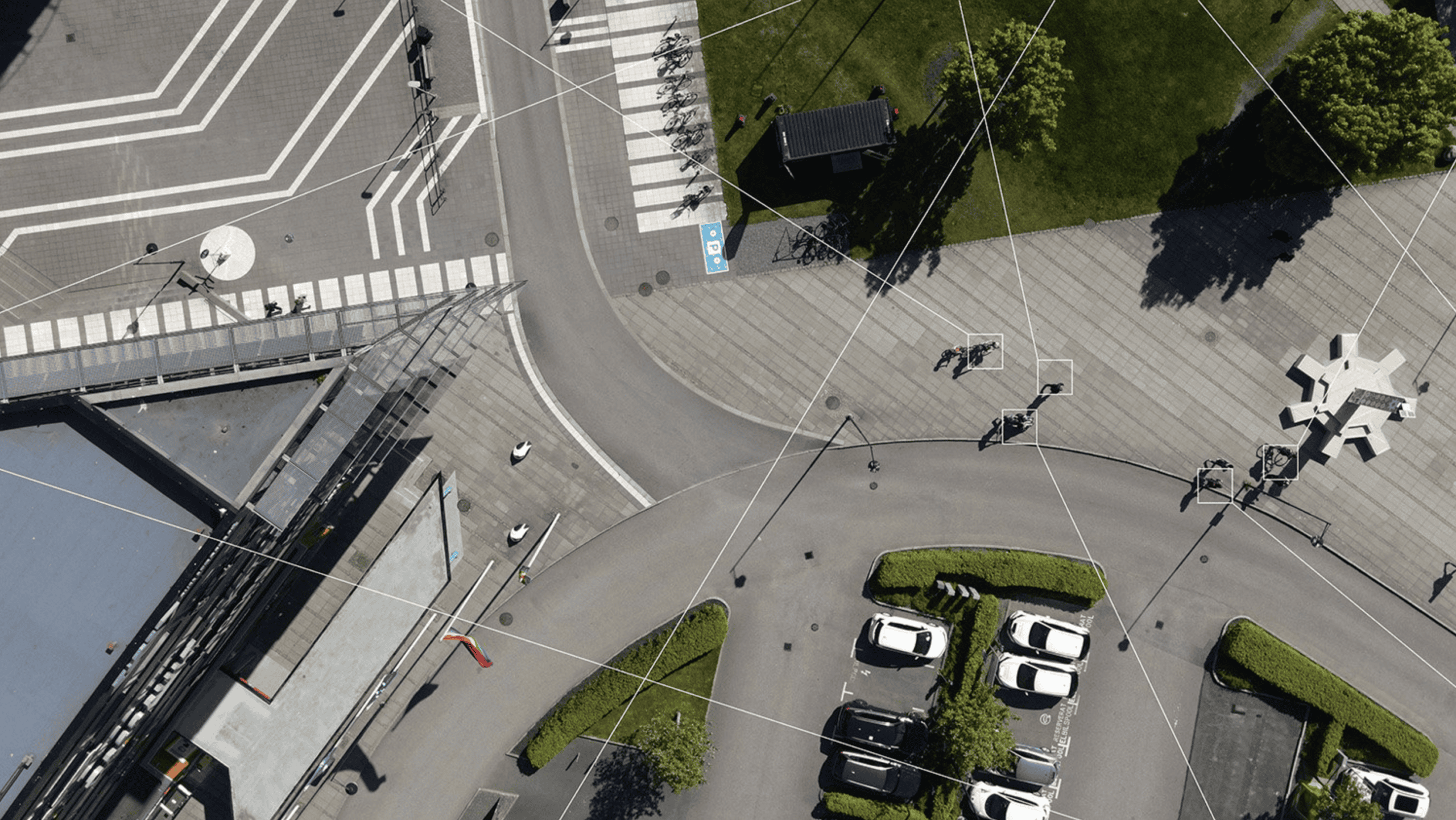
Maybe the most interesting wide-area use case for large-scale national telcos, outside of parochial and problematic industrial-style private 5G setups, is to provide air traffic control for the developing drone economy – “where Amazon and Pizza Express drop stuff to your door”, explains Ling. “That will drive a requirement for some sort of low level air traffic control function – which, if we didn’t have the current geopolitical situation, may have been a higher priority [for ISAC development]. But the technology is somewhat similar, so it matters less which use case gets prioritized.”
Either way, drone warfare is the driver. Ericsson’s ISAC solution, as shown in Texas, is “almost military-grade, right now”, says Ling – and “potentially military-grade” soon. Again, ISAC will be deployed on tactical private 5G systems for military counter-drone operations first – mostly overseas, whether supplied by Ericsson Federal to the US Department of Defense, or by other Ericsson departments to government agencies elsewhere. “All those countries that are under stress right now, trying to enhance their air defenses, are going to be prime buyers for this,” says Ling.
He adds: “There are discussions globally about potential customers for this. And there is a significant appetite as you can imagine.” He sums up: “A Patriot missile costs $3.5 million to shoot, and takes a lot of people. It has its own sensor, which only goes so far. The curvature of the earth drops off; at 70 kilometers, you can’t see below 330 meters off the ground. So you need an airborne radar, which is even more expensive. ISAC starts to bend the cost in the other direction. Drones are inexpensive. ISAC is inexpensive. And, in some places, the infrastructure exists.”
Cheap attack requires cheap defense, and the story goes that ISAC affords a mechanism to compress the new warfare economics the other way by reusing commercial masts, radios, and spectrum for counter-drone operations – and also to spark a new portfolio of 5G-based services for the everyday economy, beyond the battlefield – ahead of the 6G rollout.

