

RCR Wireless
  • News
  • Channels
    • 5G
    • 6G
    • BSS OSS
    • Carriers
    • IoT
    • Network Infrastructure
    • Open RAN
    • Private 5G
    • Telco AI
    • Telco Cloud
    • Test & Measurement
  • Resources
    • Reports
    • Webinars
    • White papers
    • AI Fundamentals
    • Analyst Angle
    • Editorial Calendar
    • Fundamentals
      • 5G NR Release 17
      • AI
        • Telco AI in 2025
    • Podcasts
      • Let’s Get Digital with Carrie Charles
      • Wireless Connectivity to Enable Industry 4.0 for the Middleprise
      • Well Technically…
      • Will 5G Change the World
      • Accelerating Industry 4.0 Digitalization
  • AI Infrastructure
  • Programs
  • Events
  • RCRtv
  • Advertise
  • Subscribe
Monday, August 10, 2026
RCR Wireless
  • News
  • Channels
    • 5G
    • 6G
    • BSS OSS
    • Carriers
    • IoT
    • Network Infrastructure
    • Open RAN
    • Private 5G
    • Telco AI
    • Telco Cloud
    • Test & Measurement
  • Resources
    • Reports
    • Webinars
    • White papers
    • AI Fundamentals
    • Analyst Angle
    • Editorial Calendar
    • Fundamentals
      • 5G NR Release 17
      • AI
        • Telco AI in 2025
    • Podcasts
      • Let’s Get Digital with Carrie Charles
      • Wireless Connectivity to Enable Industry 4.0 for the Middleprise
      • Well Technically…
      • Will 5G Change the World
      • Accelerating Industry 4.0 Digitalization
  • AI Infrastructure
  • Programs
  • Events
  • RCRtv
  • Advertise
  • Subscribe
Add RCR Wireless as a preferred source on Google
  • Qualcomm 6G Insights
  • Huawei Content Hub
  • Qualcomm – 6G Vision
  • OSS/BSS Channel
  • RCRTech Roundtable: AI Infrastructure
RCR Wireless
RCR Wireless
  • Advanced Mimo
  • Mobile mmWave
  • 5G Positioning
  • Green Networks
  • Metaverse
  • Automotive
  • Industrial and Wide-area IoT
Copyright 2021 - All Right Reserved
Home - LTE exhaust and making the 5G call: winners & losers (Reality Check)
OpinionReality Check

LTE exhaust and making the 5G call: winners & losers (Reality Check)

by Reality Check February 8, 2018
written by Reality Check February 8, 2018 Share
LinkedinEmail
Share 0LinkedinEmail
LTE exhaust
141


The most important decision operators need to make in 2018 is how aggressive and in what direction they should take 5G over the next 2-3 years. The challenge is that spend needs to be aligned with value as best as possible. One way to look at this is to consider what operators need to maintain existing services versus enabling new revenue-generating opportunities.

First, as we know, the demand for wireless data continues unabated and must be supported. An obvious question then is how long can LTE service meet that demand? Putting it another way, when do we hit LTE exhaust and when are we forced to move to 5G?

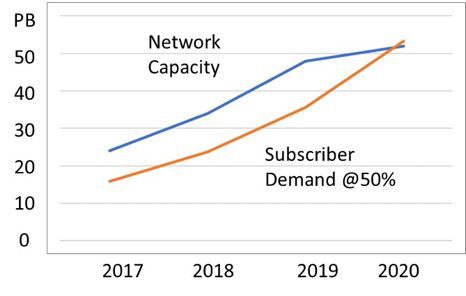
The calculation is relatively simple. After coverage rollouts have completed and density is at the maximum practical level, the only remaining feature to improve LTE capacity is through something called “massive MIMO” (mMIMO)—often specified as a number of transceivers, e.g., 32TRX. However, antenna size and weight increase with the number of TRX and efficiency diminishes beyond a certain point. In short, LTE capacity evolution is not infinite. In the simulation shown below, mMIMO deployments start across an operator’s network in 2018, peaks in 2019, yet still, “exhaust” is predicted in 2020.
LTE exhaust

If no new licensed spectrum is available and densification has been maximized already, then the only remaining options are to consider LAA (unlicensed spectrum), CBRS (shared spectrum) or re-farming LTE to 5G. LAA and CBRS are options, but because of the restricted power output levels specified for them by the FCC, those spectrum options are limited in terms of coverage—unlike 5G. The alternative, re-farming LTE, results in greater spectral efficiency versus LTE (and thus capacity), while also improving coverage. But its gains are also not infinite; think of being able to support one to two more years of capacity growth, and that is about right.

What then is the value of this concept, “LTE exhaust”? It helps to identify whether an existing LTE network can service consumer demand until new spectrum is available for 5G, or whether operators need to consider the options noted above before then. And that is undoubtedly valuable input for network planners.

With basic survival covered by this concept of LTE exhaust, let’s move now to the next consideration in any 5G plan, namely adding new services.

5G has three capability pillars: enhanced mobile broadband (eMBB), massive IoT (mIOT) and low latency. We assume every operator will use 5G for eMBB and since the planning for such networks is well understood, it doesn’t need any further discussion here. Likewise, IoT is well understood and will be launched in LTE. The only decision for 5G relates to the availability of devices, which are likely years away. That leaves us with low latency. Ironically, this is the capability most discussed, with the most impact on network designs, and, thus, is perhaps the most difficult one to address.

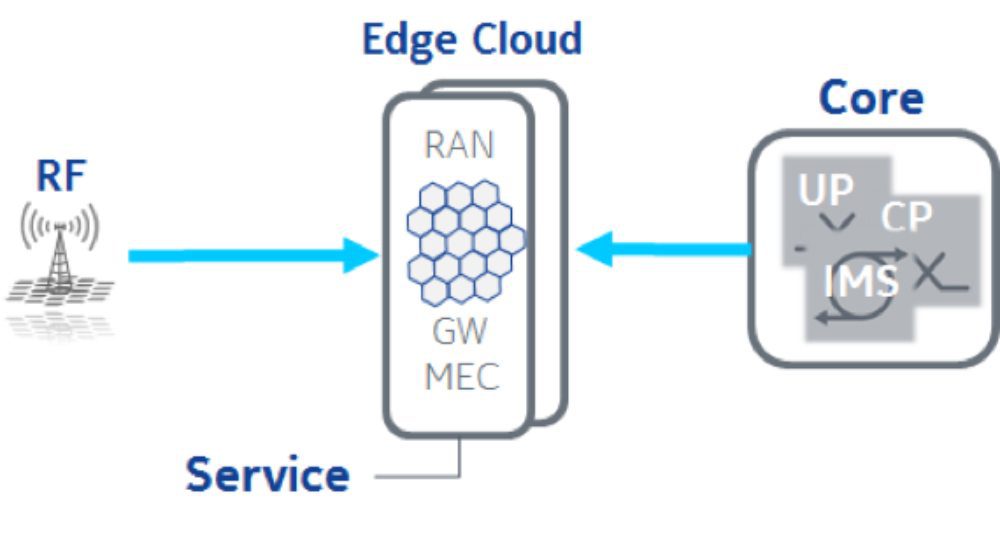
The problem is that low latency is very costly if deployed widely and can take years to implement. A low latency service requires the physical distance between the subscriber (or IoT device) and the end service to be shorter than it typically is today. That means moving functions like gateways (GWs) and content away from the center of the network towards the edge as shown below. This needs real estate and fiber investments that are likely significant. The alternatives are to consider “on demand” or geographically focused deployments, where operators offer the service only on a limited basis. But that approach has risks. Imagine a competitor has deployed low latency network-wide. Responding to that can take years, if even possible. If low latency use cases were to take off, that would imply a difficult recovery. And so, it all boils down to whether there is a belief in low latency use cases or not, and whether they will be nationwide or hot spot in nature. The time to make that decision is now.
LTE exhaust

Coming back to the original question, when and how aggressive should an operator evolve LTE and move to 5G? For today’s mobile broadband, LTE can evolve to a point; after that 5G re-farming may need to be considered and based on somewhat predictable capacity demand. 5G mobile broadband and IoT do not imply complex decisions other than timing. The challenge is in low latency services, one of the key pillars of 5G, where the outlook is far less predictable, but potentially high impacting.

With 5G mobiles debuting in early 2019, calls need to be made now regarding network architectures—with the potential of determining future winners and losers in the 5G race.


You Might Also Like
  • Friday (telco diary) | Friday night fare – private 5G to go
  • Thursday (telco diary) | APAC telcos pile into AI infrastructure
  • Wednesday (telco diary) | Starlink – a weak hand and a big mouth?
  • Agentic AI is exposing telecom’s visibility problem (Reader Forum)
  • Tuesday (telco diary) | More about ISAC – on battlefields and sportsfields
  • Monday (telco diary) | Network platforms and an AI hill of beans
Share 0 LinkedinEmail
Avatar of Reality Check
Reality Check

Subject to editorial review and copy edit, RCR Wireless News accepts bylined thought leadership articles, up to 1000 words, from industry executives. Submitted articles become property of RCR Wireless News. Submit articles to [email protected] with "Reality Check" in subject line.

previous post
Seven-carrier deployment in new Kuala Lumpur metro system blends FDD, TDD MIMO
next post
OEMs tap Qualcomm X50 modem for 5G devices

White Papers

  • Norton eBook: The 2026 Telco Playbook

  • Enea White Paper: Why Intelligent AAA is the Swiss Army Knife of Telecom

  • CSG White Paper: Telco AI Enabler: Mediation’s Defining Role

  • Enea White Paper: Scalable Database Design for 5G and Beyond

  • Supermicro and NVIDIA Whitepaper: Powering sovereign AI at scale

Editorial Reports

  • Report: NTN in motion — evolving standards, expanding services

  • Market Pulse Report: Telco AI in 2026 – Trends, Challenges and Opportunities

  • Nvidia Report: The State of AI in Telecommunications: 2026 Trends

Webinars

  • Webinar: Building 6G — aligning technology, policy and purpose

  • SIMCom Webinar: Scaling your next deployment – from plastic to provisioning

  • Webinar: Rethinking the RAN as AI, cloud and openness converge

  • Webinar: Scale-Up, Scale-Out, Scale-Across – Building AI-Era Network Fabrics

  • Webinar: NTN in motion – evolving standards, expanding services

Since 1982, RCR Wireless News has been providing wireless and mobile industry news, insights, and analysis to mobile and wireless industry professionals, decision makers, policy makers, analysts and investors.

Facebook Twitter Youtube Linkedin Envelope Rss

Useful Links

  • Subscribe
  • About RCR Wireless News
  • Contact Us
  • Advertise
  • Editorial Calendar
  • Archive
  • RSS
  • Wireless News Archive
  • Subscribe
  • About RCR Wireless News
  • Contact Us
  • Advertise
  • Editorial Calendar
  • Archive
  • RSS
  • Wireless News Archive

Edtior's Picks

‘We think of them as hometown ISPs’ – WISPA chief on BEAD, Starlink,...
Friday (telco diary) | Friday night fare – private 5G to go
The Agentic Network — NVIDIA on the full-stack path to telecom autonomy

Latest Articles

‘We think of them as hometown ISPs’ – WISPA chief on BEAD, Starlink, CBRS
Friday (telco diary) | Friday night fare – private 5G to go
The Agentic Network — NVIDIA on the full-stack path to telecom autonomy
Ericsson named sole global tech partner in SK Telecom-led AI-RAN pilot

© 2026 RCR Wireless News All Right Reserved. Developed by Eight Hats.

Cookie Policy | Privacy Policy

RCR Wireless
  • News
  • Channels
    • 5G
    • 6G
    • BSS OSS
    • Carriers
    • IoT
    • Network Infrastructure
    • Open RAN
    • Private 5G
    • Telco AI
    • Telco Cloud
    • Test & Measurement
  • Resources
    • Reports
    • Webinars
    • White papers
    • AI Fundamentals
    • Analyst Angle
    • Editorial Calendar
    • Fundamentals
      • 5G NR Release 17
      • AI
        • Telco AI in 2025
    • Podcasts
      • Let’s Get Digital with Carrie Charles
      • Wireless Connectivity to Enable Industry 4.0 for the Middleprise
      • Well Technically…
      • Will 5G Change the World
      • Accelerating Industry 4.0 Digitalization
  • AI Infrastructure
  • Programs
  • Events
  • RCRtv
  • Advertise
  • Subscribe
RCR Wireless
  • News
  • Channels
    • 5G
    • 6G
    • BSS OSS
    • Carriers
    • IoT
    • Network Infrastructure
    • Open RAN
    • Private 5G
    • Telco AI
    • Telco Cloud
    • Test & Measurement
  • Resources
    • Reports
    • Webinars
    • White papers
    • AI Fundamentals
    • Analyst Angle
    • Editorial Calendar
    • Fundamentals
      • 5G NR Release 17
      • AI
        • Telco AI in 2025
    • Podcasts
      • Let’s Get Digital with Carrie Charles
      • Wireless Connectivity to Enable Industry 4.0 for the Middleprise
      • Well Technically…
      • Will 5G Change the World
      • Accelerating Industry 4.0 Digitalization
  • AI Infrastructure
  • Programs
  • Events
  • RCRtv
  • Advertise
  • Subscribe
@2020 - All Right Reserved. Designed and Developed by PenciDesign