


Rural broadband is no longer a quiet corner of telecom, says WISPA chief David Zumwalt. Zumwalt considers how WISPs are facing fiber overbuilds, private equity, Starlink, and spectrum constraints even as hybrid networks reshape how hometown ISPs compete and grow. Adlane Fellah of Maravedis with the questions.
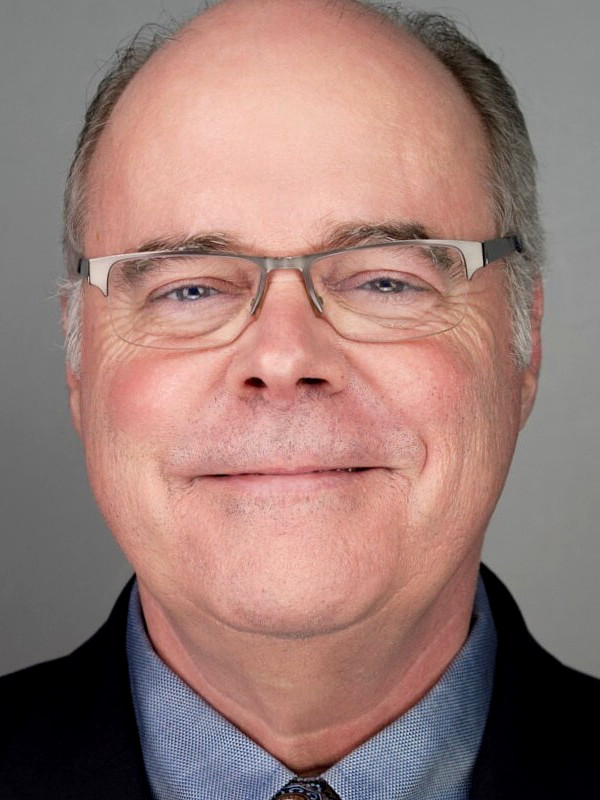
Four years into David Zumwalt’s tenure as President and CEO of the Wireless Internet Service Providers Association (WISPA), the constituency he represents looks very different from the one he inherited. WISPA now counts roughly 600 member companies, and many that began life as pure fixed wireless operators run hybrid networks today. Federal and state subsidy programs have pulled tens of billions of dollars and a wave of institutional capital into rural broadband. Low-earth-orbit constellations have arrived as both competitor and tool.
Maravedis founder Adlane Fellah spoke with Zumwalt about what has changed, what has not, and where the industry goes next. All the responses below are from Zumwalt.
An industry in transformation
How would you characterize the state of the WISP industry today compared with when you took the role?
“The industry is going through a transformation. Since COVID, the national priority for broadband everywhere has accelerated, and there is a lot more government interest, not just federal but state and local. Ten years ago, there were many communities that were frankly excited that anybody was investing in broadband infrastructure. Our members were often already part of the communities they serve. They stepped up because the larger carriers had not yet shown interest, or had not reached the point in their capital plan where they could deploy there.
“Back then, broadband was a growing necessity but politically still a nice-to-have. Now it is a must-have, and that has attracted a lot of investors, service providers, and technologies into the room. If you are a smaller company watching an influx of capital and larger competitors, that creates turmoil in the market you serve. Many WISPs were there first, growing organically. Now they have to grow against a backdrop where demand, competition, and technology choice are all increasing. It is a very interesting but challenging time.”
With so many members deploying fiber and hybrid networks, does the WISP label still fit?
“The identity I think about most is the hometown ISP. Take the technology hat off. If you are building broadband in a community of any size, and it does not have to be rural because we have members filling in areas of large urban markets, you are asking how to serve that market. Historically, serving one cost-effectively meant fixed wireless. With sparse density, it was the faster way to get going; technology was keeping up, and spectrum was available.
“But as you grow infrastructure, you have to grow it sensibly, and that means doing more with backhaul and upstream connectivity. So WISPs that had been almost 100 percent fixed wireless began deploying all of the above, putting fiber into backhaul and first mile where density justified it. Look at our members today, and they are all hybrids.
“Something like 45 to 50 percent have significant fiber deployments, but they still call themselves WISPs because they understand how to use fixed wireless very cost effectively to invest in their communities. When we think about WISPs, we think about hometown ISPs. They have some wireless in the network, but they are often hybrid providers.”
Consolidation, capital and the BEAD hangover
In a period of consolidation, what separates the operators that are thriving from those that are struggling?
“Go back to the business decision maker. Take spectrum. It seems to be getting scarcer, and larger carriers are willing to pay more and more to create exclusive use opportunities. The arc of history suggests spectrum becomes more expensive and takes more capital to secure. There is flexibility in shared models like CBRS, and dynamic sharing, and I think those are great models, but we do not yet see clearly how they play out. You would not stake the next 15 years of your company on high availability of spectrum at low cost.
“On the wired side, we still have not come close to solving permitting and pole attachment rights, and it is really hard to get fiber right now. So you are balancing both. This is not an argument about technology. What separates the companies doing well is anticipating where your supply is going, investing accordingly, and showing investors you can meet market demand and grow, whether by acquisition or organically. If your idea was to build it once and park it, I would not expect anywhere close to the same outcome as someone looking aggressively down the road.”
Has private equity taken a serious interest in fixed wireless and rural fiber?
“My first job offer out of school was in optoelectronics at Hewlett Packard, so I have been around fiber for a very long time. This is not one technology against another. The issue is that where fiber has been deployed with private capital, it has done very well, with high capacity and 25-plus years of life. Once density drops in suburban and rural areas, the math depends heavily on take rates and on federal subsidy. Private equity got excited because the federal government was willing to put 42 billion dollars at the problem, and states followed with their own programs. That is found money for a roll-up.
“Many investors bought the notion that fiber capacity was so compelling it would blow everything else away, that mobile data, LEO, and fixed wireless could never compete at that level of funding. What people are finding out is that it is not about the technology; it comes back to the business model. If you assume a 50 percent take rate quickly and discover your numbers are nowhere close, the case changes dramatically. You are upside down on capital, and you start to look and act like that hometown ISP owner making careful decisions about when to deploy fiber and when to deploy fixed wireless.
“If I were on the private equity side, I would say that once we have a green light to build in an area, I want to use whatever technology reaches customers immediately so I can generate revenue, because all of these technologies meet the standards NTIA requires. If there is demand for fiber in five months or 20 years, I will go back and put fiber in. I am not going to wait on supply chain, permitting, and pole attachments while investors harangue me for producing no revenue. There were some speculators in the room who thought this was going to be easier. The change in direction from NTIA upset the apple cart with the Benefit of the Bargain round, and we are all pivoting back to the rational business model. Private equity has a seat at that table, but so do the operators who have been out there the whole time.”
How much of that federal money has reached the WISP community?
“The latest I have seen is that fixed wireless endpoints are receiving something like 11 percent, roughly speaking. It varies state to state, and some of it is being reconsidered now. That is consistent with what I would expect, because the Infrastructure Act put the money out there to stimulate more fiber. If private capital had been able to do it alone, it would have. Fixed wireless had done it alone, so there was less demand for subsidy to build more of it. And if you look at the companies behind that 11 percent, they are often WISPs or hybrid operations related to WISPs. Where a WISP can build with private capital, it does.
“Our members are not raising their hands asking for a subsidy to extend fixed wireless. They want it for the fiber build. That gets misread as fiber winning after all. Of course it did. Our argument to NTIA was to let every technology be in the room, because decision makers deploy them more wisely and cost effectively than a program can.”
Overbuild, LEO and local value
Are fiber overbuilders moving into the markets WISPs pioneered?
“Look at the National Broadband Map. It is not as though there is a clean cluster of 500 serviceable locations somewhere that nobody touched. It is a checkerboard. Some locations are served, and others close by are not, whether because the fabric data was wrong or there was nothing there to serve. So to reach the unserved locations, you have to build through networks already serving adjacent homes, and therein lies the rub.
“In some cases, private capital planned to build through an established WISP community to reach those locations, and the rationale was that once the infrastructure is there, they can come back and poach customers from the fixed wireless provider already serving those homes. That was a cornerstone of some of the strategies we saw. Some members took it as an existential threat. Others took it as a challenge, because if you own the customer, they are happy and you deliver the bandwidth they need, the only way to take them is a price war and a race to the bottom. Even in the LEO world, people are finding that it is a dangerous game. Starlink had teaser rates that are now bouncing back to more normal levels, and many members have seen customers who flipped to Starlink come back once the real price was reintroduced.”
Have you measured the impact of Starlink on your membership?
“Anecdotally. We do not have a numeric report we can publish yet, and I want to be careful here because we have had satellite members and it is all part of solving for connectivity. The constellations being built now are amazing and serve a really important need. A number of our members use Starlink as a redundancy solution they can deploy quickly after a natural disaster, as we saw with Hurricane Helene, or to hold demand they are not yet ready to serve while they work their capital plan toward terrestrial infrastructure. It is another tool in the toolbox.
“Where I do make an argument is on presence. To build a 20-mile stretch of fiber, you may deal with 20 jurisdictional authorities, long lead times, and fees at every step. So my case as a terrestrial ISP is that I am the one who lives here. I send my kids to school here, I bank here, I pay taxes here, I invest in this community, and I depend on it for the work I do. Satellites flying overhead have nothing to do with this community. The caution is: do not run me off from this community because you became enamored with something that has no connection to the things that matter here. It is about recognizing the real value LEO brings, including resiliency and locations where it is the only reasonable solution, while knowing how to use both well.”
Technology, spectrum and policy
Next generation fixed wireless platforms have improved dramatically. What has that meant for your members?
“It has really mattered. You and I are both seasoned enough to remember 110-bit-per-second modems, then 300, then 1,200, then 2,400 baud, and people insisting that was the physical limit of copper. Then we got DSL. We have had a repeat of that lesson in fixed wireless. Early implementations had real constraints given the spectrum and technology available, but the industry responded to demand as every industry does.
“Anyone who said we were done at some arbitrary speed was wrong. I salute the vendors in this space, because they went far beyond what community demand required and opened a path forward even for ISPs that had been entirely dependent on wired infrastructure. They have been instrumental in creating the hybrid model that makes almost every business model sensible now. The open question is not really technology; it is spectrum: whether you stay unlicensed, move to something licensed, or wait to see how shared models land.”
What are the top spectrum priorities, and what other regulatory issues deserve more attention?
“The most central one right now is CBRS. There was an attempt to suggest it was not being used effectively, and I think we have squashed that argument, but the large mobile carriers continue to treat spectrum as something to buy and hold. They will say in their quarterly reports that they do not need more spectrum and tell the press they desperately need it. So which is it? They are doing a good job of banking it, and that makes it hard for smaller providers to play.
“We have seen impressive CBRS use cases, not only in our community but in private deployments at airports such as DFW, Miami, and LAX. That is encouraging, because it points toward the shared spectrum model we want to see and toward more military spectrum opportunities. We are watching 6 GHz carefully because there is still some chipping away at it, and we are looking for additional backhaul capability, possibly at 10 GHz, which means working with both NTIA and the FCC.
“Beyond spectrum, the priority is making sure our members stay competitive and are not so bogged down in red tape that they cannot respond to these markets. The Universal Service Fund is a hot topic. Broadband labels have come up again. Disparate impact is another. People ask why, if our members are hybrids, we still have the W at the front of the name. From an advocacy perspective, fixed wireless needs advocacy and fiber largely does not. People understand fiber. Because so much depends on what the FCC does or fails to do, fixed wireless needs someone speaking for it, and we do that on behalf of hometown ISPs who want every tool in the toolbox.”
The road ahead
What are WISPA’s top strategic priorities for the next two to three years?
“In broad strokes, the future availability of spectrum, measured against the reality that broadband is now a must-have rather than a nice-to-have. As an example of what we watch, we have continued to fight for broadband to be treated as an information service rather than a utility, because utility treatment brings much more regulatory layering and that slows innovation. But we also recognize that once you have a must-have service, the consumer mindset may turn it into a utility anyway. The person paying the electric bill, the water bill, and the mobile bill looks at the internet bill the same way. So what the regulatory layer looks like in the future will shape broadband access depending on which way it goes. Right now, under this administration, it is an information service. Under a future administration, who knows.
“More broadly, our industry has been full of pioneers for 40 years, from digital switches through everything that took us out of the monopoly world of the Bell System. To keep capturing that innovation, you need a system that encourages startup investment and then the ability to exit. One thing I see about private equity in our space is that it is evidence of a healthy market. That is what happens in every technology market that gets going: you build the case, customers roll out, it grows, you look to expand capital, and private equity shows up. We are going to have members who have fantastic exits, and after the work they have put in, they deserve one, because we want them to come back and do it again as the innovators who take this forward.”
Is the MDU market on your roadmap?
“Broadband, the way we have been talking about it, has been about creating a connection. But the value is what rides on that connection. It is not just that you have a connection; it is what problem you are solving. In California, for instance, they have a wildfire problem, and that heavily regulated state tends to love WISPs because WISPs have vertical infrastructure that can be part of the state early warning system. Those partnerships emerge as over-the-top services the WISP never anticipated when it was building out.
“In MDUs, there is all sorts of value to be provided, and we get lost in the noise about whether it is a bulk arrangement or individual tenant rights. It really comes down to how you differentiate that property and create something valuable for the people who are there. MDUs can be business tenants, residential tenants, resorts or hotels, and all of those give rise to services that ride on the connectivity. Being able to serve the MDU platform and then know who is living, working, or temporarily residing there is part of the value chain a provider can offer. There are companies I would call managed service providers that focus on that layer going into the building, but behind them someone still has to be connected. We would like to strengthen the partnership between the MSPs and the ISPs, or put them together, to create more resilience in both business models.”
A final word for our readers?
“I will make this personal. I have been delighted to be part of the telecom industry for my entire career. I feel as though I have had a 50-yard-line seat for some of the most transformative innovations in the way humans interact, and often I have been on the field for it rather than watching from the sidelines. What we have done is set the stage for building it so that everybody is connected. The next question is what we do with that wonderful opportunity now that everybody is.”
David Zumwalt is President and CEO of the Wireless Internet Service Providers Association (WISPA). Adlane Fellah is the founder of Maravedis, a research and strategy firm covering wireless broadband and managed connectivity markets.

