

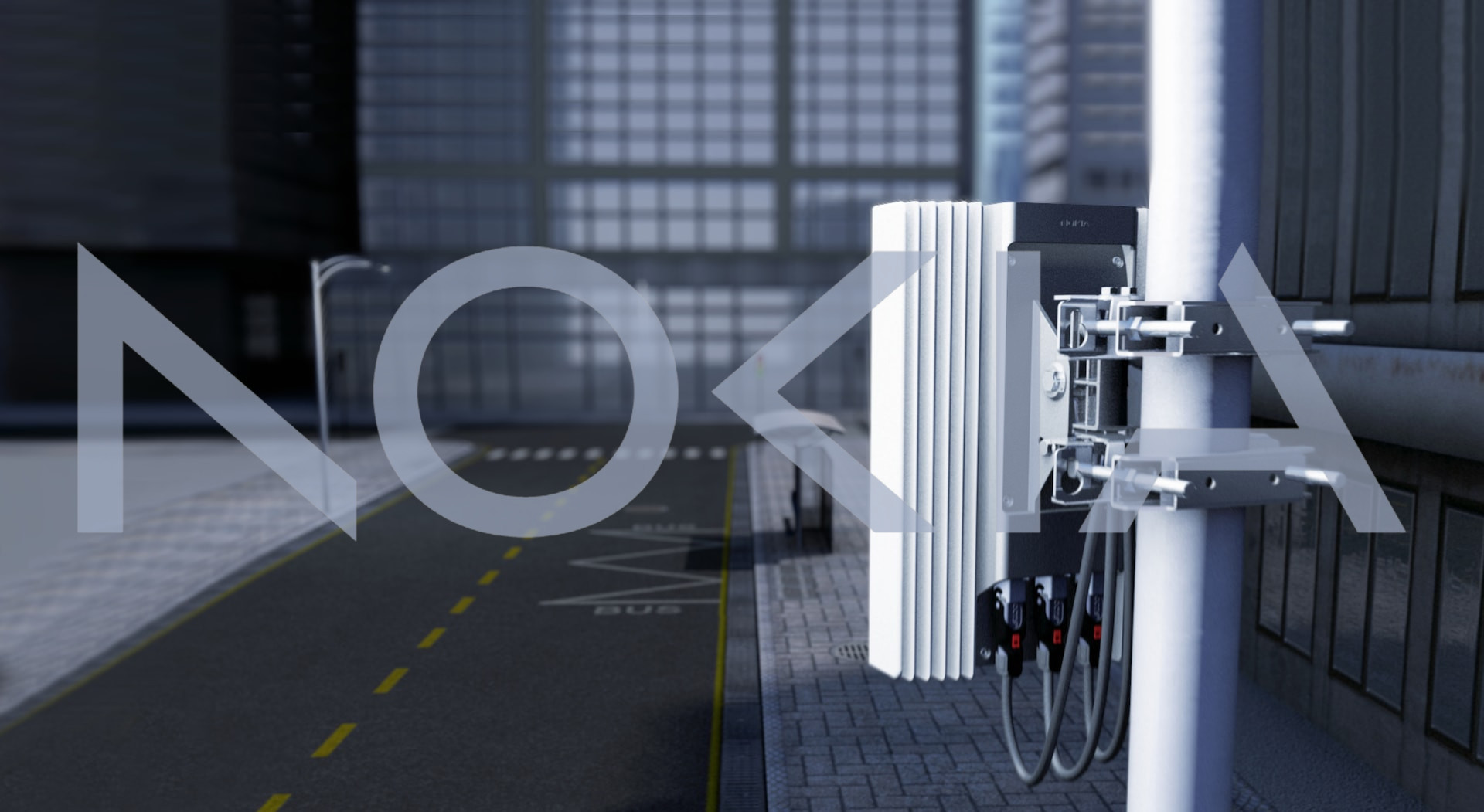
Nokia’s AI-RAN platform promises to more than double spectrum efficiency through software-driven upgrades, combining Nvidia acceleration with flexible deployment options. But analysts suggest the technology may optimize existing networks rather than expand the RAN market.
In sum – what to know:
Spectral gains – Nokia’s new AI-RAN platform combines its anyRAN software with Nvidia’s accelerated computing, and promises more than 100 percent spectral efficiency gains by 2028.
Migration paths – Nokia has three deployment models: upgrade existing systems, deploy standalone nodes, or move to COTS servers. It is offering software upgrades on subscription.
Analysts responses – AI-RAN is considered an enabler for automation, virtualisation, and open RAN – but caution that it is likely to improve networks rather than creating a new RAN growth.
Nokia has said its debut AI-RAN platform with Nvidia will be available for pilot deployments at the end of this year (2026), and on general release some time in 2027 – and deliver more than 100-percent spectral gains for telcos within a year of its launch. The Finnish firm will also release AI features and enhancements to telcos on a subscription, instead – instead of via expensive hardware upgrades.
The product is based on Nokia’s anyRAN software and Nvidia’s Aerial AI-RAN platform. Nokia reckons it has already shown over 20 percent spectral efficiency gains via “AI-driven radio innovations”; it will deliver 50 percent gains by full launch, and over 100 percent by 2028, it said. The latter measure would mean telcos more-than-doubling the capacity of their existing spectrum assets.
Nokia called it “one of the most significant shifts in radio network architecture in decades”, and an industry-first. Nvidia called it a “generational shift for operators”, and suggested the product signalled their entry in the “AI era”. The product, which integrates accelerated GPU computing into the RAN architecture, can be introduced into telco networks in three ways, depending on telcos’ start points with Nokia.
Existing customers with AirScale systems can add an accelerator card to their baseband infrastructure – presumably aimed at large operator customers, mostly in Europe and Asia, with large AirScale footprints. They can also use “merchant” (off-the-shelf) baseband silicon from Marvell, as part of Nokia’s ecosystem push to provide hardware alternatives. Telcos also have the option to deploy a new GPU-powered standalone AI-RAN node.
This will handle 4G, 5G, and future 6G setups, and do away with the need for baseband upgrade. It is geared for telcos looking to build “AI-native” public-network extensions or private networks, or add spectrum layers of capacity. They can use it as a standalone AI-RAN base station, combine multiple AI-RAN units together in a cluster, or integrate with existing AirScale equipment so old and new operate as a single virtualised RAN system.
There is a third opinion, too: a cloud-native deployment using commercial off-the-shelf (COTS) servers, delivered via ecosystem partners – effectively shifting the RAN further towards the cloud model that open RAN advocates. The platform is presented as “fully ORAN compliant”. It is a route for telcos seeking to build more flexible software-driven networks – although carrier-grade performance with time-sensitive RAN workloads remains a technical challenge.
Justin Hotard, president and chief executive at Nokia, said: “AI-RAN is the biggest innovation in radio in decades. AI-RAN makes the network intelligent, extends AI into the physical world, and allows telcos to get more from their existing infrastructure, including a software upgrade path to 6G. [This] unlocks greater performance from the spectrum operators already have and can be deployed with existing Nokia or ORAN-compliant radio units. For operators, that means more performance, better returns and faster delivery of new services.”
Jensen Huang, founder and chief executive at Nvidia, said: “Telecoms is entering the AI era – the radio access network is the next AI infrastructure. Together with Nokia, we are bringing NVIDIA CUDA and AI into the baseband, transforming RAN into a planet-scale AI computer. This is a generational shift for operators – unlocking more capacity and efficiency from today’s spectrum while creating the foundation for new AI services and the 6G era.”
In a supplied quote, Rémy Pascal, practice leader at Omdia, commented: “The addition of the new AI-RAN node alongside the AirScale capacity plug-in unit and cloud-native deployment options gives operators practical choices for adopting AI-native networks based on their existing infrastructure and transformation goals. By combining AI-accelerated computing with a software-defined architecture and a clear product roadmap, Nokia is helping operators unlock greater capacity, improve network economics and accelerate the transition toward AI-native RAN.”
Ian Fogg, research director at CCS Insight, said on social media: “Too much attention has been focused on the GPU part of this joint Nokia and Nviida initiative. The key proposition is that because Nokia’s AI-RAN is based on a software platform, Nokia and its customers can achieve significant performance improvements in future through new AI models/algorithms and without hardware upgrades. It’s also notable that Nokia is committing to third party silicon for the baseband – Marvell is again a supplier – rather than developing in-house silicon for 6G and beyond.
He added: “These Nokia moves contrast enormously with Ericsson: on that company’s earnings call yesterday Ericsson said all options were open on the best way forward and there was market uncertainty. Yes, there’s uncertainty, there always is, but companies do need to place bets if they wish to gain competitive advantage. Whether Nokia’s move is the right one will come down to the economics of this approach and Nokia’s ability to achieve those spectral efficiency boosts.”
Dell’Oro Group has a more measured assessment of the commercial opportunity. Last month, the research firm said cumulative AI-RAN revenues will exceed $35 billion between 2026 and 2030, but said the technology is unlikely to expand the overall RAN market. “AI RAN is already happening and will scale ahead of 6G,” said Stefan Pongratz, vice president at Dell’Oro Group. “At the same time, these tools will enhance the RAN, but they are unlikely to expand the overall RAN market. Even as suppliers introduce new software-based subscription models, we expect AI RAN to generate little, if any, incremental RAN revenue by the end of the forecast period.”
Instead, Dell’Oro expects AI-RAN to become an important enabling technology as operators increase the use of virtualisation, automation and Open RAN capabilities within existing network strategies. The near-term market will be driven less by fully AI-native RAN deployments and more by AI-for-RAN applications, leveraging existing hardware investments and software upgrades. GPU-based RAN will remain a smaller but growing segment, with Dell’Oro forecasting the market will surpass $1 billion by the end of the forecast period.
The shift also reflects the changing dynamics of the RAN supply chain. Incumbent vendors remain well positioned in the early stages of AI-RAN adoption, given their installed customer bases and ability to introduce AI capabilities through software enhancements. According to Dell’Oro’s regular RAN market analysis, the five largest RAN suppliers accounted for approximately 96 percent of RAN revenue in 2025 – suggesting that, at least initially, AI-RAN is more likely to strengthen existing vendor positions than disrupt the market.


