


Irish private cellular specialist Druid Software has acquired Munich-based Node-H to simplify the integration of private 4G/5G systems and broaden the channels through which they are sold – including operators. Founder and chief executive Liam Kenny says the deal is about making private cellular easier to deploy, easier to manage, and easier to scale – from factories to utilities, public safety networks, and even emerging satellite-based services.
In sum – what to know:
Simpler integration – Druid’s acquisition of Node-H will reduce the complexity of managing core and RAN systems – to grease integrator and operator channels and drive scale.
Critical infrastructure – Druid sees demand in sectors from utilities and public safety, where requirements around security, resilience, and control are driving larger-scale deployments.
Satellite partnerships – Druid is working with the likes of Skylo to support seamless roaming across private, public, and satellite systems using a common 5G core platform.
There’s no escaping from Nokia, even if the story is not about it.
Irish private cellular specialist Druid Software has just purchased Munich-based software firm Node-H to simplify network integration for enterprises, and do what everyone else in the market has been trying for ages: to make private cellular simple, or simpler anyway. So that it scales – to the point integrators everywhere, even telcos (!), can sell it – and delivers on its amped-up promise of industrial change. Which means easy integration with RAN gear, from the likes of Nokia – as the prime example, as name-checked in conversation about the deal.
There is a case to argue that Druid and Nokia – entirely different businesses; small and big, the start-up agitator and the juggernaut incumbent, selling software and radios – have represented the yin-and-yang of private cellular for a decade, through a buzzy period of LTE proofs in ports and plants, a rolling high as enterprise spectrum was freed-up around the world and 5G systems entered the market, through to a late come-down last year as Nokia said it was selling its private networks business as part of a clear-out of its basket-case business units.
This is a lazy characterisation, actually; the market is more subtle and complex than that. Druid has never been an agitator, for one. It is rather steady-going, in fact; always there, always taking business, always talking about the tech. Other core network providers – like US-based Celona, even Italian-original Athonet (now part of HPE); both with good yin-credentials – have been noisier, more deliberately disruptive. And Nokia, for its part, is entirely schizophrenic in the space, as its announcement in November to sell its own private ‘campus’ core unit made clear.
In fact, if anything, that Nokia division, Enterprise Campus Edge (ECE), was for a period the prime agitator in the market; the Nokia mothership, now jettisoning ECE, is the juggernaut vendor business. But this is not about Nokia; the point is only that Liam Kenny, founder and chief executive at Druid Software, explains his firm’s new purchase of Node-H, a couple of times, in terms of its pure-play strategy to more-easily pair the very best core network – from Druid, of course – with the “top RAN, whether from Nokia or whoever”. Which hints at the tension in the space.
Because Nokia’s ECE unit makes the DAC system, the best-selling core network in the space, and a competitor product for Druid; and Nokia’s decision to sell sent shockwaves through the market, like the fun was over. (Nokia will still box-shift radios to go with core networks like Druid’s (and ECE’s) and still provide the whole set-up, including the core, for large-scale deployments). This context is important. Druid has always worked in paired core-and-radio set-ups with Nokia et al, since the early LTE days. It is close with RAN vendors Airspan and Askey, as well.
Its Node-H strategy about simpler system integration (discussed below) aligns with Nokia’s primary interests as a straighter RAN vendor for enterprises, and supports smaller open RAN vendors in the space, too, which it has worked with in parallel. Plus, there is not much in the way of hard facts around the deal: the fee is undisclosed; Druid’s headcount will go from about 100 to about 120, and Node-H will be reorientated around Druid’s strategy. But there’s lots about strategy.
Strategy and dynamics
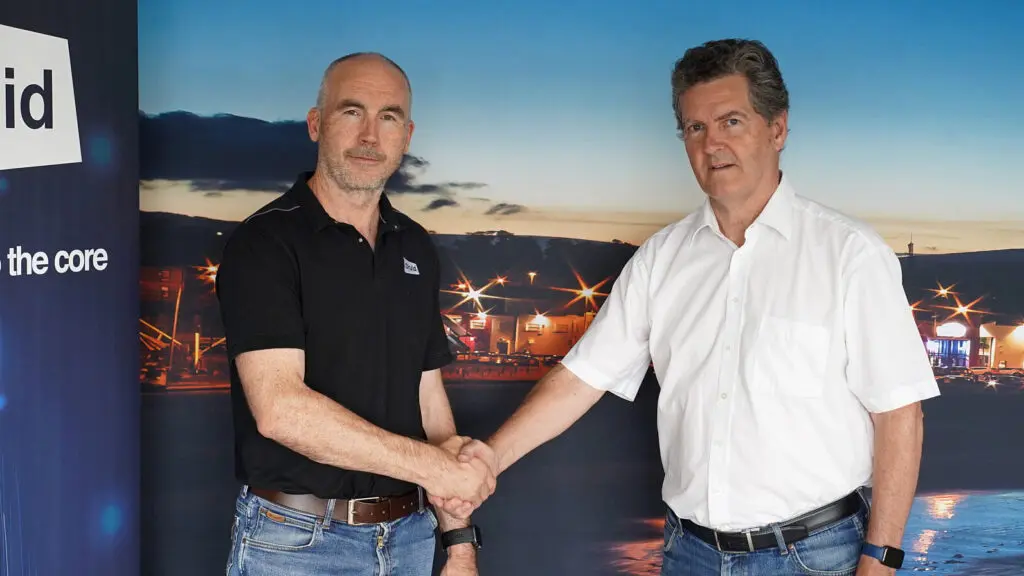
So Druid’s should be viewed within the market dynamics: about system integration, channel partnerships, enterprise adoption, AI of course; even just the real state of things. Kenny talks about it all. Let’s zoom out, briefly. How is the market – given everything? “It’s good for us,” he responds, effectively disputing the idea of a ‘come-down’ as well. “Maybe we’re right-sized for it, getting bigger with it. Customers definitely want this. Maybe the bigger guys have found it difficult to deliver something they want; maybe the market wasn’t big enough for them. I’m not sure.”
Asked about the hype, he suggests Druid has never been fussed – and says something about the firm’s steady-Eddy reputation as well. “We’ve seen 30-40 percent [annual] growth over five or six years. We run the thing profitably; we just haven’t got into the hype side of it. We are, I suppose, a carefully-moving-forward type-of-company. The market is stronger and stronger. We’re going through a bit of a change, going after bigger stuff – really critical industries like utilities and public safety, which want bigger networks.” He won’t be drawn further on the firm’s financial numbers.
Is there some kind of a hockey-stick jump on the horizon with Node-H? He repeats: “The model is steady growth – 30-40 percent per year; seven times growth in the last five or six; profitable every year. We’re aiming a little higher – 50-60 percent growth per year over the next three, four, five years. We see the opportunities to achieve that. But we want to grow the team and keep the culture, and still be the good and happy company that won’t let you down, which you can have a few drinks with.” We should just clear the decks on the rest of the Node-H details.
As above, the Munich firm will be re-oriented for Druid’s ends. What happens to Node-H’s base, which must include rivals? “This is a small industry. We don’t want to hurt smaller competitors. We’re looking up at the bigger businesses – is where our heads are. But we’re not following through on its strategy. We have a different strategy.” At the same time, Druid will license software to other open-RAN and RAN firms, potentially, and push the tech IPR with “the best RAN partners” to “show what’s possible” with 5G LAN and TSN, as examples – for the whole industry to run with.
A couple of things, here: electric utilities and public safety, it might be noted, are macro-scale verticals that Nokia (post-ECE) still has in its sights, including with supply of its own core networks; scaling-up, as Druid is doing, is something that Celona, say, attempted in 2024/25, only to find the market didn’t keep pace. The first point might be left as an observation about a competitive criss-cross supplier market; the second is put to Kenny on the call. “I mean telecoms is tough,” he says. “But we’ve got this organic strategy, and we’ve been profitable all along.
He adds: “We haven’t put ourselves in a difficult position. We’re well positioned because we’ve got great products and a great team, which we’ve built slowly – because it’s hard to build really fast. And we know Node-H very well, for 10-plus years. We like them, their culture, their capabilities. So bringing it all in one go is a fantastic boost for the stuff we’re doing. We have so much on, and want to expand quickly. It is a brilliant new resource, with a different angle – because the weakness in some other propositions is that end-to-end experience. So it’s really positive from our side.”
Easier end-to-end integration
This “end-to-end” dynamic goes to the heart of it: Druid does not want to own everything (like Ericsson or Celona, say) but it does want the pieces to combine better (like everyone). “We want to work with the best RAN vendors, and make that [integration] more seamless. Trying to build your own RAN now would not be a good strategy; it’s better to leverage the stuff that’s there. But Node-H has a lot of RAN and UE experience. They can do the software on base stations, routers, modems, UEs. We need their expertise for that seamless integration with Nokia, Askey, Airspan.”
He goes on: “They’re protocol engineers; it’s a similar skillset. They can do the work on the core, which we need doing. That is a no-brainer. But the other thing is integrators often can’t get their heads around managing the RAN separately. The bigger integrators might not be interested in private networks; they don’t want to hire [experts] to deploy them. We will deliver a management interface that makes it easy for any integrator. Because you usually end up with a specialist for private networks, who knows the stuff but [finds] it harder to scale.”
Again, lots to pick through; lots about the wider market. The deal supports Druid’s development of a management platform to simplify private core-and-RAN deployments. “We want to make them scale better by making them easier to deploy and manage – with the best RAN and the best core.” This way, the integration work – the ECE part that Nokia has deemed too expensive to continue to fund – is reduced. “With the help of Node-H, we will put a software layer around that will make the heavy lifting go away. That’s the whole idea,” says Kenny.
“It just looks like a comms system as opposed to a cellular network – instead of having your RAN interface over here, and your core interface over here. Which is just not very enterprise friendly… Most competitors are just trying to manage their own cores, which is what we’ve done historically. But we have to step up and make private networks a really easy product to consume. It would be a game changer for the market. And there’s great potential to work with the bigger RAN vendors because we can make their really-good RAN really effective for private networks.”
Which is not to say specialist telecoms integrators will be out of a job, he responds (“exactly right”), just that the job won’t be so specialist anymore – to the point IT integrators more familiar with enterprise LAN will be able to do it. Even telecom operators, which have mostly outsourced private 4G/5G to third-party integrators, might get their hands dirty, and make a proper go of supplying enterprises with a private/sliced 5G combo, using shared spectrum and their own radio assets. “We’re going after the operator channel in a big way,” says Kenny.
“We now have success with a number of them, and we want to make it easier for them – because they struggle with private networks as well… And lots of [specialist vertical integrators] don’t know anything about cellular… It just increases the number of channels that can deliver a private network.”
Also: AI and D2D
Racing through; some other quick Q&A talking points, before we wrap-up – on AI and D2D, as new hype stories in enterprise tech, and how they intersect with an older one. Is the buzz about AI a lucky sales narrative for Druid Software? I mean, it feels like almost every time Jensen Huang opens his mouth, the discussion ends up in the same place – about enterprise AI, edge AI, physical AI, and (often) use cases for private 5G, as we have talked about for years. “Yes, that connectivity layer is the enabler for all the AI stuff. So it’s very synergistic,” he responds.
“I mean, it takes away the attention from private 5G, but we don’t mind that; we’re happy to keep going as we are. But yeah, if any of this AI stuff – AGVs, robots, whatever it might be – is going to work, it has to have a secure and excellent mobile layer. And what else are you going to do? There’s nothing like private 5G for that.” So apart from the cybersecurity imperative – Kenny references the impact of the NIS2 directive and IEC 62443 framework – are investments in private 5G by utility providers and public safety groups informed by their new AI strategies?
Or are they, day to day, just trying to connect devices in the field, and shore up their systems? “Things are changing apart from AI. There’s a lot of old OT tech out there that needs to be secured, which is fairly urgent. AI brings new threats as much as anything else. And private 5G is an answer to a lot of those security and resilience questions, and just to connect more things and have more control in the grid. It’s more about that for them than about running AI inside their companies.”
Kenny talked earlier (on the tape) as well about Druid’s tie-ups with “a number” of direct-to-device (D2D) satellite providers. Softbank-backed satellite IoT startup Skylo, offering Release-17 level (5G-compatible) NB-IoT on geostationary (GEO) satellites, is a public reference; there aren’t any others, as yet. He says: “There’s a nice tie-up there, where private networks meet public networks – especially in these larger-scale deployments for public safety.” Satellite connectivity complements private 5G where coverage and resilience are critical, he says.
A police force, say, might have its own dedicated private network to cover its busiest locales, and roam onto a public network outside the footprint, and fall back to satellite if terrestrial coverage is unavailable altogether. Druid’s ability to support all three within a common core framework, including roaming between, positions it as more than a private 5G specialist, he suggests; it is increasingly pitching itself as converged critical comms platform. “They have a belt and braces of the three layers. That combination – private, roaming to public and satellite networks – is really attractive.”
The key requirement, he argues, is flexibility. Many satellite providers want to migrate to a 5G-native architecture, but have large installed bases of legacy devices and services that cannot be replaced overnight. Druid’s advantage, he says, is its willingness to build the integration layers needed to bring those older systems into a modern 5G core environment. “Things like the AGF (Access Gateway Function; a function in the 5G core architecture to bridge non-native or legacy access technologies),” he says. “Those integration functions that nobody else looked at.”
That adaptability has helped the company win business in emerging NTN deployments, while also demonstrating that its technology is capable of operating at far greater scale than the factory-sized private-network deployments with which it is often associated. “We’re pretty adaptable, and suddenly there’s a solution. That flexibility has given us some strength. But it’s also then scaling up all of our offerings. We have 10 million devices on some networks. So again, don’t think of us just as something for a factory. We can do a lot more than that these days.”
Node-H will make it so, the strategy goes – more factories, bigger deployments, simpler deployments, more channels, more advanced solutions.

