

RCR Wireless
  • News
  • Channels
    • 5G
    • 6G
    • BSS OSS
    • Carriers
    • IoT
    • Network Infrastructure
    • Open RAN
    • Private 5G
    • Telco AI
    • Telco Cloud
    • Test & Measurement
  • Resources
    • Reports
    • Webinars
    • White papers
    • AI Fundamentals
    • Analyst Angle
    • Editorial Calendar
    • Fundamentals
      • 5G NR Release 17
      • AI
        • Telco AI in 2025
    • Podcasts
      • Let’s Get Digital with Carrie Charles
      • Wireless Connectivity to Enable Industry 4.0 for the Middleprise
      • Well Technically…
      • Will 5G Change the World
      • Accelerating Industry 4.0 Digitalization
  • AI Infrastructure
  • Programs
  • Events
  • RCRtv
  • Advertise
  • Subscribe
Monday, August 10, 2026
RCR Wireless
  • News
  • Channels
    • 5G
    • 6G
    • BSS OSS
    • Carriers
    • IoT
    • Network Infrastructure
    • Open RAN
    • Private 5G
    • Telco AI
    • Telco Cloud
    • Test & Measurement
  • Resources
    • Reports
    • Webinars
    • White papers
    • AI Fundamentals
    • Analyst Angle
    • Editorial Calendar
    • Fundamentals
      • 5G NR Release 17
      • AI
        • Telco AI in 2025
    • Podcasts
      • Let’s Get Digital with Carrie Charles
      • Wireless Connectivity to Enable Industry 4.0 for the Middleprise
      • Well Technically…
      • Will 5G Change the World
      • Accelerating Industry 4.0 Digitalization
  • AI Infrastructure
  • Programs
  • Events
  • RCRtv
  • Advertise
  • Subscribe
Add RCR Wireless as a preferred source on Google
  • Qualcomm 6G Insights
  • Huawei Content Hub
  • Qualcomm – 6G Vision
  • OSS/BSS Channel
  • RCRTech Roundtable: AI Infrastructure
RCR Wireless
RCR Wireless
  • Advanced Mimo
  • Mobile mmWave
  • 5G Positioning
  • Green Networks
  • Metaverse
  • Automotive
  • Industrial and Wide-area IoT
Copyright 2021 - All Right Reserved
Home - Nvidia and global telecom operators pivot to distributed AI grids
Telco AI

Nvidia and global telecom operators pivot to distributed AI grids

by Christian de Looper March 19, 2026
written by Christian de Looper March 19, 2026 Share
LinkedinEmail
Share 0LinkedinEmail
Nvidia AI Grid
1.6K

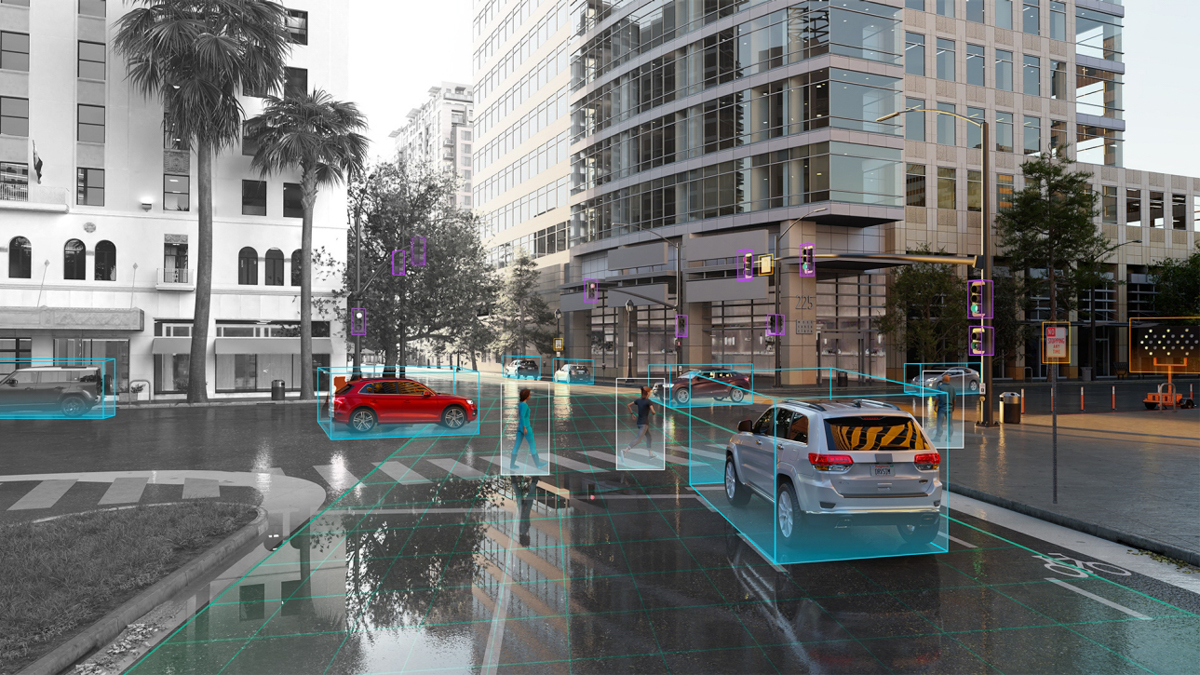
Major carriers are using Nvidia’s “AI Grid” to repurpose their networks

In sum – what we know:

  • A distributed architecture – Nvidia is branding “AI grids” as geographically distributed infrastructure designed to monetize AI inference at the network edge.
  • Proven performance gains – Validation tests by Comcast showed that edge-based inference can be cheaper and faster than centralized deployments during burst conditions.
  • Broad industry adoption – Six major operators, including AT&T, Spectrum, and Indosat, are already deploying these grids for use cases ranging from IoT and gaming to sovereign AI.

Nvidia GTC 2026 brought a wave of announcements from some of the biggest telecom operators on the planet, rallying around a concept Nvidia is branding “AI grids” — essentially, geographically distributed AI infrastructure designed to run and monetize inference workloads at the edge. The idea itself isn’t complicated, though building it might be. Essentially, telcos already operate a massive physical footprint of regional hubs, central offices, and mobile switching facilities — and the idea here is to embed compute across those sites so AI inferences happens closer to users devices.

This is, of course, a familiar pitch — telcos have long tried to be more than “dumb pipes.” What’s supposedly different this time, at least according to Nvidia and its partners, is the collision between surging demand for low-latency AI inference and the fact that centralized data centers can’t always get it done. Whether this structural shift actually holds, or whether it joins the graveyard of edge computing narratives that overpromised and underdelivered, remains to be seen. That said, the operator commitments unveiled at GTC point to real momentum.

Latency and cost bottlenecks

The problem AI grids are trying to solve is essentially that centralized data centers add latency that real-time AI applications can’t tolerate. Voice assistants, video analytics, interactive media demand fast round-trip times, and sending them hundreds or thousands of miles to a hyperscale facility eats up latency budget just on the network hop. There’s also the cost dynamic — pushing inference to the edge keeps round-trip times short enough that you could run GPUs harder at the same latency target.

Major operators

Six major operators introduced AI grid initiatives that leverage their infrastructure to bring high-performance computing closer to the end user. North American providers like Comcast and Spectrum are capitalizing on their massive low-latency broadband footprints and edge data centers to power real-time, resource-heavy experiences. By using distributed GPUs, these networks are validating hyper-personalized conversational agents, cloud gaming, and high-resolution media production, ensuring these services remain responsive even during peak demand. Similarly, Akamai is scaling its Inference Cloud across thousands of global locations, using an orchestration platform to optimize token economics for industries ranging from finance to retail.

Other operators are focusing on specialized connectivity and regional sovereignty to drive the next wave of automation and localized intelligence. AT&T and T-Mobile are transforming their massive IoT and mobile networks into smart grids that connect millions of devices—including delivery robots, industrial sensors, and city-scale agents—to real-time AI at the network edge. Meanwhile, Indosat Ooredoo Hutchison is applying this model to a national scale by linking a sovereign AI factory with distributed sites across Indonesia. By hosting localized models like Sahabat-AI within national borders, they are providing a culturally relevant and compliant platform that reaches users across thousands of islands, proving that the future of the AI grid is as much about local context as it is about raw compute power.

A broader ecosystem

The technical backbone supporting AI grids is the Nvidia AI Grid Reference Design, which lays out the building blocks for deploying and orchestrating AI across distributed sites. On the hardware side, the stack centers on Nvidia RTX PRO 6000 Blackwell GPUs, Spectrum-X Ethernet networking, and BlueField DPUs.

Through strategic partnerships, companies like Juice Labs are contributing GPU-over-IP fabrics to pool resources over existing fiber, while Cisco integrates its networking expertise to facilitate real-time, mission-critical “Physical AI” at the edge. Hardware leaders like HPE are bringing these grids to market using Nvidia RTX PRO 6000 Blackwell systems, supported by orchestrators such as Armada, Rafay, and Spectro Cloud to manage workloads across distributed infrastructure. 

The reference design is available now, which means deployments could materialize relatively soon. Whether the ecosystem ultimately delivers on its full promise of turning the network edge into a unified intelligence layer that runs, scales, and monetizes AI workloads remains to be seen. 

You Might Also Like
  • Ericsson named sole global tech partner in SK Telecom-led AI-RAN pilot
  • Context before control – Blue Planet maps AI architecture for autonomous networks
  • SK Telecom’s A.X K2 is South Korea’s biggest bet yet on sovereign AI
  • The 6G AI uplink panic (Analyst Angle)
  • Network agents are “ready” for commercial use, but are telcos? (Analyst Angle)
  • Monday (telco diary) | ‘A new telco growth profile’?

Table of Contents

  • Major carriers are using Nvidia’s “AI Grid” to repurpose their networks
    • Latency and cost bottlenecks
    • Major operators
    • A broader ecosystem
Share 0 LinkedinEmail
Christian de Looper

previous post
Italian carriers plan tower JV to boost 5G expansion
next post
Telefónica targets AI-era monetization with automation push, transport overhaul

White Papers

  • Norton eBook: The 2026 Telco Playbook

  • Enea White Paper: Why Intelligent AAA is the Swiss Army Knife of Telecom

  • CSG White Paper: Telco AI Enabler: Mediation’s Defining Role

  • Enea White Paper: Scalable Database Design for 5G and Beyond

  • Supermicro and NVIDIA Whitepaper: Powering sovereign AI at scale

Editorial Reports

  • Report: NTN in motion — evolving standards, expanding services

  • Market Pulse Report: Telco AI in 2026 – Trends, Challenges and Opportunities

  • Nvidia Report: The State of AI in Telecommunications: 2026 Trends

Webinars

  • Webinar: Building 6G — aligning technology, policy and purpose

  • SIMCom Webinar: Scaling your next deployment – from plastic to provisioning

  • Webinar: Rethinking the RAN as AI, cloud and openness converge

  • Webinar: Scale-Up, Scale-Out, Scale-Across – Building AI-Era Network Fabrics

  • Webinar: NTN in motion – evolving standards, expanding services

Since 1982, RCR Wireless News has been providing wireless and mobile industry news, insights, and analysis to mobile and wireless industry professionals, decision makers, policy makers, analysts and investors.

Facebook Twitter Youtube Linkedin Envelope Rss

Useful Links

  • Subscribe
  • About RCR Wireless News
  • Contact Us
  • Advertise
  • Editorial Calendar
  • Archive
  • RSS
  • Wireless News Archive
  • Subscribe
  • About RCR Wireless News
  • Contact Us
  • Advertise
  • Editorial Calendar
  • Archive
  • RSS
  • Wireless News Archive

Edtior's Picks

‘We think of them as hometown ISPs’ – WISPA chief on BEAD, Starlink,...
Friday (telco diary) | Friday night fare – private 5G to go
The Agentic Network — NVIDIA on the full-stack path to telecom autonomy

Latest Articles

‘We think of them as hometown ISPs’ – WISPA chief on BEAD, Starlink, CBRS
Friday (telco diary) | Friday night fare – private 5G to go
The Agentic Network — NVIDIA on the full-stack path to telecom autonomy
Ericsson named sole global tech partner in SK Telecom-led AI-RAN pilot

© 2026 RCR Wireless News All Right Reserved. Developed by Eight Hats.

Cookie Policy | Privacy Policy

RCR Wireless
  • News
  • Channels
    • 5G
    • 6G
    • BSS OSS
    • Carriers
    • IoT
    • Network Infrastructure
    • Open RAN
    • Private 5G
    • Telco AI
    • Telco Cloud
    • Test & Measurement
  • Resources
    • Reports
    • Webinars
    • White papers
    • AI Fundamentals
    • Analyst Angle
    • Editorial Calendar
    • Fundamentals
      • 5G NR Release 17
      • AI
        • Telco AI in 2025
    • Podcasts
      • Let’s Get Digital with Carrie Charles
      • Wireless Connectivity to Enable Industry 4.0 for the Middleprise
      • Well Technically…
      • Will 5G Change the World
      • Accelerating Industry 4.0 Digitalization
  • AI Infrastructure
  • Programs
  • Events
  • RCRtv
  • Advertise
  • Subscribe
RCR Wireless
  • News
  • Channels
    • 5G
    • 6G
    • BSS OSS
    • Carriers
    • IoT
    • Network Infrastructure
    • Open RAN
    • Private 5G
    • Telco AI
    • Telco Cloud
    • Test & Measurement
  • Resources
    • Reports
    • Webinars
    • White papers
    • AI Fundamentals
    • Analyst Angle
    • Editorial Calendar
    • Fundamentals
      • 5G NR Release 17
      • AI
        • Telco AI in 2025
    • Podcasts
      • Let’s Get Digital with Carrie Charles
      • Wireless Connectivity to Enable Industry 4.0 for the Middleprise
      • Well Technically…
      • Will 5G Change the World
      • Accelerating Industry 4.0 Digitalization
  • AI Infrastructure
  • Programs
  • Events
  • RCRtv
  • Advertise
  • Subscribe
@2020 - All Right Reserved. Designed and Developed by PenciDesign
