

Vodafone is adding Samsung as a third O-RAN partner, alongside existing suppliers, with Wismar set to become the country’s first O-RAN city
In sum – what to know:
Network expansion at scale – Vodafone plans 10,600 projects in 2026, including new towers, 5G upgrades and capacity expansions across cities and rural areas.
O-RAN moves into production – Germany’s largest O-RAN rollout launches this spring, with Samsung added as a third supplier and Wismar named the first O-RAN city.
Rising demand drives urgency – Mobile data traffic is already up 40% year-on-year, reinforcing the need for higher capacity and denser 5G coverage.
German carrier Vodafone has kicked off its 2026 mobile network expansion program, combining large-scale infrastructure upgrades with the country’s biggest Open RAN (O-RAN) deployment to date. The initiative aims to improve coverage, capacity and performance across both urban and rural areas.
The expansion begins in Bavaria’s Upper Palatinate region, where seven new mobile base stations around Grafenwöhr, Vilseck and Hohenfels are bringing connectivity to previously underserved areas. Vodafone says this marks the starting point of a broader nationwide rollout planned for the year ahead.
“This year, we are making our mobile network even better for millions of mobile phone users. We are closing coverage gaps, activating 5G for even more people, and increasing the power output of thousands of cell towers in cities and rural areas. Our goal: more network coverage, more Mbps, and more performance for all consumers on our network,” said Vodafone Germany CEO Marcel de Groot.
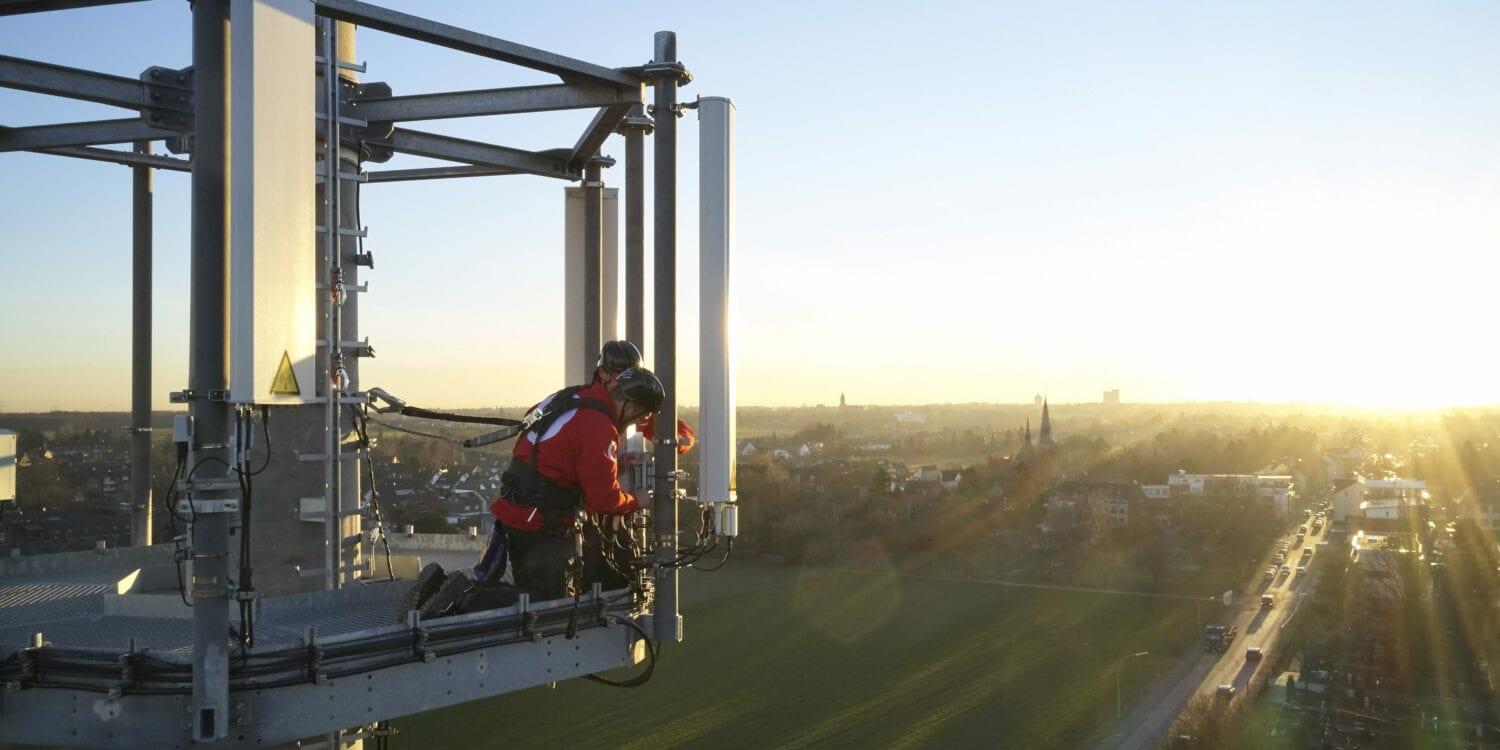
Over the next twelve months, Vodafone plans around 10,600 construction and upgrade projects. These include new cell towers, 5G upgrades, capacity expansions and modernization measures. The operator will add antennas to many existing sites, deploying high-capacity 3.5 GHz equipment alongside 700 MHz and 1,800 MHz frequencies. Around 4,300 sites will be upgraded to 5G for the first time, according to the European telco.
As a result of continued network densification, Vodafone expects 5G to reach 96% of households on its mobile network by the end of the year. Data demand is already rising sharply, with mobile traffic up 40% in the first weeks of 2026 compared with the same period last year.
A key part of the expansion is Vodafone’s large-scale adoption of O-RAN. Vodafone said that Germany’s largest O-RAN project will begin this spring, with several hundred new and existing sites upgraded throughout the year. The operator is adding Samsung as a third O-RAN partner, alongside existing suppliers, with Wismar set to become the country’s first O-RAN city.
Vodafone currently operates more than 27,000 mobile sites across Germany. LTE covers more than 99% of the population, while 5G availability stands at 94%
In October 2024, Vodafone announced the activation of its 5G Standalone (5G SA) network nationwide. Vodafone Germany had initially launched its 5G SA network in partnership with Ericsson, Nokia, Qualcomm, and Oppo.
Vodafone’s 5G SA technology utilizes frequencies in the 700 MHz, 1.8 GHz and 3.5 GHz ranges.

