

Recent drive-testing in the Washington, DC area confirmed its algorithms’ accuracy, SmartCIC says
Monetization of 5G is one of the most pressing issues facing the telecom industry. In Toby Forman’s view, that translates to two questions around 5G networks: How can carriers monetize their investments in 5G, particularly 5G Standalone? And how can enterprises take advantage of those networks in order to leverage them for enterprise applications and be more agile and disruptive?
Forman, CEO and co-founder of SmartCIC, says that his company is seeking to answer those questions, which in his view are fundamentally tied to 5G coverage and specifics of network performance at any given location. After all, how can you convince businesses to use 5G for their applications if the coverage or performance doesn’t meet their needs?
SmartCIC’s view is that if AI can predict metrics like network speed and latency, at a granular level, it can not only assist enterprises in leveraging 5G and carriers in monetizing it, but it can also streamline related processes by reducing the amount of testing required at the street level to “achieve the data density required for predictive analytics”—and along the way, optimize the drive-test routes that do need to be conducted, to ultimately reduce an organization’s overall resource use and carbon footprint.
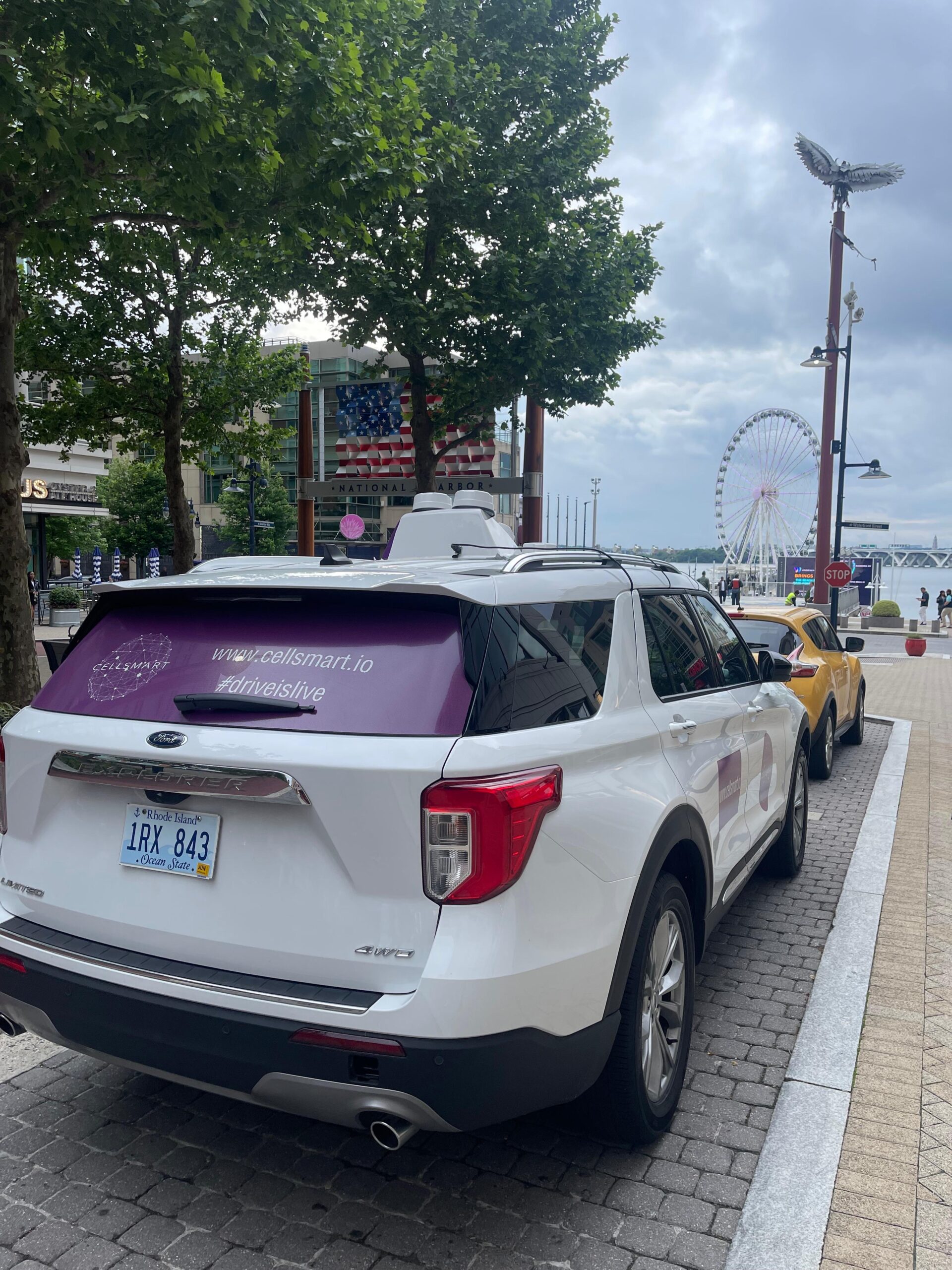
But first, you have to prove that your AI is really were capable of accurately predicting real-world network conditions. So SmartCIC ran the numbers on the Washington, D.C. area and then, earlier this spring, performed drive-testing to collect the hard numbers on network performance to see how it compared to the AI predictions.
The results? A spreadsheet-to-spreadsheet comparison of predicted and actual network data, which revealed that SmartCIC’s AI had greater than 95% accuracy in its predictions on metrics including upload and download speeds for the three national operators—in some cases, as high as 98%, according to data from the company.
That rate of accuracy “was far better than we expected, and we were excited to see this level of precision delivered across a major US city,” Forman said. “The results reflect the level of skill in our data and analytics teams and the progress they are making every day. They are optimizing our approach to AI modeling and refining our algorithm and it is delivering amazing results.”
SmartCIC is spending time this year to nail down “independent and enterprise-grade cellular intelligence” across a 30 National Football League (NFL) cities in the United States, with mapping tools that provide heat maps of performance. The company will also collect data that makes its modeling even more robust. SmartCIC’s AI engine “provides visual clusters of the areas that are detected to behave in a consistent way,” with a combination of observed and predicted network performance that does down to the level of specific addresses.

“We’re visualizing data to make it immediately consumable by engineers, network planners, and senior decision makers,” said Forman. “Carriers gain insights into where they can deploy enterprise-grade solutions, which accelerates network monetization. They can sell more enterprise services if they know immediately the quality of connectivity that is available at a site,” he continued.
Asked about the bigger picture of how his company’s data relates to monetization, Forman responded: “I think people have almost sleep-walked into investing billions of dollars globally—hundreds of billions of dollars—in these next generation networks, without a clear understanding about how they’re going to extract the value,” he said. “It’s very easy to understand how a Meta, Netflix, [and] those others can extract value from fast network connectivity, but if you’re the underlying provider, how do you extract that value? … It’s really difficult for you to monetize that by other than increasing the value of a subscription by a few dollars a month every year. So you’ve got to think of other ways of doing it. And I genuinely think that it’s a conundrum that MNOs are struggling with and what we want to do is try and help them.”
He went on: “We really believe that enterprise solutions are the way to go. They’re stickier relationship with customers—we can see that through our professional services business—and … if you can provide them with a solution that works, then they will pay for that solution. And they’re looking for those type of opportunities.”
Monetization, Forman reflected, could mean a number of things—perhaps making it faster and easier to predict where FWA service can be turned up. Good data on roadside coverage across specific areas or regions could help to drive automotive-related use cases. The company is also looking at signal height and penetration into buildings to get a holistic view for potential support of, say, smart buildings use cases. Ultimately, Forman said, “There are lots of different use cases and what we’re trying to do is be able to provide an independent view to MNOs and to enterprise. So if when I’m an MNO, I can look at this data and say, ‘OK, this is how my network’s performing, and this is how I can develop sticky enterprise solutions to sell to my customers.’ As opposed to simply providing a platform that somebody else generates revenue from, [they can] … actually begin to develop their own solutions.
“If they’re enterprises, they’re getting some information that allows them to make investment decisions around how they use these networks. There’s definitely a desire to use these type of networks. People just don’t understand how they perform,” he continued. And they don’t necessarily trust what mobile network operators say about their own network performance—which is why Forman sees a role for companies like his, and for the value of AI that can accurately predict network performance down to the individual addresses. “One of the things that we firmly believe is that enterprise customers don’t really believe in the information that’s coming out of the MNOs directly, and there’s a role for an independent organization to be able to test and validate the performance of those networks,” he said. CTOs and CIOs want to better understand how to use wireless access to power their enterprise applications, Forman said, and so SmartCIC’s “granular” testing of things like SD-WAN “begin to create some qualitative information that we can provide and sell to organizations that show how these type of applications will work in those environments.”
SmartCIC is based in France, where it holds an operator’s license; it opened a new innovation hub in Barcelona earlier this year. The company has both a technology division and one for professional telecom network services, with a network of 25,000 field techs around the world. The company already works with Tier 1 telcos and large systems integrators, Forman said, and it developed its AI in-house. SmartCIC’s approach to testing, he explained, is different than either the typical crowd-sourced model, or straight-up RF testing. Crowdsourced data doesn’t offer control over what Forman calls “the where, the why and the what” of testing. “When you can control those elements, you can actually start using that data and you can start using AI in order to be able to provide some predictive analytics when you don’t control” a large number of variables. On the other hand, he says, testing focused on the RF environment “only tells part of the story. … You can have great RF, but you can still have really bad network performance because there’s an issue with the architecture and so on.
“We don’t really see anybody exactly sitting in the middle where we are, which is really exciting,” he concluded. And while SmartCIC is currently focusing its AI development on predicting terrestrial cellular performance, it also has its eyes on low-power wide-area network technologies and eventually, Low Earth Orbit wireless coverage.
“We’re really interested in providing intelligence,” Forman said. “We’re certainly working initially on that in that wireless space, and that’s our focus for the moment. But … there’s a lot of really interesting stuff out there that we want to provide answers to.”

