

RCR Wireless
  • News
  • Channels
    • 5G
    • 6G
    • BSS OSS
    • Carriers
    • IoT
    • Network Infrastructure
    • Open RAN
    • Private 5G
    • Telco AI
    • Telco Cloud
    • Test & Measurement
  • Resources
    • Reports
    • Webinars
    • White papers
    • AI Fundamentals
    • Analyst Angle
    • Editorial Calendar
    • Fundamentals
      • 5G NR Release 17
      • AI
        • Telco AI in 2025
    • Podcasts
      • Let’s Get Digital with Carrie Charles
      • Wireless Connectivity to Enable Industry 4.0 for the Middleprise
      • Well Technically…
      • Will 5G Change the World
      • Accelerating Industry 4.0 Digitalization
  • AI Infrastructure
  • Programs
  • Events
  • RCRtv
  • Advertise
  • Subscribe
Wednesday, July 15, 2026
RCR Wireless
  • News
  • Channels
    • 5G
    • 6G
    • BSS OSS
    • Carriers
    • IoT
    • Network Infrastructure
    • Open RAN
    • Private 5G
    • Telco AI
    • Telco Cloud
    • Test & Measurement
  • Resources
    • Reports
    • Webinars
    • White papers
    • AI Fundamentals
    • Analyst Angle
    • Editorial Calendar
    • Fundamentals
      • 5G NR Release 17
      • AI
        • Telco AI in 2025
    • Podcasts
      • Let’s Get Digital with Carrie Charles
      • Wireless Connectivity to Enable Industry 4.0 for the Middleprise
      • Well Technically…
      • Will 5G Change the World
      • Accelerating Industry 4.0 Digitalization
  • AI Infrastructure
  • Programs
  • Events
  • RCRtv
  • Advertise
  • Subscribe
Add RCR Wireless as a preferred source on Google
  • Qualcomm 6G Insights
  • Huawei Content Hub
  • Qualcomm – 6G Vision
  • OSS/BSS Channel
  • RCRTech Roundtable: AI Infrastructure
RCR Wireless
RCR Wireless
  • Advanced Mimo
  • Mobile mmWave
  • 5G Positioning
  • Green Networks
  • Metaverse
  • Automotive
  • Industrial and Wide-area IoT
Copyright 2021 - All Right Reserved
Home - Why AI at the edge is the future of smart homes (Reader Forum)
Network InfrastructureOpinionReader Forum

Why AI at the edge is the future of smart homes (Reader Forum)

by Carsten Rhod Gregersen, CEO and Founder, Nabto June 13, 2022
written by Carsten Rhod Gregersen, CEO and Founder, Nabto June 13, 2022 Share
LinkedinEmail
Share 0LinkedinEmail
smart home ai
183

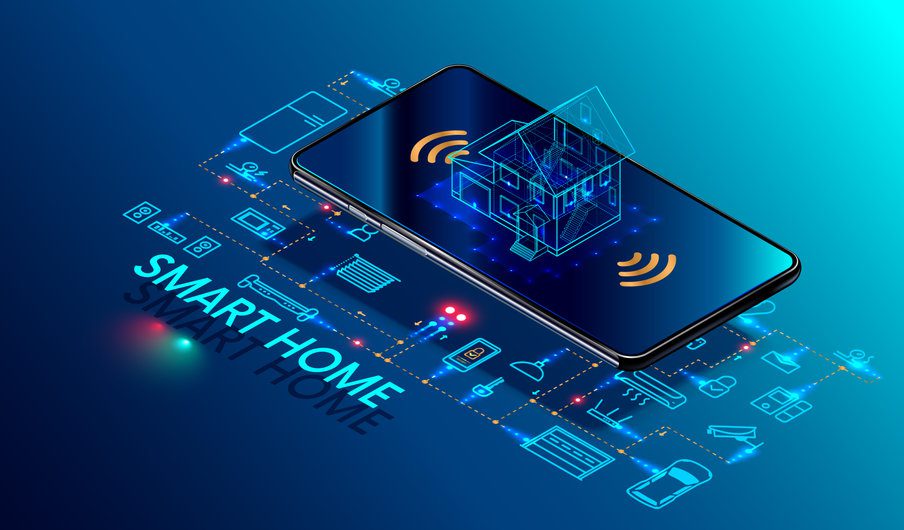
Forget the cloud; more and more devices today are connecting at the edge. Better yet, they’re more powerful thanks to artificial intelligence and machine learning. This one-two punch of smarter, nearer devices is transforming what devices can do in the Internet of Things (IoT).

The result will revolutionize tomorrow’s smart homes in a big win for consumers. A step beyond Amazon’s Alexa, the next generation of devices with data processing at the edge will be able to make more autonomous decisions and transform our interactions with technology.

What’s more, this trend shows no sign of slowing. The more intelligent the device, the more data it carries and the more important the privacy and speed of edge processing. Let’s dig deeper into this virtuous circle that is leading to more powerful edge-based devices and smarter homes.

The move from cloud to edge

Hosting and processing data at the edge is the logical next step for computing. Over the decades, technology has evolved to store data on a central mainframe, then to personal computing and later to cloud computing. Now, instead of using data centers to host and process information, the edge brings computation and data storage closer to the source, thereby reducing the need for sending large volumes to remote locations. This can deliver myriad benefits in terms of speed, usability, privacy and security of data.

At the same time, smarter devices are driving the data migration from cloud to edge. Consider that devices are more often loaded with AI-optimized chipsets. These chips are smaller, more economical and less power-consuming. As a result, they enable devices to handle far more processes internally rather than externally. Moreover, they’re capable of making predictions, processing complex data and administering solutions — all abilities that translate into higher levels of autonomy.

Smarter devices, smarter homes

The increase in capable devices throughout the modern home makes edge computing not only viable but practical. Instead of hosting personal data on the leased cloud storage of a company, why not keep it at home? The benefits to users speak for themselves.

First, bandwidth.Since edge technology analyzes data locally rather than in a faraway cloud delayed by long-distance communications, this could pave the way toward devices that respond to user needs in real-time. In tomorrow’s smart home, for example, connected security cameras could stream ultra high definition video at lower costs. Further, loaded with artificial intelligence, the cameras could identify people and count passing traffic. Similarly, smart speakers — like Google Home or Amazon Alexa — could perform more complex tasks and calculations, becoming more helpful.

Second, latency. Some applications require near-instant response times, which cloud computing can’t always provide. Latency is inherently lower at the edge since the data doesn’t have to travel as far. Therefore, smart home devices become faster, responding instantly to user commands and providing real-time information. These quicker response times could be life-saving for smart home devices that contact emergency services or raise alarms. They could also offer greater convenience, like door locks with instant facial recognition or smart induction stoves that automatically change cooking temperature.

Third, security. Edge computing’s higher speed and lower latency mean there’s less downtime and disruption, leaving fewer opportunities to compromise data in transit. Moreover, platforms which assist edge computing communication are maturing. Take for example peer-to-peer (P2P) connection between IoT devices. This type of communication between end-user and server bypasses any third-party servers to ensure the direct and secure relaying of messages. This not only eliminates latency but removes another element typically handled by the cloud and brings it back under the user’s control. This is especially important for connected devices which, historically, have a poor security track record.

The start of a smarter future

In my view, edge AI represents the first wave of truly integrating future-forward tech into the home. While elements like artificial intelligence and machine learning have been around for decades, we’re only now starting to see their practical uses in consumer products. Self-driving cars, for example, are a product of advancements in edge AI. It’s exciting to think that this is the beginning of a smarter future.

The pandemic has only kicked this connected device trend into overdrive. The number of smart homes is forecast to surpass the 350 million mark by next year. Now, with more devices and heightened consumer expectations, it remains to be seen how advanced these applications become. From fitness bands analyzing the user’s vital parameters and prescribing precautionary measures to home alarm systems triggering an automatic call to emergency services in case of fire, AI at the edge will forever change IoT in the home.

You Might Also Like
  • Nokia preps AI-RAN in 2027, promises 100% spectral gain in 2028 – but will operators buy it?
  • The (agentic) future of AI-to-AI connectivity (Reader Forum)
  • Monday (telco diary) | Consolidation, orchestration, automation
  • Netgear’s quiet reinvention as a B2B and SaaS company (Analyst Angle)
  • Friday (telco diary) | Telco reset, RAN reboot, P5G reality check
  • How operations leaders see 5G as vital for mission-critical workflows (Reader Forum)

Table of Contents

  • The move from cloud to edge
  • Smarter devices, smarter homes
  • The start of a smarter future
Share 0 LinkedinEmail
Carsten Rhod Gregersen, CEO and Founder, Nabto

previous post
AI will take SD-WAN to the next level (Reader Forum)
next post
Almost 800 entities deploying LTE, 5G private networks globally: GSA

White Papers

  • Enea White Paper: Why Intelligent AAA is the Swiss Army Knife of Telecom

  • CSG White Paper: Telco AI Enabler: Mediation’s Defining Role

  • Enea White Paper: Scalable Database Design for 5G and Beyond

  • Supermicro and NVIDIA Whitepaper: Powering sovereign AI at scale

  • VIAVI Whitepaper: RAN scenario generators and their critical role for future-proofing AI-native RAN in Advanced 5G and 6G networks

Editorial Reports

  • Report: Scaling Optical Networks For The Hyperscale And AI Era

  • Test And Measurement Market Pulse Report

  • Editorial Report: Securing telecom infrastructure for the quantum era

Webinars

  • Webinar: Building 6G — aligning technology, policy and purpose

  • SIMCom Webinar: Scaling your next deployment – from plastic to provisioning

  • Webinar: Rethinking the RAN as AI, cloud and openness converge

  • Webinar: Scale-Up, Scale-Out, Scale-Across – Building AI-Era Network Fabrics

  • Webinar: NTN in motion – evolving standards, expanding services

Since 1982, RCR Wireless News has been providing wireless and mobile industry news, insights, and analysis to mobile and wireless industry professionals, decision makers, policy makers, analysts and investors.

Facebook Twitter Youtube Linkedin Envelope Rss

Useful Links

  • Subscribe
  • About RCR Wireless News
  • Contact Us
  • Advertise
  • Editorial Calendar
  • Archive
  • RSS
  • Wireless News Archive
  • Subscribe
  • About RCR Wireless News
  • Contact Us
  • Advertise
  • Editorial Calendar
  • Archive
  • RSS
  • Wireless News Archive

Edtior's Picks

Nokia and Taiwan Mobile are building an AI-native 5G network
Nokia preps AI-RAN in 2027, promises 100% spectral gain in 2028 – but...
Agentic AI to reshape network demand, KPMG says

Latest Articles

Nokia and Taiwan Mobile are building an AI-native 5G network
Nokia preps AI-RAN in 2027, promises 100% spectral gain in 2028 – but will operators buy it?
Agentic AI to reshape network demand, KPMG says
From Site Truth to Revenue: How Decision Ready Digital Twins Are Changing Wireless Telecom with David Pash

© 2026 RCR Wireless News All Right Reserved. Developed by Eight Hats.

Cookie Policy | Privacy Policy

RCR Wireless
  • News
  • Channels
    • 5G
    • 6G
    • BSS OSS
    • Carriers
    • IoT
    • Network Infrastructure
    • Open RAN
    • Private 5G
    • Telco AI
    • Telco Cloud
    • Test & Measurement
  • Resources
    • Reports
    • Webinars
    • White papers
    • AI Fundamentals
    • Analyst Angle
    • Editorial Calendar
    • Fundamentals
      • 5G NR Release 17
      • AI
        • Telco AI in 2025
    • Podcasts
      • Let’s Get Digital with Carrie Charles
      • Wireless Connectivity to Enable Industry 4.0 for the Middleprise
      • Well Technically…
      • Will 5G Change the World
      • Accelerating Industry 4.0 Digitalization
  • AI Infrastructure
  • Programs
  • Events
  • RCRtv
  • Advertise
  • Subscribe
RCR Wireless
  • News
  • Channels
    • 5G
    • 6G
    • BSS OSS
    • Carriers
    • IoT
    • Network Infrastructure
    • Open RAN
    • Private 5G
    • Telco AI
    • Telco Cloud
    • Test & Measurement
  • Resources
    • Reports
    • Webinars
    • White papers
    • AI Fundamentals
    • Analyst Angle
    • Editorial Calendar
    • Fundamentals
      • 5G NR Release 17
      • AI
        • Telco AI in 2025
    • Podcasts
      • Let’s Get Digital with Carrie Charles
      • Wireless Connectivity to Enable Industry 4.0 for the Middleprise
      • Well Technically…
      • Will 5G Change the World
      • Accelerating Industry 4.0 Digitalization
  • AI Infrastructure
  • Programs
  • Events
  • RCRtv
  • Advertise
  • Subscribe
@2020 - All Right Reserved. Designed and Developed by PenciDesign
