

RCR Wireless
  • News
  • Channels
    • 5G
    • 6G
    • BSS OSS
    • Carriers
    • IoT
    • Network Infrastructure
    • Open RAN
    • Private 5G
    • Telco AI
    • Telco Cloud
    • Test & Measurement
  • Resources
    • Reports
    • Webinars
    • White papers
    • AI Fundamentals
    • Analyst Angle
    • Editorial Calendar
    • Fundamentals
      • 5G NR Release 17
      • AI
        • Telco AI in 2025
    • Podcasts
      • Let’s Get Digital with Carrie Charles
      • Wireless Connectivity to Enable Industry 4.0 for the Middleprise
      • Well Technically…
      • Will 5G Change the World
      • Accelerating Industry 4.0 Digitalization
  • AI Infrastructure
  • Programs
  • Events
  • RCRtv
  • Advertise
  • Subscribe
Thursday, July 23, 2026
RCR Wireless
  • News
  • Channels
    • 5G
    • 6G
    • BSS OSS
    • Carriers
    • IoT
    • Network Infrastructure
    • Open RAN
    • Private 5G
    • Telco AI
    • Telco Cloud
    • Test & Measurement
  • Resources
    • Reports
    • Webinars
    • White papers
    • AI Fundamentals
    • Analyst Angle
    • Editorial Calendar
    • Fundamentals
      • 5G NR Release 17
      • AI
        • Telco AI in 2025
    • Podcasts
      • Let’s Get Digital with Carrie Charles
      • Wireless Connectivity to Enable Industry 4.0 for the Middleprise
      • Well Technically…
      • Will 5G Change the World
      • Accelerating Industry 4.0 Digitalization
  • AI Infrastructure
  • Programs
  • Events
  • RCRtv
  • Advertise
  • Subscribe
Add RCR Wireless as a preferred source on Google
  • Qualcomm 6G Insights
  • Huawei Content Hub
  • Qualcomm – 6G Vision
  • OSS/BSS Channel
  • RCRTech Roundtable: AI Infrastructure
RCR Wireless
RCR Wireless
  • Advanced Mimo
  • Mobile mmWave
  • 5G Positioning
  • Green Networks
  • Metaverse
  • Automotive
  • Industrial and Wide-area IoT
Copyright 2021 - All Right Reserved
Home - 1NCE upon a time in the West – how 1NCE brought order to the global IoT game
CarriersEnterpriseInfrastructureInternet of Things (IoT)NB-IoTNews & Event CoveragePlatformsSensorsSmart CitiesTransportation: Airports, Rail, PortsWired Networks, Fiber

1NCE upon a time in the West – how 1NCE brought order to the global IoT game

by James Blackman April 14, 2022
written by James Blackman April 14, 2022 Share
LinkedinEmail
Share 0LinkedinEmail
Background image: 123rf
234

Yes, we have done the Leone analogy before, kind-of (see: 1NCE upon a time in America), but the original Spaghetti Western title works even better to tell the story, briefly, of how cellular IoT rode into town on a horse called 1NCE, and brought order to the New West – where all the talk is about silver bullets and buried gold, and no one is making a killing. Anyway, enough of that; we’re mixing movies (and directors), and worse…

“Let’s not start with the money,” says Ivo Rook, chief operating officer at 1NCE, speaking with Enterprise IoT Insights in a hotel lobby somewhere in Barcelona – at the time of some (fairly) recent telco mega-show. He wants to get into the strategy and vision, and the logic behind the company’s new $50 million windfall, raised from investors SoftBank and Deutsche Telekom in September. “Because the real story is all about what we are going to do with it.”

The real story is also about what Germany-based 1NCE did, in the first place, to raise such funds, and such interest from the telco market; the tale goes backward and forwards from here. “1NCE is on a mission,” confides Rook. “It broke the mould with prepaid; it basically brought prepaid to IoT. But the philosophy was not about prepaid; it was about the cellular IoT supply chain, which was too complicated – and therefore prohibitive for many use cases.”

Rook tells how low-power IoT – the traditional IoT stuff, separate of the new-fangled 5G stuff, which the traditional cellular market has struggled with for so long; “fitted in light bulbs, embedded in parking lots” – has also been high-pressure IoT, effectively, until now – until 1NCE rode into town. “Customers want to know it works, and never needs attention. They worry about truck-roll; visit once-more than planned, and the business case fails.”
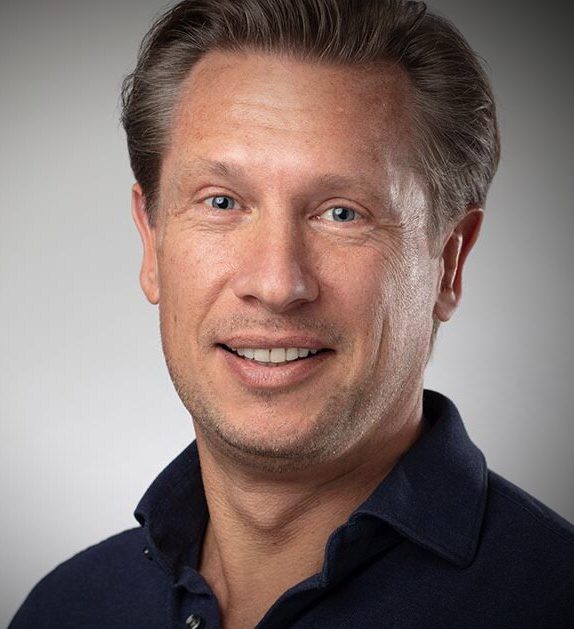
Ivo Rook

Rook – 10-for-10 is impossible for operators, whatever they say

The point is, Rook reckons, low-power IoT IoT should be fit-and-forget, anywhere in the world, for the whole of its prescribed lifetime. “Which is what we offer – that you don’t have to worry about it, ever,” he says. Yes, but hang on; the prepaid thing was the ‘game-changer’; no question. 1NCE was the first to flat-rate cellular IoT, at $10 for 10 years (10-for-10), nominally. Everyone else has followed suit; the 1NCE pricing has opened up this New West, effectively.

Which means the piece we, at Enterprise IoT Insights, struggle with is how 1NCE is different – from the likes of Deutsche Telekom, the Cologne firm’s majority shareholder, and Vodafone, the biggest telco-mover on NB-IoT, as well as from MVNO-style setups like Belgium-based BICS or UK-based Arkessa. Tell us that tale, if you please. “But you have to read the fine print,” responds Rook. Right, and how so?

He gets into the weeds about the minimum revenue commitment (MRC) being offered, variously, which on the telco-side is buried in the small print to cover legacy IT costs. Rook, formerly with Vodafone in the UK and T-Mobile in the US, explains: “One of the issues for operators is the pure IT cost to run a connection inside an operator IT system is about $3 a year, just to have that connection live. So for them, actually, running at 10-for-10 is almost impossible.”

He goes on: “And we don’t go just to $10 for 10 years, but to a dollar a year, or even eight cents per month. And the fine print is those other offers, advertised that way, as copying our model, says there’s an MRC of 20 or 30 cents, or a big setup fee. There is no setup with us; our model is so disruptive because our costs are so much lower.” He reverses, again, and splits the cost structure into two elements: network minutes and network systems.

“Deutsche Telekom and Vodafone have the biggest buying power. Their patterns are different – Vodafone buys in more places; Deutsche Telekom buys more in certain places. We buy on Deutsche Telekom’s SIM property, which means our costs on the network are similar, really to both. The difference is with the IT. We run at roughly 50 percent of the cost because we built the system ourselves; it’s our own code, with no vendors and no external components.”

There is some gnarly 101-stuff in there, about the inherent costs of lawful intercept and E911/E112 compliance, as well as “reporting to the street” on fluctuating subscription numbers – plus all the staff (actually, “the smaller portion of it”). “Their whole supply chain is tied to ERP systems and accounting systems, and so on,” he says. The IT costs associated with cellular IoT for big telcos can, in some cases, be 200 percent higher, he suggests.

By contrast, 1NCE has its own cellular core network on AWS, functioning as an over-the-top (cloud) network control system for the network minutes it acquires from global operators via Deutsche Telekom. “The kind of Uberizing moment was to buy in bulk – this enormous package of data – and to activate all the SIMs [ourselves],” he says. “Because of the investments we’ve made, and because of our partnership with AWS, we have three big advantages.”

He never gets past the first advantage, in the end; but it sounds clear enough. “What a lot of operators and IoT companies underestimate is that IoT is less about the solution, and more about the distribution. It is about being able to deliver and maintain a service anywhere in the world. And because we’ve built-it digital, from scratch, with our own software, it scales like software. So why work only in Europe? It works the same in the US; the same in Asia.”

Indeed, on the back of its latest $50 million investment from Deutsche Telekom and Softbank – and with Rook’s appointment as operations chief and a new office in Miami, plus with an enhanced deal with AWS to “push forward… on a global scale” – 1NCE has just expanded into the US (which has quickly become “all of the Americas”). It is about to open in 12 countries in Asia, he says. “We did Europe, then the US, and now we’re setting up there.”

Curiously, it will ride into this new town on the same nag, rented from Deutsche Telekom. “We did the comparison; it turned out our cost in Asia was lower than SoftBank’s,” says Rook. In the meantime, Softbank will bulk-up on international IoT minutes (“increase the power of its own SIM property”), until it gets to parity with Deutsche Telekom, he implies; at which point, Softbank will “move its own SIM property underneath”.

Which sounds rather like the mountain coming to Muhammed, to mix metaphors. But then, the Tokyo gunslinger, like Deutsche Telekom, has invested in 1NCE as the upstart prospector that might bring prosperity. “It will keep our IT system, which is interesting because it would give us two SIM properties. Why is that clever? Because sometimes it is helpful not to stay in one SIM property for too long – because then you’re permanently roaming.”

To be continued (time permitting)…

You Might Also Like
  • South Korea launches AI-RAN project to advance industrial AI
  • AT&T’s bets on “best tech” (fiber) pay off with record adds, improving margins 
  • The most expensive wireless system is the one you install twice (Reader Forum)
  • The Agentic Network — Cisco on earning trust in autonomous operations
  • Blue Planet intros AI agents to fight OSS configuration drift – and stand-up telco trust
  • Rakuten Mobile expands O-RAN footprint with 1Finity radios
Share 0 LinkedinEmail
James Blackman
James Blackman

James Blackman has been writing about the technology and telecoms sectors for over a decade. He has edited and contributed to a number of European news outlets and trade titles. He has also worked at telecoms company Huawei, leading media activity for its devices business in Western Europe. He is based in London.

previous post
Sigfox sale gets delayed to April 21 – ‘a week to convince the government,’ says UnaBiz
next post
Google’s Topaz subsea cable will be the first to connect Asia and Canada

White Papers

  • Norton eBook: The 2026 Telco Playbook

  • Enea White Paper: Why Intelligent AAA is the Swiss Army Knife of Telecom

  • CSG White Paper: Telco AI Enabler: Mediation’s Defining Role

  • Enea White Paper: Scalable Database Design for 5G and Beyond

  • Supermicro and NVIDIA Whitepaper: Powering sovereign AI at scale

Editorial Reports

  • Nvidia Report: The State of AI in Telecommunications: 2026 Trends

  • Report: Scaling Optical Networks For The Hyperscale And AI Era

  • Test And Measurement Market Pulse Report

Webinars

  • Webinar: Building 6G — aligning technology, policy and purpose

  • SIMCom Webinar: Scaling your next deployment – from plastic to provisioning

  • Webinar: Rethinking the RAN as AI, cloud and openness converge

  • Webinar: Scale-Up, Scale-Out, Scale-Across – Building AI-Era Network Fabrics

  • Webinar: NTN in motion – evolving standards, expanding services

Since 1982, RCR Wireless News has been providing wireless and mobile industry news, insights, and analysis to mobile and wireless industry professionals, decision makers, policy makers, analysts and investors.

Facebook Twitter Youtube Linkedin Envelope Rss

Useful Links

  • Subscribe
  • About RCR Wireless News
  • Contact Us
  • Advertise
  • Editorial Calendar
  • Archive
  • RSS
  • Wireless News Archive
  • Subscribe
  • About RCR Wireless News
  • Contact Us
  • Advertise
  • Editorial Calendar
  • Archive
  • RSS
  • Wireless News Archive

Edtior's Picks

South Korea launches AI-RAN project to advance industrial AI
Tuesday (telco diary) | Telco agents and outcomes
AT&T’s bets on “best tech” (fiber) pay off with record adds, improving margins 

Latest Articles

South Korea launches AI-RAN project to advance industrial AI
Tuesday (telco diary) | Telco agents and outcomes
AT&T’s bets on “best tech” (fiber) pay off with record adds, improving margins 
The most expensive wireless system is the one you install twice (Reader Forum)

© 2026 RCR Wireless News All Right Reserved. Developed by Eight Hats.

Cookie Policy | Privacy Policy

RCR Wireless
  • News
  • Channels
    • 5G
    • 6G
    • BSS OSS
    • Carriers
    • IoT
    • Network Infrastructure
    • Open RAN
    • Private 5G
    • Telco AI
    • Telco Cloud
    • Test & Measurement
  • Resources
    • Reports
    • Webinars
    • White papers
    • AI Fundamentals
    • Analyst Angle
    • Editorial Calendar
    • Fundamentals
      • 5G NR Release 17
      • AI
        • Telco AI in 2025
    • Podcasts
      • Let’s Get Digital with Carrie Charles
      • Wireless Connectivity to Enable Industry 4.0 for the Middleprise
      • Well Technically…
      • Will 5G Change the World
      • Accelerating Industry 4.0 Digitalization
  • AI Infrastructure
  • Programs
  • Events
  • RCRtv
  • Advertise
  • Subscribe
RCR Wireless
  • News
  • Channels
    • 5G
    • 6G
    • BSS OSS
    • Carriers
    • IoT
    • Network Infrastructure
    • Open RAN
    • Private 5G
    • Telco AI
    • Telco Cloud
    • Test & Measurement
  • Resources
    • Reports
    • Webinars
    • White papers
    • AI Fundamentals
    • Analyst Angle
    • Editorial Calendar
    • Fundamentals
      • 5G NR Release 17
      • AI
        • Telco AI in 2025
    • Podcasts
      • Let’s Get Digital with Carrie Charles
      • Wireless Connectivity to Enable Industry 4.0 for the Middleprise
      • Well Technically…
      • Will 5G Change the World
      • Accelerating Industry 4.0 Digitalization
  • AI Infrastructure
  • Programs
  • Events
  • RCRtv
  • Advertise
  • Subscribe
@2020 - All Right Reserved. Designed and Developed by PenciDesign
