

RCR Wireless
  • News
  • Channels
    • 5G
    • 6G
    • BSS OSS
    • Carriers
    • IoT
    • Network Infrastructure
    • Open RAN
    • Private 5G
    • Telco AI
    • Telco Cloud
    • Test & Measurement
  • Resources
    • Reports
    • Webinars
    • White papers
    • AI Fundamentals
    • Analyst Angle
    • Editorial Calendar
    • Fundamentals
      • 5G NR Release 17
      • AI
        • Telco AI in 2025
    • Podcasts
      • Let’s Get Digital with Carrie Charles
      • Wireless Connectivity to Enable Industry 4.0 for the Middleprise
      • Well Technically…
      • Will 5G Change the World
      • Accelerating Industry 4.0 Digitalization
  • AI Infrastructure
  • Programs
  • Events
  • RCRtv
  • Advertise
  • Subscribe
Friday, July 17, 2026
RCR Wireless
  • News
  • Channels
    • 5G
    • 6G
    • BSS OSS
    • Carriers
    • IoT
    • Network Infrastructure
    • Open RAN
    • Private 5G
    • Telco AI
    • Telco Cloud
    • Test & Measurement
  • Resources
    • Reports
    • Webinars
    • White papers
    • AI Fundamentals
    • Analyst Angle
    • Editorial Calendar
    • Fundamentals
      • 5G NR Release 17
      • AI
        • Telco AI in 2025
    • Podcasts
      • Let’s Get Digital with Carrie Charles
      • Wireless Connectivity to Enable Industry 4.0 for the Middleprise
      • Well Technically…
      • Will 5G Change the World
      • Accelerating Industry 4.0 Digitalization
  • AI Infrastructure
  • Programs
  • Events
  • RCRtv
  • Advertise
  • Subscribe
Add RCR Wireless as a preferred source on Google
  • Qualcomm 6G Insights
  • Huawei Content Hub
  • Qualcomm – 6G Vision
  • OSS/BSS Channel
  • RCRTech Roundtable: AI Infrastructure
RCR Wireless
RCR Wireless
  • Advanced Mimo
  • Mobile mmWave
  • 5G Positioning
  • Green Networks
  • Metaverse
  • Automotive
  • Industrial and Wide-area IoT
Copyright 2021 - All Right Reserved
Home - How can C-RAN cut costs for mobile operators?
Network Infrastructure

How can C-RAN cut costs for mobile operators?

by Martha DeGrasse August 20, 2016
written by Martha DeGrasse August 20, 2016 Share
LinkedinEmail
Share 0LinkedinEmail
5G C-RAN cable
114

Video downloads, social media and mobile video games are a double-edged sword for wireless carriers: more data use means more revenue, but it also means carriers must invest more in their networks to meet that demand. When data price wars put pressure on the revenue side of the equation, carriers find themselves looking for a way to limit expenses without falling behind.
“Operators need to maintain very high-quality networks, but also need to hold their cost structures as we’re seeing end-user pricing under significant pressure,” said analyst Aaron Blazar of Atlantic-ACM. Blazar said many operators are trying to take advantage of new technologies like centralized radio access networks to control costs and potentially boost network performance at the same time.
“On a go-forward basis we expect … the focus to be non-macro densification and with that we’re seeing three core areas of focus … [distributed antenna systems], C-RAN or small cell,” said Blazar.
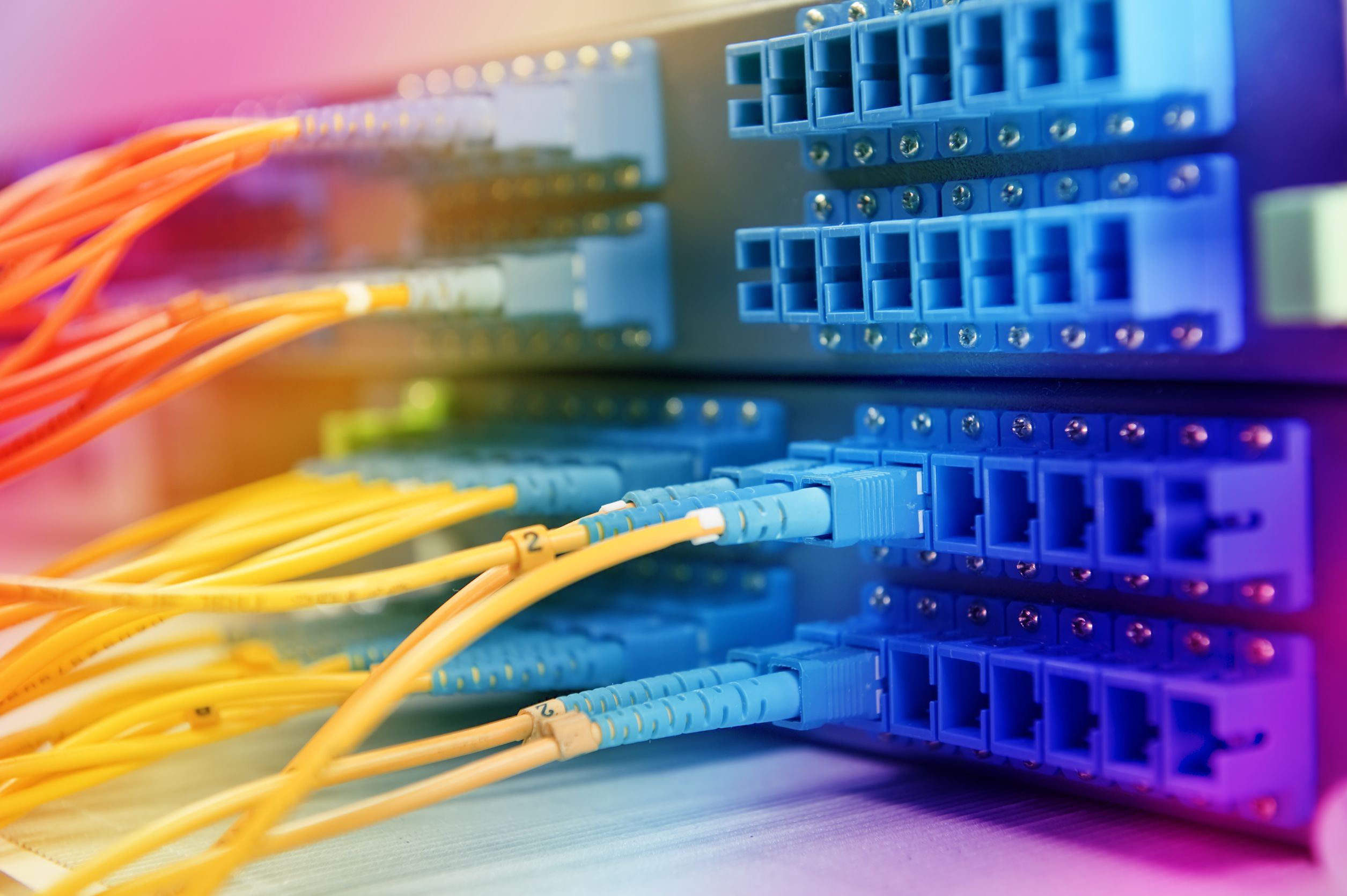
“We’re seeing the second phase of the RAN evolution with C-RAN,” said Marquis Dorais, fronthaul product line manager at test equipment maker EXFO. Dorais explained the C-RAN architecture uses fiber to connect base station equipment to tower top remote radio heads and antennas. Since RF signal show less degradation over fiber compared with copper, the base station can be up to 20 kilometers away from the tower, he said. Operators can consolidate base station equipment for multiple cell sites at a central office or data center.
How does C-RAN save money for operators? It can cut costs in at least two ways. First, real estate is almost always less expensive at a data center location than at a cell tower site. Second, power loss is much lower with fiber than with cable, so the fiber connection associated with C-RAN (often called fronthaul) can reduce operating expenses.
“In some cases we saw up to 50% or more power loss in those copper cables,” said Dorais. “You’re going from legacy mobile installations, so the copper from the bottom to the top, to FTTA, so fiber to the antenna or fiber to the tower. In that case you potentially save up to 50% on the electrical bill. Moving towards a C-RAN architecture where the base stations can be centralized in a data center or in a central office and the remote radio heads are many kilometers away, in that case you save an additional 10% on top of the 50% that’s already saved, just by centralizing those BBUs in a central location where you basically save on your energy bill for cooling, ventilation, and all that.”
C-RAN may also lay the groundwork for the “5G” networks of the future. Analysts expect 5G networks to connect mission critical machines as well as personal mobile devices. For that, these networks will need even faster response times than today’s LTE networks. This will require very low latency communication between base stations, so colocated base stations may be a cost-effective way to implement next-generation architectures.
For more on C-RAN, see our recent tower technology report and webinar.
Follow me on Twitter.

You Might Also Like
  • Thursday (telco diary) | Satellite versus terrestrial
  • Fast-growing private 5G offers blueprint for AI-era telecoms
  • Wednesday (telco diary) | What telcos want – and why they wait
  • Nokia preps AI-RAN in 2027, promises 100% spectral gain in 2028 – but will operators buy it?
  • Tuesday (telco diary) | Ericsson holds the line
  • The (agentic) future of AI-to-AI connectivity (Reader Forum)
Share 0 LinkedinEmail
Martha DeGrasse

Martha DeGrasse is the publisher of Network Builder Reports (nbreports.com). At RCR, Martha authored more than 20 in-depth feature reports and more than 2,400 news articles. She also created the Mobile Minute and the 5 Things to Know Today series. Prior to joining RCR Wireless News, Martha produced business and technology news for CNN and Dow Jones in New York and managed the online editorial group at Hoover’s Online before taking a number of years off to be at home when her children were young. Martha is the board president of Austin's Trinity Center and is a member of the Women's Wireless Leadership Forum.

previous post
How mobile carriers are using big data, AI
next post
Reader Forum: 5 keys to getting to 5G

White Papers

  • Norton eBook: The 2026 Telco Playbook

  • Enea White Paper: Why Intelligent AAA is the Swiss Army Knife of Telecom

  • CSG White Paper: Telco AI Enabler: Mediation’s Defining Role

  • Enea White Paper: Scalable Database Design for 5G and Beyond

  • Supermicro and NVIDIA Whitepaper: Powering sovereign AI at scale

Editorial Reports

  • Nvidia Report: The State of AI in Telecommunications: 2026 Trends

  • Report: Scaling Optical Networks For The Hyperscale And AI Era

  • Test And Measurement Market Pulse Report

Webinars

  • Webinar: Building 6G — aligning technology, policy and purpose

  • SIMCom Webinar: Scaling your next deployment – from plastic to provisioning

  • Webinar: Rethinking the RAN as AI, cloud and openness converge

  • Webinar: Scale-Up, Scale-Out, Scale-Across – Building AI-Era Network Fabrics

  • Webinar: NTN in motion – evolving standards, expanding services

Since 1982, RCR Wireless News has been providing wireless and mobile industry news, insights, and analysis to mobile and wireless industry professionals, decision makers, policy makers, analysts and investors.

Facebook Twitter Youtube Linkedin Envelope Rss

Useful Links

  • Subscribe
  • About RCR Wireless News
  • Contact Us
  • Advertise
  • Editorial Calendar
  • Archive
  • RSS
  • Wireless News Archive
  • Subscribe
  • About RCR Wireless News
  • Contact Us
  • Advertise
  • Editorial Calendar
  • Archive
  • RSS
  • Wireless News Archive

Edtior's Picks

Red Hat outlines AI-RAN roadmap
Ericsson wins role in £8bn UK’s defense upgrade as private 5G moves to...
Thursday (telco diary) | Satellite versus terrestrial

Latest Articles

Red Hat outlines AI-RAN roadmap
Ericsson wins role in £8bn UK’s defense upgrade as private 5G moves to frontline
Thursday (telco diary) | Satellite versus terrestrial
The Agentic Network — Deutsche Telekom on APIs for trusted AI

© 2026 RCR Wireless News All Right Reserved. Developed by Eight Hats.

Cookie Policy | Privacy Policy

RCR Wireless
  • News
  • Channels
    • 5G
    • 6G
    • BSS OSS
    • Carriers
    • IoT
    • Network Infrastructure
    • Open RAN
    • Private 5G
    • Telco AI
    • Telco Cloud
    • Test & Measurement
  • Resources
    • Reports
    • Webinars
    • White papers
    • AI Fundamentals
    • Analyst Angle
    • Editorial Calendar
    • Fundamentals
      • 5G NR Release 17
      • AI
        • Telco AI in 2025
    • Podcasts
      • Let’s Get Digital with Carrie Charles
      • Wireless Connectivity to Enable Industry 4.0 for the Middleprise
      • Well Technically…
      • Will 5G Change the World
      • Accelerating Industry 4.0 Digitalization
  • AI Infrastructure
  • Programs
  • Events
  • RCRtv
  • Advertise
  • Subscribe
RCR Wireless
  • News
  • Channels
    • 5G
    • 6G
    • BSS OSS
    • Carriers
    • IoT
    • Network Infrastructure
    • Open RAN
    • Private 5G
    • Telco AI
    • Telco Cloud
    • Test & Measurement
  • Resources
    • Reports
    • Webinars
    • White papers
    • AI Fundamentals
    • Analyst Angle
    • Editorial Calendar
    • Fundamentals
      • 5G NR Release 17
      • AI
        • Telco AI in 2025
    • Podcasts
      • Let’s Get Digital with Carrie Charles
      • Wireless Connectivity to Enable Industry 4.0 for the Middleprise
      • Well Technically…
      • Will 5G Change the World
      • Accelerating Industry 4.0 Digitalization
  • AI Infrastructure
  • Programs
  • Events
  • RCRtv
  • Advertise
  • Subscribe
@2020 - All Right Reserved. Designed and Developed by PenciDesign
