
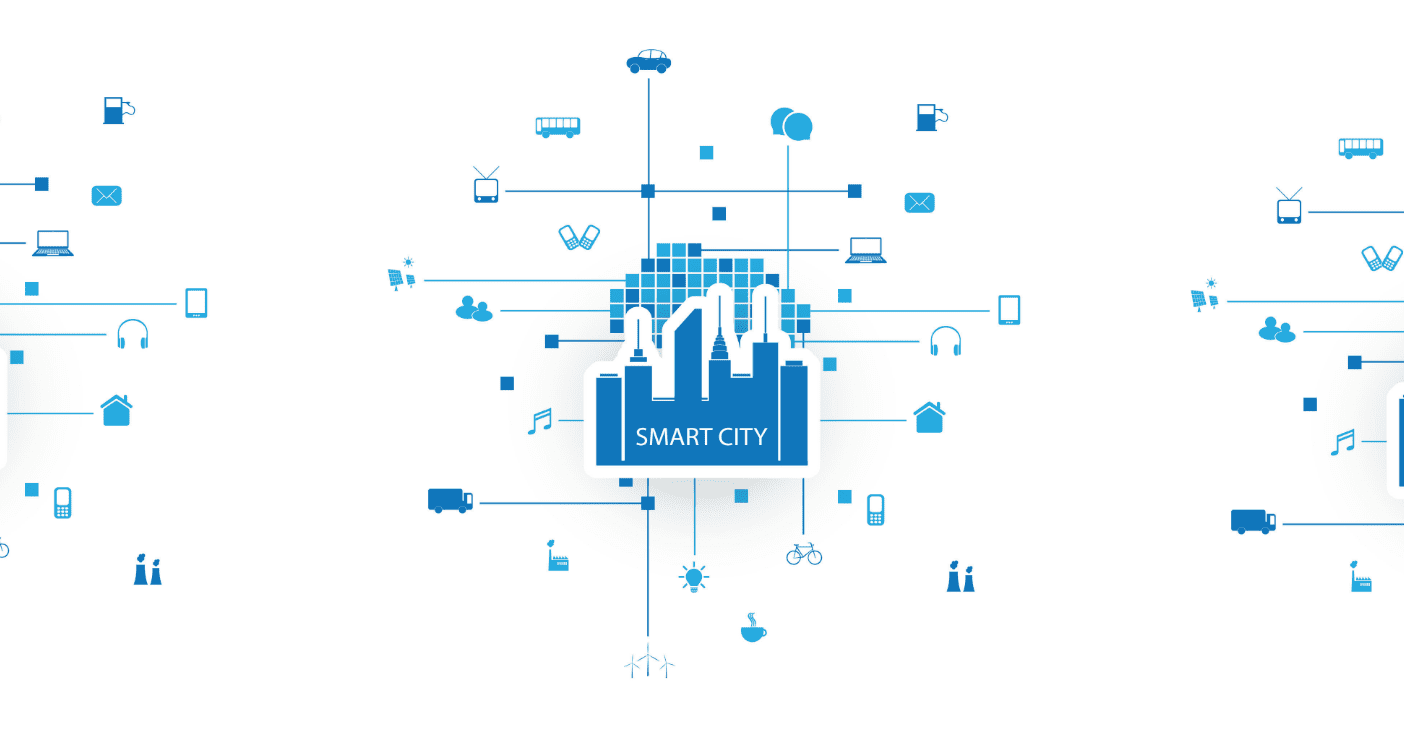
In the expanding universe of the Internet of Things (or “IoT”), transportation and “smart city” projects are at once among the most complex, and also the most advanced, types of IoT platforms currently in deployment. While their development is relatively far along, these types of deployments are helping to uncover some key areas where data integration challenges are rising to the surface, and where IoT standards will become a vital piece of the puzzle as the IoT comes to the forefront.
Data integration is a significant issue in three key ways:
- Even within a given smart city deployment ecosystem, data sets are wide and varied and bring integration challenges. The problem gets more complex when you try to integrate data sets from different cities and agencies because different cities have different approaches to smart city concepts and different ideas about data ownership between the various agencies, organizations and authorities involved.
- Despite their progress, IoT standards have not yet reached a point where they are able to address all of the structural inconsistencies between data sets.
- Most smart city deployments are focused on addressing the issues of the city in which they are in use because feasibility is determined at the local, not national, level. Large-scale, nationwide deployments are too massive at the moment to be possible, even in some of the geographically smaller European and Asian countries where pilot projects are already underway. This evolution will be a grassroots model starting with local municipalities and agencies.
Ultimately, this means that integrations between neighboring cities and local agencies will become both a necessity and a challenge.
Let’s examine these challenges a bit more deeply. Traditionally, smart city concepts tend to be confined to just the individual city. What happens when you go outside that city, to a different city implementing a different deployment, or to one with no deployment at all? In order for the smart city concepts to scale broadly, data integrations are of prime importance.
Transportation is a natural place to conduct real-world IoT pilot programs on these sorts of complex, multi-city deployments. For instance, there is a pilot program underway in the UK called oneTRANSPORT that is designed to test and develop better solutions for multi-locality IoT integrations. This program has paved the way for further integration of yet another pilot program, Smart Routing, which is focused within a single large urban area. These pilot programs are being conducted in four urban/suburban counties just north of London, and the second largest city in the UK, respectively, so the test-beds are exposed to very high-demand environments in terms of cross-region traffic volume and congestion. All of the work in both the oneTRANSPORT and Smart Routing pilot programs and related projects will lead to more effective urban transport infrastructure, reduced CO2 emissions, improved traffic flow, reduced congestion, and higher levels of traffic safety. These programs are designed to operate using the oneM2M™ IoT standard, which is designed to accommodate a wide range of machine-to-machine (“M2M”) applications. The oneM2M™ standard is still in development as well, so projects like oneTRANSPORT and Smart Routing offer a real-world testing opportunity.
So, what’s being learned from this work with oneTRANSPORT and the oneM2M™ standard that is being developed?
Transportation is just one vertical, which will be an excellent use case for oneM2M™. In the future, transportation data will be integrated seamlessly with IoT data from other verticals like healthcare, industrial and utilities to improve efficiencies of cities around the world.
The oneM2M™ standard (and other standards like HyperCat which allows entire catalogues of IoT data sets to be queried by individual devices) really helps here, because the industry can use the advances in the standard to describe the data being used within the system, and thereby link it with other data sets from other systems.
One of the great historic challenges in IoT overall has been the tendency of data to exist in silos — either vertical industry silos or individual organizational silos. IoT will become far more impactful when data can be liberated from silos through the use of standards and integrate with other data sets from different domains, verticals and platforms. This kind of evolution in thinking will take us toward a more “ecosystem” approach to IoT, instead of merely a problem/solution paradigm.
Stated differently, this is about connecting the dots between different smart cities and their legacy data sources, IoT systems and platforms, in order to draw a more holistic picture of a fully realized Internet of Things.
When we talk about ecosystems in this transportation context, we are talking about the platform providers, the transport experts, the data owners, and the local authorities. Significant benefits of this ecosystem approach will be realized as well, both direct benefits and indirect benefits. The direct benefits are fairly obvious: data owners and platform providers will be able to monetize their data and their expertise; local authorities will gain deeper insight into the functioning of their city’s transportation infrastructure and systems; and, deployment and management costs will be reduced.
But the indirect benefits are more far-reaching and will have a ripple effect. For example, if driving time is reduced by having transportation data integrated into a common platform, then CO2 emissions will concurrently be reduced. As a result, if CO2 and other vehicle emissions are reduced, then health costs for local authorities and hospitals will likely be reduced as well because we already know that there’s a direct correlation between local air quality and public health. Before this ecosystem paradigm, many local agencies were collecting data on things like local static air quality and simply not doing much with it beyond making it available to those who asked for it, and possibly enforcing regulatory requirements. By integrating the analysis of this information in view of transportation data, we can begin to make and account for measurable improvements in public health.
The oneTRANSPORT and Smart Routing pilot programs are interesting because of their real-world implications. These projects are a manageable size to be practical and cost-effective, but also sufficiently large and longitudinal to give the entire IoT industry some very valuable insight into how future smart-city deployments will move beyond networks of static devices (e.g., sensors) and into dynamic applications of rich and varied sets of complex IoT data.