
RCR Wireless
  • News
  • Channels
    • 5G
    • 6G
    • BSS OSS
    • Carriers
    • IoT
    • Network Infrastructure
    • Open RAN
    • Private 5G
    • Telco AI
    • Telco Cloud
    • Test & Measurement
  • Resources
    • Reports
    • Webinars
    • White papers
    • AI Fundamentals
    • Analyst Angle
    • Editorial Calendar
    • Fundamentals
      • 5G NR Release 17
      • AI
        • Telco AI in 2025
    • Podcasts
      • Let’s Get Digital with Carrie Charles
      • Wireless Connectivity to Enable Industry 4.0 for the Middleprise
      • Well Technically…
      • Will 5G Change the World
      • Accelerating Industry 4.0 Digitalization
  • AI Infrastructure
  • Programs
  • Events
  • RCRtv
  • Advertise
  • Subscribe
Friday, August 14, 2026
RCR Wireless
  • News
  • Channels
    • 5G
    • 6G
    • BSS OSS
    • Carriers
    • IoT
    • Network Infrastructure
    • Open RAN
    • Private 5G
    • Telco AI
    • Telco Cloud
    • Test & Measurement
  • Resources
    • Reports
    • Webinars
    • White papers
    • AI Fundamentals
    • Analyst Angle
    • Editorial Calendar
    • Fundamentals
      • 5G NR Release 17
      • AI
        • Telco AI in 2025
    • Podcasts
      • Let’s Get Digital with Carrie Charles
      • Wireless Connectivity to Enable Industry 4.0 for the Middleprise
      • Well Technically…
      • Will 5G Change the World
      • Accelerating Industry 4.0 Digitalization
  • AI Infrastructure
  • Programs
  • Events
  • RCRtv
  • Advertise
  • Subscribe
Add RCR Wireless as a preferred source on Google
  • Qualcomm 6G Insights
  • Huawei Content Hub
  • Qualcomm – 6G Vision
  • OSS/BSS Channel
  • RCRTech Roundtable: AI Infrastructure
RCR Wireless
RCR Wireless
  • Advanced Mimo
  • Mobile mmWave
  • 5G Positioning
  • Green Networks
  • Metaverse
  • Automotive
  • Industrial and Wide-area IoT
Copyright 2021 - All Right Reserved
Home - Telecom workforce adjustments needed for move to devops model
BusinessFundamentalsSoftware-defined networks (SDN)

Telecom workforce adjustments needed for move to devops model

by Phillip Tracy August 10, 2016
written by Phillip Tracy August 10, 2016 Share
LinkedinEmail
Share 0LinkedinEmail
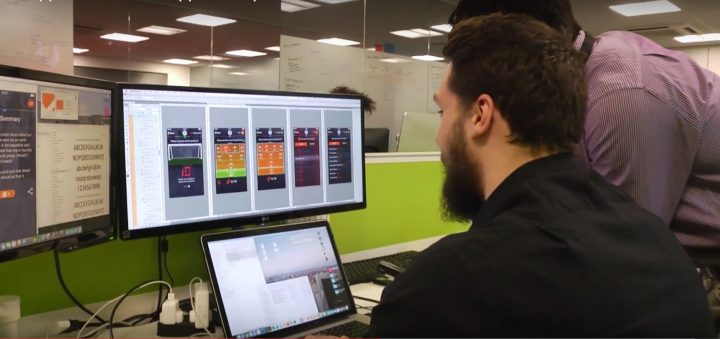
what is devops
source: Appitized ltd/Youutbe
129

Telecom workforce adjustments needed for devops

Just as workforce adjustments will be needed for telecom’s move to software-defined networks, changes will also need to take place in order for devops to be fully realized. In our article How telecom operators should approach devops we talked about some best practices for telecom companies switching to the devops model, and in 3 challenges facing telecom operators in shift to devops we detailed a few difficulties with that transition. We will now talk about some workforce changes that need to be made in order to get everyone on the same devops page.

Moving away from the silo

It is the premise of devops: getting developers and operations staff working together. This means breaking down the wall of the isolated silos they have, for so long, been working in. Those teams were almost always created as a response to some need or problem, and have always been better at resolving issues than making sure they do not occur in the first place. The earlier a company can get its developers and operations staff communicating with each other, the higher the rate of success it will have in deploying a successful devops environment.

It’s not about consolidating, it’s about flexibility

The prospect of “merging” departments might make some weary about the potential for job loss, but that isn’t what devops is all about. It is about flexibility and visibility; getting devs and ops to learn new skills so they can exchange their knowledge with someone who could benefit from it. Of course, some employees struggle with change more than others, so it should be taken on a case by case basis where and whether they fit within the organization’s new operating strategy.

A change of mindset: Agility is the key

Telecom operators should follow the agile principle of “everybody all together from early on,” to begin the process of moving to a more software-friendly work model.  One major features of devops is continuous integration (CI) and continuous delivery and/or continuous deployment (CD). CI is about continuously and automatically running tests against a code branch. It means continually merging source code updates from all developers on a team into a shared mainline. Whereas CD automates the process of getting code into production after testing and approval. Teams produce software in short cycles in order to ensure that the software can be reliably released at any time. This means devops workers no longer focus on projects with definite start and end times, and should no longer be working on projects catered to their own, often incompatible, development styles.

Getting your pieces together

Of course, you still need structure within each devops teams, each individual having a defined role and set of responsibilities.
Puppet, a machine and software automation company designed for devops, provides some recommendations as to what members should be present and what roles they should take in a devops team:

  • IT manager: Build trust with counterparts on other teams; create a climate of learning and continuous improvement; delegate authority to team members
  • Dev manager: Build trust with Ops counterpart; bring Ops into the planning process early.
  • Systems engineer: Automate the things that are painful.
  • Quality engineer: Provide input into scale and performance; provide feedback on staging environments.
  • Devs: Plan for deployment as you’re planning new features; get feedback from Ops and work with them on deployment process.

Software to the rescue

Change is tough on everyone. It is difficult for companies, which are required to determine and spend money on the correct resources for turning legacy equipment into agile, adaptable software. It is tough on workers who have been potentially doing their jobs for decades, and now must learn an entirely new system with a new set of colleagues. And the change to devops requires everyone in telecom to learn new skills, and use new tools.
Thankfully, software exists that help bridge the gap between developers and operations staff. HashiCorp’s Atlas, for example, provides visibility into infrastructure, including servers, containers, and virtual machines, in addition to configuration management and service discovery.  Services like Chef help automate complex processes, and popular Docker provides a platform for applications to run within self-contained units that can be moved across platforms.

You Might Also Like
  • ‘Literally truthful’ claims — T-Mobile US responds to Verizon lawsuit
  • What is AI-RRM in Wi-Fi 7?
  • T-Mobile US outpaces rivals as broadband becomes new battleground
  • SoftBank delivers record revenue, maps telco strategy beyond traditional services
  • T-Mobile US’ switching strategy lands in court again
  • SK Telecom turns to AI to restore profitability after FY2025 revenue decline

Table of Contents

  • Telecom workforce adjustments needed for devops
  • Moving away from the silo
  • It’s not about consolidating, it’s about flexibility
  • A change of mindset: Agility is the key
  • Getting your pieces together
  • Software to the rescue
Share 0 LinkedinEmail
Phillip Tracy

previous post
Intel acquisition portends importance of artificial intelligence
next post
Feature Report: Assuring the virtualized networks of the future

White Papers

  • Norton eBook: The 2026 Telco Playbook

  • Enea White Paper: Why Intelligent AAA is the Swiss Army Knife of Telecom

  • CSG White Paper: Telco AI Enabler: Mediation’s Defining Role

  • Enea White Paper: Scalable Database Design for 5G and Beyond

  • Supermicro and NVIDIA Whitepaper: Powering sovereign AI at scale

Editorial Reports

  • Report: NTN in motion — evolving standards, expanding services

  • Market Pulse Report: Telco AI in 2026 – Trends, Challenges and Opportunities

  • Nvidia Report: The State of AI in Telecommunications: 2026 Trends

Webinars

  • Webinar: Building 6G — aligning technology, policy and purpose

  • SIMCom Webinar: Scaling your next deployment – from plastic to provisioning

  • Webinar: Rethinking the RAN as AI, cloud and openness converge

  • Webinar: Scale-Up, Scale-Out, Scale-Across – Building AI-Era Network Fabrics

  • Webinar: NTN in motion – evolving standards, expanding services

Since 1982, RCR Wireless News has been providing wireless and mobile industry news, insights, and analysis to mobile and wireless industry professionals, decision makers, policy makers, analysts and investors.

Facebook Twitter Youtube Linkedin Envelope Rss

Useful Links

  • Subscribe
  • About RCR Wireless News
  • Contact Us
  • Advertise
  • Editorial Calendar
  • Archive
  • RSS
  • Wireless News Archive
  • Subscribe
  • About RCR Wireless News
  • Contact Us
  • Advertise
  • Editorial Calendar
  • Archive
  • RSS
  • Wireless News Archive

Edtior's Picks

Lockheed’s NetSense turns Verizon’s 5G network into a drone-tracking system
Criss-cross comms – Lumen bets on east-west AI, while the edge keeps north-south...
Fighting talk (and team spirit) – Celona preps private 5G/Wi-Fi for AI scramble...

Latest Articles

Lockheed’s NetSense turns Verizon’s 5G network into a drone-tracking system
Criss-cross comms – Lumen bets on east-west AI, while the edge keeps north-south in play
Fighting talk (and team spirit) – Celona preps private 5G/Wi-Fi for AI scramble in Industry 4.0
The Agentic Network — T-Mobile US on aligning AI initiatives with customer outcomes

© 2026 RCR Wireless News All Right Reserved. Developed by Eight Hats.

Cookie Policy | Privacy Policy

RCR Wireless
  • News
  • Channels
    • 5G
    • 6G
    • BSS OSS
    • Carriers
    • IoT
    • Network Infrastructure
    • Open RAN
    • Private 5G
    • Telco AI
    • Telco Cloud
    • Test & Measurement
  • Resources
    • Reports
    • Webinars
    • White papers
    • AI Fundamentals
    • Analyst Angle
    • Editorial Calendar
    • Fundamentals
      • 5G NR Release 17
      • AI
        • Telco AI in 2025
    • Podcasts
      • Let’s Get Digital with Carrie Charles
      • Wireless Connectivity to Enable Industry 4.0 for the Middleprise
      • Well Technically…
      • Will 5G Change the World
      • Accelerating Industry 4.0 Digitalization
  • AI Infrastructure
  • Programs
  • Events
  • RCRtv
  • Advertise
  • Subscribe
RCR Wireless
  • News
  • Channels
    • 5G
    • 6G
    • BSS OSS
    • Carriers
    • IoT
    • Network Infrastructure
    • Open RAN
    • Private 5G
    • Telco AI
    • Telco Cloud
    • Test & Measurement
  • Resources
    • Reports
    • Webinars
    • White papers
    • AI Fundamentals
    • Analyst Angle
    • Editorial Calendar
    • Fundamentals
      • 5G NR Release 17
      • AI
        • Telco AI in 2025
    • Podcasts
      • Let’s Get Digital with Carrie Charles
      • Wireless Connectivity to Enable Industry 4.0 for the Middleprise
      • Well Technically…
      • Will 5G Change the World
      • Accelerating Industry 4.0 Digitalization
  • AI Infrastructure
  • Programs
  • Events
  • RCRtv
  • Advertise
  • Subscribe
@2020 - All Right Reserved. Designed and Developed by PenciDesign