

RCR Wireless
  • News
  • Channels
    • 5G
    • 6G
    • BSS OSS
    • Carriers
    • IoT
    • Network Infrastructure
    • Open RAN
    • Private 5G
    • Telco AI
    • Telco Cloud
    • Test & Measurement
  • Resources
    • Reports
    • Webinars
    • White papers
    • AI Fundamentals
    • Analyst Angle
    • Editorial Calendar
    • Fundamentals
      • 5G NR Release 17
      • AI
        • Telco AI in 2025
    • Podcasts
      • Let’s Get Digital with Carrie Charles
      • Wireless Connectivity to Enable Industry 4.0 for the Middleprise
      • Well Technically…
      • Will 5G Change the World
      • Accelerating Industry 4.0 Digitalization
  • AI Infrastructure
  • Programs
  • Events
  • RCRtv
  • Advertise
  • Subscribe
Saturday, July 18, 2026
RCR Wireless
  • News
  • Channels
    • 5G
    • 6G
    • BSS OSS
    • Carriers
    • IoT
    • Network Infrastructure
    • Open RAN
    • Private 5G
    • Telco AI
    • Telco Cloud
    • Test & Measurement
  • Resources
    • Reports
    • Webinars
    • White papers
    • AI Fundamentals
    • Analyst Angle
    • Editorial Calendar
    • Fundamentals
      • 5G NR Release 17
      • AI
        • Telco AI in 2025
    • Podcasts
      • Let’s Get Digital with Carrie Charles
      • Wireless Connectivity to Enable Industry 4.0 for the Middleprise
      • Well Technically…
      • Will 5G Change the World
      • Accelerating Industry 4.0 Digitalization
  • AI Infrastructure
  • Programs
  • Events
  • RCRtv
  • Advertise
  • Subscribe
Add RCR Wireless as a preferred source on Google
  • Qualcomm 6G Insights
  • Huawei Content Hub
  • Qualcomm – 6G Vision
  • OSS/BSS Channel
  • RCRTech Roundtable: AI Infrastructure
RCR Wireless
RCR Wireless
  • Advanced Mimo
  • Mobile mmWave
  • 5G Positioning
  • Green Networks
  • Metaverse
  • Automotive
  • Industrial and Wide-area IoT
Copyright 2021 - All Right Reserved
Home - WebRTC vs. VoLTE: Is there room for both?
Software

WebRTC vs. VoLTE: Is there room for both?

by Dan Meyer October 9, 2014
written by Dan Meyer October 9, 2014 Share
LinkedinEmail
Share 0LinkedinEmail
radisys
65

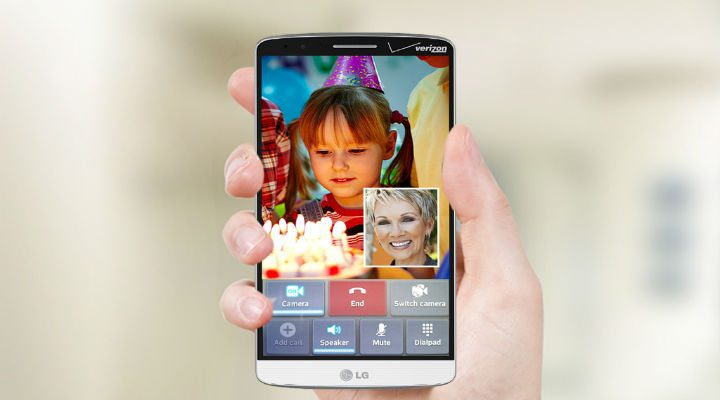
With voice over LTE technology rapidly being rolled out by a number of mobile operators, the move toward carrier-grade voice traffic running over data networks has finally arrived.

VoLTE is not the only game in town as voice-over-IP services have been running across a number of over-the-top services for years. Skype, Tango and Apple’s FaceTime are all examples of voice traffic being transmitted as data services, as consumers have been flocking to those efforts. These services often tap into Web-based standards, including WebRTC, which is a platform that uses JavaScript APIs to support real-time communications through standard Web browsers.

Jim Machi, VP of product management at Dialogic, provided some insight into how WebRTC compares with VoLTE, as well as how mobile operators can look to take advantage of the technology.

RCR Wireless News: What are the basic differences/similarities between VoLTE and WebRTC?
Jim Machi: The basic similarity is that both are Internet Protocol-based. Since you can make point-to-point phone calls with WebRTC, similar to a Skype call, and since Web browsers are part of smartphones, then the assumption is that people will make IP-based WebRTC phone calls instead of VoLTE phone calls. However, because WebRTC is built into the browser, we will ultimately see a lot of apps that incorporate voice and video as elements of a larger communications application. That’s where I see the ultimate benefit and difference of WebRTC. We will see people “talking” to one another as part of a communications app, not as the singular function.

RCRWN: How are the two technologies currently being used in the mobile communications space?
JM: VoLTE is deployed by carriers, and subscribers are using it for voice and/or video calls on mobile networks. An LTE offering from the carrier to the subscriber would include VoLTE as part of the voice (and video) package. Therefore, the subscriber may not even know (or care for that matter) that he or she is using VoLTE. WebRTC, on the other hand, is relatively new. There are some deployments, like Amazon Mayday, but right now these deployments tend to be more enterprise-focused.

RCRWN: How should mobile operators approach the two technologies?
JM: VoLTE is becoming the preferred method of voice and video calls, as well as the de-facto method for carriers that use LTE networks. WebRTC can be utilized by carriers to offer their own over-the-top voice or video apps and integrate voice/video and data into a Web surfing experience. Likewise, the OTT app providers themselves can use WebRTC in a similar fashion.

RCRWN: Is there a place for both technologies in the market, or does one win out?
JM: There is certainly a place for both technologies. VoLTE will be part of the subscriber package and used for basic voice and video calls, whereas WebRTC can be used for value-added services. For instance, WebRTC is a way for voice and video to be integrated into communications applications and therein lies its ultimate power. Sure, you can make a WebRTC point-to-point VoIP call, which would technically compete with a VoLTE call, but WebRTC is really app-centric.

RCRWN: Are there service level agreement issues that make one more compelling for different market segments than the other?
JM: Keep in mind, one huge advantage the carriers have over OTT players is that built-in customers receive basic VoLTE service as part of their subscriber package. VoLTE will also wield tight quality-of-service requirements. The subscriber is left with a choice between the basic voice service with VoLTE and the OTT voice play, which will be subject to the vagaries of mobile Internet bandwidth. The carriers ultimately need to offer true flexibility and differentiation to cater to a range of customer needs. On a phone call, the added value of VoLTE would be noticeable, which inherently makes it something people would pay for. I was recently at LTE Asia, and in one of the keynotes Singtel stated that its VoLTE mean opinion score was higher than its 3G MOS, likely due to use of HD Voice codecs.

RCRWN: How does IMS and RCS fit into the deployment of both technologies?
JM: IMS is an IP network architecture and LTE networks follow the IMS standards, generally. RCS is a carrier-supported initiative to have services (applications) work between carriers. Since it’s about applications, WebRTC can be seen to compete with RCS because as I said above, this is all about apps. WebRTC could not only enable the carriers to offer their own apps more easily, but also offer different kinds of integrated, value-added apps. A service provider could easily offer WebRTC-enabled conferencing with a simple URL. The carriers could also offer services to enterprises, for instance, so now enterprise offerings could include different kinds of more tailored apps. The GSMA is starting to look into WebRTC and initiating working groups to incorporate WebRTC into the IMS network.

Bored? Why not follow me on Twitter

You Might Also Like
  • OCUDU aims to resolve the ‘last bottlenecks of proprietary software’
  • Telefónica on making Open Gateway APIs agent-ready
  • How telecommunications operators can thrive in the software-centric era (Reader Forum)
  • Rethinking managed connectivity — from license fees to tariffs and open software (Analyst Angle)
  • Comcast expands Janus virtualization, AI trial with DriveNets
  • Red Hat secures new deals with SoftBank, Fujitsu, Orange and more
Share 0 LinkedinEmail
Dan Meyer

Contributor

previous post
Cell Tower News: NATE joins FCC safety workshop
next post
Highest, lowest wireless tax rates

White Papers

  • Norton eBook: The 2026 Telco Playbook

  • Enea White Paper: Why Intelligent AAA is the Swiss Army Knife of Telecom

  • CSG White Paper: Telco AI Enabler: Mediation’s Defining Role

  • Enea White Paper: Scalable Database Design for 5G and Beyond

  • Supermicro and NVIDIA Whitepaper: Powering sovereign AI at scale

Editorial Reports

  • Nvidia Report: The State of AI in Telecommunications: 2026 Trends

  • Report: Scaling Optical Networks For The Hyperscale And AI Era

  • Test And Measurement Market Pulse Report

Webinars

  • Webinar: Building 6G — aligning technology, policy and purpose

  • SIMCom Webinar: Scaling your next deployment – from plastic to provisioning

  • Webinar: Rethinking the RAN as AI, cloud and openness converge

  • Webinar: Scale-Up, Scale-Out, Scale-Across – Building AI-Era Network Fabrics

  • Webinar: NTN in motion – evolving standards, expanding services

Since 1982, RCR Wireless News has been providing wireless and mobile industry news, insights, and analysis to mobile and wireless industry professionals, decision makers, policy makers, analysts and investors.

Facebook Twitter Youtube Linkedin Envelope Rss

Useful Links

  • Subscribe
  • About RCR Wireless News
  • Contact Us
  • Advertise
  • Editorial Calendar
  • Archive
  • RSS
  • Wireless News Archive
  • Subscribe
  • About RCR Wireless News
  • Contact Us
  • Advertise
  • Editorial Calendar
  • Archive
  • RSS
  • Wireless News Archive

Edtior's Picks

Red Hat outlines AI-RAN roadmap
Ericsson wins role in £8bn UK’s defense upgrade as private 5G moves to...
Thursday (telco diary) | Satellite versus terrestrial

Latest Articles

Red Hat outlines AI-RAN roadmap
Ericsson wins role in £8bn UK’s defense upgrade as private 5G moves to frontline
Thursday (telco diary) | Satellite versus terrestrial
The Agentic Network — Deutsche Telekom on APIs for trusted AI

© 2026 RCR Wireless News All Right Reserved. Developed by Eight Hats.

Cookie Policy | Privacy Policy

RCR Wireless
  • News
  • Channels
    • 5G
    • 6G
    • BSS OSS
    • Carriers
    • IoT
    • Network Infrastructure
    • Open RAN
    • Private 5G
    • Telco AI
    • Telco Cloud
    • Test & Measurement
  • Resources
    • Reports
    • Webinars
    • White papers
    • AI Fundamentals
    • Analyst Angle
    • Editorial Calendar
    • Fundamentals
      • 5G NR Release 17
      • AI
        • Telco AI in 2025
    • Podcasts
      • Let’s Get Digital with Carrie Charles
      • Wireless Connectivity to Enable Industry 4.0 for the Middleprise
      • Well Technically…
      • Will 5G Change the World
      • Accelerating Industry 4.0 Digitalization
  • AI Infrastructure
  • Programs
  • Events
  • RCRtv
  • Advertise
  • Subscribe
RCR Wireless
  • News
  • Channels
    • 5G
    • 6G
    • BSS OSS
    • Carriers
    • IoT
    • Network Infrastructure
    • Open RAN
    • Private 5G
    • Telco AI
    • Telco Cloud
    • Test & Measurement
  • Resources
    • Reports
    • Webinars
    • White papers
    • AI Fundamentals
    • Analyst Angle
    • Editorial Calendar
    • Fundamentals
      • 5G NR Release 17
      • AI
        • Telco AI in 2025
    • Podcasts
      • Let’s Get Digital with Carrie Charles
      • Wireless Connectivity to Enable Industry 4.0 for the Middleprise
      • Well Technically…
      • Will 5G Change the World
      • Accelerating Industry 4.0 Digitalization
  • AI Infrastructure
  • Programs
  • Events
  • RCRtv
  • Advertise
  • Subscribe
@2020 - All Right Reserved. Designed and Developed by PenciDesign
