

RCR Wireless
  • News
  • Channels
    • 5G
    • 6G
    • BSS OSS
    • Carriers
    • IoT
    • Network Infrastructure
    • Open RAN
    • Private 5G
    • Telco AI
    • Telco Cloud
    • Test & Measurement
  • Resources
    • Reports
    • Webinars
    • White papers
    • AI Fundamentals
    • Analyst Angle
    • Editorial Calendar
    • Fundamentals
      • 5G NR Release 17
      • AI
        • Telco AI in 2025
    • Podcasts
      • Let’s Get Digital with Carrie Charles
      • Wireless Connectivity to Enable Industry 4.0 for the Middleprise
      • Well Technically…
      • Will 5G Change the World
      • Accelerating Industry 4.0 Digitalization
  • AI Infrastructure
  • Programs
  • Events
  • RCRtv
  • Advertise
  • Subscribe
Saturday, July 18, 2026
RCR Wireless
  • News
  • Channels
    • 5G
    • 6G
    • BSS OSS
    • Carriers
    • IoT
    • Network Infrastructure
    • Open RAN
    • Private 5G
    • Telco AI
    • Telco Cloud
    • Test & Measurement
  • Resources
    • Reports
    • Webinars
    • White papers
    • AI Fundamentals
    • Analyst Angle
    • Editorial Calendar
    • Fundamentals
      • 5G NR Release 17
      • AI
        • Telco AI in 2025
    • Podcasts
      • Let’s Get Digital with Carrie Charles
      • Wireless Connectivity to Enable Industry 4.0 for the Middleprise
      • Well Technically…
      • Will 5G Change the World
      • Accelerating Industry 4.0 Digitalization
  • AI Infrastructure
  • Programs
  • Events
  • RCRtv
  • Advertise
  • Subscribe
Add RCR Wireless as a preferred source on Google
  • Qualcomm 6G Insights
  • Huawei Content Hub
  • Qualcomm – 6G Vision
  • OSS/BSS Channel
  • RCRTech Roundtable: AI Infrastructure
RCR Wireless
RCR Wireless
  • Advanced Mimo
  • Mobile mmWave
  • 5G Positioning
  • Green Networks
  • Metaverse
  • Automotive
  • Industrial and Wide-area IoT
Copyright 2021 - All Right Reserved
Home - Sprint injects speed into the LTE argument with Spark plans
CarriersPolicy

Sprint injects speed into the LTE argument with Spark plans

by Dan Meyer October 30, 2013
written by Dan Meyer October 30, 2013 Share
LinkedinEmail
Share 0LinkedinEmail
136

Sprint looks finally set to take advantage of its recently bolstered spectrum position in an attempt to move the LTE discussion away from outright coverage to that of network speed.

The carrier unveiled the plans under its “Sprint Spark” banner, bringing together the various spectrum bands it plans to use in support of its LTE network, the carrier said it will soon be offering customers network speeds of up to 60 megabits per second. The carrier noted that lab testing across the network has shown speeds of up to one gigabit per second.

Those spectrum bands include the carriers current 1.9 GHz G-Band spectrum being used as the base of its initial FDD-LTE deployment, plans to begin adding in 800 MHz spectrum re-farmed from the shut down of its iDEN network, and to then tap into the vast 2.5 GHz spectrum holdings from Clearwire, which Sprint recently gained full control over. Analysts have noted that the 2.5 GHz spectrum is the real crux of Sprint’s speed plans as the depth of those assets reach to more than 120 megahertz in most markets. That 2.5 GHz spectrum will also utilize the TDD-LTE standard, which allows for dynamic usage of spectrum resources.

“While both LTE technologies bring significant enhancements in network speed, the 2.5GHz spectrum is crucial to the exceptional capacity, speed and flexibility expected with Sprint Spark,” the carrier noted in a statement.

Clearwire reported back in late 2010 that network testing using 40 megahertz of 2.5 GHz spectrum and the TDD-LTE standard produced downlink speeds in excess of 90 Mbps. Verizon Wireless, which leads the domestic market in LTE coverage, professes its network will provide downlink speeds only as high as 12 Mbps, though the carrier is in the process of adding spectrum support from the 1.7/2.1 GHz band that could boost those speeds.

%7B8cacf213 dd71 480e a572 136beefc7f49%7D Ixia White Paper

Sprint noted that the network upgrades, which are part of its Network Vision initiative, was now available in five markets, with plans to cover 100 million potential customers by the end of 2014 and 100 top markets over the next three years. The initial markets include New York, Los Angeles, Chicago, Tampa and Miami.

The Spark offering did get a bit of a head start due to more than 130 million pops Clearwire had already covered with its legacy WiMAX offering using the 2.5 GHz spectrum band. Clearwire had begun to convert many of those markets to LTE prior to the Sprint acquisition, though financial concerns stymied those efforts.

Sprint’s current LTE network was on track to cover 200 million pops by the end of the year, with expansion to 250 million pops by mid-2014. Sprint has said it plans to expand its 2.5 GHz services across all of its cell sites.

That 250 million pop mark seems to be a limiting number for both Sprint and smaller rival T-Mobile US as both operators have not committed to LTE coverage beyond that level. Larger carriers Verizon Wireless and AT&T Mobility have both said they expect to expand their LTE coverage to in excess of 300 million pops, bolstered by their ownership of sub-1 GHz spectrum holdings that allow carriers to expand coverage at a lower cost point than the higher spectrum bands used by Sprint and T-Mobile US.

Sprint said it has tapped Samsung, Nokia Solutions and Networks and Alcatel-Lucent to implement its Spark initiative, with each provider handling roughly one-third of the deployment. That lineup is somewhat interesting in that NSN has replaced Ericsson on the vendor list compared with Sprint’s network-wide Network Vision program. Ericsson is still involved in the process through its managed network services agreement with the carrier.

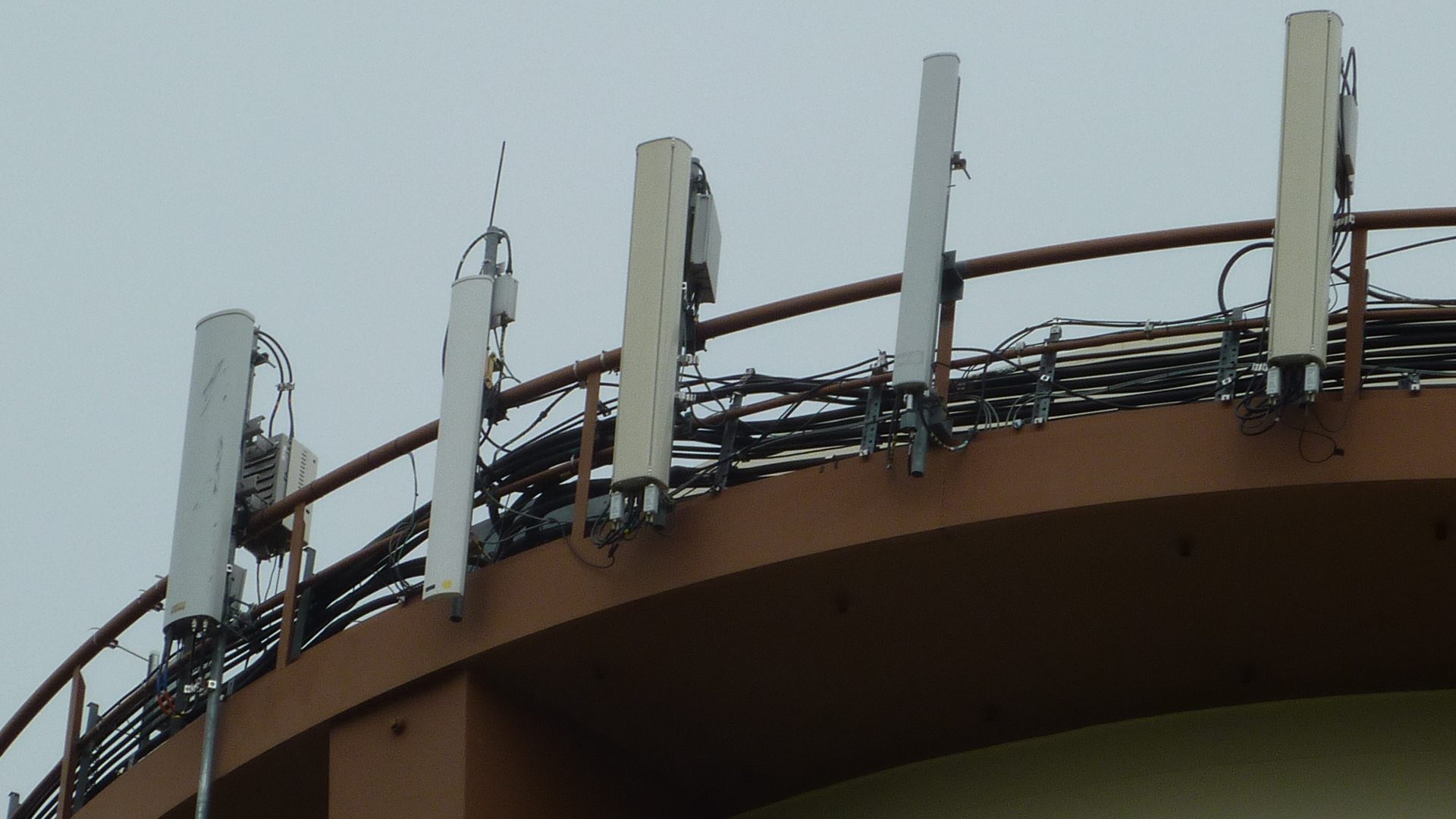
The Spark effort will also see a continued reliance on remote radio head technology, which the carrier began to utilize as part of the Network Vision program. The Spark-specific equipment will include support for eight transmitters-eight receivers, which the carrier said would be the first deployment of that technology in North America.

“These radios will be capable of improved coverage, capacity and speeds when compared to the more traditional 2T2R or 4T4R radios used by our competitors,” Sprint explained.

Sprint’s Network Vision program was initially scheduled to include the de-commissioning of approximately 20,000 macro sites, taking the carrier’s total count to less than 40,000 total sites. However, Sprint noted that as part of the Spark program it will continue to support approximately 55,000 macro sites for the “next few years.” Future bolstering of the network will come from small cells, which Sprint said it expects to begin next year.

Sprint’s network upgrade will also see the carrier include the High Definition Voice standard across its CDMA-based 3G network, which currently covers 85 million pops. That coverage is set to reach 250 million pops by mid-2014. The carrier said it expects there to be 12 million HD Voice devices on its network by the end of the year, with up to 20 million by the end of 2014.

Spark device support

Of course, to take advantage of that increased Spark speed, customers will need devices embolden with tri-band capabilities. Sprint began offering tri-band devices earlier this year in the form of mobile hotspots, with plans to begin rolling out smartphones on Nov. 8. Those devices include a pair of Samsung models – the Galaxy Mega and Galaxy S4 Mini, both of which will require a future software upgrade to enable the 800 MHz and 2.5 GHz support – and the LG G2 that will also require a future update set for early next year. Sprint also noted that the HTC One Max, which is set to come to the carrier later this year, would be upgradeable for Spark support.

The Galaxy Mega is set to retail for $200 after rebates and with a contract; the S4 Mini for $100 after rebates and with a contract; the G2 for $200 with rebates and a contract; and the Max One for $250 with rebates and a contract.

Bored? Why not follow me on Twitter?

You Might Also Like
  • Red Hat outlines AI-RAN roadmap
  • Thursday (telco diary) | Satellite versus terrestrial
  • The Agentic Network — Deutsche Telekom on APIs for trusted AI
  • Wednesday (telco diary) | What telcos want – and why they wait
  • Prioritise AI outcomes over agent numbers, says Orange
  • The (agentic) future of AI-to-AI connectivity (Reader Forum)
Share 0 LinkedinEmail
Dan Meyer

Contributor

previous post
Towercrews Featured Jobs for the Week of 10/30/2013
next post
American Tower sees revenue boom from network upgrades

White Papers

  • Norton eBook: The 2026 Telco Playbook

  • Enea White Paper: Why Intelligent AAA is the Swiss Army Knife of Telecom

  • CSG White Paper: Telco AI Enabler: Mediation’s Defining Role

  • Enea White Paper: Scalable Database Design for 5G and Beyond

  • Supermicro and NVIDIA Whitepaper: Powering sovereign AI at scale

Editorial Reports

  • Nvidia Report: The State of AI in Telecommunications: 2026 Trends

  • Report: Scaling Optical Networks For The Hyperscale And AI Era

  • Test And Measurement Market Pulse Report

Webinars

  • Webinar: Building 6G — aligning technology, policy and purpose

  • SIMCom Webinar: Scaling your next deployment – from plastic to provisioning

  • Webinar: Rethinking the RAN as AI, cloud and openness converge

  • Webinar: Scale-Up, Scale-Out, Scale-Across – Building AI-Era Network Fabrics

  • Webinar: NTN in motion – evolving standards, expanding services

Since 1982, RCR Wireless News has been providing wireless and mobile industry news, insights, and analysis to mobile and wireless industry professionals, decision makers, policy makers, analysts and investors.

Facebook Twitter Youtube Linkedin Envelope Rss

Useful Links

  • Subscribe
  • About RCR Wireless News
  • Contact Us
  • Advertise
  • Editorial Calendar
  • Archive
  • RSS
  • Wireless News Archive
  • Subscribe
  • About RCR Wireless News
  • Contact Us
  • Advertise
  • Editorial Calendar
  • Archive
  • RSS
  • Wireless News Archive

Edtior's Picks

Red Hat outlines AI-RAN roadmap
Ericsson wins role in £8bn UK’s defense upgrade as private 5G moves to...
Thursday (telco diary) | Satellite versus terrestrial

Latest Articles

Red Hat outlines AI-RAN roadmap
Ericsson wins role in £8bn UK’s defense upgrade as private 5G moves to frontline
Thursday (telco diary) | Satellite versus terrestrial
The Agentic Network — Deutsche Telekom on APIs for trusted AI

© 2026 RCR Wireless News All Right Reserved. Developed by Eight Hats.

Cookie Policy | Privacy Policy

RCR Wireless
  • News
  • Channels
    • 5G
    • 6G
    • BSS OSS
    • Carriers
    • IoT
    • Network Infrastructure
    • Open RAN
    • Private 5G
    • Telco AI
    • Telco Cloud
    • Test & Measurement
  • Resources
    • Reports
    • Webinars
    • White papers
    • AI Fundamentals
    • Analyst Angle
    • Editorial Calendar
    • Fundamentals
      • 5G NR Release 17
      • AI
        • Telco AI in 2025
    • Podcasts
      • Let’s Get Digital with Carrie Charles
      • Wireless Connectivity to Enable Industry 4.0 for the Middleprise
      • Well Technically…
      • Will 5G Change the World
      • Accelerating Industry 4.0 Digitalization
  • AI Infrastructure
  • Programs
  • Events
  • RCRtv
  • Advertise
  • Subscribe
RCR Wireless
  • News
  • Channels
    • 5G
    • 6G
    • BSS OSS
    • Carriers
    • IoT
    • Network Infrastructure
    • Open RAN
    • Private 5G
    • Telco AI
    • Telco Cloud
    • Test & Measurement
  • Resources
    • Reports
    • Webinars
    • White papers
    • AI Fundamentals
    • Analyst Angle
    • Editorial Calendar
    • Fundamentals
      • 5G NR Release 17
      • AI
        • Telco AI in 2025
    • Podcasts
      • Let’s Get Digital with Carrie Charles
      • Wireless Connectivity to Enable Industry 4.0 for the Middleprise
      • Well Technically…
      • Will 5G Change the World
      • Accelerating Industry 4.0 Digitalization
  • AI Infrastructure
  • Programs
  • Events
  • RCRtv
  • Advertise
  • Subscribe
@2020 - All Right Reserved. Designed and Developed by PenciDesign
