

From the newsletter: AI agents in telecoms is sharpening focus on governance, controlled autonomy and human oversight, while momentum in private 5G and industrial AI continues to build through new deployments, ecosystem partnerships, spectrum initiatives and innovative network applications.
Firstly, good stuff from Sean Kinney, as always – from Cisco Live a couple of weeks back (with apologies for its tardiness) and DTW last week (right on time). The two pieces are worth taking as a pair: they discuss the tension as AI reshapes operational control in networks. The DTW writeup, an intellectual take, says probabilistic AI and deterministic telecoms are strange bedfellows – that inference and judgement are unreliable stewards of repeatability and predictability. Which is the discussion most industries are having about AI, actually. The Cisco review deals with the same, effectively: as AI is licensed to take action, rather than just to generate responses, mechanisms must be in place to govern what agents can do, what they can access, and how their actions are monitored. Which is the Cisco pitch. The point is, the telco AI story – just the industrialisation of AI, broadly – is about human control of machine intelligence, and controlled autonomy rather than unrestricted autonomy. Search-out the two articles.
Secondly, and related (to AI-organized control of industrial systems, plus outward-looking telco upsides), there is lots happening in the private 5G space. Twelve months ago, RCR might have covered these items individually, in depth, but AI has changed everything, including the news trade and news beat (so share if you care). For one, Nokia – which we shall call ECE for now, on the grounds Nokia has put it up for sale, and doesn’t deserve the credit – has started its own little PR engine, it seems, to make some noise, finally, if only to dispel rumours about its (enforced) six-month silence, and also to spread the good Industry 4.0 gospel. There’s lots here: contract wins with Schneider Electric in France, Toyota TPEC in Japan, and Odense Harbour in Denmark, with Orange, NS Solutions, and Borch Teknik; and headline stats, including claims that 99% achieve ROI within two years, 68% get there in six months, and that the super-set industrial AI market will grow 23% per year to be worth $150bn by 2030 (citation needed).
ECE (right?) makes mention of its partners, including far-sighted telcos like Orange – like it gets the teamwork in IoT / Industry 4.0 / Enterprise AI etc (choose your PR poison). It also talks about app stacking (the “ecosystem multiplier”, per “the art of the possible”; where’s the eye-roll emoji?) on ‘AI-ready’ (ditto) network foundations – which is the same stuff everyone at Cisco Live and DTW is talking about, just on larger-scale networks (even discussing physical AI at the edge). ECE has a blog on this. Plus, it discusses “zero-touch” mines, same as Ericsson lately, and how airports, harbours, and hubs are making money as private 5G hosts. It lists a bunch of “new” home-made and third-party solutions on its MXIE platform: a crisis workflow and alerting system called Secapp; digital twin mapping to track fleets of devices; “all-in-one” small cells; a more-compact DAC Compact for smaller sites; neutral-host capabilities for shared private 5G. “2026 has been a strong year,” it writes. Well, who knew? Hopefully it finds a happier home.
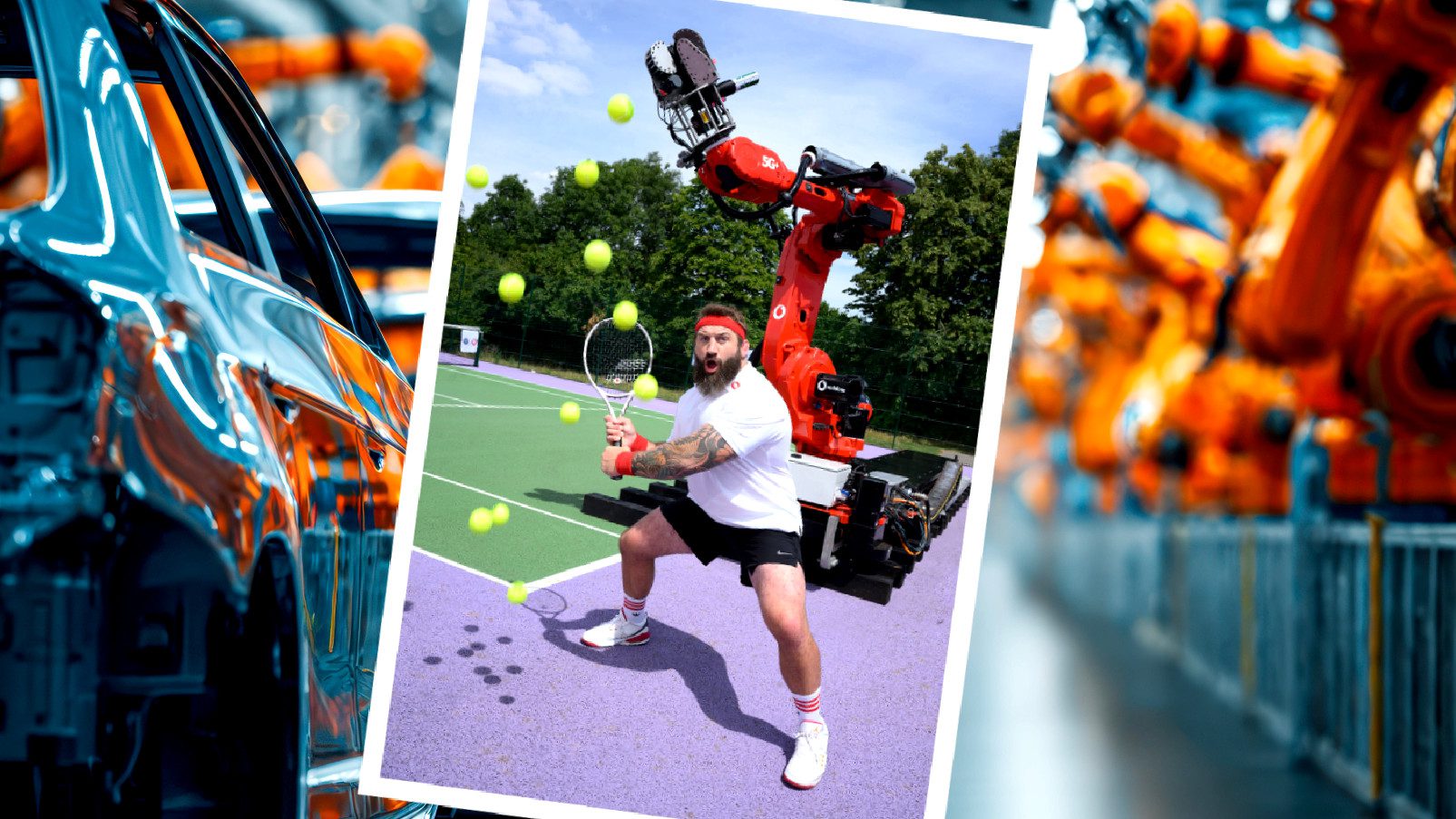
Meanwhile, there is plenty going on to think ECE is still on to a good thing. China Daily reports that China is to build 50,000 private 5G networks to drive the “value-added of the industrial internet core industry” (whatever that means) to $368bn by 2030 – says a plan by eight government departments. The government in New Zealand is to open the 3340-3460 MHz band for private 5G; it has a consultation, to the end of the summer, about use cases and spectrum sharing. All positive, then. Best of all, as the public 5G tech solution for similar ends in different set-ups: Vodafone has a fun demo in the UK. It has sliced its 5G SA network for a Wimbledon tennis app, which gives visitors a chance to return Jannik Sinner’s pro-serves on Centre Court – in ‘real time’. The set-up analyzes the live match feed, including the speed, position, and trajectory of each serve, and sends the data over the 5G slice to a robot arm that recreates the serve “in under a second” – for have-a-go-Henrys (Joe Mahler in the pic) to have a swing at.
How cool is that? But that’s enough from me; there’s a football game to watch.

