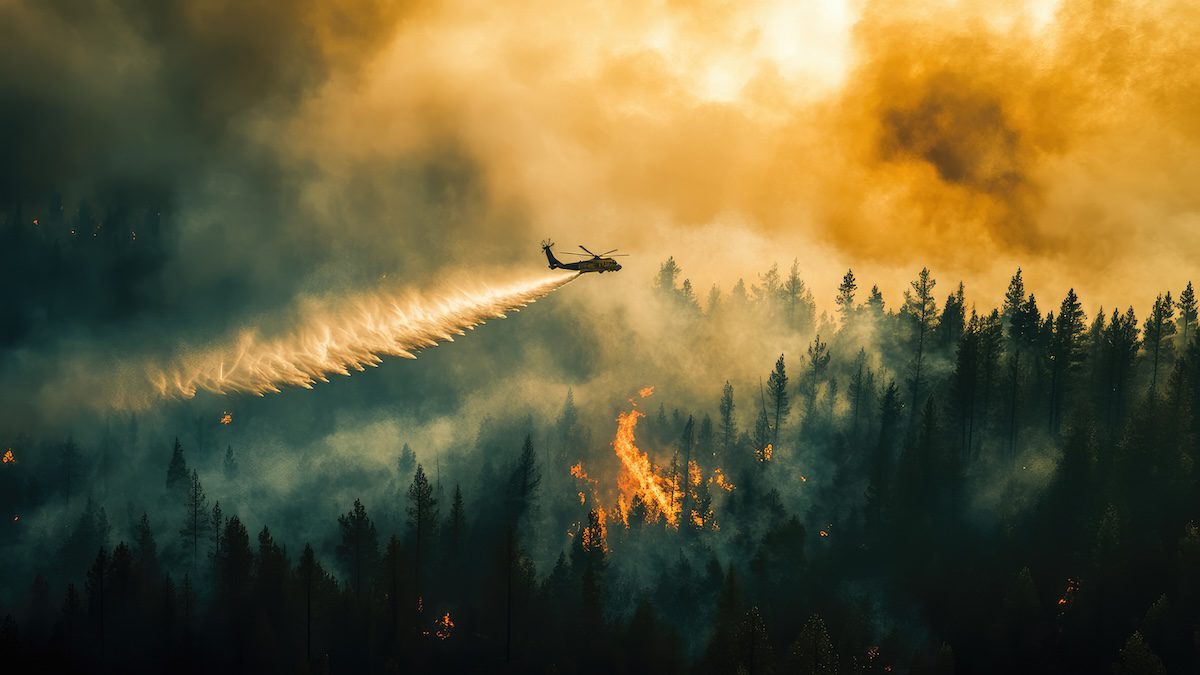
A layer of satellite connectivity will enable FirstNet to provide coverage for “any potential emergency”, says FirstNet President, Scott Agnew
In sum — what to know:
FirstNet tests satellite connectivity: Working alongside AST SpaceMobile, AT&T’s FirstNet is testing a direct-to-cellular satellite service for its emergency network
A multi-layered approach: The satellite service which will launch for select commercial and public safety users in the first half of this year, will help plug coverage gaps in certain remote areas that land-based networks do not serve.
Coverage beyond terrestrial builds: FirstNet president, Scott Agnew told RCR that the multi-layered network will go beyond FirstNet’s terrestrial builds to provide “coverage for any potential emergency.”
Satellite connectivity has become a compelling supplement to land-based network services, especially in closing the digital divide between urban communities and remote areas. In 2026, it’s poised to take a step further.
In an effort to serve public safety workers in remote areas, FirstNet — AT&T’s network for first responders — is working with AST SpaceMobile to bring satellite connectivity to its network which could plug gaps in public safety communication.
The direct-to-cellular service which received FCC approval early in 2025, will operate using AST’s super-large BlueBird satellite constellation. Bluebird 6, the latest in the Bluebird series, was launched from India’s Satish Dhawan Space Centre in December. The provider described the constellation as the “largest commercial communications array in low Earth orbit [LEO].”
AST is on track to launch four additional Bluebird satellites by March 2026, with plans to deploy 45 to 60 satellites by the end of this year. The rollout is expected to take place every one to two months.
The direct-to-cellular service will connect the satellites with AT&T’s terrestrial network via ground stations or gateways. Those gateways, designed by AT&T, will adjust and route the signal over to an AT&T network, establishing the connection.
For FirstNet, satellite is not intended to replace ground-based network. Instead, it is meant to strengthen coverage by adding another layer of connectivity which will make it easier to serve “white space areas” where FirstNet’s macro network currently cannot reach. The goal is to create “resilient and diverse connectivity that can adapt to whatever technology first responders need in the field.”
“Emergencies do not have a zip code,” Scott Agnew, president of FirstNet, AT&T said. “And when a natural disaster like wildfire hits a rural area, we want to make sure our first responders have the same experience as they would if it was in an urban one.”
“We are designing FirstNet with and for public safety by creating a multi-layered network that would provide coverage for any potential emergency, ” Agnew said, adding that it will “one day give first responders the same unique benefits and capabilities that set the terrestrial FirstNet network apart from non-public safety networks,” Agnew said.
The service, now in beta testing, is expected to become available for early access to select users in the first half of 2026.
“We plan to offer a select number of AT&T customers and public safety [agencies] on FirstNet beta satellite service in the first half of next year, with commercial launch to follow,” AT&T announced on its website.
Connectivity has remained a thorny issue for public safety workers in remote areas where terrestrial network service is weak or unavailable. The lack of reliable, consistent communication complicates response efforts, often leaving workers struggling to complete their mission in times of disaster. The rise of satellite connectivity promises to resolve this issue by extending coverage beyond the limits of land-based networks.