

RCR Wireless
  • News
  • Channels
    • 5G
    • 6G
    • BSS OSS
    • Carriers
    • IoT
    • Network Infrastructure
    • Open RAN
    • Private 5G
    • Telco AI
    • Telco Cloud
    • Test & Measurement
  • Resources
    • Reports
    • Webinars
    • White papers
    • AI Fundamentals
    • Analyst Angle
    • Editorial Calendar
    • Fundamentals
      • 5G NR Release 17
      • AI
        • Telco AI in 2025
    • Podcasts
      • Let’s Get Digital with Carrie Charles
      • Wireless Connectivity to Enable Industry 4.0 for the Middleprise
      • Well Technically…
      • Will 5G Change the World
      • Accelerating Industry 4.0 Digitalization
  • AI Infrastructure
  • Programs
  • Events
  • RCRtv
  • Advertise
  • Subscribe
Friday, July 3, 2026
RCR Wireless
  • News
  • Channels
    • 5G
    • 6G
    • BSS OSS
    • Carriers
    • IoT
    • Network Infrastructure
    • Open RAN
    • Private 5G
    • Telco AI
    • Telco Cloud
    • Test & Measurement
  • Resources
    • Reports
    • Webinars
    • White papers
    • AI Fundamentals
    • Analyst Angle
    • Editorial Calendar
    • Fundamentals
      • 5G NR Release 17
      • AI
        • Telco AI in 2025
    • Podcasts
      • Let’s Get Digital with Carrie Charles
      • Wireless Connectivity to Enable Industry 4.0 for the Middleprise
      • Well Technically…
      • Will 5G Change the World
      • Accelerating Industry 4.0 Digitalization
  • AI Infrastructure
  • Programs
  • Events
  • RCRtv
  • Advertise
  • Subscribe
Add RCR Wireless as a preferred source on Google
  • Qualcomm 6G Insights
  • Huawei Content Hub
  • Qualcomm – 6G Vision
  • OSS/BSS Channel
RCR Wireless
RCR Wireless
  • Advanced Mimo
  • Mobile mmWave
  • 5G Positioning
  • Green Networks
  • Metaverse
  • Automotive
  • Industrial and Wide-area IoT
Copyright 2021 - All Right Reserved
Home - Nokia proof points about private 5G – devices, apps, traffic all rising fast
Private 5GPrivate Networks

Nokia proof points about private 5G – devices, apps, traffic all rising fast

by James Blackman March 6, 2025
written by James Blackman March 6, 2025 Share
LinkedinEmail
Share 0LinkedinEmail
Vodafone Idea
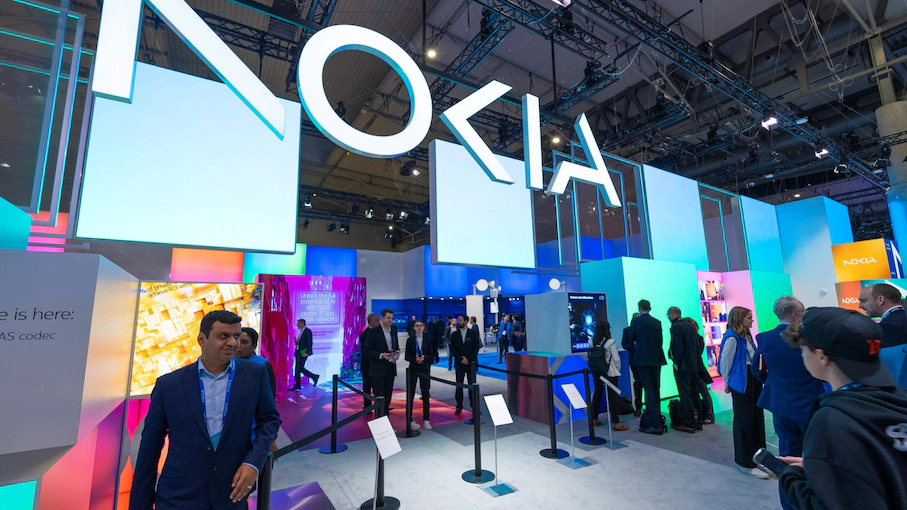
Image: Nokia
350

MWC 2025, Barcelona | In the press room, late on the final day, trying to digest a bunch of briefings. Further coverage will follow, including (time permitting) about a Barcelona derby game between old rivals Nokia and Ericsson in the private 5G space – as a microcosm of this whole 5G event; an MWC in miniature, if you like. But here is a write-up and explanation of some (really!) interesting data points from the former about its progress in the market – which say customers are piling new traffic and applications onto their private networks at a decent rate.

The figures, showing compound annual growth (CAGR) for various measures over three years (2022 through 2024) are drawn from customer activity on Nokia’s Digital Automation Cloud (DAC) platform, which has spearheaded its charge in industrial campus environments (factories, ports, mines, and so on), notably. They do not cover network usage on its Modular Private Wireless (MPW) system, as deployed for utilities, cities, and suchlike. Nokia has deployed its DAC solution with 421 customers, it says – versus a total base (including MPW and other solutions) of around 850.

The point is, in order, that network usage is going the right way; the figures are promising. The average number of radio cells (eNodeBs) per private cellular network has jumped by 74 percent over three years to close to nine units. As well, the number of ‘edges’ (network cores) per deployment has increased by 42 percent to two systems – effectively meaning a geo-redundant setup for each DAC network for every site (on average), as per the mission-critical brief for Industry 4.0 engagements. Three years ago, the number was 1.4, says Nokia.

More surprising, probably, is the average throughput across its customer base: 620 GB per month, per network, growing at 57 percent over three years. As context, the average US household uses about the same (700 GB per month) on fixed and fixed-wireless broadband – and factories are not streaming films and football, and all the rest. Certainly, Nokia sounds pleased. “It’s pretty good, right? And it is growing, which means more use cases are going on these networks.” (Note, there are no CAGR start-numbers in the slides, but the CAGR calculation is reversible, of course.) 

There is more detail, and surprise: the downlink / uplink ratio, which was always supposed to skew to the latter in industrial settings where data is harvested from machinery (rather than fed to a consumer), is 11.6:1 – meaning private 4G / 5G networks in warehouses, factories, and plants are mostly being used to consume data on enterprise-grade smartphones and tablets, and whatever industrial end-user devices are deployed. Is that a worry? “It is not a worry, but we were surprised.” So what is the explanation?

The busy downlink activity has various explanations: that the initial use cases have focused on worker connectivity, just to get data into the hands of staff; and that the flow of machine data going into edge servers on the uplink comprises smaller packets (except for camera streams, presumably), and is multiplied on the downlink for consumption by many workers, and other systems, potentially. Perhaps also, some on-device compute is filtering anomalies from larger volumes of data to limit the uplink traffic. All the same, uplink volumes are growing “much faster”, says Nokia.

It suggests a compound rate of 18 percent in the period; a comparative CAGR figure for average downlink traffic is not provided, and so we will take its word. Besides, Nokia says the average private 4G/5G network has 553 “things connected” – counting SIMs provisioned and active in various devices, covering phones, computers, routers, gateways, sensors, machines. “That is higher than we thought – probably by two or three times,” reflects Nokia. The sense is as well, of course, that gateways, in particular, will be offering 4G / 5G backhaul for many more industrial devices, like legacy sensors.

The number of SIMs / devices on its networks is growing at 30 percent per year, calculated over the period. Which means either more use cases, or just more usage; the average throughput per SIM is 1.1 GB per month, which has remained “stable” over the time, the company says – just as the total network throughput has jumped 57 percent, as above. The conclusion, broadly, is that applications and traffic are both spiralling upwards on private 4G / 5G networks.

For Nokia, the business is swift and expandable, it suggests. Seventy four percent of customers with one or several DAC networks have also taken its MXIE edge server-platform, which hosts the network core, plus an expanding stable of industrial applications. So, that’s 315 MXIE customers, to date – among 421 DAC customers, with an average of two DAC systems each. The MXIE setup is now sold with its DAC systems; older installations are also being upgraded, it says. 

Revenues from applications are “still quite small”, compared to straight private network sales, but there is “good upsell potential” – from industrial devices on the side, and industrial apps on top. “We are moving up the value chain,” the company says, as if to gesture to the slide, and say; ‘here’s the proof’. Indeed, on the second score, Nokia claims it has more than 50 apps and add-ons available through the MXIE platform. Thirty three are embedded onto the platform, and a further 22 vendor offerings are available through its marketplace app.

Of these at least 14 are Nokia-made services, on the system from the start; to its credit and pride, these also occupy the top spots in its MXIE sales charts: Team Comms (as it says on the tin) is top, Network Digital Twin (for network monitoring and triage based on device performance) is second, and HAIP (for high-accuracy indoor BLE positioning) is third. Then come third-party apps related to machine data and security. All the third-party apps are tested and certified by Nokia. 

The MXIE stats suggests Nokia is on to something for itself; the others say the wider private 4G / 5G market is getting busier, and delivering applications and traffic (and therefore value, one concludes).


You Might Also Like
  • Wednesday | Telco agents and smash hits (Editorial Diary)
  • In defense of CBRS – protecting American university innovation (Reader Forum)
  • T-Mobile’s big telco plot twist – from ‘un-carrier’ rebel to industry pace-setter
  • Nokia’s FWA exit shows urgency of portfolio purge – and makes Inseego a global player overnight
  • HPE intros rugged edge servers – as defense and industry drive AI, 5G, IoT
  • ISAC positioning for physical AI on private 5G – is this industry’s ‘iPhone moment’?
Share 0 LinkedinEmail
James Blackman
James Blackman

James Blackman has been writing about the technology and telecoms sectors for over a decade. He has edited and contributed to a number of European news outlets and trade titles. He has also worked at telecoms company Huawei, leading media activity for its devices business in Western Europe. He is based in London.

previous post
STMicroelectronics intros two new MCU series for ultra low-power IoT
next post
Pure Storage joins AI-RAN Alliance

White Papers

  • CSG White Paper: Telco AI Enabler: Mediation’s Defining Role

  • Enea White Paper: Scalable Database Design for 5G and Beyond

  • Supermicro and NVIDIA Whitepaper: Powering sovereign AI at scale

  • VIAVI Whitepaper: RAN scenario generators and their critical role for future-proofing AI-native RAN in Advanced 5G and 6G networks

  • Emerson/NI White Paper: 2026 Technology Trends Impacting the Wireless Communications Industry

Editorial Reports

  • Report: Scaling Optical Networks For The Hyperscale And AI Era

  • Test And Measurement Market Pulse Report

  • Editorial Report: Securing telecom infrastructure for the quantum era

Webinars

  • Webinar: Rethinking the RAN as AI, cloud and openness converge

  • Webinar: Scale-Up, Scale-Out, Scale-Across – Building AI-Era Network Fabrics

  • Webinar: NTN in motion – evolving standards, expanding services

  • Webinar: Noise-Figure Measurements with RFmx and PXI VSTs

  • Qualcomm Webinar – Building the 6G Standard: Key developments to know

Since 1982, RCR Wireless News has been providing wireless and mobile industry news, insights, and analysis to mobile and wireless industry professionals, decision makers, policy makers, analysts and investors.

Facebook Twitter Youtube Linkedin Envelope Rss

Useful Links

  • Subscribe
  • About RCR Wireless News
  • Contact Us
  • Advertise
  • Editorial Calendar
  • Archive
  • RSS
  • Wireless News Archive
  • Subscribe
  • About RCR Wireless News
  • Contact Us
  • Advertise
  • Editorial Calendar
  • Archive
  • RSS
  • Wireless News Archive

Edtior's Picks

Indosat outlines AI Grid vision as 5G modernization targets nationwide AI-ready network
Wednesday | Telco agents and smash hits (Editorial Diary)
Trust you can see – the convergence of voice, messaging, and identity (Reader...

Latest Articles

Indosat outlines AI Grid vision as 5G modernization targets nationwide AI-ready network
Wednesday | Telco agents and smash hits (Editorial Diary)
Trust you can see – the convergence of voice, messaging, and identity (Reader Forum)
Tencent Cloud used AI agents for XLSMART migration

© 2026 RCR Wireless News All Right Reserved. Developed by Eight Hats.

Cookie Policy | Privacy Policy

RCR Wireless
  • News
  • Channels
    • 5G
    • 6G
    • BSS OSS
    • Carriers
    • IoT
    • Network Infrastructure
    • Open RAN
    • Private 5G
    • Telco AI
    • Telco Cloud
    • Test & Measurement
  • Resources
    • Reports
    • Webinars
    • White papers
    • AI Fundamentals
    • Analyst Angle
    • Editorial Calendar
    • Fundamentals
      • 5G NR Release 17
      • AI
        • Telco AI in 2025
    • Podcasts
      • Let’s Get Digital with Carrie Charles
      • Wireless Connectivity to Enable Industry 4.0 for the Middleprise
      • Well Technically…
      • Will 5G Change the World
      • Accelerating Industry 4.0 Digitalization
  • AI Infrastructure
  • Programs
  • Events
  • RCRtv
  • Advertise
  • Subscribe
RCR Wireless
  • News
  • Channels
    • 5G
    • 6G
    • BSS OSS
    • Carriers
    • IoT
    • Network Infrastructure
    • Open RAN
    • Private 5G
    • Telco AI
    • Telco Cloud
    • Test & Measurement
  • Resources
    • Reports
    • Webinars
    • White papers
    • AI Fundamentals
    • Analyst Angle
    • Editorial Calendar
    • Fundamentals
      • 5G NR Release 17
      • AI
        • Telco AI in 2025
    • Podcasts
      • Let’s Get Digital with Carrie Charles
      • Wireless Connectivity to Enable Industry 4.0 for the Middleprise
      • Well Technically…
      • Will 5G Change the World
      • Accelerating Industry 4.0 Digitalization
  • AI Infrastructure
  • Programs
  • Events
  • RCRtv
  • Advertise
  • Subscribe
@2020 - All Right Reserved. Designed and Developed by PenciDesign