
Hitachi sets about the task of industrial transformation with its customers by posing three simple, but very pointed, questions. “What if you could predict and prevent production downtime? What if you could predict and prevent production bottlenecks? What if you could predict and prevent production defects?”
The first of these questions describes the availability of a factory; its uptime might be impacted by machine breakages, staff absences, or missed deliveries. The second covers how factories use this capacity in the most efficient manner, and avoid production bottlenecks from mis-managed workflow.
The third question is about stopping defective products from disrupting manufacturing batches and yields, and ultimately revenues and reputations. The more a manufacturer is forced to re-work or chuck out, the flakier their production processes and the duller their competitive edge.
Hitachi has developed a collaborative problem-solving and advanced data-analytics techniques to deal with each of these challenges. In the next weeks, in discussion with Greg Kinsey, vice president of Hitachi Vantara, the firm’s digital transformation division, Enterprise IoT Insights will consider use cases for all.
Here, we start with the last question, first; how can manufacturers prevent production defects? Hitachi has its own data-led process to manage ingredients and processes, which it defines as ‘predictive quality’.
“The idea is we look at all the data from a production line, which has a quality challenge; that data is used to drive the quality equation – where Y is a function of many Xs, and the challenge is just to understand the right combination of all those Xs,” explains Kinsey.
“When all those variables are correct, the process runs fine; as soon as there is a drop in the speed, or temperature, or tool sharpening, then something changes in the mix.”
For Hitachi, the process is always the same: it works with the customer in an experimental and collaborative fashion, initially to run a failure modes and effects analysis (FMEA) review, construct a hypothesis of all the variables in the system, and find ways to gather data on them. Often, the data is readily available; sometimes, Hitachi is engaged to attach sensors to machines, buildings and people.
“You don’t know what the solution is when you start; all you know is what the problem is and you dig deeper, and start to come up with ideas,” explains Kinsey. This has been its methodology for industrial transformation since the start, and its very first predictive quality use cases. Kinsey describes three…
USE CASE 1.1 | PREDICTIVE QUALITY (PHARMA)
 “One of the first projects we did was with a pharmaceutical company, which had shifted from synthetic to organic ingredients, along with most of the drug industry. As they shifted, they discovered – lo and behold – that natural ingredients are more varied. This higher variation in the raw materials created greater variation in the product it was making,.
“Its yields went down as a result; the company needed to be able to adjust its processes in real time to accommodate the new variations in the raw materials. And, of course, you can do that if you have the data. So we built the data lake, tested the algorithms, and created the mathematics so the system could automatically adjust to live variations in the mix.”
USE CASE 1.2 | PREDICTIVE QUALITY (STEEL)
 “It used to be this stuff was done by trial and error, and then with very limited algorithms, written by the Six Sigma Black Belts using factorial analysis in Minitab. But it was a small data set, with 10 variables, perhaps. Modern analytics tools allow us to process much bigger data sets, and to apply machine learning to make the process smarter.
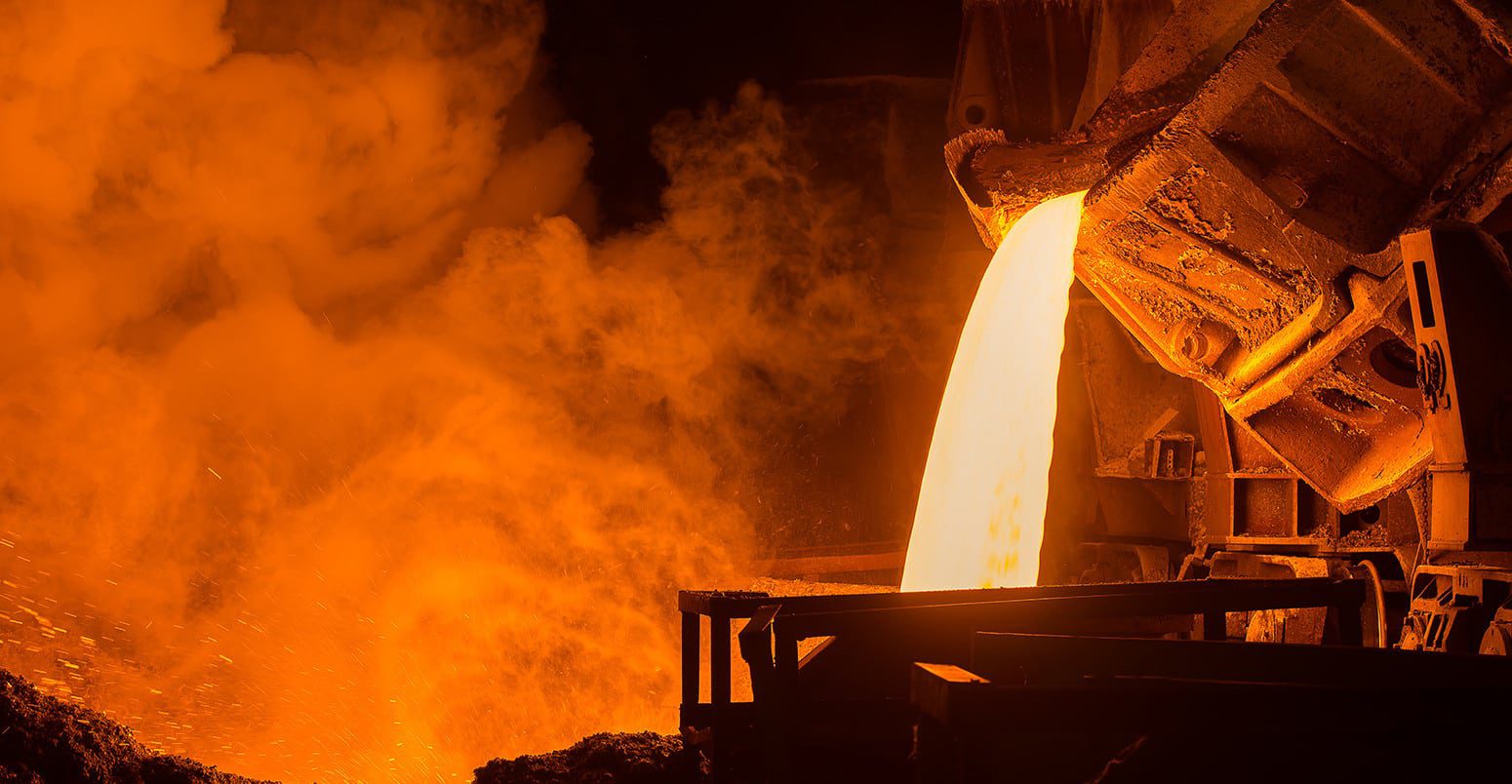
“These first use cases are about accommodating variations in raw materials. The day after I heard about the first case from the project team, I got a call from a steel factory in Europe with exactly the same problem, about the consistency of the coal from its various suppliers.Exactly the same; variations in the coal were impacting the quality of the steel. And in the same way, we worked with the company to adjust the parameters in the process to counter the inconsistencies in the raw materials.”
USE CASE 1.3 | PREDICTIVE QUALITY (TYRES)
 “We’ve encountered the same process in tyre manufacturing, as well; the process involves mixing multiple polymer compounds into massive machines according to a recipe. What comes out is an uncured polymer material, which is then shaped and moulded and cured into a tyre, or whatever you’re making.
“The problem was the product designers were trying to respond to the market, and move towards mass customisation, which means a higher number of product variations. ‘The product designers keep changing the product,’ they said. ‘They keep doing one-offs for customers. Our processes aren’t build for this.’
“If you tweak the recipe, then the yields in the mixer drop from 98 per cent, say, down to 75 per cent. At that point you’re not just losing money; you are introducing capacity to make bad batches. You have to adjust the parameters throughout the whole recipe to make it work, and you can only do that with the right data and insight.”
This is an excerpt from a wide-ranging interview with Hitachi Vantara vice president Greg Kinsey. For more from the interview, check out the links below.
The IIoT interview (pt1): “It’s a two-speed market; the US doesn’t get it,” says Hitachi
The IIoT interview (pt2): “Three is the magic number for digital ROI,” says Hitachi
The IIoT interview (pt3) “We’re selling innovations, not solutions,” says Hitachi
Planes, computers and books: Three ‘dynamic scheduling’ use cases from Hitachi
Motor cars and gas turbines: Two ‘predictive downtime’ use cases from Hitachi
Table of Contents