

RCR Wireless
  • News
  • Channels
    • 5G
    • 6G
    • BSS OSS
    • Carriers
    • IoT
    • Network Infrastructure
    • Open RAN
    • Private 5G
    • Telco AI
    • Telco Cloud
    • Test & Measurement
  • Resources
    • Reports
    • Webinars
    • White papers
    • AI Fundamentals
    • Analyst Angle
    • Editorial Calendar
    • Fundamentals
      • 5G NR Release 17
      • AI
        • Telco AI in 2025
    • Podcasts
      • Let’s Get Digital with Carrie Charles
      • Wireless Connectivity to Enable Industry 4.0 for the Middleprise
      • Well Technically…
      • Will 5G Change the World
      • Accelerating Industry 4.0 Digitalization
  • AI Infrastructure
  • Programs
  • Events
  • RCRtv
  • Advertise
  • Subscribe
Tuesday, July 14, 2026
RCR Wireless
  • News
  • Channels
    • 5G
    • 6G
    • BSS OSS
    • Carriers
    • IoT
    • Network Infrastructure
    • Open RAN
    • Private 5G
    • Telco AI
    • Telco Cloud
    • Test & Measurement
  • Resources
    • Reports
    • Webinars
    • White papers
    • AI Fundamentals
    • Analyst Angle
    • Editorial Calendar
    • Fundamentals
      • 5G NR Release 17
      • AI
        • Telco AI in 2025
    • Podcasts
      • Let’s Get Digital with Carrie Charles
      • Wireless Connectivity to Enable Industry 4.0 for the Middleprise
      • Well Technically…
      • Will 5G Change the World
      • Accelerating Industry 4.0 Digitalization
  • AI Infrastructure
  • Programs
  • Events
  • RCRtv
  • Advertise
  • Subscribe
Add RCR Wireless as a preferred source on Google
  • Qualcomm 6G Insights
  • Huawei Content Hub
  • Qualcomm – 6G Vision
  • OSS/BSS Channel
  • RCRTech Roundtable: AI Infrastructure
RCR Wireless
RCR Wireless
  • Advanced Mimo
  • Mobile mmWave
  • 5G Positioning
  • Green Networks
  • Metaverse
  • Automotive
  • Industrial and Wide-area IoT
Copyright 2021 - All Right Reserved
Home - FCC grants SpaceX partial permission to launch Starlink Gen2
Network InfrastructureFeatured

FCC grants SpaceX partial permission to launch Starlink Gen2

by RCR Wireless News December 2, 2022
written by RCR Wireless News December 2, 2022 Share
LinkedinEmail
Share 0LinkedinEmail
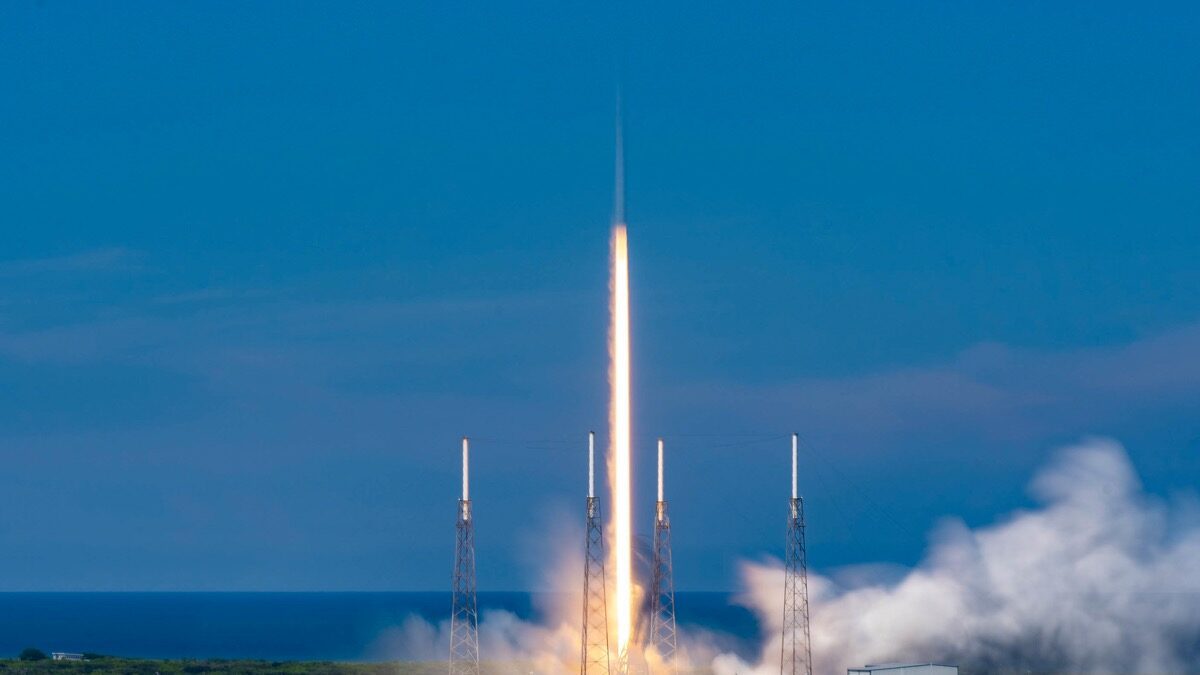
A SpaceX Falcon 9 rocket delivers Starlink satellites into space.
Image via SpaceX
346

The federal agency sharply curtailed the number of satellites Starlink sought to launch, citing orbital safety concerns

The U.S. Federal Communications Commission (FCC) on Thursday granted private space firm SpaceX partial permission to get started on their second-generation Low Earth Orbit (LEO) satellite constellation. With this clearance, SpaceX can start building and deploying Starlink Gen2 satellites, though the number of satellites the FCC allowed is sharply lower than what SpaceX requested.

The FCC has authorized SpaceX to deploy and operate the satellites “at altitudes of 525, 530, and 535 km (326 miles, 329 miles, and 332 miles) and inclinations of 53, 43, and 33 degrees, respectively, using frequencies in the Ku- and Ka-band.” The agency will allow SpaceX to launch up to 7,500 Starlink Gen2 satellites, sharply lower than the almost 30,000 SpaceX requested. The lower number, the FCC said, will help to maintain a safer orbital environment. The FCC didn’t veto the final number, only deferring action for now. By doing so, the FCC appears to be acquiescing to concerns voiced by NASA and SpaceX competitors including Amazon, and Dish. Opponents are concerned that SpaceX’s plans may create more satellite collisions and affected manned spaceflight missions planned by NASA.

In its order, the FCC said, “Our action will allow SpaceX to begin deployment of Gen2 Starlink, which will bring next generation satellite broadband to Americans nationwide, including those living and working in areas traditionally unserved or underserved by terrestrial systems. Our action also will enable worldwide satellite broadband service, helping to close the digital divide on a global scale. At the same time, this limited grant and associated conditions will protect other satellite and terrestrial operators from harmful interference and maintain a safe space environment, promoting competition and protecting spectrum and orbital resources for future use.”

In August, T-Mobile US announced a partnership with SpaceX that promises universal text coverage for T-Mobile customers across the United States, using Starlink’s satellite network. The companies promise the new capability will be compatible with existing 5G smartphones, and said it will be made available starting in late 2023. SpaceX head Elon Musk said at the event announcing the new service that it will depend on the launch of Starlink Gen2 satellites.

“We’re constructing special antennas … the most advanced phased array antennas in the world, we think. The antennas have to be very advanced, because they pick up very quiet signals from your cell phone. Imagine, that signal has to travel 500 miles and be caught by a satellite traveling at 17,000 miles per hour … This is quite a difficult technical challenge, but we have it working in the lab, and we’re confident this will work in the field,” said Musk. He called the new T-Mobile US service the “perfect addition” to Starlink Gen2.

Initially, Musk indicated that Starlink Gen2 was dependent on SpaceX’s still-in-development Starship to reach orbit. Starship is a reusable rocket capable of moving heavier payloads into space than are capable using SpaceX’s current platform, the Falcon9 rocket. While SpaceX continues ground tests on Starship’s engines, it is still yet to do an orbital test of “Super Heavy” rocket. But in late August, around the same time as the T-Mobile announcement, SpaceX told regulators that it would change the physical structure of its Gen2 satellites to meet the payload requirements of the smaller Falcon9, hoping to accelerate its Gen2 launch schedule.

To date, SpaceX has about 3,200 operational first-generation Starlink satellites in orbit, and the company boasts more than half a million subscribers. But as SpaceX continues to add new subscribers to its user base and continues to launch first-generation Starlink satellites to increase coverage, Starlink’s performance has degraded, according to benchmarking company Ookla. The company said in September that year-over-year Starlink service performance has diminished.

“Starlink speeds decreased in every country we surveyed over the past year as more users sign up for service,” Ookla said. It looked at Starlink performance in Europe, Oceania, North America and South America, including eight additional countries and “expanded data” compared to its previous looks at satellite internet providers’ services.

The drop in median download speed was between 9% to 54% when comparing performance from the second quarter of 2021 to the second quarter of 2022. That was reflected in Starlink service in Canada, France, Germany, New Zealand, the U.K. and the U.S., Ookla reported. Uplink speeds were also slower, while latency was mostly flat.


You Might Also Like
  • The (agentic) future of AI-to-AI connectivity (Reader Forum)
  • Netgear’s quiet reinvention as a B2B and SaaS company (Analyst Angle)
  • Friday (telco diary) | Telco reset, RAN reboot, P5G reality check
  • Operators are seeking greater control of NTN: GSMA Intelligence
  • How operations leaders see 5G as vital for mission-critical workflows (Reader Forum)
  • Thursday (telco diary) | The plumbing is the product
Share 0 LinkedinEmail
RCR Wireless News

previous post
The top testing challenges in 6 GHz Wi-Fi operation: Part 2
next post
Swisscom launches 5G FWA services for enterprise customers

White Papers

  • Enea White Paper: Why Intelligent AAA is the Swiss Army Knife of Telecom

  • CSG White Paper: Telco AI Enabler: Mediation’s Defining Role

  • Enea White Paper: Scalable Database Design for 5G and Beyond

  • Supermicro and NVIDIA Whitepaper: Powering sovereign AI at scale

  • VIAVI Whitepaper: RAN scenario generators and their critical role for future-proofing AI-native RAN in Advanced 5G and 6G networks

Editorial Reports

  • Report: Scaling Optical Networks For The Hyperscale And AI Era

  • Test And Measurement Market Pulse Report

  • Editorial Report: Securing telecom infrastructure for the quantum era

Webinars

  • Webinar: Building 6G — aligning technology, policy and purpose

  • SIMCom Webinar: Scaling your next deployment – from plastic to provisioning

  • Webinar: Rethinking the RAN as AI, cloud and openness converge

  • Webinar: Scale-Up, Scale-Out, Scale-Across – Building AI-Era Network Fabrics

  • Webinar: NTN in motion – evolving standards, expanding services

Since 1982, RCR Wireless News has been providing wireless and mobile industry news, insights, and analysis to mobile and wireless industry professionals, decision makers, policy makers, analysts and investors.

Facebook Twitter Youtube Linkedin Envelope Rss

Useful Links

  • Subscribe
  • About RCR Wireless News
  • Contact Us
  • Advertise
  • Editorial Calendar
  • Archive
  • RSS
  • Wireless News Archive
  • Subscribe
  • About RCR Wireless News
  • Contact Us
  • Advertise
  • Editorial Calendar
  • Archive
  • RSS
  • Wireless News Archive

Edtior's Picks

Prioritise AI outcomes over agent numbers, says Orange
The (agentic) future of AI-to-AI connectivity (Reader Forum)
Monday (telco diary) | Consolidation, orchestration, automation

Latest Articles

Prioritise AI outcomes over agent numbers, says Orange
The (agentic) future of AI-to-AI connectivity (Reader Forum)
Monday (telco diary) | Consolidation, orchestration, automation
Korean telcos pivot to AI infra as government pursues AI G3 ambitions

© 2026 RCR Wireless News All Right Reserved. Developed by Eight Hats.

Cookie Policy | Privacy Policy

RCR Wireless
  • News
  • Channels
    • 5G
    • 6G
    • BSS OSS
    • Carriers
    • IoT
    • Network Infrastructure
    • Open RAN
    • Private 5G
    • Telco AI
    • Telco Cloud
    • Test & Measurement
  • Resources
    • Reports
    • Webinars
    • White papers
    • AI Fundamentals
    • Analyst Angle
    • Editorial Calendar
    • Fundamentals
      • 5G NR Release 17
      • AI
        • Telco AI in 2025
    • Podcasts
      • Let’s Get Digital with Carrie Charles
      • Wireless Connectivity to Enable Industry 4.0 for the Middleprise
      • Well Technically…
      • Will 5G Change the World
      • Accelerating Industry 4.0 Digitalization
  • AI Infrastructure
  • Programs
  • Events
  • RCRtv
  • Advertise
  • Subscribe
RCR Wireless
  • News
  • Channels
    • 5G
    • 6G
    • BSS OSS
    • Carriers
    • IoT
    • Network Infrastructure
    • Open RAN
    • Private 5G
    • Telco AI
    • Telco Cloud
    • Test & Measurement
  • Resources
    • Reports
    • Webinars
    • White papers
    • AI Fundamentals
    • Analyst Angle
    • Editorial Calendar
    • Fundamentals
      • 5G NR Release 17
      • AI
        • Telco AI in 2025
    • Podcasts
      • Let’s Get Digital with Carrie Charles
      • Wireless Connectivity to Enable Industry 4.0 for the Middleprise
      • Well Technically…
      • Will 5G Change the World
      • Accelerating Industry 4.0 Digitalization
  • AI Infrastructure
  • Programs
  • Events
  • RCRtv
  • Advertise
  • Subscribe
@2020 - All Right Reserved. Designed and Developed by PenciDesign