

RCR Wireless
  • News
  • Channels
    • 5G
    • 6G
    • BSS OSS
    • Carriers
    • IoT
    • Network Infrastructure
    • Open RAN
    • Private 5G
    • Telco AI
    • Telco Cloud
    • Test & Measurement
  • Resources
    • Reports
    • Webinars
    • White papers
    • AI Fundamentals
    • Analyst Angle
    • Editorial Calendar
    • Fundamentals
      • 5G NR Release 17
      • AI
        • Telco AI in 2025
    • Podcasts
      • Let’s Get Digital with Carrie Charles
      • Wireless Connectivity to Enable Industry 4.0 for the Middleprise
      • Well Technically…
      • Will 5G Change the World
      • Accelerating Industry 4.0 Digitalization
  • AI Infrastructure
  • Programs
  • Events
  • RCRtv
  • Advertise
  • Subscribe
Wednesday, July 8, 2026
RCR Wireless
  • News
  • Channels
    • 5G
    • 6G
    • BSS OSS
    • Carriers
    • IoT
    • Network Infrastructure
    • Open RAN
    • Private 5G
    • Telco AI
    • Telco Cloud
    • Test & Measurement
  • Resources
    • Reports
    • Webinars
    • White papers
    • AI Fundamentals
    • Analyst Angle
    • Editorial Calendar
    • Fundamentals
      • 5G NR Release 17
      • AI
        • Telco AI in 2025
    • Podcasts
      • Let’s Get Digital with Carrie Charles
      • Wireless Connectivity to Enable Industry 4.0 for the Middleprise
      • Well Technically…
      • Will 5G Change the World
      • Accelerating Industry 4.0 Digitalization
  • AI Infrastructure
  • Programs
  • Events
  • RCRtv
  • Advertise
  • Subscribe
Add RCR Wireless as a preferred source on Google
  • Qualcomm 6G Insights
  • Huawei Content Hub
  • Qualcomm – 6G Vision
  • OSS/BSS Channel
RCR Wireless
RCR Wireless
  • Advanced Mimo
  • Mobile mmWave
  • 5G Positioning
  • Green Networks
  • Metaverse
  • Automotive
  • Industrial and Wide-area IoT
Copyright 2021 - All Right Reserved
Home - Federated’s coastal sensor network is ready to support CBRS roll-outs
Network Infrastructure

Federated’s coastal sensor network is ready to support CBRS roll-outs

by Kelly Hill May 14, 2019
written by Kelly Hill May 14, 2019 Share
LinkedinEmail
Share 0LinkedinEmail
CBRS
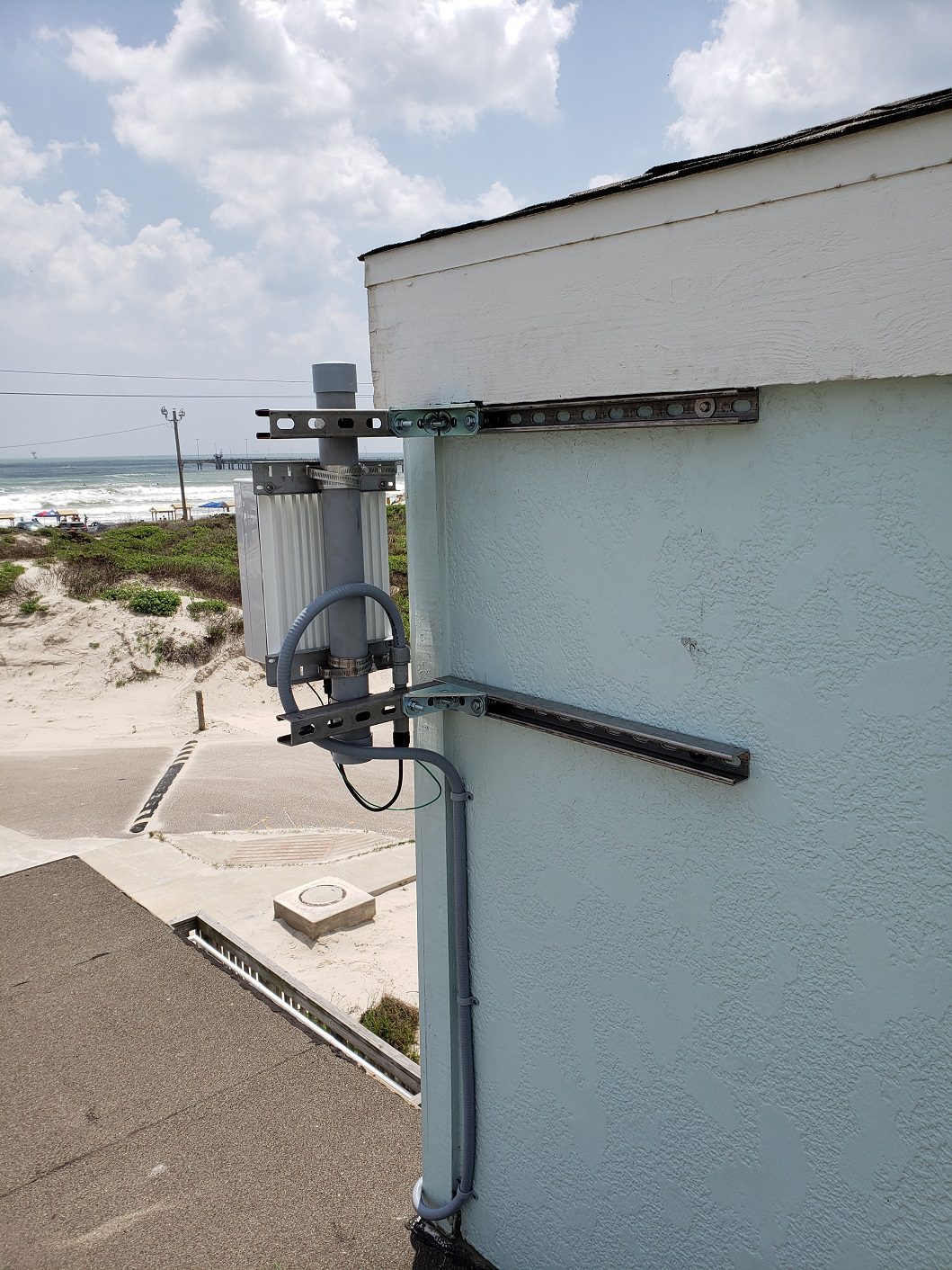
A Gulf Coast installation that is part of Federated Wireless' ESC network for CBRS. (Image: Federated)
128

The first wave of coastal sensor networks that detect the presence of naval radar systems which share the Citizens Broadband Radio Service band at 3.5 GHz have received approval from the Federal Communications Commission, and Federated Wireless has now officially announced the nationwide availability of its Environmental Sensing Capability (ESC) network.

“This is something we’ve been working on for the last two years, and it is really going to be the key aspect to fully unleashing the potential of the 150 megahertz of spectrum,” said Kurt Shaubach, CTO of Federated Wireless.

Federated, CommScope and Google all recently received FCC approval for their ESCs. CommScope and Google’s ESC is a collaborative effort between the two companies, with both companies operating their own Spectrum Access Systems.

Federated has long been one of the central backers of CBRS, and it developed both an ESC system and a Spectrum Access System — the two systems which are necessary to support the three tiers of CBRS spectrum sharing — along the way. While the SAS assigns spectrum access to authorized devices, the ESC must detect the presence of incumbent systems; since those include moving radar systems on naval ships, the ESC was designed as a network of sensors along the coast that would pick up the presence of such systems and ensure that the SAS could appropriately move lower-priority CBRS users so that there would not be an impact on radar operations. This is particularly important because many large U.S. cities — where network operators would likely be most interested in being able to leverage CBRS spectrum — are on the coasts, and customer continuity of experience has to be able to be maintained even in major ports with naval operations, such as Norfolk, Virginia and San Diego, California.

Schaubach said that Federated has been working with the Department of Defense for nearly six years, from the very early days of Federated’s existence. The company developed some initial hardware platforms for concept validation, field deployment and testing, and the network that will support commercial CBRS use is the third iteration of that product platform, he said. Federated says that its network is telco-grade in that it achieves 5-9s of reliability or better — “closer to 6-9s in terms of real customer availability, the continuous ability for us to manage that spectrum,” Shaubach said.

Within the dynamic protection areas along the coasts, he said, “it is really important that you have a sufficient number of sensors to fully monitor each of these DPAs.” He said that Federated has a “couple hundred” sensors in place along the entire U.S. coast, as well as a network operations center ready to support CBRS deployments.

As with a service provider network, Shaubach said, Federated has gained valuable real-world insights from the past two years of deployment and in-field testing of its ESC. It has endured two hurricanes, wildfires and more mundane weather conditions, as well as siting challenges because the sensors must have coastal locations while still having access to power and an internet connection. Because of the worst-case consequences if an ESC were to fail or be unavailable — the SAS must revert to assigning the 150 MHz of CBRS spectrum as if a full 100 megahertz of the spectrum was occupied by DoD radar — extremely high reliability and redundancy is necessary, Schaubach said.

Although the Priority Access License tier of CBRS is not expected to be available until an auction can be held — likely in 2020 — the certification of the ESCs mean that commercial CBRS deployments are a step closer to moving forward, with users taking advantage of the unlicensed General Authorized Access level. That can’t happen, however, until the last piece — the certification of the Spectrum Access Systems — is complete. According to the most recent timeline from the CBRS Alliance, initial commercial deployments of CBRS are expected in the third quarter of this year.

“We’re thrilled to see all of this come together at the same time. That will, I think, really bring much more significance to our initial customer deployment activities, because the whole network is available for us,” Shaubach said.

Federated said that it has more than 40 device manufacturers and edge partners working with it to support CBRS ecosystem development, and that its customer base includes more than 25 companies across a range of industries.

“We are truly ready. We are ready beyond just having a technology that has been FCC authorized — we’ve done all the other work necessary to make sure that CBRS is ready for commercial launch,” he added.

The CBRS Alliance is hosting a workshop on deploying OnGo (LTE in CBRS spectrum) next week at the Connectivity Expo.


You Might Also Like
  • Wednesday | Telco agents and smash hits (Editorial Diary)
  • Tuesday | Vertical build-outs, horizontal break-ups (Editorial Diary)
  • BT and Verizon merge international arms in $4bn global enterprise JV
  • Friday | Starlink raises the stakes (Editorial Diary)
  • Thursday | Tokenomics is not new telco economics (Editorial Diary)
  • AI-native 6G needs joint network-compute orchestration, says China Telecom
Share 0 LinkedinEmail
Kelly Hill

Kelly Hill reports on network test and measurement, AI infrastructure and regulatory issues, including spectrum, for RCR Wireless News. She began covering the wireless industry in 2005, focusing on carriers and MVNOs, then took a few years’ hiatus and returned to RCR Wireless News to write about heterogeneous networks (remember those?) and network infrastructure. Kelly is an Ohio native with a masters degree in journalism from the University of California, Berkeley, where she focused on science writing and multimedia. She has written for the San Francisco Chronicle, The Oregonian and The Canton Repository. She lives in northern Virginia, not far from Data Center Alley.

previous post
Verizon hits go on guard-band NB-IoT network with 50KB $1 price-plan
next post
Osram inks partnership with FSG to provide smart building solutions in the US

White Papers

  • Enea White Paper: Why Intelligent AAA is the Swiss Army Knife of Telecom

  • CSG White Paper: Telco AI Enabler: Mediation’s Defining Role

  • Enea White Paper: Scalable Database Design for 5G and Beyond

  • Supermicro and NVIDIA Whitepaper: Powering sovereign AI at scale

  • VIAVI Whitepaper: RAN scenario generators and their critical role for future-proofing AI-native RAN in Advanced 5G and 6G networks

Editorial Reports

  • Report: Scaling Optical Networks For The Hyperscale And AI Era

  • Test And Measurement Market Pulse Report

  • Editorial Report: Securing telecom infrastructure for the quantum era

Webinars

  • Webinar: Rethinking the RAN as AI, cloud and openness converge

  • Webinar: Scale-Up, Scale-Out, Scale-Across – Building AI-Era Network Fabrics

  • Webinar: NTN in motion – evolving standards, expanding services

  • Webinar: Noise-Figure Measurements with RFmx and PXI VSTs

  • Qualcomm Webinar – Building the 6G Standard: Key developments to know

Since 1982, RCR Wireless News has been providing wireless and mobile industry news, insights, and analysis to mobile and wireless industry professionals, decision makers, policy makers, analysts and investors.

Facebook Twitter Youtube Linkedin Envelope Rss

Useful Links

  • Subscribe
  • About RCR Wireless News
  • Contact Us
  • Advertise
  • Editorial Calendar
  • Archive
  • RSS
  • Wireless News Archive
  • Subscribe
  • About RCR Wireless News
  • Contact Us
  • Advertise
  • Editorial Calendar
  • Archive
  • RSS
  • Wireless News Archive

Edtior's Picks

How the FCC can protect IoT innovation and GPS resilience in the 900...
What defines network performance in 5G and beyond? A CTO Perspective
Elisa says AI automation has cut network incidents by over 80%

Latest Articles

How the FCC can protect IoT innovation and GPS resilience in the 900 MHz band (Reader Forum)
What defines network performance in 5G and beyond? A CTO Perspective
Elisa says AI automation has cut network incidents by over 80%
“We’re going after the operator channel” – Druid bets on simplicity to scale private 5G

© 2026 RCR Wireless News All Right Reserved. Developed by Eight Hats.

Cookie Policy | Privacy Policy

RCR Wireless
  • News
  • Channels
    • 5G
    • 6G
    • BSS OSS
    • Carriers
    • IoT
    • Network Infrastructure
    • Open RAN
    • Private 5G
    • Telco AI
    • Telco Cloud
    • Test & Measurement
  • Resources
    • Reports
    • Webinars
    • White papers
    • AI Fundamentals
    • Analyst Angle
    • Editorial Calendar
    • Fundamentals
      • 5G NR Release 17
      • AI
        • Telco AI in 2025
    • Podcasts
      • Let’s Get Digital with Carrie Charles
      • Wireless Connectivity to Enable Industry 4.0 for the Middleprise
      • Well Technically…
      • Will 5G Change the World
      • Accelerating Industry 4.0 Digitalization
  • AI Infrastructure
  • Programs
  • Events
  • RCRtv
  • Advertise
  • Subscribe
RCR Wireless
  • News
  • Channels
    • 5G
    • 6G
    • BSS OSS
    • Carriers
    • IoT
    • Network Infrastructure
    • Open RAN
    • Private 5G
    • Telco AI
    • Telco Cloud
    • Test & Measurement
  • Resources
    • Reports
    • Webinars
    • White papers
    • AI Fundamentals
    • Analyst Angle
    • Editorial Calendar
    • Fundamentals
      • 5G NR Release 17
      • AI
        • Telco AI in 2025
    • Podcasts
      • Let’s Get Digital with Carrie Charles
      • Wireless Connectivity to Enable Industry 4.0 for the Middleprise
      • Well Technically…
      • Will 5G Change the World
      • Accelerating Industry 4.0 Digitalization
  • AI Infrastructure
  • Programs
  • Events
  • RCRtv
  • Advertise
  • Subscribe
@2020 - All Right Reserved. Designed and Developed by PenciDesign