

RCR Wireless
  • News
  • Channels
    • 5G
    • 6G
    • BSS OSS
    • Carriers
    • IoT
    • Network Infrastructure
    • Open RAN
    • Private 5G
    • Telco AI
    • Telco Cloud
    • Test & Measurement
  • Resources
    • Reports
    • Webinars
    • White papers
    • AI Fundamentals
    • Analyst Angle
    • Editorial Calendar
    • Fundamentals
      • 5G NR Release 17
      • AI
        • Telco AI in 2025
    • Podcasts
      • Let’s Get Digital with Carrie Charles
      • Wireless Connectivity to Enable Industry 4.0 for the Middleprise
      • Well Technically…
      • Will 5G Change the World
      • Accelerating Industry 4.0 Digitalization
  • AI Infrastructure
  • Programs
  • Events
  • RCRtv
  • Advertise
  • Subscribe
Friday, July 3, 2026
RCR Wireless
  • News
  • Channels
    • 5G
    • 6G
    • BSS OSS
    • Carriers
    • IoT
    • Network Infrastructure
    • Open RAN
    • Private 5G
    • Telco AI
    • Telco Cloud
    • Test & Measurement
  • Resources
    • Reports
    • Webinars
    • White papers
    • AI Fundamentals
    • Analyst Angle
    • Editorial Calendar
    • Fundamentals
      • 5G NR Release 17
      • AI
        • Telco AI in 2025
    • Podcasts
      • Let’s Get Digital with Carrie Charles
      • Wireless Connectivity to Enable Industry 4.0 for the Middleprise
      • Well Technically…
      • Will 5G Change the World
      • Accelerating Industry 4.0 Digitalization
  • AI Infrastructure
  • Programs
  • Events
  • RCRtv
  • Advertise
  • Subscribe
Add RCR Wireless as a preferred source on Google
  • Qualcomm 6G Insights
  • Huawei Content Hub
  • Qualcomm – 6G Vision
  • OSS/BSS Channel
RCR Wireless
RCR Wireless
  • Advanced Mimo
  • Mobile mmWave
  • 5G Positioning
  • Green Networks
  • Metaverse
  • Automotive
  • Industrial and Wide-area IoT
Copyright 2021 - All Right Reserved
Home - Port authorities and terminal operators: private networks and public slices in sea ports
5GCarriersConnected CarsFundamentalsInfrastructureInternet of Things (IoT)LTENews & Event CoverageSmart CitiesSmart FactoryWired Networks, Fiber

Port authorities and terminal operators: private networks and public slices in sea ports

by James Blackman July 12, 2019
written by James Blackman July 12, 2019 Share
LinkedinEmail
Share 0LinkedinEmail
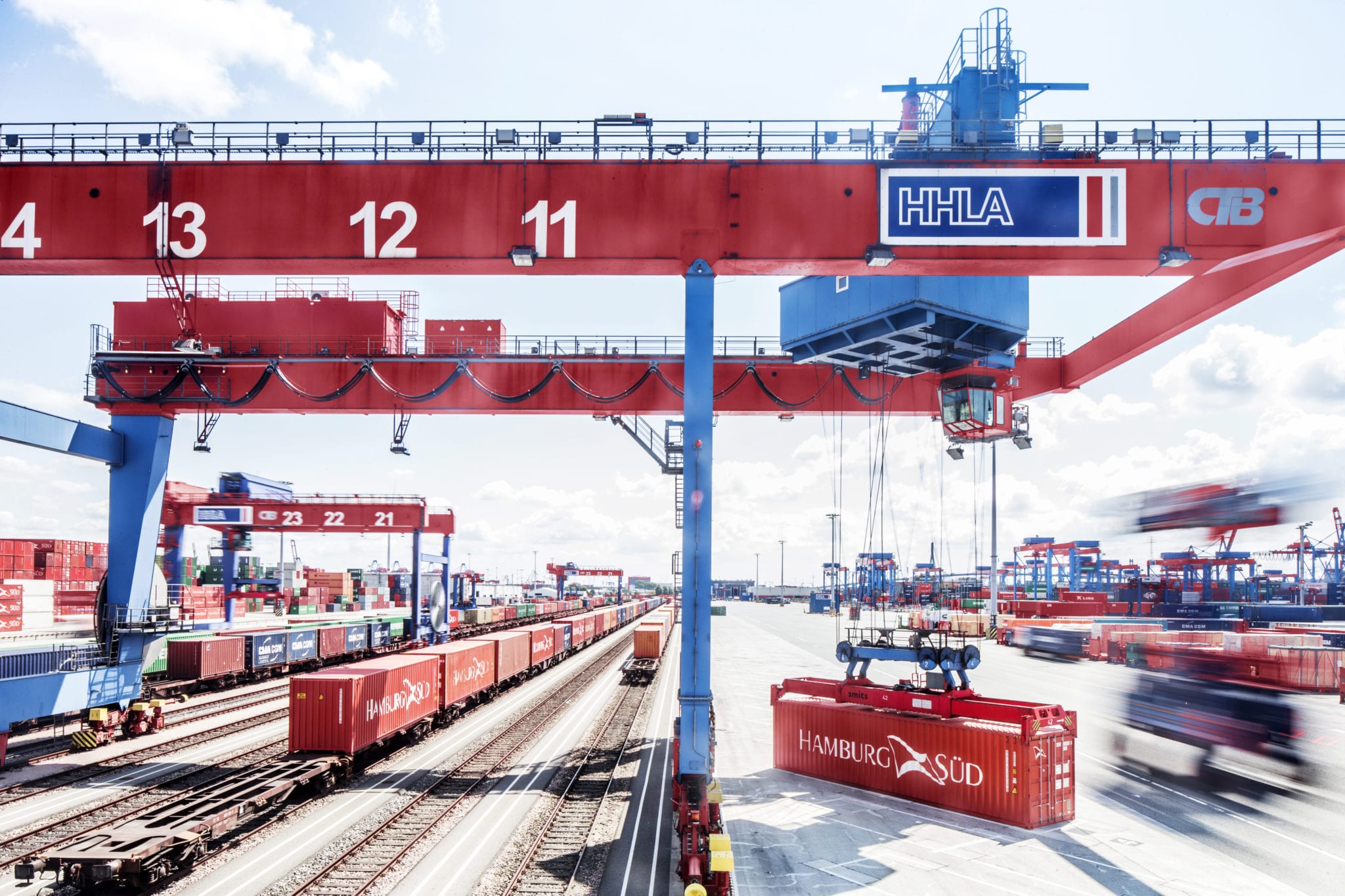
Hamburg port – a primary venue for private LTE; Nokia and Deutsche Telekom are trialling private systems and applications at the site
136

Sea ports have become a primary focus for the telecoms sector as it maps out potential customers for private communications networks, particularly as the industrial space at large hits upon the opportunity for new LTE and 5G networks to bring digital advancement.

But networking deployments for ports must, of course, consider various actors in the vacinity. When it comes to designing and managing telecoms infrastructure, there are two of primary candidates in and around the dockyard: the port authority and the terminal operator.

Their roles are different, in terms of reponsibilities in the port, and requirements from a communications network. “It is important to differentiate between them,” explains Matthias Jablonowski, global practice lead for ports and roads at Nokia.

The main difference tends to be that port authorities are, like industrial landlords, managing the port area itself, which is vast and multi-faceted. By contrast, the terminal operator – several of them, in large ports – is managing the cargo in and out of the site. One is facilitating the site-flow for multiple players; the other is handling the goods.

Nokia has just completed a trial of 5G slicing in the Port of Hamburg, Europe’s third-largest port, together with the Hamburg Port Authority and Deutsche Telekom. It is also engaged in a number of private LTE projects with ports in Finland, its homeland, variously with industrial networking specialist Ukkoverkot, port machinery maker Kalmar, and port operator Steveco.

The Port of Hamburg, the third largest port in Europe, is managed by a port authority; smaller ports like those at HaminaKotka, Kokkola, and Oulu in Finland, where Nokia is engaged on private networking assignments, are also managed by terminal operators. “But their requirements are different,” explains Jablonowski.

The main difference is the size of their operations. The Port of Hamburg covers 43 square kilometres, handles about 10 million twenty-foot equivalent units (TEUs), and employs around 10,000 people. Its networking requirements are rather like a city’s, and cover a range of narrowband and wideband use cases.

But the main challenge, arguably, is traffic management, to keep the trains and trucks in flux. “The idea of building a private infrastructure to cover the does not really make economic sense – and it’s not really needed,” says Jablonowski. Instead, port authorities will likely settle for a public network, ideally a slice from a 5G version, as per the recent Hamburg trial.

But private networks are perfect for terminal operators, in charge of loading and unloading ships after docking. There are four in Hamburg, managed by private companies. If the smart-city analogy works for terminal authorities, then the terminal is akin to a digital-factory set-up, with low-latency automation and ultra-reliable controls in order.

Smaller port authorities and especially those operating ports in remote locations, where public connectivity services are not sufficient, also consider private networks.

In addition, private networks are perfect for terminal operators, in charge of loading and unloading ships after docking. There are four in Hamburg, managed by private companies. If the smart-city analogy works for terminal authorities, then the terminal is akin to a digital-factory set-up, with low-latency automation and ultra-reliable controls in order.

“It’s less about wide-area coverage, and more about coverage between the containers – that bandwidth and throughput in the right locations inside the container terminal. For terminal operators, these networks are very important, because their operations rely on it,” says Jablonowski.

“If the network is not operating smoothly, the container handling process inside the terminal slips. They want to keep their data local, inside their terminal, and not just the port. And they want control and independence from the outside world – so if something goes down in the port, their terminal continues to work.”


You Might Also Like
  • Indosat outlines AI Grid vision as 5G modernization targets nationwide AI-ready network
  • Huawei shows how 5G and AI are reshaping tourism in China
  • Tuesday | Vertical build-outs, horizontal break-ups (Editorial Diary)
  • ‘You can’t tame it’ – private networks, open standards and the AI proof for IoT
  • Monday | Global enterprise reset (Editorial Diary)
  • China Tower shifts to ‘digital’ and ‘intelligent’ towers
Share 0 LinkedinEmail
James Blackman
James Blackman

James Blackman has been writing about the technology and telecoms sectors for over a decade. He has edited and contributed to a number of European news outlets and trade titles. He has also worked at telecoms company Huawei, leading media activity for its devices business in Western Europe. He is based in London.

previous post
Neutral host provider densifies Dublin with small cell network
next post
Test and Measurement: EXFO reports sales up, profit for the quarter

White Papers

  • CSG White Paper: Telco AI Enabler: Mediation’s Defining Role

  • Enea White Paper: Scalable Database Design for 5G and Beyond

  • Supermicro and NVIDIA Whitepaper: Powering sovereign AI at scale

  • VIAVI Whitepaper: RAN scenario generators and their critical role for future-proofing AI-native RAN in Advanced 5G and 6G networks

  • Emerson/NI White Paper: 2026 Technology Trends Impacting the Wireless Communications Industry

Editorial Reports

  • Report: Scaling Optical Networks For The Hyperscale And AI Era

  • Test And Measurement Market Pulse Report

  • Editorial Report: Securing telecom infrastructure for the quantum era

Webinars

  • Webinar: Rethinking the RAN as AI, cloud and openness converge

  • Webinar: Scale-Up, Scale-Out, Scale-Across – Building AI-Era Network Fabrics

  • Webinar: NTN in motion – evolving standards, expanding services

  • Webinar: Noise-Figure Measurements with RFmx and PXI VSTs

  • Qualcomm Webinar – Building the 6G Standard: Key developments to know

Since 1982, RCR Wireless News has been providing wireless and mobile industry news, insights, and analysis to mobile and wireless industry professionals, decision makers, policy makers, analysts and investors.

Facebook Twitter Youtube Linkedin Envelope Rss

Useful Links

  • Subscribe
  • About RCR Wireless News
  • Contact Us
  • Advertise
  • Editorial Calendar
  • Archive
  • RSS
  • Wireless News Archive
  • Subscribe
  • About RCR Wireless News
  • Contact Us
  • Advertise
  • Editorial Calendar
  • Archive
  • RSS
  • Wireless News Archive

Edtior's Picks

Indosat outlines AI Grid vision as 5G modernization targets nationwide AI-ready network
Wednesday | Telco agents and smash hits (Editorial Diary)
Trust you can see – the convergence of voice, messaging, and identity (Reader...

Latest Articles

Indosat outlines AI Grid vision as 5G modernization targets nationwide AI-ready network
Wednesday | Telco agents and smash hits (Editorial Diary)
Trust you can see – the convergence of voice, messaging, and identity (Reader Forum)
Tencent Cloud used AI agents for XLSMART migration

© 2026 RCR Wireless News All Right Reserved. Developed by Eight Hats.

Cookie Policy | Privacy Policy

RCR Wireless
  • News
  • Channels
    • 5G
    • 6G
    • BSS OSS
    • Carriers
    • IoT
    • Network Infrastructure
    • Open RAN
    • Private 5G
    • Telco AI
    • Telco Cloud
    • Test & Measurement
  • Resources
    • Reports
    • Webinars
    • White papers
    • AI Fundamentals
    • Analyst Angle
    • Editorial Calendar
    • Fundamentals
      • 5G NR Release 17
      • AI
        • Telco AI in 2025
    • Podcasts
      • Let’s Get Digital with Carrie Charles
      • Wireless Connectivity to Enable Industry 4.0 for the Middleprise
      • Well Technically…
      • Will 5G Change the World
      • Accelerating Industry 4.0 Digitalization
  • AI Infrastructure
  • Programs
  • Events
  • RCRtv
  • Advertise
  • Subscribe
RCR Wireless
  • News
  • Channels
    • 5G
    • 6G
    • BSS OSS
    • Carriers
    • IoT
    • Network Infrastructure
    • Open RAN
    • Private 5G
    • Telco AI
    • Telco Cloud
    • Test & Measurement
  • Resources
    • Reports
    • Webinars
    • White papers
    • AI Fundamentals
    • Analyst Angle
    • Editorial Calendar
    • Fundamentals
      • 5G NR Release 17
      • AI
        • Telco AI in 2025
    • Podcasts
      • Let’s Get Digital with Carrie Charles
      • Wireless Connectivity to Enable Industry 4.0 for the Middleprise
      • Well Technically…
      • Will 5G Change the World
      • Accelerating Industry 4.0 Digitalization
  • AI Infrastructure
  • Programs
  • Events
  • RCRtv
  • Advertise
  • Subscribe
@2020 - All Right Reserved. Designed and Developed by PenciDesign