RCR Wireless
  • News
  • Channels
    • 5G
    • 6G
    • BSS OSS
    • Carriers
    • IoT
    • Network Infrastructure
    • Open RAN
    • Private 5G
    • Telco AI
    • Telco Cloud
    • Test & Measurement
  • Resources
    • Reports
    • Webinars
    • White papers
    • AI Fundamentals
    • Analyst Angle
    • Editorial Calendar
    • Fundamentals
      • 5G NR Release 17
      • AI
        • Telco AI in 2025
    • Podcasts
      • Let’s Get Digital with Carrie Charles
      • Wireless Connectivity to Enable Industry 4.0 for the Middleprise
      • Well Technically…
      • Will 5G Change the World
      • Accelerating Industry 4.0 Digitalization
  • AI Infrastructure
  • Programs
  • Events
  • RCRtv
  • Advertise
  • Subscribe
Saturday, August 1, 2026
RCR Wireless
  • News
  • Channels
    • 5G
    • 6G
    • BSS OSS
    • Carriers
    • IoT
    • Network Infrastructure
    • Open RAN
    • Private 5G
    • Telco AI
    • Telco Cloud
    • Test & Measurement
  • Resources
    • Reports
    • Webinars
    • White papers
    • AI Fundamentals
    • Analyst Angle
    • Editorial Calendar
    • Fundamentals
      • 5G NR Release 17
      • AI
        • Telco AI in 2025
    • Podcasts
      • Let’s Get Digital with Carrie Charles
      • Wireless Connectivity to Enable Industry 4.0 for the Middleprise
      • Well Technically…
      • Will 5G Change the World
      • Accelerating Industry 4.0 Digitalization
  • AI Infrastructure
  • Programs
  • Events
  • RCRtv
  • Advertise
  • Subscribe
Add RCR Wireless as a preferred source on Google
  • Qualcomm 6G Insights
  • Huawei Content Hub
  • Qualcomm – 6G Vision
  • OSS/BSS Channel
  • RCRTech Roundtable: AI Infrastructure
RCR Wireless
RCR Wireless
  • Advanced Mimo
  • Mobile mmWave
  • 5G Positioning
  • Green Networks
  • Metaverse
  • Automotive
  • Industrial and Wide-area IoT
Copyright 2021 - All Right Reserved
Home - What is open source software?
FeaturedFundamentalsSoftware

What is open source software?

by Dan Meyer January 19, 2017
written by Dan Meyer January 19, 2017 Share
LinkedinEmail
Share 0LinkedinEmail
open source
100

The term open source when connected to software may today seem like it’s been around forever, but you would be surprised how new of a concept it is.

The transformational nature of the telecommunication industry’s march towards a software future should not be under estimated. What for most of its history has been an industry based on live, physical hardware is quickly turning into a future where hardware will still be there, but it will be the software inside that is truly running the game.

While there has always been a software component to telecommunications networks, much of that has been proprietary to the equipment maker or their respective equipment partners. This has led to the commonly referred to “vendor lock” syndrome where telecom operators have been forced to maintain close relationships with specific vendors in order to garner continued support for network enhancements.

However, as part of the move towards more software-focused networks, the telecommunications space has begun to take a cue from the web-based software world in adopting more open source software platforms that can tap into a broader base of vendor partners. This is seen as potentially offering up the ability for greater agility in updating networks and rolling out new services, as well as lowering the cost of such deployments.

Open source is most often linked to a model in which source code for an application or architecture is available to others to alter or help in developing. The term was coined in the late 1990s, with the Open Source Initiative noting the label was created at a “strategy session” surrounding the Netscape web browser held on Feb. 3, 1998, in Palo Alto, California.

“The strategy session grew from a realization that the attention around the Netscape announcement had created an opportunity to educate and advocate for the superiority of an open development process,” OSI notes on its website. “The conferees believed the pragmatic, business-case grounds that had motivated Netscape to release their code illustrated a valuable way to engage with potential software users and developers and convince them to create and improve source code by participating in an engaged community. The conferees also believed that it would be useful to have a single label that identified this approach and distinguished it from the philosophically and politically focused label ‘free software.’”

OSI was formed shortly thereafter, tasked with general education and advocacy with a focus on “explaining and protecting the ‘open source’ label.” Early work included drafting the Open Source Definition in order to create a list of approved licenses, which was officially released in October 1999.

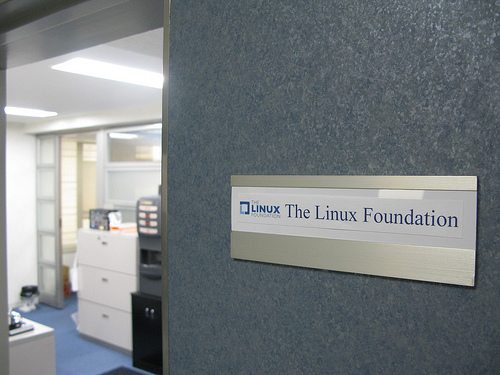
By early 2000, open source received a boost from the formation of the Open Source Development Labs, which focused on the deployment of the Linux platform for enterprise computing. The OSDL merged with the Free Standards Group in 2007 to form The Linux Foundation.

Highlighting the changing views on open source was the recent announcement from Microsoft in joining The Linux Foundation as a “Platinum” member. The computing software giant has increasingly pushed its focus into the open source world, including recently releasing the open source .Net Core 1.0 platform; saddled up with Canonical to deploy Ubuntu on Windows 10; partnered with FreeBSD on releasing a version of its Azure cloud platform; and in acquiring Xamarin moved its software development kit to open source.

“As a cloud platform company we aim to help developers achieve more using the platforms and languages they know,” said Scott Guthrie, EVP for Microsoft Cloud and Enterprise Group, in a statement. “The Linux Foundation is home not only to Linux, but many of the community’s most innovative open source projects. We are excited to join The Linux Foundation and partner with the community to help developers capitalize on the shift to intelligent cloud and mobile experiences.”

As part of its Platinum membership, which reports indicate typically runs $500,000, Microsoft placed John Gossman, architect on its Azure team, on The Linux Foundation board of directors. Other Platinum members include Cisco, Fujitsu, Hewlett-Packard Enterprise, Huawei, IBM, Intel, NEC, Oracle, Qualcomm and Samsung.

The move came as a surprise to some as Microsoft’s past history of basing platforms on proprietary software seemed counter to what The Linux Foundation was attempting to do. That history was somewhat noticeable in comments from the open source group in connection with the announcement.

“Microsoft has grown and matured in its use of and contributions to open source technology,” said Jim Zemlin, executive director at The Linux Foundation. “The company has become an enthusiastic supporter of Linux and of open source and a very active member of many important projects. Membership is an important step for Microsoft, but also for the open source community at large, which stands to benefit from the company’s expanding range of contributions.”

For more on the topic of open source software check out the latest RCR Wireless News feature report “Open Source: Opening up the telecom world for new opportunities and challenges.”

Also, check out the accompanying webinar on the topic, with panel members from Analysys Mason, Orange Business Services, Radisys and Sonus.

Bored? Why not follow me on Twitter.

You Might Also Like
  • Operators are seeking greater control of NTN: GSMA Intelligence
  • OCUDU aims to resolve the ‘last bottlenecks of proprietary software’
  • Telefónica on making Open Gateway APIs agent-ready
  • What is AI-RRM in Wi-Fi 7?
  • Why Wi-Fi 7 strengthens Wi-Fi/5G convergence
  • Three reasons 2026 is Wi-Fi 7’s breakout year, according to Cisco
Share 0 LinkedinEmail
Dan Meyer

Contributor

previous post
2017 Predictions: High-speed broadband to require specific infrastructure, spectrum support
next post
Analyst Angle: Enabling low-latency, high-reliability apps with edge computing

White Papers

  • Norton eBook: The 2026 Telco Playbook

  • Enea White Paper: Why Intelligent AAA is the Swiss Army Knife of Telecom

  • CSG White Paper: Telco AI Enabler: Mediation’s Defining Role

  • Enea White Paper: Scalable Database Design for 5G and Beyond

  • Supermicro and NVIDIA Whitepaper: Powering sovereign AI at scale

Editorial Reports

  • Market Pulse Report: Telco AI in 2026 – Trends, Challenges and Opportunities

  • Nvidia Report: The State of AI in Telecommunications: 2026 Trends

  • Report: Scaling Optical Networks For The Hyperscale And AI Era

Webinars

  • Webinar: Building 6G — aligning technology, policy and purpose

  • SIMCom Webinar: Scaling your next deployment – from plastic to provisioning

  • Webinar: Rethinking the RAN as AI, cloud and openness converge

  • Webinar: Scale-Up, Scale-Out, Scale-Across – Building AI-Era Network Fabrics

  • Webinar: NTN in motion – evolving standards, expanding services

Since 1982, RCR Wireless News has been providing wireless and mobile industry news, insights, and analysis to mobile and wireless industry professionals, decision makers, policy makers, analysts and investors.

Facebook Twitter Youtube Linkedin Envelope Rss

Useful Links

  • Subscribe
  • About RCR Wireless News
  • Contact Us
  • Advertise
  • Editorial Calendar
  • Archive
  • RSS
  • Wireless News Archive
  • Subscribe
  • About RCR Wireless News
  • Contact Us
  • Advertise
  • Editorial Calendar
  • Archive
  • RSS
  • Wireless News Archive

Edtior's Picks

Building the AI backbone, waiting on the AI billions
Ensuring colocation success by eliminating network observability blind spots (Reader Forum)
Thursday (telco diary) | Vodafone resets, AT&T reloads

Latest Articles

Building the AI backbone, waiting on the AI billions
Ensuring colocation success by eliminating network observability blind spots (Reader Forum)
Thursday (telco diary) | Vodafone resets, AT&T reloads
SK Telecom’s A.X K2 is South Korea’s biggest bet yet on sovereign AI

© 2026 RCR Wireless News All Right Reserved. Developed by Eight Hats.

Cookie Policy | Privacy Policy

RCR Wireless
  • News
  • Channels
    • 5G
    • 6G
    • BSS OSS
    • Carriers
    • IoT
    • Network Infrastructure
    • Open RAN
    • Private 5G
    • Telco AI
    • Telco Cloud
    • Test & Measurement
  • Resources
    • Reports
    • Webinars
    • White papers
    • AI Fundamentals
    • Analyst Angle
    • Editorial Calendar
    • Fundamentals
      • 5G NR Release 17
      • AI
        • Telco AI in 2025
    • Podcasts
      • Let’s Get Digital with Carrie Charles
      • Wireless Connectivity to Enable Industry 4.0 for the Middleprise
      • Well Technically…
      • Will 5G Change the World
      • Accelerating Industry 4.0 Digitalization
  • AI Infrastructure
  • Programs
  • Events
  • RCRtv
  • Advertise
  • Subscribe
RCR Wireless
  • News
  • Channels
    • 5G
    • 6G
    • BSS OSS
    • Carriers
    • IoT
    • Network Infrastructure
    • Open RAN
    • Private 5G
    • Telco AI
    • Telco Cloud
    • Test & Measurement
  • Resources
    • Reports
    • Webinars
    • White papers
    • AI Fundamentals
    • Analyst Angle
    • Editorial Calendar
    • Fundamentals
      • 5G NR Release 17
      • AI
        • Telco AI in 2025
    • Podcasts
      • Let’s Get Digital with Carrie Charles
      • Wireless Connectivity to Enable Industry 4.0 for the Middleprise
      • Well Technically…
      • Will 5G Change the World
      • Accelerating Industry 4.0 Digitalization
  • AI Infrastructure
  • Programs
  • Events
  • RCRtv
  • Advertise
  • Subscribe
@2020 - All Right Reserved. Designed and Developed by PenciDesign