
RCR Wireless
  • News
  • Channels
    • 5G
    • 6G
    • BSS OSS
    • Carriers
    • IoT
    • Network Infrastructure
    • Open RAN
    • Private 5G
    • Telco AI
    • Telco Cloud
    • Test & Measurement
  • Resources
    • Reports
    • Webinars
    • White papers
    • AI Fundamentals
    • Analyst Angle
    • Editorial Calendar
    • Fundamentals
      • 5G NR Release 17
      • AI
        • Telco AI in 2025
    • Podcasts
      • Let’s Get Digital with Carrie Charles
      • Wireless Connectivity to Enable Industry 4.0 for the Middleprise
      • Well Technically…
      • Will 5G Change the World
      • Accelerating Industry 4.0 Digitalization
  • AI Infrastructure
  • Programs
  • Events
  • RCRtv
  • Advertise
  • Subscribe
Friday, July 31, 2026
RCR Wireless
  • News
  • Channels
    • 5G
    • 6G
    • BSS OSS
    • Carriers
    • IoT
    • Network Infrastructure
    • Open RAN
    • Private 5G
    • Telco AI
    • Telco Cloud
    • Test & Measurement
  • Resources
    • Reports
    • Webinars
    • White papers
    • AI Fundamentals
    • Analyst Angle
    • Editorial Calendar
    • Fundamentals
      • 5G NR Release 17
      • AI
        • Telco AI in 2025
    • Podcasts
      • Let’s Get Digital with Carrie Charles
      • Wireless Connectivity to Enable Industry 4.0 for the Middleprise
      • Well Technically…
      • Will 5G Change the World
      • Accelerating Industry 4.0 Digitalization
  • AI Infrastructure
  • Programs
  • Events
  • RCRtv
  • Advertise
  • Subscribe
Add RCR Wireless as a preferred source on Google
  • Qualcomm 6G Insights
  • Huawei Content Hub
  • Qualcomm – 6G Vision
  • OSS/BSS Channel
  • RCRTech Roundtable: AI Infrastructure
RCR Wireless
RCR Wireless
  • Advanced Mimo
  • Mobile mmWave
  • 5G Positioning
  • Green Networks
  • Metaverse
  • Automotive
  • Industrial and Wide-area IoT
Copyright 2021 - All Right Reserved
Home - LTE standards provide new levels of efficiency for IoT
5GFeaturedInternet of Things (IoT)LTEQualcomm 5G Use Cases and EssentialsSponsoredWi-Fi

LTE standards provide new levels of efficiency for IoT

by Qualcomm November 2, 2016
written by Qualcomm November 2, 2016 Share
LinkedinEmail
Share 0LinkedinEmail
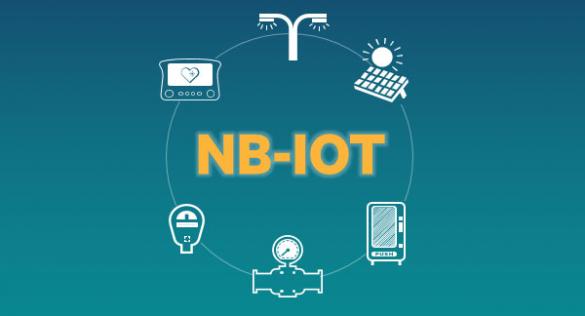
NB-IoT
196

As the internet of things grows, LTE-based technologies will shape 5G

Part of the vision for 5G is a single, unified air interface capable of supporting everything from massive numbers of internet of things devices and sensors requiring low levels of throughput to mission critical applications like autonomous drones that demand incredibly low latency and high reliability.

The internet of things (IoT) promises to revolutionize industry as automation and big data are leveraged to reduce operational expenses through predictive maintenance, workforce optimization and increased efficiencies in virtually all business processes. Consumers and enterprises will similarly benefit from the perpetuation of IoT technologies. Corporate campuses will become more worker-friendly as employee patterns are established and predicted; on a larger scale, smart cities will help improve quality-of-life for citizens by making urban living easier. But, in order to do this, IoT devices and sensors require a scalable platform that supports always-on communications that are reliable, secure and ubiquitous.
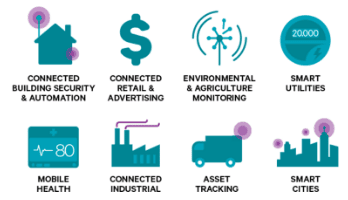
Qualcomm NB-IoT

To that last point—ubiquity—existing LTE networks will be instrumental in bringing the IoT to life today, as well as in the context of the path to 5G. In fact, international standards body 3GPP recently defined requirements for new narrowband LTE-based IoT, which is now making its way to commercialization.

3GPP Release 13 includes specifications for LTE Cat-M1 (eMTC) and LTE Cat-NB1 (NB-IoT), which reduces the throughput and bandwidth requirements from previous generations of standards. Specifically, LTE Cat-M1 provides a variable rate up to 1 Mbps in 1.4 MHz narrowband; NB-IoT delivers 10 Kbps in 200 kHz narrowband.

Built on a strong foundation of widely-available LTE, IoT systems further benefit from reduced device and network complexity, multi-year battery life achieved through power save modes and more efficient signaling, deep coverage for hard-to-reach IoT devices, and higher node density.

As wide-area IoT deployments pick-up, these new standards provide global scalability, coexistence with existing LTE services, easily managed quality of service and end-to-end security and authentication features.

Danny Tseng, a technical marketing manager for Qualcomm, which is and has been a major contributor to 3GPP, said these new IoT specs represents “a superior solution to emerging non-3GPP technologies for IoT and Low Power Wide Area (LPWA) applications,” and explained the importance of working through 3GPP. “It’s backed by a mature ecosystem with a rich roadmap to 5G. In fact, NB-IoT will continue to evolve beyond Release 13 with new features, such as support for multicast and positioning, establishing the foundation for Narrowband 5G IoT.”

Coupled with 5G New Radio standards, which are well on the way to standardization by 3GPP, the IoT is poised to fundamentally alter the way people live, work and do business. “As we did with 3G and 4G,” Tseng said, “Qualcomm is leading the world to 5G. And this is certainly exemplified in the internet of things, starting with LTE IoT technologies today.”

You Might Also Like
  • AI-RAN takes shape as Open RAN, Cloud RAN and AI converge
  • Japan’s private 5G market is finally moving beyond demo experiments (Analyst Angle)
  • Wednesday (telco diary) | Orange leads Euro telco revival
  • Huawei sees Mobile AI driving new wave of uplink network investment
  • South Korea launches AI-RAN project to advance industrial AI
  • Rakuten Mobile expands O-RAN footprint with 1Finity radios
Share 0 LinkedinEmail
Qualcomm

Mobile is already the biggest technology platform in history, and 5G technology has the opportunity to expand it even further by transforming people, societies and industries. Much more than higher peak rates, Qualcomm envisions 5G as a way to enable new services, connect new industries and devices, and empower new user experiences. 5G networks will play a key part in creating the connectivity fabric for everything.

previous post
Analyst Angle: Google lays down an Apple strategy with Pixel
next post
A message from Qualcomm’s CEO: Leading the Way to 5G

White Papers

  • Norton eBook: The 2026 Telco Playbook

  • Enea White Paper: Why Intelligent AAA is the Swiss Army Knife of Telecom

  • CSG White Paper: Telco AI Enabler: Mediation’s Defining Role

  • Enea White Paper: Scalable Database Design for 5G and Beyond

  • Supermicro and NVIDIA Whitepaper: Powering sovereign AI at scale

Editorial Reports

  • Market Pulse Report: Telco AI in 2026 – Trends, Challenges and Opportunities

  • Nvidia Report: The State of AI in Telecommunications: 2026 Trends

  • Report: Scaling Optical Networks For The Hyperscale And AI Era

Webinars

  • Webinar: Building 6G — aligning technology, policy and purpose

  • SIMCom Webinar: Scaling your next deployment – from plastic to provisioning

  • Webinar: Rethinking the RAN as AI, cloud and openness converge

  • Webinar: Scale-Up, Scale-Out, Scale-Across – Building AI-Era Network Fabrics

  • Webinar: NTN in motion – evolving standards, expanding services

Since 1982, RCR Wireless News has been providing wireless and mobile industry news, insights, and analysis to mobile and wireless industry professionals, decision makers, policy makers, analysts and investors.

Facebook Twitter Youtube Linkedin Envelope Rss

Useful Links

  • Subscribe
  • About RCR Wireless News
  • Contact Us
  • Advertise
  • Editorial Calendar
  • Archive
  • RSS
  • Wireless News Archive
  • Subscribe
  • About RCR Wireless News
  • Contact Us
  • Advertise
  • Editorial Calendar
  • Archive
  • RSS
  • Wireless News Archive

Edtior's Picks

Building the AI backbone, waiting on the AI billions
Ensuring colocation success by eliminating network observability blind spots (Reader Forum)
Thursday (telco diary) | Vodafone resets, AT&T reloads

Latest Articles

Building the AI backbone, waiting on the AI billions
Ensuring colocation success by eliminating network observability blind spots (Reader Forum)
Thursday (telco diary) | Vodafone resets, AT&T reloads
SK Telecom’s A.X K2 is South Korea’s biggest bet yet on sovereign AI

© 2026 RCR Wireless News All Right Reserved. Developed by Eight Hats.

Cookie Policy | Privacy Policy

RCR Wireless
  • News
  • Channels
    • 5G
    • 6G
    • BSS OSS
    • Carriers
    • IoT
    • Network Infrastructure
    • Open RAN
    • Private 5G
    • Telco AI
    • Telco Cloud
    • Test & Measurement
  • Resources
    • Reports
    • Webinars
    • White papers
    • AI Fundamentals
    • Analyst Angle
    • Editorial Calendar
    • Fundamentals
      • 5G NR Release 17
      • AI
        • Telco AI in 2025
    • Podcasts
      • Let’s Get Digital with Carrie Charles
      • Wireless Connectivity to Enable Industry 4.0 for the Middleprise
      • Well Technically…
      • Will 5G Change the World
      • Accelerating Industry 4.0 Digitalization
  • AI Infrastructure
  • Programs
  • Events
  • RCRtv
  • Advertise
  • Subscribe
RCR Wireless
  • News
  • Channels
    • 5G
    • 6G
    • BSS OSS
    • Carriers
    • IoT
    • Network Infrastructure
    • Open RAN
    • Private 5G
    • Telco AI
    • Telco Cloud
    • Test & Measurement
  • Resources
    • Reports
    • Webinars
    • White papers
    • AI Fundamentals
    • Analyst Angle
    • Editorial Calendar
    • Fundamentals
      • 5G NR Release 17
      • AI
        • Telco AI in 2025
    • Podcasts
      • Let’s Get Digital with Carrie Charles
      • Wireless Connectivity to Enable Industry 4.0 for the Middleprise
      • Well Technically…
      • Will 5G Change the World
      • Accelerating Industry 4.0 Digitalization
  • AI Infrastructure
  • Programs
  • Events
  • RCRtv
  • Advertise
  • Subscribe
@2020 - All Right Reserved. Designed and Developed by PenciDesign