

RCR Wireless
  • News
  • Channels
    • 5G
    • 6G
    • BSS OSS
    • Carriers
    • IoT
    • Network Infrastructure
    • Open RAN
    • Private 5G
    • Telco AI
    • Telco Cloud
    • Test & Measurement
  • Resources
    • Reports
    • Webinars
    • White papers
    • AI Fundamentals
    • Analyst Angle
    • Editorial Calendar
    • Fundamentals
      • 5G NR Release 17
      • AI
        • Telco AI in 2025
    • Podcasts
      • Let’s Get Digital with Carrie Charles
      • Wireless Connectivity to Enable Industry 4.0 for the Middleprise
      • Well Technically…
      • Will 5G Change the World
      • Accelerating Industry 4.0 Digitalization
  • AI Infrastructure
  • Programs
  • Events
  • RCRtv
  • Advertise
  • Subscribe
Thursday, July 9, 2026
RCR Wireless
  • News
  • Channels
    • 5G
    • 6G
    • BSS OSS
    • Carriers
    • IoT
    • Network Infrastructure
    • Open RAN
    • Private 5G
    • Telco AI
    • Telco Cloud
    • Test & Measurement
  • Resources
    • Reports
    • Webinars
    • White papers
    • AI Fundamentals
    • Analyst Angle
    • Editorial Calendar
    • Fundamentals
      • 5G NR Release 17
      • AI
        • Telco AI in 2025
    • Podcasts
      • Let’s Get Digital with Carrie Charles
      • Wireless Connectivity to Enable Industry 4.0 for the Middleprise
      • Well Technically…
      • Will 5G Change the World
      • Accelerating Industry 4.0 Digitalization
  • AI Infrastructure
  • Programs
  • Events
  • RCRtv
  • Advertise
  • Subscribe
Add RCR Wireless as a preferred source on Google
  • Qualcomm 6G Insights
  • Huawei Content Hub
  • Qualcomm – 6G Vision
  • OSS/BSS Channel
  • RCRTech Roundtable: AI Infrastructure
RCR Wireless
RCR Wireless
  • Advanced Mimo
  • Mobile mmWave
  • 5G Positioning
  • Green Networks
  • Metaverse
  • Automotive
  • Industrial and Wide-area IoT
Copyright 2021 - All Right Reserved
Home - Use cases and what to consider when using IoT for your supply chain
Data AnalyticsFundamentalsInternet of Things (IoT)Transportation: Airports, Rail, Ports

Use cases and what to consider when using IoT for your supply chain

by Phillip Tracy September 27, 2016
written by Phillip Tracy September 27, 2016 Share
LinkedinEmail
Share 0LinkedinEmail
5G trials
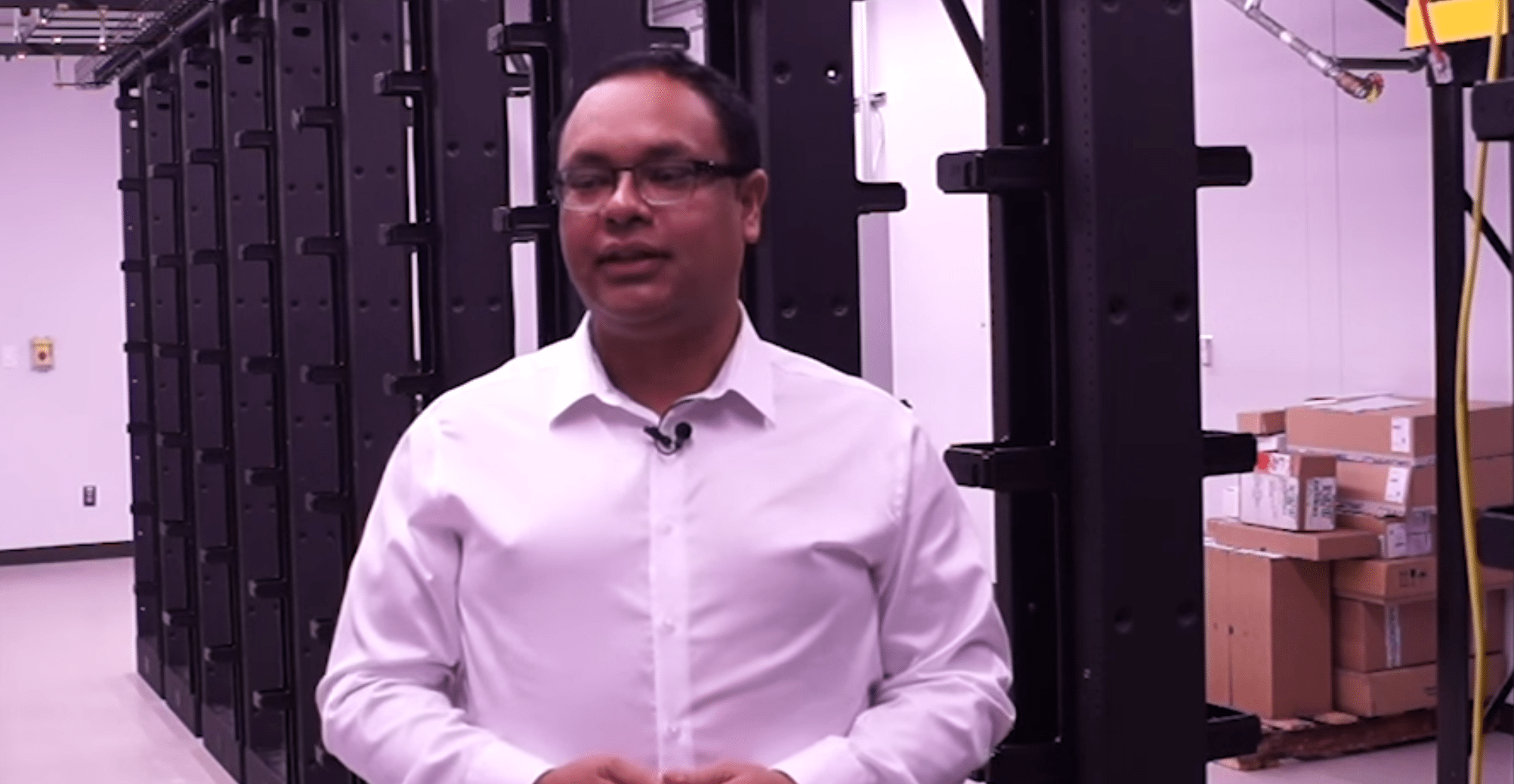
The manager of AT&T's Austin Spectrum Lab discusses 5G trials.
81

Unlike previous generations of passive sensors, the IoT will allow a supply chain to control the external environment and execute decisions, according to the Gartner article Five Ways the Internet of Things Will Benefit the Supply Chain. With the IoT, sensor-embedded factory equipment can not only communicate data about parameters such as the temperature and utilization of a machine, but also change equipment settings and process workflow to optimize performance.

source: DHL/Youtube

source: DHL/Youtube

According to Noha Tohamy, research vice-president at Gartner, in order to profit from the IoT, chief supply chain officers (CSCOs) need to leverage analytics and define new processes along the entire supply chain, with the ultimate goal of fulfilling customer demand for digital and information products and services.

Industrial IoT supply chain considerations

Tohamy outlined five rules CSCOs must follow for success:

Pursue the IoT at any demand-driven value network (DDVN) maturity level
The ability of an organization to benefit from the IoT is not predicated on higher maturity levels. However, the magnitude of those benefits will be impacted by those levels, Tohamy said.

Take, for example, a consumer products manufacturer who plans to implement telematics to allow the organization to capture information on the location and conditions of its transportation equipment.

“While a functionally siloed company would be able to apply the IoT use case to capture efficiency and cost reduction improvement; a company with an integrated supply chain would benefit from the same technology to further improve overall supply chain performance, and to become demand-driven,” Tahomy said.

source: ABC News/Youtube

source: ABC News/Youtube

Leverage the IoT to improve existing supply chain processes
As well as being a driver for business and supply chain transformation, IoT can also drive incremental benefits to existing supply chain processes spanning asset utilization, warehouse space optimization or production planning.

Consider the potential for IoT to fully redesign existing supply chain process
The proliferation of the adoption of IoT will drive the need for the redesign of many existing supply chain processes.

For example, an industrial equipment manufacturer that has redefined its customers’ value proposition from selling pure physical products to offering a complete solution that spans physical products, embedded software and combined services. In this business model, a supply chain process like sales and operations planning must now account for the customers’ demand for the complete solution.

Assess the potential for offering IoT-enabled information products to internal and external clients
“With the IoT, the supply chain will have unprecedented access to data valued by internal and external stakeholders,” Tohamy said to Gartner. “This presents an opportunity for supply chain groups to co-develop new information-based solutions for individual customers or markets.”

For example, an agricultural equipment manufacturer can capture data from sensors on agricultural equipment to understand how farmers are using different product features. This information can be shared with the R&D groups to develop products that best meet customers’ needs.

Build strong supply chain technology leadership to support the convergence of the digital and physical supply chains
Infusion of IoT in the supply chain will create new challenges and demands on the supply chain organization who will likely be tasked with delivering, sourcing and maintaining technology-enabled products and solutions.

“This presents a great opportunity for the supply chain to play a critical leadership role in defining the overall digital business strategy,” Tohamy said. “To do that, the supply chain organization must acquire senior technology skill sets and leadership with the companywide credibility to define strategic technology direction. These skill sets must go far beyond those with the traditional focus on providing tactical support to supply chain functions.”

Now that we have gone over some considerations when using IoT in a supply chain environment, it is time to outline some potential use cases for using IoT for production and distribution.

IoT supply chain use cases

source: Martin Smith for GBS Digital Insight/Youtube

source: Martin Smith for GBS Digital Insight/Youtube

Increased Logistics Transparency

The internet of things can make information about transport available to the entire supply chain, making the chain more transparent, according to researchers at the University of Houston. The smart items monitor the goods and proactively raise an alert if transport conditions are not appropriate anymore, so the carrier is alerted and the goods have a higher chance to be saved. This reduces the costs of return, the removal of defective goods and lowers transports due to lower reshipping rate.

In-transit visibility

One area that will play a prominent role in the future supply chain, as it’s impacted by IoT, is in-transit visibility. The logistics ecosystem has many players, and thus, many moving parts, according to In-bound logistics. Products are handled and transferred between the manufacturer, suppliers, the distribution center, retailer and customer.

Key to in-transit visibility are cloud-based GPS and Radio Frequency Identification (RFID) technologies, which provide identity, location and other tracking information. These are the backbone of IoT as it relates to the supply chain. By tapping the data gathered by these technologies, detailed visibility of an item is provided all the way from the manufacturer to the retailer. Data gathered from GPS and RFID technologies not only allows supply chain professionals to automate shipping and delivery by exactly predicting the time of arrival; they can monitor important details like temperature control, which impact the quality of a product in-transit.

Gathering the data to decrease opex

Internet of things means richer data and deeper intelligence for all parties in a supply network. And that doesn’t just apply to product visibility. According to In-bound Logistics, by allowing devices to “talk to each other” in the right way, IoT can help supply chain professionals:

  • Reduce asset loss
    • Know about product issues in time to find a solution.
  • Save fuel costs
    • Optimize fleet routes by monitoring traffic conditions.
  • Ensure temperature stability
    • Monitor the cold chain – according to the Food and Agriculture Organization of the United Nations, about one third of food perishes in transit every year.
  • Manage warehouse stock
    • Monitor inventory to reduce out-of-stock situations.
  • Gain user insight
    • Embedded sensors provide visibility into customer behavior and product usage.
  • Increase fleet efficiency
    • Reduce redundancies – deadhead miles account for up to 10 percent of truck miles, according to the EPA, and 28% for private fleet trucks, according to the National Private Truck Council.
You Might Also Like
  • How the FCC can protect IoT innovation and GPS resilience in the 900 MHz band (Reader Forum)
  • ‘You can’t tame it’ – private networks, open standards and the AI proof for IoT
  • LoRaWAN eyes ‘fourth pillar’ status as IoT apps start to stack
  • New LoRaWAN roadmap puts focus on usability in bid for ‘massive’-scale IoT
  • ISAC positioning for physical AI on private 5G – is this industry’s ‘iPhone moment’?
  • The SGP.32 opportunity – how to capture new enterprise IoT growth (Reader Forum)
Share 0 LinkedinEmail
Phillip Tracy

previous post
Analyst Angle: Managing interference in densified networks
next post
OPNFV Colorado platform bolsters open source NFV efforts

White Papers

  • Enea White Paper: Why Intelligent AAA is the Swiss Army Knife of Telecom

  • CSG White Paper: Telco AI Enabler: Mediation’s Defining Role

  • Enea White Paper: Scalable Database Design for 5G and Beyond

  • Supermicro and NVIDIA Whitepaper: Powering sovereign AI at scale

  • VIAVI Whitepaper: RAN scenario generators and their critical role for future-proofing AI-native RAN in Advanced 5G and 6G networks

Editorial Reports

  • Report: Scaling Optical Networks For The Hyperscale And AI Era

  • Test And Measurement Market Pulse Report

  • Editorial Report: Securing telecom infrastructure for the quantum era

Webinars

  • SIMCom Webinar: Scaling your next deployment – from plastic to provisioning

  • Webinar: Rethinking the RAN as AI, cloud and openness converge

  • Webinar: Scale-Up, Scale-Out, Scale-Across – Building AI-Era Network Fabrics

  • Webinar: NTN in motion – evolving standards, expanding services

  • Webinar: Noise-Figure Measurements with RFmx and PXI VSTs

Since 1982, RCR Wireless News has been providing wireless and mobile industry news, insights, and analysis to mobile and wireless industry professionals, decision makers, policy makers, analysts and investors.

Facebook Twitter Youtube Linkedin Envelope Rss

Useful Links

  • Subscribe
  • About RCR Wireless News
  • Contact Us
  • Advertise
  • Editorial Calendar
  • Archive
  • RSS
  • Wireless News Archive
  • Subscribe
  • About RCR Wireless News
  • Contact Us
  • Advertise
  • Editorial Calendar
  • Archive
  • RSS
  • Wireless News Archive

Edtior's Picks

Optical advances won’t eliminate need for new fiber, says Dell’Oro
SIMCom Webinar: Scaling your next deployment – from plastic to provisioning
GSMA Industry Insight: Enabling seamless cellular wearable experiences

Latest Articles

Optical advances won’t eliminate need for new fiber, says Dell’Oro
SIMCom Webinar: Scaling your next deployment – from plastic to provisioning
GSMA Industry Insight: Enabling seamless cellular wearable experiences
Wednesday (telco diary) | Mobility matters for physical AI

© 2026 RCR Wireless News All Right Reserved. Developed by Eight Hats.

Cookie Policy | Privacy Policy

RCR Wireless
  • News
  • Channels
    • 5G
    • 6G
    • BSS OSS
    • Carriers
    • IoT
    • Network Infrastructure
    • Open RAN
    • Private 5G
    • Telco AI
    • Telco Cloud
    • Test & Measurement
  • Resources
    • Reports
    • Webinars
    • White papers
    • AI Fundamentals
    • Analyst Angle
    • Editorial Calendar
    • Fundamentals
      • 5G NR Release 17
      • AI
        • Telco AI in 2025
    • Podcasts
      • Let’s Get Digital with Carrie Charles
      • Wireless Connectivity to Enable Industry 4.0 for the Middleprise
      • Well Technically…
      • Will 5G Change the World
      • Accelerating Industry 4.0 Digitalization
  • AI Infrastructure
  • Programs
  • Events
  • RCRtv
  • Advertise
  • Subscribe
RCR Wireless
  • News
  • Channels
    • 5G
    • 6G
    • BSS OSS
    • Carriers
    • IoT
    • Network Infrastructure
    • Open RAN
    • Private 5G
    • Telco AI
    • Telco Cloud
    • Test & Measurement
  • Resources
    • Reports
    • Webinars
    • White papers
    • AI Fundamentals
    • Analyst Angle
    • Editorial Calendar
    • Fundamentals
      • 5G NR Release 17
      • AI
        • Telco AI in 2025
    • Podcasts
      • Let’s Get Digital with Carrie Charles
      • Wireless Connectivity to Enable Industry 4.0 for the Middleprise
      • Well Technically…
      • Will 5G Change the World
      • Accelerating Industry 4.0 Digitalization
  • AI Infrastructure
  • Programs
  • Events
  • RCRtv
  • Advertise
  • Subscribe
@2020 - All Right Reserved. Designed and Developed by PenciDesign
