RCR Wireless
  • News
  • Channels
    • 5G
    • 6G
    • BSS OSS
    • Carriers
    • IoT
    • Network Infrastructure
    • Open RAN
    • Private 5G
    • Telco AI
    • Telco Cloud
    • Test & Measurement
  • Resources
    • Reports
    • Webinars
    • White papers
    • AI Fundamentals
    • Analyst Angle
    • Editorial Calendar
    • Fundamentals
      • 5G NR Release 17
      • AI
        • Telco AI in 2025
    • Podcasts
      • Let’s Get Digital with Carrie Charles
      • Wireless Connectivity to Enable Industry 4.0 for the Middleprise
      • Well Technically…
      • Will 5G Change the World
      • Accelerating Industry 4.0 Digitalization
  • AI Infrastructure
  • Programs
  • Events
  • RCRtv
  • Advertise
  • Subscribe
Monday, August 3, 2026
RCR Wireless
  • News
  • Channels
    • 5G
    • 6G
    • BSS OSS
    • Carriers
    • IoT
    • Network Infrastructure
    • Open RAN
    • Private 5G
    • Telco AI
    • Telco Cloud
    • Test & Measurement
  • Resources
    • Reports
    • Webinars
    • White papers
    • AI Fundamentals
    • Analyst Angle
    • Editorial Calendar
    • Fundamentals
      • 5G NR Release 17
      • AI
        • Telco AI in 2025
    • Podcasts
      • Let’s Get Digital with Carrie Charles
      • Wireless Connectivity to Enable Industry 4.0 for the Middleprise
      • Well Technically…
      • Will 5G Change the World
      • Accelerating Industry 4.0 Digitalization
  • AI Infrastructure
  • Programs
  • Events
  • RCRtv
  • Advertise
  • Subscribe
Add RCR Wireless as a preferred source on Google
  • Qualcomm 6G Insights
  • Huawei Content Hub
  • Qualcomm – 6G Vision
  • OSS/BSS Channel
  • RCRTech Roundtable: AI Infrastructure
RCR Wireless
RCR Wireless
  • Advanced Mimo
  • Mobile mmWave
  • 5G Positioning
  • Green Networks
  • Metaverse
  • Automotive
  • Industrial and Wide-area IoT
Copyright 2021 - All Right Reserved
Home - AT&T SDN and NFV moves include leadership to workforce, standards, interoperability
FeaturedSoftware

AT&T SDN and NFV moves include leadership to workforce, standards, interoperability

by Dan Meyer March 28, 2016
written by Dan Meyer March 28, 2016 Share
LinkedinEmail
Share 0LinkedinEmail
SDN
162

AT&T SDN and NFV deployment continues with focus and support as it looks to reach 75% control by 2020

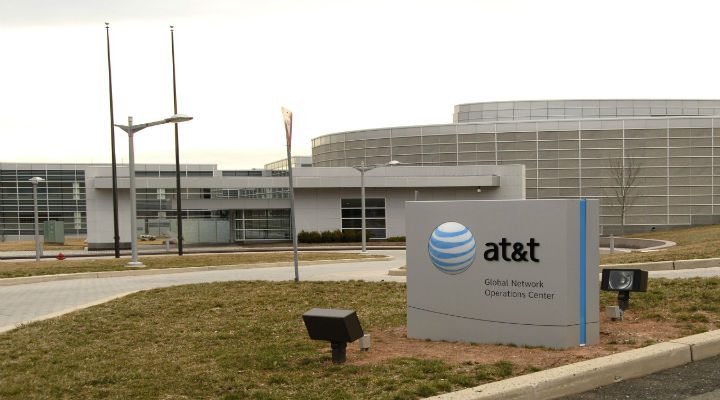
AT&T is often referenced as the gold standard among domestic carriers as well as one of the global leaders in terms of its dedication towards virtualization. AT&T in late 2014 announced plans to control 75% of its network resources using virtualization technologies by 2020, and that at the end of 2015 the carrier had reached 5.7% control, which was ahead of its 5% target.

John Donovan, SEVP for AT&T Technology and Operations, earlier this year said the company’s deployment of its AT&T Integrated Cloud nodes hit 74 nodes at the end of last year, ahead of its target of 69 nodes deployed. These include international deployments, which Donovan said allow for better alignment with local regulations and improve security.

In part two of a Q&A, Margaret Chiosi, distinguished network architect at AT&T Labs, provided insight into the telecom operator’s ongoing push in using software-defined networking, network functions virtualization and cloud technologies to power its network.

(Check out part one of the interview where Chiosi touched on current deployments, challenges in making those initial deployments and support from the vendor community.)

RCR Wireless News: What impact if any are the continuing development of standards having on the deployment process?

Margaret Chiosi: Standards need to be pulled into the agile development process of software. We are engaging more software developers to help us validate the APIs, common data models, etc.

RCRWN: What are your thoughts on telecom operators taking an even greater role in developing the standards/technology needed to support virtualization plans? Might this lead to a lessening of cost efficiencies in the long term?

Chiosi: It would be great if all the operators improved their software development skill sets. This would help accelerate the realization of the SDN-enabled cloud. Because of this need, AT&T is reskilling our workforce: from hardware to software skills; wireline to IP and wireless skills; from data reporters to data scientists. This is a company wide initiative and we are providing a number of ways for our employees to build on top of the skills they already have and gain new ones.

Our employees have taken advantage of the skills training we’re offering and we’re seeing results like these:

–More than 79,000 “badges” awarded to 39,000 employees. Badges are visual indicators added to an employee’s profile within the company’s internal social media platform. AT&T University badges signify that the employee has completed all coursework required (to earn a technical certification, Nanodegree, etc.).

–1.22 million courses completed.

–110,000 employees (39% of workforce) actively enrolled in coursework.

–1,093 employees enrolled in Nanodegrees.

–292 employees enrolled in the Georgia Tech online masters in computer science.

RCRWN: What operations/services are you seeing/expecting to see the most efficiency gains from in terms of both network usage efficiency and cost savings?

Chiosi: It’s hard to choose one area versus the other. Just moving to a [common off-the-shelf] environment has the potential for more sharing of platforms among different virtual functions and full automation of that platform. By moving to a COTS environment, I can now share one common pool of platforms for 10 VFs, which increases utilization of the platform by 10 different applications. By being on a common platform, there is a higher chance of fully automating the platform. Then, the focus is on the automation of each of virtual applications. But once they are virtualized, there is a set of use cases in instantiation and lifecycle of the virtual applications that will be in common. So, those common operational scenarios need to be fully automated as well.

RCRWN: As AT&T moves through this process, how deep do you think the move towards virtualization be implemented into the network? Can everything beyond the RF antenna and fiber backhaul be virtualized using NFV/SDN/cloud?

Chiosi: Yes. There are already applications on their own COTS environments in the mobile network. It’s a matter of performance and scale with respect to getting on a single shareable COTS environment.

There is actually a continuum of traffic growth, which may require ASIC chips. As COTS environment expands to support higher packet per second, the demand for more PPS increases. But more functions starting from the edge toward the core will justify COTS and we may only be left with the core routers being on ASICs. There is work being done to disaggregate the network core through Open Compute Project. So even the core may no longer need ASICs.

For more information on the current move towards NFV, SDN and cloud deployments across the telecom space, check out the latest RCR Wireless News feature report “NFV, SDN and cloud: How deep and where?”

Bored? Why not follow me on Twitter

You Might Also Like
  • Operators are seeking greater control of NTN: GSMA Intelligence
  • OCUDU aims to resolve the ‘last bottlenecks of proprietary software’
  • Telefónica on making Open Gateway APIs agent-ready
  • How telecommunications operators can thrive in the software-centric era (Reader Forum)
  • Rethinking managed connectivity — from license fees to tariffs and open software (Analyst Angle)
  • Comcast expands Janus virtualization, AI trial with DriveNets
Share 0 LinkedinEmail
Dan Meyer

Contributor

previous post
Ofcom looks to streamline mobile number portability
next post
Wi-Fi SON and why it’s important

White Papers

  • Norton eBook: The 2026 Telco Playbook

  • Enea White Paper: Why Intelligent AAA is the Swiss Army Knife of Telecom

  • CSG White Paper: Telco AI Enabler: Mediation’s Defining Role

  • Enea White Paper: Scalable Database Design for 5G and Beyond

  • Supermicro and NVIDIA Whitepaper: Powering sovereign AI at scale

Editorial Reports

  • Market Pulse Report: Telco AI in 2026 – Trends, Challenges and Opportunities

  • Nvidia Report: The State of AI in Telecommunications: 2026 Trends

  • Report: Scaling Optical Networks For The Hyperscale And AI Era

Webinars

  • Webinar: Building 6G — aligning technology, policy and purpose

  • SIMCom Webinar: Scaling your next deployment – from plastic to provisioning

  • Webinar: Rethinking the RAN as AI, cloud and openness converge

  • Webinar: Scale-Up, Scale-Out, Scale-Across – Building AI-Era Network Fabrics

  • Webinar: NTN in motion – evolving standards, expanding services

Since 1982, RCR Wireless News has been providing wireless and mobile industry news, insights, and analysis to mobile and wireless industry professionals, decision makers, policy makers, analysts and investors.

Facebook Twitter Youtube Linkedin Envelope Rss

Useful Links

  • Subscribe
  • About RCR Wireless News
  • Contact Us
  • Advertise
  • Editorial Calendar
  • Archive
  • RSS
  • Wireless News Archive
  • Subscribe
  • About RCR Wireless News
  • Contact Us
  • Advertise
  • Editorial Calendar
  • Archive
  • RSS
  • Wireless News Archive

Edtior's Picks

Poste deal advances as TIM eyes growth in AI services, mission-critical industries
Physical AI is exposing a data sovereignty gap (Reader Forum)
Friday (telco diary) | Telcos in AI and ISAC arms race

Latest Articles

Poste deal advances as TIM eyes growth in AI services, mission-critical industries
Physical AI is exposing a data sovereignty gap (Reader Forum)
Friday (telco diary) | Telcos in AI and ISAC arms race
Building the AI backbone, waiting on the AI billions

© 2026 RCR Wireless News All Right Reserved. Developed by Eight Hats.

Cookie Policy | Privacy Policy

RCR Wireless
  • News
  • Channels
    • 5G
    • 6G
    • BSS OSS
    • Carriers
    • IoT
    • Network Infrastructure
    • Open RAN
    • Private 5G
    • Telco AI
    • Telco Cloud
    • Test & Measurement
  • Resources
    • Reports
    • Webinars
    • White papers
    • AI Fundamentals
    • Analyst Angle
    • Editorial Calendar
    • Fundamentals
      • 5G NR Release 17
      • AI
        • Telco AI in 2025
    • Podcasts
      • Let’s Get Digital with Carrie Charles
      • Wireless Connectivity to Enable Industry 4.0 for the Middleprise
      • Well Technically…
      • Will 5G Change the World
      • Accelerating Industry 4.0 Digitalization
  • AI Infrastructure
  • Programs
  • Events
  • RCRtv
  • Advertise
  • Subscribe
RCR Wireless
  • News
  • Channels
    • 5G
    • 6G
    • BSS OSS
    • Carriers
    • IoT
    • Network Infrastructure
    • Open RAN
    • Private 5G
    • Telco AI
    • Telco Cloud
    • Test & Measurement
  • Resources
    • Reports
    • Webinars
    • White papers
    • AI Fundamentals
    • Analyst Angle
    • Editorial Calendar
    • Fundamentals
      • 5G NR Release 17
      • AI
        • Telco AI in 2025
    • Podcasts
      • Let’s Get Digital with Carrie Charles
      • Wireless Connectivity to Enable Industry 4.0 for the Middleprise
      • Well Technically…
      • Will 5G Change the World
      • Accelerating Industry 4.0 Digitalization
  • AI Infrastructure
  • Programs
  • Events
  • RCRtv
  • Advertise
  • Subscribe
@2020 - All Right Reserved. Designed and Developed by PenciDesign