
RCR Wireless
  • News
  • Channels
    • 5G
    • 6G
    • BSS OSS
    • Carriers
    • IoT
    • Network Infrastructure
    • Open RAN
    • Private 5G
    • Telco AI
    • Telco Cloud
    • Test & Measurement
  • Resources
    • Reports
    • Webinars
    • White papers
    • AI Fundamentals
    • Analyst Angle
    • Editorial Calendar
    • Fundamentals
      • 5G NR Release 17
      • AI
        • Telco AI in 2025
    • Podcasts
      • Let’s Get Digital with Carrie Charles
      • Wireless Connectivity to Enable Industry 4.0 for the Middleprise
      • Well Technically…
      • Will 5G Change the World
      • Accelerating Industry 4.0 Digitalization
  • AI Infrastructure
  • Programs
  • Events
  • RCRtv
  • Advertise
  • Subscribe
Thursday, August 13, 2026
RCR Wireless
  • News
  • Channels
    • 5G
    • 6G
    • BSS OSS
    • Carriers
    • IoT
    • Network Infrastructure
    • Open RAN
    • Private 5G
    • Telco AI
    • Telco Cloud
    • Test & Measurement
  • Resources
    • Reports
    • Webinars
    • White papers
    • AI Fundamentals
    • Analyst Angle
    • Editorial Calendar
    • Fundamentals
      • 5G NR Release 17
      • AI
        • Telco AI in 2025
    • Podcasts
      • Let’s Get Digital with Carrie Charles
      • Wireless Connectivity to Enable Industry 4.0 for the Middleprise
      • Well Technically…
      • Will 5G Change the World
      • Accelerating Industry 4.0 Digitalization
  • AI Infrastructure
  • Programs
  • Events
  • RCRtv
  • Advertise
  • Subscribe
Add RCR Wireless as a preferred source on Google
  • Qualcomm 6G Insights
  • Huawei Content Hub
  • Qualcomm – 6G Vision
  • OSS/BSS Channel
  • RCRTech Roundtable: AI Infrastructure
RCR Wireless
RCR Wireless
  • Advanced Mimo
  • Mobile mmWave
  • 5G Positioning
  • Green Networks
  • Metaverse
  • Automotive
  • Industrial and Wide-area IoT
Copyright 2021 - All Right Reserved
Home - Reader Forum: Debunking myths regarding antenna design for wearable devices
OpinionReader Forum

Reader Forum: Debunking myths regarding antenna design for wearable devices

by Reader Forum October 6, 2014
written by Reader Forum October 6, 2014 Share
LinkedinEmail
Share 0LinkedinEmail
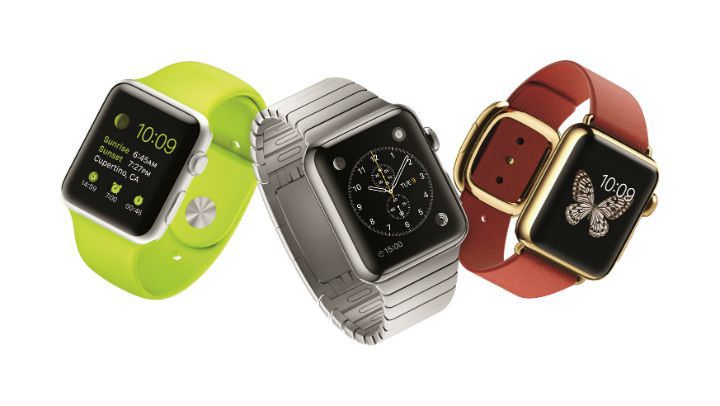
apple watch
110

Editor’s Note: In an attempt to broaden our interaction with our readers we have created this Reader Forum for those with something meaningful to say to the wireless industry. We want to keep this as open as possible, but we maintain some editorial control to keep it free of commercials or attacks. Please send along submissions for this section to our editors at: [email protected].

The technocrats in Silicon Valley seem to have placed their bets on the next big thing — wearables. According to ABI Research, 2014 alone will see 90 million wearable devices sold around the world, most of them in the health and wellness space, including fitness bands. These devices typically either pair to a smart phone or beam data to the cloud. The key component that launches the radio signal into space and makes the device “wireless” is the antenna. Unfortunately, it is also the component that receives the least respect and attention. Some initial investment in design and development of the antennas will go a long way in making a wearable device cheaper, smaller, more comfortable and better performing — quite simply, a more desirable product.

An antenna’s performance is related to its geometry and shape. Antennas can be produced in many ways, such as stamped metal pieces, laser structured metal patterns on injection-molded parts, or copper prints on a circuit board, to name a few. Recent market research suggests that the key factors that end users look for in a wearable device are low cost, comfort, ease of use and performance — all of which are directly affected by the antenna design. This suggests that every wearable device manufacturer should invest in a good antenna solution. However, many of the currently available devices use “copy and pasted” reference designs provided by the radio chip manufacturer or fit in off-the-shelf antenna offerings instead of customizing one for their particular need. Through many conversations with device manufacturers about their design decisions, I have unearthed several myths.

Myth 1: An antenna can be treated like a passive part (e.g. capacitor) and dropped into a circuit.

The performance of an antenna is a function of the environment in which it lives. The same antenna will perform differently when it’s on a manufacturer’s development board versus in a product. Unlike most components in a design that can be dropped in with a predictable effect on the circuit, an antenna is affected by everything around it. Antennas for wearable devices need to be designed carefully because every mechanical, electrical and material feature in the device will affect the antenna’s performance.

Myth 2: Reference antenna designs provided by the radio chip manufacturers are the best possible solution.

Reference designs are merely a guide that aid quick prototyping. The optimal antenna design for a wearable device is one that maximizes performance without increasing size and cost, and one that performs adequately in all the use case scenarios for the product.

Myth 3: Off-the-shelf ceramic antennas provide the best compromise between size, cost and performance.

This is one of the most common myths that need debunking. Ceramic antennas are indeed smaller than their metallic cousins, but achieving the performance touted in the manufacturers’ data sheet requires dedicated real estate on the circuit board’s ground plane and clearance areas around the antenna. All this adds to the size of the circuit board, making the device size bigger. It is true that there is an initial upfront cost involved in designing a custom antenna solution. However, the custom designed antenna will perform better and could be better integrated into the product than an off-the-shelf alternative.

Myth 4: The human body can be treated like a big capacitor and affects all antennas the same way.

Antennas can be classified as electric (e.g. dipole) or magnetic (e.g. Loop) antennas. Electric antennas are affected more significantly by the human body because the body tissue is a lossy dielectric. It is not sufficient to merely treat the human body as a big capacitor due to the way the body affects the antenna. The effect of the body differs depending on the location of the antenna on the body, and on body morphology (e.g. fat, muscular or skinny).

Myth 5: The antenna’s efficiency can be improved by matching the antenna’s impedance (complex resistance) to the impedance of the radio chip.

True, but matching circuits can never fully compensate for a poor antenna. Improving the matching circuit improves the amount of power delivered to the antenna from the radio chip, but an inefficient antenna launches only a fraction of the power from the radio chip into space, resulting in poor radio performance.

In summary, although the antenna is only one component of a wearable device, it has the ability to make the difference between an ordinary device and a true game changer. Moreover, it is critical to delivering a satisfactory user experience. Wearable device manufacturers take note; in order to stand out from the crowd, spend time and effort on upfront design and development cost to get it right.

You Might Also Like
  • Wednesday (telco diary) | Smells like team spirit – and that tech-bro Musk
  • Tuesday (telco diary) | About open RAN, c/o Dell’Oro…
  • Europe’s AI ambitions will fail without sovereign cloud infrastructure (Reader Forum)
  • Monday (telco diary) | Digging in, moving up – lessons from Lumen
  • Friday (telco diary) | Friday night fare – private 5G to go
  • Thursday (telco diary) | APAC telcos pile into AI infrastructure
Share 0 LinkedinEmail
Avatar of Reader Forum
Reader Forum

Submit Reader Forum articles to [email protected]. Articles submitted to RCR Wireless News become property of RCR Wireless News and will be subject to editorial review and copy edit. Posting of submitted Reader Forum articles shall be at RCR Wireless News sole discretion.

previous post
Network test engineer jobs: who’s hiring?
next post
Reader Forum: Leveraging SDN and NFV technologies for better broadband service

White Papers

  • Norton eBook: The 2026 Telco Playbook

  • Enea White Paper: Why Intelligent AAA is the Swiss Army Knife of Telecom

  • CSG White Paper: Telco AI Enabler: Mediation’s Defining Role

  • Enea White Paper: Scalable Database Design for 5G and Beyond

  • Supermicro and NVIDIA Whitepaper: Powering sovereign AI at scale

Editorial Reports

  • Report: NTN in motion — evolving standards, expanding services

  • Market Pulse Report: Telco AI in 2026 – Trends, Challenges and Opportunities

  • Nvidia Report: The State of AI in Telecommunications: 2026 Trends

Webinars

  • Webinar: Building 6G — aligning technology, policy and purpose

  • SIMCom Webinar: Scaling your next deployment – from plastic to provisioning

  • Webinar: Rethinking the RAN as AI, cloud and openness converge

  • Webinar: Scale-Up, Scale-Out, Scale-Across – Building AI-Era Network Fabrics

  • Webinar: NTN in motion – evolving standards, expanding services

Since 1982, RCR Wireless News has been providing wireless and mobile industry news, insights, and analysis to mobile and wireless industry professionals, decision makers, policy makers, analysts and investors.

Facebook Twitter Youtube Linkedin Envelope Rss

Useful Links

  • Subscribe
  • About RCR Wireless News
  • Contact Us
  • Advertise
  • Editorial Calendar
  • Archive
  • RSS
  • Wireless News Archive
  • Subscribe
  • About RCR Wireless News
  • Contact Us
  • Advertise
  • Editorial Calendar
  • Archive
  • RSS
  • Wireless News Archive

Edtior's Picks

U Mobile partners with OpenAI and AWS for enterprise AI
Lumen ready for AI traffic rush – with programmable fabric and “more fiber...
Rakuten confirms KDDI roaming will be reduced as own network expands

Latest Articles

U Mobile partners with OpenAI and AWS for enterprise AI
Lumen ready for AI traffic rush – with programmable fabric and “more fiber than anyone”
Rakuten confirms KDDI roaming will be reduced as own network expands
AI fiber build-out undermines rural BEAD skills-drive

© 2026 RCR Wireless News All Right Reserved. Developed by Eight Hats.

Cookie Policy | Privacy Policy

RCR Wireless
  • News
  • Channels
    • 5G
    • 6G
    • BSS OSS
    • Carriers
    • IoT
    • Network Infrastructure
    • Open RAN
    • Private 5G
    • Telco AI
    • Telco Cloud
    • Test & Measurement
  • Resources
    • Reports
    • Webinars
    • White papers
    • AI Fundamentals
    • Analyst Angle
    • Editorial Calendar
    • Fundamentals
      • 5G NR Release 17
      • AI
        • Telco AI in 2025
    • Podcasts
      • Let’s Get Digital with Carrie Charles
      • Wireless Connectivity to Enable Industry 4.0 for the Middleprise
      • Well Technically…
      • Will 5G Change the World
      • Accelerating Industry 4.0 Digitalization
  • AI Infrastructure
  • Programs
  • Events
  • RCRtv
  • Advertise
  • Subscribe
RCR Wireless
  • News
  • Channels
    • 5G
    • 6G
    • BSS OSS
    • Carriers
    • IoT
    • Network Infrastructure
    • Open RAN
    • Private 5G
    • Telco AI
    • Telco Cloud
    • Test & Measurement
  • Resources
    • Reports
    • Webinars
    • White papers
    • AI Fundamentals
    • Analyst Angle
    • Editorial Calendar
    • Fundamentals
      • 5G NR Release 17
      • AI
        • Telco AI in 2025
    • Podcasts
      • Let’s Get Digital with Carrie Charles
      • Wireless Connectivity to Enable Industry 4.0 for the Middleprise
      • Well Technically…
      • Will 5G Change the World
      • Accelerating Industry 4.0 Digitalization
  • AI Infrastructure
  • Programs
  • Events
  • RCRtv
  • Advertise
  • Subscribe
@2020 - All Right Reserved. Designed and Developed by PenciDesign