

Canada’s attempts to reduce wireless service pricing continue to draw mixed results, with the latest news coming from a report commissioned by government regulators.
The report, which was conducted by Wall Communications and is commissioned annually by Canadian regulator Industry Canada and the Canadian Radio-television and Telecommunications Industry, found that pricing for low-end, voice-only wireless rate plans increased 16% year-over-year, while the price of higher-end, data-heavy wireless plans dropped 15% compared with last year’s report. The report added that “the price of a typical basket of mobile phone services – including voice, text, call display and voice mail features” remained basically the same.
The pricing changes appeared to be driven by new entrants into the space, with the reporting finding prices between 10% to 50% less compared with incumbent price plans, with the largest difference seen in unlimited talk, messaging and larger data bucket plans. Those lower prices were also seen from value-branded offerings from incumbent operators, which were priced between 20% and 34% lower than branded plans.
The report also cited the CRTC’s recently enacted “wireless code” as putting “upward pressure on service plan prices” due to mandatory shorter terms on wireless contracts. The code, which went into effect Dec. 2, requires that all new contract customers will be able to get out of three-year contracts without having to pay a cancellation fee; required carriers to cap data overages at $50 per month and international data roaming charged at $100 per month; allowed customers to unlock devices after 90 days of service or immediately if the device has been paid in full; provides a 15-day return window for customers signing up for new service; and receive a contract that “is easy to read and understand.” The code applies to all new contracts signed beginning Dec. 2, as well as to existing contracts that are renewed or extended or where the “key terms” are amended. The code also applies to all wireless contracts as of June 3, 2015, regardless of when they were signed.
However, downward pressure has been applied through the recent introduction of “bring-your-own-device” plans that offer a per-month discount on service for consumers bringing their own paid for device to a carrier.
Overall, Canada’s wireless pricing remained at the “high side of the average” among the seven countries also surveyed, and that cross-border roaming rates between customers in the U.S. and Canada have remained consistent year-over-year.
Canadian media earlier this year reported that the country’s three dominate wireless carriers – Rogers Wireless, Bell Canada and Telus Mobility – had slowly increased the price of wireless services by around $5, roughly in line with the recent completion of a nationwide 700 MHz spectrum auction that failed to generate new nationwide competitors.

CBC noted that the price changes had been consistent across Bell Canada, Rogers and Telus, with those three operators charging around $72 per month for unlimited nationwide calling, messaging and 500 megabytes of data from a smartphone. International Business Times reported that increased prices had also trickled down to those carriers’ discount brands, including Koodo (Telus), Fido (Rogers) and Virgin Mobile (Bell Canada).
The CBC story found analysts were not surprised by the moves.
“In one sense, they’re [raising prices] just because they can get away with it,” Michael Geist, E-Commerce lawyer and technology law columnist, told IBT. “Until we get more competition in the marketplace, I don’t think there’s any doubt we’ll see fees continue to increase in the future.”
“What the big three are saying, in essence from a high level, is that they’re seeing increasingly less competition,” added Ronald Gruia, a telecom expert at Frost & Sullivan.
Industry Canada used the Wall Communications report to tout progress it said it has made in reducing wireless service pricing.
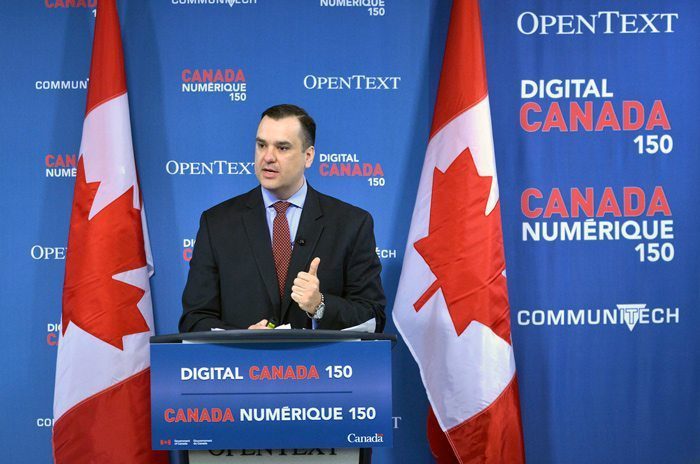
“Our government has aggressively and consistently made decisions to support a healthy and competitive wireless industry for the benefit of Canadian consumers of wireless services,” noted Industry Minister James Moore, in a statement. “We are encouraged by the findings revealed in today’s independent report, which confirm that our policies for more choice and lower prices are working to support Canadian families. We will continue to stand up for consumer choice and robust competition in Canada’s wireless sector.”
Those efforts have been ongoing for years, but picked up steam last year when Industry Canada announced plans for new spectrum auctions designed to draw in new competitors to take on established players. The government recently announced plans to auction off so-called AWS-3 spectrum in the 1.7/2.1 GHz band early next year just ahead of a previously scheduled 2.5 GHz spectrum auction.
New entrants
While the 700 MHz auction failed to garner a new player with spectrum holdings across the entire country, it did help put spectrum in the hands of at least four companies across all regions of the country. One of those companies, Quebecor, said last month that it was ready to expand its presence in the country’s wireless market under the Videotron brand, bringing what it termed a “fourth competitor” to the Canadian market.
“Our vision is to provide Canadians with a new high quality, low-cost wireless choice and real wireless competition,” said Quebecor President and CEO Pierre Dion in a keynote speech at the 2014 Canadian Telecom Summit. “We aim to deliver real low-cost wireless plans for consumers, real wireless competition and a real new offering in the Canadian marketplace. Under the right conditions, we are ready, willing and able to become Canada’s fourth wireless competitor.”
Montreal-based Quebecor currently offers Videotron services in parts of Quebec tapping into 1.7/2.1 GHz spectrum licenses it acquired in 2008 for more than $550 million. The company acquired seven paired, 10-megahertz spectrum licenses for $210 million covering 28 million pops during the country’s 700 MHz spectrum auction. Those licenses covered Quebec, as well as Ontario, Alberta and British Columbia.
Quebecor said the company would look to offer consumers “competitive voice, data and roaming plans currently only available in Europe and Australia,” with it able to provide true competition to the country’s larger operators – Rogers Wireless, Telus Mobility and Bell Canada – as “a fourth competitor who is experienced, well-financed, well-equipped, highly entrepreneurial and customer-focused.” The company added that it has so far invested more than $1.6 billion in its wireless network and spectrum assets.
Dion did hint that in order for Quebecor to become a compelling rival the Canadian government needed to enact “a fair and competitive federally regulated roaming policy” that would allow Videotron to offer competitive, nationwide services. The company cited a Competition Bureau of Canada report that said “incumbent players have used the roaming policy as a ‘strategic tool to eliminate or reduce the competitive pressure … in Canadian mobile wireless markets.’”
In addition to spectrum licenses acquired through auctions, Quebecor last year announced a deal with Rogers to pool resources across the provinces of Quebec and Ottawa to build out and operate a shared LTE network. Financial terms of the 20-year agreement call for Rogers to pay Videotron $93 million and for Videotron to pay Rogers $200 million over a 10-year period.
History has been mixed
However, previous efforts to spur competition through the auction process have been mixed. The government auctioned off AWS spectrum in 2008, with a number of potential new entrants winning licenses. However, many of those potential new entrants eventually sold off their licenses to the established players, while those that did manage to launch services have been focused in just a handful of larger markets.
Industry Canada’s intent to bolster new entrants is being pressured again as Telus earlier this year announced plans to acquire beleaguered operator Mobilicity. Those plans were initially instituted last year before being shot down by the regulator citing the initial requirement that Mobilicity’s 1.7/2.1 GHz licenses be used by new entrants into the market.
Bored? Why not follow me on Twitter
Canada’s wireless competition efforts remain mixed
56

previous post
