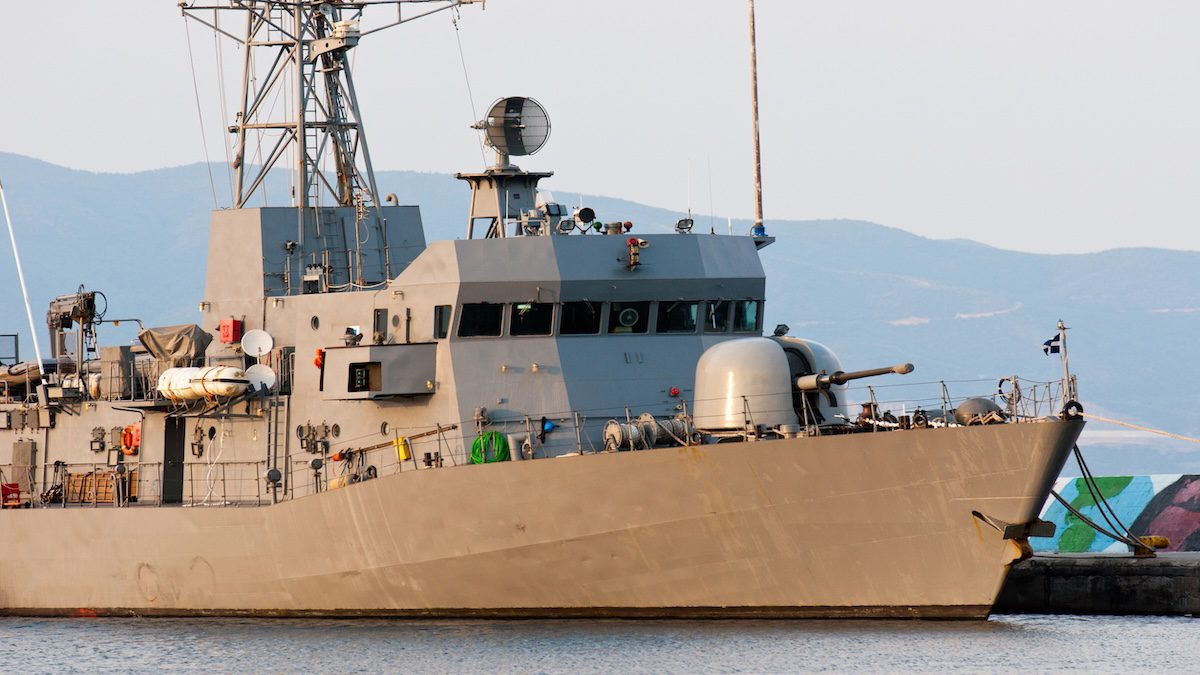
The company collaborated with defense company, Leonardo, and the Italian Navy to trial a 5G Standalone network aboard naval ships
5G SA at sea: Ericsson collaborates with Leonardo and the Italian Navy to demonstrate 5G SA connectivity between two naval vessels.
Defense pivot in action: The trial comes after CEO, Börje Ekholm, outlined plans to allocate more capital toward defense as RAN market plateaus, during the recent earnings calls.
State of 5G SA: Operator monetization of 5G SA remains slow despite rising deployments in 2025
Ericsson, in collaboration with defense contractor Leonardo, and the Italian Navy, tested a 5G Standalone (SA) network on board naval ships engaged in a training scenario in the open sea.
The trial which was demonstrated at the Italian Navy’s defense initiative, Operational Experimentation (OPEX) 2-25 in the Gulf of Taranto, was performed using a self-contained Ericsson 5G SA network underpinned by the company’s Ultra Compact Core and Massive MIMO Radio Access Network platforms.
The equipment were installed on board a lead ship, while the Ericsson 5G SA customer premises equipment (CPE) which connects end-user devices to the network, was set up in a second ship.
Then leveraging Leonardo’s NINE encryption solution, a secure, real-time, exchange of information was demonstrated between the two vessels. According to Ericsson, the data included classified and nonclassified information, such as “full situational awareness from the Combat Management System and video streams from 12 unmanned systems.”
“The OPEX validated the performance, security and resilience of 5G SA for on-board connected systems, while also showing how a unified 5G network can optimize spectrum usage compared to multiple standalone communication systems operating on unlicensed and potentially overlapping, bands with interference risks,” the company said in the press release.
“This successful trial with Leonardo and the Italian Navy represents a significant milestone in our ongoing commitment to advancing defense capabilities through 5G technology,” Freddie Södergren, head of mission critical networks, at Ericsson said in a statement.
A strategic shift
The trial comes after Börje Ekholm, president and CEO, during the recent earnings call in January, said that the Swedish vendor will shift attention to mission-critical and enterprise markets where its has an organic advantage, amid a flat RAN market.
“In this environment, we plan to increase investments in defense during 2026 while continuing to optimize our cost base to support margins and cash flow generation,” Ekholm said.
Earlier this year, Ericsson also unveiled a 5G-Advanced location service built on its 5G SA core. The service determines device locations from one base station as opposed to triangulation models that rely on multiple base stations for the same.
5G SA deployments picked up in 2025. An Omdia report found that after the 2024 slump, 5G SA deployments rose as the technology found applications across industries.
However, despite being a superior technology with added advantages like built-in support for network slices that allows connectivity to be tuned to the needs of users and applications, customer uptake remains low, and a majority of operators that soft-launched 5G SA in 2025 are still struggling to monetize it.
Conversely, Ericsson’s trial shows that 5G SA may have a place beyond the consumer market where it can deliver real value in challenging environments. Optimized for edge computing, the architecture may enable operators to bring high-quality connectivity to critical sectors where resilience is key, and SA can unlock use cases that traditional 5G connectivity cannot support.