

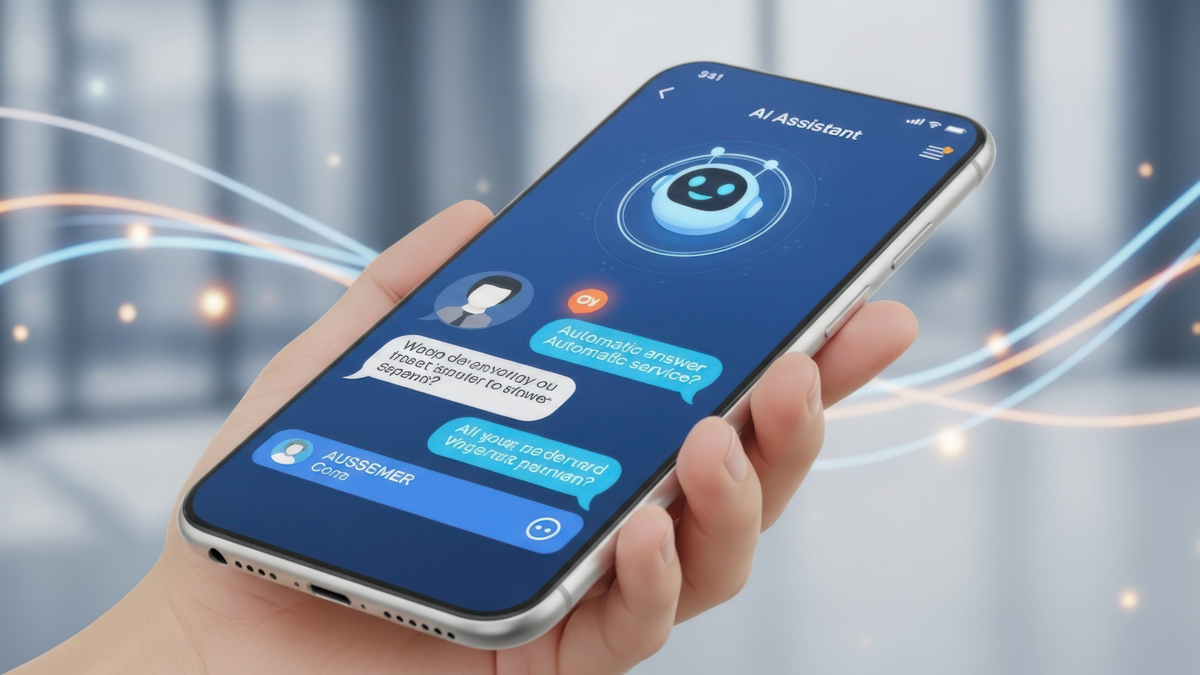
The humble chatbot is an easy first step for telco AI integration
The era of clunky, script-bound chatbots that leave customers more frustrated than helped is arguably winding down. Telecom companies have spent years relying on decision-tree systems that fail at understanding what customers actually want. Now they’re rolling out AI-powered platforms that can hold real conversations, work through complicated problems, and sometimes spot issues before customers even know something’s wrong.
With customer expectations climbing and support budgets under constant scrutiny, telcos are making a bet that conversational AI can not only help them save money on customer support, but actually improve it in the process.
Autonomous agents are coming
The shift from reactive FAQ chatbots to autonomous agents capable of acting on their own is actually happening quite fast. Most experts project that AI will handle the vast majority of customer service interactions in the near future, managing routine questions, basic troubleshooting, and account tasks without anyone stepping in. These are systems designed to anticipate what customers need and take action before they’re asked, rather than bots aimed at only really fielding basic questions.
Rebecca Wettemann, CEO of industry analyst firm Valoir, notes that “the next generation of customer service bots are more like virtual agents than traditional chatbots. Rather than having a prebuilt flow and limited conversation topics, and having to be recoded each time changes are needed, agentic bots will conduct conversations in natural language, understand colloquialisms and broader vocabularies, and rely on both what it learns from previous conversations and any new knowledge or documents it has access to to search for personalized, contextual, and time-aware answers.”
The numbers are already showing results. Companies using conversational AI have seen support costs drop by 30%, and telecom providers are deploying similar technology for order tracking, technical support, and account management. Still, this trajectory isn’t without friction. Autonomous agents stumble on edge cases and complex technical problems where human judgment matters. Leaning too heavily on automation without clear escalation paths can erode customer trust, especially in regulated spaces like telecom, where getting things right isn’t optional.
Moving to actual resolution
The market is shifting away from chatbots built primarily to push customers toward self-service and call it a day. Instead, systems are being built that can work through complex, multi-turn conversations, like troubleshooting sessions, billing disputes, and service modifications. These are all scenarios that used to require a human on the other end.
Vida Founder and CEO Lyle Pratt explains the shift: “The next phase is a shift from simple deflection to true resolution, where agents handle complex, multi-turn scenarios like troubleshooting, returns or refunds without human help. We are also seeing a massive leap in ’emotional intelligence,’ where bots can now detect frustration and adjust their tone in real-time to de-escalate situations. The goal is no longer just answering a query; it’s providing an interaction that feels less like a rigid transaction and more like a helpful conversation with a capable expert.”
Transformer-based language models have gotten substantially better at grasping context, which means less friction mid-conversation. Customers aren’t stuck repeating themselves or rewording questions three different ways. For telecom providers, that translates to a single bot interaction handling network troubleshooting, plan adjustments, and equipment setup without bouncing the customer between systems.
But real-world complexity still exists, especially as it relates to the massive amounts of network and customer-related data that chatbots need to have access to in order to be actually helpful. Network problems look wildly different depending on location, equipment, and how a customer’s service is configured, too. Bots keep improving, but plenty of situations still demand expert human knowledge.
A hybrid future?
Research pushes back hard on the idea that AI will simply swap out human agents, at least in the next few years. Data cited by Vida shows 74% of respondents believe the best service comes from AI and humans working in tandem, says Pratt. The model taking shape positions humans as “Tier 3” problem-solvers, tackling genuinely difficult issues while AI clears out the routine stuff.
Pratt emphasizes this collaborative approach. “Humans will absolutely remain essential. While AI excels at handling routine inquiries, it is designed to seamlessly escalate to human agents for complex troubleshooting or uncommon questions that require human judgment. This dynamic elevates the human role to that of a ‘Tier 3’ problem solver. The future isn’t about replacement, but collaboration, using AI to handle the noise so people can focus on the customer relationships that matter most.”
For telcos, this means rethinking how customer service teams are structured. AI takes on password resets, billing questions, straightforward troubleshooting, and service changes. Humans, on the other hand, concentrate on thorny technical problems, contract negotiations, dispute resolution, and anything requiring a judgment call.
Making hybrid models actually work takes real investment, in the form of training, process redesign, and technology integration. A lot of organizations struggle with clunky handoffs where customers have to re-explain everything to a human agent after already walking through the problem with a bot. The ideal collaboration sounds great on paper but often falls short when systems aren’t properly connected.
Personalized help
Conversational AI is moving from reactive to proactive. In other words, soon enough, AI systems might actually initiate content with a customer based on data and behavior patterns. By pulling from real-time client data and sophisticated intent recognition, these systems can deliver personalized recommendations, preventive alerts, and relevant offers.
Dvir Hoffman, CEO of CommBox, sees this as the most significant development on the horizon.
“The most significant development we will see is the ability for AI agents to initiate outbound customer interactions,” said Hoffman in an interview with RCR Wireless. “Rather than waiting for inbound requests, these agents proactively leverage data from the CRM and ERP to reach out. For instance, if a customer is approaching 12 months since their last annual car servicing, these agents could instigate a conversation and arrange the service for the customer. In this context, AI agents go from reactive mechanisms to revenue drivers.”
In telecom terms, this means bots that warn customers about upcoming outages before they’re affected, suggest data plans based on actual usage patterns, or get ahead of potential service problems. Around 65% of consumers say they want offers tailored to their needs, and 61% prefer quick, personalized customer journeys.
Proactivity can tip into intrusion pretty easily, though. Too much outreach or irrelevant recommendations hurt the customer experience rather than helping it. Telcos have to strike a balance between personalization and respecting what customers actually want. Using behavioral data for proactive contact also opens up regulatory and ethical questions the industry hasn’t fully sorted out yet.
Privacy and industry-specific models
Telecom companies deploying conversational AI are increasingly gravitating toward proprietary, sector-specific models trained on telecom terminology, regulatory requirements, and decision workflows. Generic chatbots pulled off the shelf lack the context to navigate billing regulations, service level agreements, or network-specific troubleshooting, which are the kinds of things telecom customers run into constantly.
Newer approaches like federated learning let chatbots improve their accuracy and personalization without shipping sensitive user data outside the organization. That matters a lot for telecom providers sitting on subscriber information, billing records, and location history. Deloitte estimates roughly 50% of companies using generative AI will run agentic pilots by 2027, with many of those being industry-specific deployments.
Privacy-preserving AI is still finding its footing, and current implementations often force trade-offs between protecting data and delivering personalization. Telcos need to communicate clearly about what their chatbots collect, store, and use, instead of just implementing privacy measures technically and hoping for the best. There’s also the issue of chatbots trained on limited or skewed data perpetuating discrimination or failing in edge cases that affect specific customer groups. That’s a problem requiring constant attention as these systems scale.
Table of Contents

