

RCR Wireless
  • News
  • Channels
    • 5G
    • 6G
    • BSS OSS
    • Carriers
    • IoT
    • Network Infrastructure
    • Open RAN
    • Private 5G
    • Telco AI
    • Telco Cloud
    • Test & Measurement
  • Resources
    • Reports
    • Webinars
    • White papers
    • AI Fundamentals
    • Analyst Angle
    • Editorial Calendar
    • Fundamentals
      • 5G NR Release 17
      • AI
        • Telco AI in 2025
    • Podcasts
      • Let’s Get Digital with Carrie Charles
      • Wireless Connectivity to Enable Industry 4.0 for the Middleprise
      • Well Technically…
      • Will 5G Change the World
      • Accelerating Industry 4.0 Digitalization
  • AI Infrastructure
  • Programs
  • Events
  • RCRtv
  • Advertise
  • Subscribe
Monday, July 13, 2026
RCR Wireless
  • News
  • Channels
    • 5G
    • 6G
    • BSS OSS
    • Carriers
    • IoT
    • Network Infrastructure
    • Open RAN
    • Private 5G
    • Telco AI
    • Telco Cloud
    • Test & Measurement
  • Resources
    • Reports
    • Webinars
    • White papers
    • AI Fundamentals
    • Analyst Angle
    • Editorial Calendar
    • Fundamentals
      • 5G NR Release 17
      • AI
        • Telco AI in 2025
    • Podcasts
      • Let’s Get Digital with Carrie Charles
      • Wireless Connectivity to Enable Industry 4.0 for the Middleprise
      • Well Technically…
      • Will 5G Change the World
      • Accelerating Industry 4.0 Digitalization
  • AI Infrastructure
  • Programs
  • Events
  • RCRtv
  • Advertise
  • Subscribe
Add RCR Wireless as a preferred source on Google
  • Qualcomm 6G Insights
  • Huawei Content Hub
  • Qualcomm – 6G Vision
  • OSS/BSS Channel
  • RCRTech Roundtable: AI Infrastructure
RCR Wireless
RCR Wireless
  • Advanced Mimo
  • Mobile mmWave
  • 5G Positioning
  • Green Networks
  • Metaverse
  • Automotive
  • Industrial and Wide-area IoT
Copyright 2021 - All Right Reserved
Home - What does it take to cover rural America with 5G? UScellular’s CEO breaks it down
5GCarriersNetwork Infrastructure

What does it take to cover rural America with 5G? UScellular’s CEO breaks it down

by Kelly Hill May 13, 2024
written by Kelly Hill May 13, 2024 Share
LinkedinEmail
Share 0LinkedinEmail
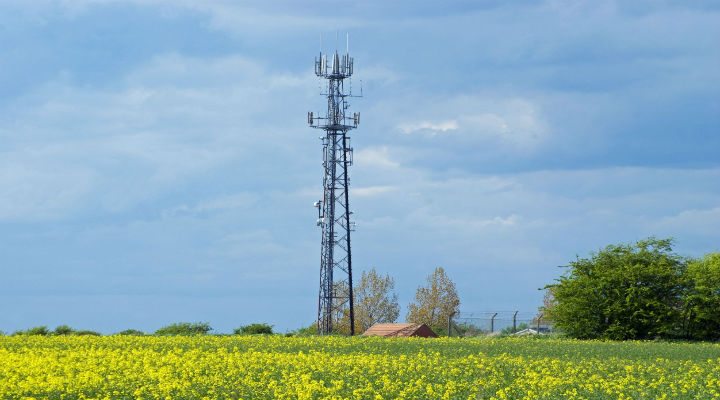
LTE rural mobile carriers show CCA
Image: 123RF
157

Just what would it take to actually get ubiquitous 5G in rural America?

UScellular CEO Laurent Therivel walked through that scenario for just one county in rural Iowa at last week’s CTIA 5G Summit, illustrating the challenges and the need for coordinated federal funding programs in order to achieve the most efficient and practical coverage levels for the least cost.

As mobile network operators navigate massive increases in demand for data, that has both pros and cons, according to Therivel. “It is always a good thing to have people wanting more and more of your product,” he said. “The challenge is how you support it. At its most basic, the way you support huge increases in data is with more spectrum and more infrastructure.” In an event with a major focus on global competitiveness—particularly with China—Therivel said that the U.S. is behind both in terms of the number of cellular base stations as well as the amount of spectrum available for 5G deployments.

In his view, the U.S. needs three things at the federal level in order to catch up: More licensed, full-power spectrum (which goes hand-in-hand with restoring the Federal Communications Commission’s authority to auction spectrum), an “aligned approach to innovation” across the government as well as more alignment across the tens of billions of dollars in funding that is available for infrastructure, in the hopes of bridging the digital divide.

UScellular, the last of the large regional wireless providers, focuses on rural America, which can be a tough business case. The company, which is in the process of exploring strategic alternatives including a sale or merger, had a mixed first quarter in which it continued to struggle with wireless retail subscribers but saw very strong Fixed Wireless Access growth. “In rural America, a lot of times it is uneconomical to connect and put in infrastructure without support,” Therivel said at the CTIA event. “The good news is that there is a variety of programs in place—think BEAD, think various state programs, think the 5G Fund—to put more dollars behind rural America, to put more dollars behind investing in these areas. The challenge … is that these efforts are not coordinated,” he said, adding that the lack of coordination across those funding programs makes it difficult for private industry to put capital to work to solve connectivity gaps.

He gave a specific example in the form of Monona County, Iowa, which covers about 700 square miles and had a population of fewer than 9,000 people as of 2022. It would take about 100 towers to completely blanket the entire county with 5G, Therivel said, and at between $650,000 to $1 million per tower—including the actual tower infrastructure and equipment as well as fiber backhaul—that is a total cost of about $100 million. For a single county. That illustrates the scale of the financial challenge of covering rural areas for which that level of coverage cannot provide return on investment. “$100 million is not worth spending when it comes to trying to provide blanket coverage. You have to find a way to bring those costs down if we’re going to connect Monona, but also if we’re going to provide ubiquitous 5G coverage for rural America,” he said.

So how do you make those numbers more workable? Therivel offered up a scenario that involved focusing on where people “work, live, play and drive” in Monona County, rather than 100% geographic coverage. That scenario would cover about 75% of the county’s geography and 95% of population coverage. That brings that 100-tower figure down to about 30 towers—but those will be expensive towers that skew toward the top end of the price range, Therivel said, and still end up costing about $25-$30 million total. But applying government funding to a $25-$30 million cost scenario makes the numbers far more practical than applying it to a $100 million cost scenario.

He then brought in maps with unserved or underserved locations with no or very low-speed internet service, which qualified for federal infrastructure dollars through the Broadband Equity, Access, and Deployment program, and offered likely fiber routes that could be funded through BEAD in order to both serve clusters of locations as well as support Fixed Wireless Access backhaul. “All of a sudden, I have fiber and I have fiber density in a lot of places where it wasn’t before,” Therivel said—even though not all homes were served by fiber. Then he went through where, in his theoretical planning, towers could be added that would connect the most rural homes and businesses with FWA. And such towers wouldn’t just serve up FWA, he pointed out; they would also provide mobile 5G coverage for the area. “So now, by using BEAD, I’ve done two things: I’ve put in a dense fiber grid throughout my county and … I’ve brought the load down on what it takes to actually provide ubiquitous 5G across my county.” Doing so, as Therivel continued to play out the scenario, brings the number of additional towers needed to provide the rest of the 5G coverage to get to that 75% geography/95% mark, to 10 towers that he estimated would also be less expensive overall and cost about $6-8 million.

“By being smart about the way that we sequence the use of our government programs, and the way the government works with industry, we can take a hundred million dollars, which would be the notional concept of, ‘let’s blanket Monona County with 5G’, and we’re able to take it down to six to eight million that would actually need to be spent,” he said.

And what that enables in Monona County is not just consumer mobile broadband access for entertainment or social media apps, but intelligent farming, ubiquitous intelligent cars and 5G AR/VR, and improving global competitiveness. UScellular, he said, recently worked with a storage facility customer in Monona County that was able to bring down its costs of managing access and security by putting in 5G-enabled cameras that could read license plates. “It’s difficult, and it’s challenging, and it’s not as sexy to talk about Monona County as it is to talk about Manhattan or it is to talk about [Washington] DC. But it’s going to be critical if we’re going to bridge this global competitiveness gap,” Therivel said.

But Therivel wrapped up with a story about helping connect a North Carolina county with FWA where a resident told him that her grandchildren would finally be willing to visit because there was now internet service—because providing broadband may be about competitiveness on a global scale, but it’s about connecting individual people as well.


You Might Also Like
  • Netgear’s quiet reinvention as a B2B and SaaS company (Analyst Angle)
  • Friday (telco diary) | Telco reset, RAN reboot, P5G reality check
  • Vodafone at the heart of Euro telco reset as Iliad owner buys e& stake for $5.9bn
  • How operations leaders see 5G as vital for mission-critical workflows (Reader Forum)
  • Thursday (telco diary) | The plumbing is the product
  • Wednesday (telco diary) | Mobility matters for physical AI
Share 0 LinkedinEmail
Kelly Hill

Kelly Hill reports on network test and measurement, AI infrastructure and regulatory issues, including spectrum, for RCR Wireless News. She began covering the wireless industry in 2005, focusing on carriers and MVNOs, then took a few years’ hiatus and returned to RCR Wireless News to write about heterogeneous networks (remember those?) and network infrastructure. Kelly is an Ohio native with a masters degree in journalism from the University of California, Berkeley, where she focused on science writing and multimedia. She has written for the San Francisco Chronicle, The Oregonian and The Canton Repository. She lives in northern Virginia, not far from Data Center Alley.

previous post
UK gives conditional security clearance for Vodafone-Three merger
next post
‘Not a hockey stick, and never was’ – but IoT market to more than double in 10 years

White Papers

  • Enea White Paper: Why Intelligent AAA is the Swiss Army Knife of Telecom

  • CSG White Paper: Telco AI Enabler: Mediation’s Defining Role

  • Enea White Paper: Scalable Database Design for 5G and Beyond

  • Supermicro and NVIDIA Whitepaper: Powering sovereign AI at scale

  • VIAVI Whitepaper: RAN scenario generators and their critical role for future-proofing AI-native RAN in Advanced 5G and 6G networks

Editorial Reports

  • Report: Scaling Optical Networks For The Hyperscale And AI Era

  • Test And Measurement Market Pulse Report

  • Editorial Report: Securing telecom infrastructure for the quantum era

Webinars

  • Webinar: Building 6G — aligning technology, policy and purpose

  • SIMCom Webinar: Scaling your next deployment – from plastic to provisioning

  • Webinar: Rethinking the RAN as AI, cloud and openness converge

  • Webinar: Scale-Up, Scale-Out, Scale-Across – Building AI-Era Network Fabrics

  • Webinar: NTN in motion – evolving standards, expanding services

Since 1982, RCR Wireless News has been providing wireless and mobile industry news, insights, and analysis to mobile and wireless industry professionals, decision makers, policy makers, analysts and investors.

Facebook Twitter Youtube Linkedin Envelope Rss

Useful Links

  • Subscribe
  • About RCR Wireless News
  • Contact Us
  • Advertise
  • Editorial Calendar
  • Archive
  • RSS
  • Wireless News Archive
  • Subscribe
  • About RCR Wireless News
  • Contact Us
  • Advertise
  • Editorial Calendar
  • Archive
  • RSS
  • Wireless News Archive

Edtior's Picks

Netgear’s quiet reinvention as a B2B and SaaS company (Analyst Angle)
Friday (telco diary) | Telco reset, RAN reboot, P5G reality check
Operators are seeking greater control of NTN: GSMA Intelligence

Latest Articles

Netgear’s quiet reinvention as a B2B and SaaS company (Analyst Angle)
Friday (telco diary) | Telco reset, RAN reboot, P5G reality check
Operators are seeking greater control of NTN: GSMA Intelligence
Webinar: Building 6G — aligning technology, policy and purpose

© 2026 RCR Wireless News All Right Reserved. Developed by Eight Hats.

Cookie Policy | Privacy Policy

RCR Wireless
  • News
  • Channels
    • 5G
    • 6G
    • BSS OSS
    • Carriers
    • IoT
    • Network Infrastructure
    • Open RAN
    • Private 5G
    • Telco AI
    • Telco Cloud
    • Test & Measurement
  • Resources
    • Reports
    • Webinars
    • White papers
    • AI Fundamentals
    • Analyst Angle
    • Editorial Calendar
    • Fundamentals
      • 5G NR Release 17
      • AI
        • Telco AI in 2025
    • Podcasts
      • Let’s Get Digital with Carrie Charles
      • Wireless Connectivity to Enable Industry 4.0 for the Middleprise
      • Well Technically…
      • Will 5G Change the World
      • Accelerating Industry 4.0 Digitalization
  • AI Infrastructure
  • Programs
  • Events
  • RCRtv
  • Advertise
  • Subscribe
RCR Wireless
  • News
  • Channels
    • 5G
    • 6G
    • BSS OSS
    • Carriers
    • IoT
    • Network Infrastructure
    • Open RAN
    • Private 5G
    • Telco AI
    • Telco Cloud
    • Test & Measurement
  • Resources
    • Reports
    • Webinars
    • White papers
    • AI Fundamentals
    • Analyst Angle
    • Editorial Calendar
    • Fundamentals
      • 5G NR Release 17
      • AI
        • Telco AI in 2025
    • Podcasts
      • Let’s Get Digital with Carrie Charles
      • Wireless Connectivity to Enable Industry 4.0 for the Middleprise
      • Well Technically…
      • Will 5G Change the World
      • Accelerating Industry 4.0 Digitalization
  • AI Infrastructure
  • Programs
  • Events
  • RCRtv
  • Advertise
  • Subscribe
@2020 - All Right Reserved. Designed and Developed by PenciDesign