

RCR Wireless
  • News
  • Channels
    • 5G
    • 6G
    • BSS OSS
    • Carriers
    • IoT
    • Network Infrastructure
    • Open RAN
    • Private 5G
    • Telco AI
    • Telco Cloud
    • Test & Measurement
  • Resources
    • Reports
    • Webinars
    • White papers
    • AI Fundamentals
    • Analyst Angle
    • Editorial Calendar
    • Fundamentals
      • 5G NR Release 17
      • AI
        • Telco AI in 2025
    • Podcasts
      • Let’s Get Digital with Carrie Charles
      • Wireless Connectivity to Enable Industry 4.0 for the Middleprise
      • Well Technically…
      • Will 5G Change the World
      • Accelerating Industry 4.0 Digitalization
  • AI Infrastructure
  • Programs
  • Events
  • RCRtv
  • Advertise
  • Subscribe
Thursday, July 23, 2026
RCR Wireless
  • News
  • Channels
    • 5G
    • 6G
    • BSS OSS
    • Carriers
    • IoT
    • Network Infrastructure
    • Open RAN
    • Private 5G
    • Telco AI
    • Telco Cloud
    • Test & Measurement
  • Resources
    • Reports
    • Webinars
    • White papers
    • AI Fundamentals
    • Analyst Angle
    • Editorial Calendar
    • Fundamentals
      • 5G NR Release 17
      • AI
        • Telco AI in 2025
    • Podcasts
      • Let’s Get Digital with Carrie Charles
      • Wireless Connectivity to Enable Industry 4.0 for the Middleprise
      • Well Technically…
      • Will 5G Change the World
      • Accelerating Industry 4.0 Digitalization
  • AI Infrastructure
  • Programs
  • Events
  • RCRtv
  • Advertise
  • Subscribe
Add RCR Wireless as a preferred source on Google
  • Qualcomm 6G Insights
  • Huawei Content Hub
  • Qualcomm – 6G Vision
  • OSS/BSS Channel
  • RCRTech Roundtable: AI Infrastructure
RCR Wireless
RCR Wireless
  • Advanced Mimo
  • Mobile mmWave
  • 5G Positioning
  • Green Networks
  • Metaverse
  • Automotive
  • Industrial and Wide-area IoT
Copyright 2021 - All Right Reserved
Home - Addressing the global rise of the SIM card swap (Reader Forum)
DevicesOpinionReader Forum

Addressing the global rise of the SIM card swap (Reader Forum)

by Kai Imgenberg, Director of International Sales, Aware July 11, 2022
written by Kai Imgenberg, Director of International Sales, Aware July 11, 2022 Share
LinkedinEmail
Share 0LinkedinEmail
sim card swapping
132

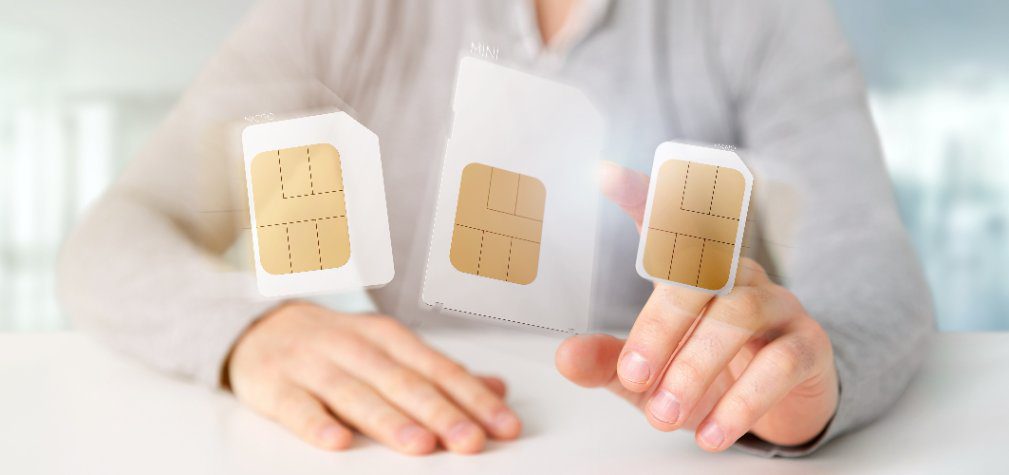
SIM card fraud unfortunately manifests itself in a number of ways, but one of the most pernicious forms is the SIM card swap. SIM card swapping is the process by which a hacker or bad actor obtains the personal information and mobile number of an unsuspecting individual. That bad actor then uses that information to request a new SIM card from the victim’s mobile provider. Once received and placed into the bad actor’s mobile device, that SIM card grants the hacker with the ability to access SMS codes and change the victim’s passwords, enabling unfettered access to bank and financial accounts, and much more.

The prevalence of SIM card fraud has risen sharply since the onset of COVID-19, driven primarily by increased customer reliance on remote access procedures, decreased customer willingness to visit local branches and greater hacker interest in SIM card-focused social engineering attacks. These trends have resulted in approximately $100 million in losses in the United States in 2021 alone. 

Measuring the impact of SIM card swapping

The most obvious impact of SIM card swapping is the monetary losses — such as the $100 million figure cited above. Seemingly anyone can be a victim or perpetrator — in 2019, Twitter CEO Jack Dorsey was famously a victim of the SIM card swap, and the year prior, a fifteen-year-old was able to steal $23 million in cryptocurrency from one victim alone. 

Ultimately the responsibility for these losses falls on the customer, not the provider. While this may seem like a positive for mobile providers at first, who undoubtedly would not want to be on the hook for such high dollar figures, it can have a sizeable impact on the provider’s reputation. Customers increasingly do not want to do business with providers who don’t take their security seriously, and high-profile instances of identity theft and fraud can have a lasting negative impact on how providers are perceived.

Current methods used for SIM card registration and replacement

Historically the SIM card registration process—by which a new customer enrolls with a mobile provider and provides their personal details—has been performed in person at a local office or branch. This face-to-face workflow is by-and-large a very secure process, giving providers a strong foundation to get to know their customers and provide their services with the confidence that the user is in fact authorized and legitimate. Increasingly, however, this process has become available remotely due to the perceived inconvenience of in-person procedures; this has only accelerated in recent years because of the COVID-19 pandemic. 

Remote replacement procedures performed online or over the phone are inherently less secure than in-person ones. This is because these rely on increasingly fraud-prone authentication methods, such as passwords. With identity theft at an all-time high of late, it has become easier and easier for bad actors to impersonate a victim and obtain a SIM card replacement fraudulently. To combat this, mobile providers are researching and implementing stronger authentication methods than traditional ones.

Biometric authentication to reduce SIM card fraud

For providers seeking to improve security for their customers without adding additional inconveniences, biometric authentication presents a strong option. Unlike passwords and PIN numbers, biometrics take advantage of the uniqueness of our physical features and characteristics, increasing security dramatically and greatly reducing a bad actor’s ability to impersonate customers. 

Contemporary biometrics don’t require special hardware and are performed as easily as a person taking a selfie. Modern biometric technologies are mobile, using the cameras and microphones on today’s smartphones and devices to perform a facial capture or voice prompt from a user wherever that person may be. The face or voice presented would then be matched against the user’s existing biometric profile, ensuring the user is in fact the authorized individual.

As a result, since biometrics rely on something you are instead of something you know —like a password or the answer to a security question — a customer’s means of authenticating himself or herself cannot be stolen by a malicious party.

Biometric authentication is also fast, ensuring a high level of convenience for users. Today, highly secure facial or voice recognition can take place in seconds via a mobile device, using the cameras and microphones already included. No special hardware is needed, and the entire authentication process can be natural and frictionless.

Additionally, biometric authentication software can replace contemporary authentication methods such as passwords relatively quickly and easily with minimal implementation concerns. Providers can continue to maintain their existing workflows for SIM card registration and replacement; the only change is how users authenticate themselves.

With SIM card fraud on the rise globally, and passwords increasingly outdated and fraud-prone, now is an ideal time for mobile providers to review their authentication procedures and investigate proven alternatives. Too much is on the line not to do so.

You Might Also Like
  • Tuesday (telco diary) | Telco agents and outcomes
  • The most expensive wireless system is the one you install twice (Reader Forum)
  • Monday (telco diary) | Sovereign AI for Industry 4.0
  • Friday (telco diary) | Verizon looks to AI horizon
  • Agentic AI – the $60bn opportunity for telecom operators (Reader Forum)
  • Thursday (telco diary) | Satellite versus terrestrial

Table of Contents

  • Measuring the impact of SIM card swapping
  • Current methods used for SIM card registration and replacement
  • Biometric authentication to reduce SIM card fraud
Share 0 LinkedinEmail
Kai Imgenberg, Director of International Sales, Aware

previous post
The Sunday Brief: How a recession brings out the best in telecom and tech
next post
Canadian telco Rogers suffers second major outage in two years

White Papers

  • Norton eBook: The 2026 Telco Playbook

  • Enea White Paper: Why Intelligent AAA is the Swiss Army Knife of Telecom

  • CSG White Paper: Telco AI Enabler: Mediation’s Defining Role

  • Enea White Paper: Scalable Database Design for 5G and Beyond

  • Supermicro and NVIDIA Whitepaper: Powering sovereign AI at scale

Editorial Reports

  • Nvidia Report: The State of AI in Telecommunications: 2026 Trends

  • Report: Scaling Optical Networks For The Hyperscale And AI Era

  • Test And Measurement Market Pulse Report

Webinars

  • Webinar: Building 6G — aligning technology, policy and purpose

  • SIMCom Webinar: Scaling your next deployment – from plastic to provisioning

  • Webinar: Rethinking the RAN as AI, cloud and openness converge

  • Webinar: Scale-Up, Scale-Out, Scale-Across – Building AI-Era Network Fabrics

  • Webinar: NTN in motion – evolving standards, expanding services

Since 1982, RCR Wireless News has been providing wireless and mobile industry news, insights, and analysis to mobile and wireless industry professionals, decision makers, policy makers, analysts and investors.

Facebook Twitter Youtube Linkedin Envelope Rss

Useful Links

  • Subscribe
  • About RCR Wireless News
  • Contact Us
  • Advertise
  • Editorial Calendar
  • Archive
  • RSS
  • Wireless News Archive
  • Subscribe
  • About RCR Wireless News
  • Contact Us
  • Advertise
  • Editorial Calendar
  • Archive
  • RSS
  • Wireless News Archive

Edtior's Picks

South Korea launches AI-RAN project to advance industrial AI
Tuesday (telco diary) | Telco agents and outcomes
AT&T’s bets on “best tech” (fiber) pay off with record adds, improving margins 

Latest Articles

South Korea launches AI-RAN project to advance industrial AI
Tuesday (telco diary) | Telco agents and outcomes
AT&T’s bets on “best tech” (fiber) pay off with record adds, improving margins 
The most expensive wireless system is the one you install twice (Reader Forum)

© 2026 RCR Wireless News All Right Reserved. Developed by Eight Hats.

Cookie Policy | Privacy Policy

RCR Wireless
  • News
  • Channels
    • 5G
    • 6G
    • BSS OSS
    • Carriers
    • IoT
    • Network Infrastructure
    • Open RAN
    • Private 5G
    • Telco AI
    • Telco Cloud
    • Test & Measurement
  • Resources
    • Reports
    • Webinars
    • White papers
    • AI Fundamentals
    • Analyst Angle
    • Editorial Calendar
    • Fundamentals
      • 5G NR Release 17
      • AI
        • Telco AI in 2025
    • Podcasts
      • Let’s Get Digital with Carrie Charles
      • Wireless Connectivity to Enable Industry 4.0 for the Middleprise
      • Well Technically…
      • Will 5G Change the World
      • Accelerating Industry 4.0 Digitalization
  • AI Infrastructure
  • Programs
  • Events
  • RCRtv
  • Advertise
  • Subscribe
RCR Wireless
  • News
  • Channels
    • 5G
    • 6G
    • BSS OSS
    • Carriers
    • IoT
    • Network Infrastructure
    • Open RAN
    • Private 5G
    • Telco AI
    • Telco Cloud
    • Test & Measurement
  • Resources
    • Reports
    • Webinars
    • White papers
    • AI Fundamentals
    • Analyst Angle
    • Editorial Calendar
    • Fundamentals
      • 5G NR Release 17
      • AI
        • Telco AI in 2025
    • Podcasts
      • Let’s Get Digital with Carrie Charles
      • Wireless Connectivity to Enable Industry 4.0 for the Middleprise
      • Well Technically…
      • Will 5G Change the World
      • Accelerating Industry 4.0 Digitalization
  • AI Infrastructure
  • Programs
  • Events
  • RCRtv
  • Advertise
  • Subscribe
@2020 - All Right Reserved. Designed and Developed by PenciDesign
