


RCR Wireless
  • News
  • Channels
    • 5G
    • 6G
    • BSS OSS
    • Carriers
    • IoT
    • Network Infrastructure
    • Open RAN
    • Private 5G
    • Telco AI
    • Telco Cloud
    • Test & Measurement
  • Resources
    • Reports
    • Webinars
    • White papers
    • AI Fundamentals
    • Analyst Angle
    • Editorial Calendar
    • Fundamentals
      • 5G NR Release 17
      • AI
        • Telco AI in 2025
    • Podcasts
      • Let’s Get Digital with Carrie Charles
      • Wireless Connectivity to Enable Industry 4.0 for the Middleprise
      • Well Technically…
      • Will 5G Change the World
      • Accelerating Industry 4.0 Digitalization
  • AI Infrastructure
  • Programs
  • Events
  • RCRtv
  • Advertise
  • Subscribe
Sunday, July 19, 2026
RCR Wireless
  • News
  • Channels
    • 5G
    • 6G
    • BSS OSS
    • Carriers
    • IoT
    • Network Infrastructure
    • Open RAN
    • Private 5G
    • Telco AI
    • Telco Cloud
    • Test & Measurement
  • Resources
    • Reports
    • Webinars
    • White papers
    • AI Fundamentals
    • Analyst Angle
    • Editorial Calendar
    • Fundamentals
      • 5G NR Release 17
      • AI
        • Telco AI in 2025
    • Podcasts
      • Let’s Get Digital with Carrie Charles
      • Wireless Connectivity to Enable Industry 4.0 for the Middleprise
      • Well Technically…
      • Will 5G Change the World
      • Accelerating Industry 4.0 Digitalization
  • AI Infrastructure
  • Programs
  • Events
  • RCRtv
  • Advertise
  • Subscribe
Add RCR Wireless as a preferred source on Google
  • Qualcomm 6G Insights
  • Huawei Content Hub
  • Qualcomm – 6G Vision
  • OSS/BSS Channel
  • RCRTech Roundtable: AI Infrastructure
RCR Wireless
RCR Wireless
  • Advanced Mimo
  • Mobile mmWave
  • 5G Positioning
  • Green Networks
  • Metaverse
  • Automotive
  • Industrial and Wide-area IoT
Copyright 2021 - All Right Reserved
Home - ‘All the capabilities to be a front-runner’ – OBS and the SI model for Industry 4.0
5GBuildingsCarriersEnterpriseInfrastructureInternet of Things (IoT)NB-IoTNews & Event CoveragePlatformsSmart FactoryWired Networks, Fiber

‘All the capabilities to be a front-runner’ – OBS and the SI model for Industry 4.0

by James Blackman January 10, 2022
written by James Blackman January 10, 2022 Share
LinkedinEmail
Share 0LinkedinEmail
Safran Aircraft Engines – taking 15,000 BLE trackers and 250 BLE antennas from OBS for two production sites in Paris
188

Note, this article is continued from a previous entry, under the headline: ‘A “different beast” in the telco pack – often it’s not about 5G at all, says Orange’. For the first instalment, go here.

We should rewind, and hit play again on the Safran deal, announced late last year, to see how Orange Business Services (OBS) has orchestrated the brass and strings in this new Industry 4.0 score. The OBS solution combines tracker tags from French firm ELA Innovation, network gear from Finnish outfit Quuppa, and a management platform from UK-based. OBS is providing an “integrated software platform” on top, it says, which it has “adapted” for the task. But, as discussed, it is providing nothing in the way of traditional cellular inputs. 

The setup with Safran (“a world leader in its domain; making helicopter and aircraft engines”) covers the 15,000-odd BLE trackers and 250 BLE antennas, installed across two production sites in and around Paris, which measure 55,000 square metres (in Villaroche, an hour’s drive southeast of the capital) and 20,000 square metres (in Saint-Quentin-en-Yvelines, on the outskirts), respectively. The solution enables Safran to pinpoint the location of industrial tools and engine parts – “remotely and in real time” – to an accuracy of around three metres. 

This is where OBS and co have “push(ed) the limits of the technology,” as Emmanuel Routier put it last time out. “It is a real time location system,” says Routier, vice president of Industry 4.0 at OBS, describing the industry terminology (RTLS; also real-time tracking system) for the primary use case at the Safran facilities. RTLS use cases, by definition, require higher positional accuracy than afforded by GPS or cellular radio (or Wi-Fi) triangulation, and also dictate lower-power transmission technologies to support higher-density (and longer-life) volumes of tracking tags. 
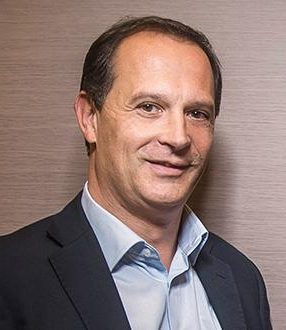
Routier

Routier – in charge of the network build and network run

As discussed before, low-power wide-area IoT tech (NB-IoT, LTE-M, LoRaWAN, and so on) will not cut it (and often get bundled as a backhaul carrier for remote RTLS systems). Often, and increasingly, short-range Bluetooth Low Energy (BLE) is picked for the task, although radio frequency identification (RFID) and ultrasonic ranging are common too. OBS went with BLE, and cherry-picked ELA Innovation and Quuppa, as RTLS specialists, to provide the devices and networks, respectively. 

It played the system integrator (SI) role, getting the band together for the gig, fine-tuning the system for the venue (with Quuppa), and making sure the show goes without a hitch. The (interview) tape gets scrambled, but the gist is the location accuracy needed to be good enough, and also smart enough, to track at least 15,000 tools and parts in 75,000 square-metres of complex industrial space. Routier remarks: “We needed to make sure it was very accurate. Because the signal can bounce [off metal infrastructure] and also needs to travel a long way.”

He adds: “We put the ecosystem together to fix the challenges – the size and complexity of the venue, the demands of the use cases. The Villaroche site is huge, and the tools being tracked are pretty small, and really valuable. Accuracy is important – not to half-a-metre, when it’s right next to you, but we are talking 10,000 tools in Villaroche, and the right one is needed at the right time. The other site, a bit smaller, is about [engine] maintenance, and [the system is being used] to track spare parts – so you don’t confuse parts when you dismantle a broken engine.”

UK-based Ubisense is providing the management platform for all the tags and data; but OBS has tweaked some of the settings, it seems, to introduce elements of predictive analytics (“dashboarding”) into the industrial IoT tracking mix. “It’s important, as well, to know where tools are in order to recalibrate them. And there’s an interesting case to correlate production processes and localization data – to know how often they are being used, and to schedule their maintenance. Because some could be used more than others.”

However, the real business for OBS, once the solution has been scoped and installed, is in its ongoing provision. “More than that, we are responsible end-to-end for the service to work,” says Routier. It will bring in and swap out suppliers, as required, he says. “Other use cases will use other suppliers. We will always go with the best technology for the use case. And with this one, we could change it, by the way – you know, should we find something more efficient. We could work with someone else. But at the moment, it is state-of-the-art.”

He adds: “The Safran project is huge. It’s an industrial environment. It must be rock solid. And it’s a good proof of our capabilities to address the industrial market. We face all the challenges and fix them – on our own, or with partners. But we are the one in charge; we are the one that is customer-facing.” With a hop and a jump, the conversation quickly gets back into private 5G for Industry 4.0 – as another (higher-profile) digital-change platform, and one Safran may yet migrate to with OBS – and the nitty-gritty of system integration and management.

Does OBS expect to take charge of run-phase Industry 4.0 networking, post-sell and post-build, for 5G, as it is here for a single-case BLE-based RTLS system? Because, of course, the private 5G market remains in its infancy, and the big-ticket run-phase appears to be up for grabs, with specialists network vendors, system integrators, and cloud providers in contention. “We are going to be competing for that. Are we going to always win? No, not always; we accept that, and it’s already the case,” responds Routier.

“But it’s a new domain, where we were not present before. I mean, private cellular is coming from the TETRA and DECT markets, where customers sometimes have their own network teams. Obviously, private 5G is a bit more complex to maintain. And we have seen customers which started out wanting to handle the run part, which are now handing over to us. 

“So we are competing on those deals, working with network equipment partners – which are good partners, with which we have good references. And the pie is growing significantly; there are other competitors, obviously, and new ones coming as well. But we will do everything possible to be the front-runner. And we have all the competencies and all the expertise to be a front-runner – in the build phase as well as the run phase.”


You Might Also Like
  • Red Hat outlines AI-RAN roadmap
  • Thursday (telco diary) | Satellite versus terrestrial
  • The Agentic Network — Deutsche Telekom on APIs for trusted AI
  • Fast-growing private 5G offers blueprint for AI-era telecoms
  • Wednesday (telco diary) | What telcos want – and why they wait
  • Agentic AI to reshape network demand, KPMG says
Share 0 LinkedinEmail
James Blackman
James Blackman

James Blackman has been writing about the technology and telecoms sectors for over a decade. He has edited and contributed to a number of European news outlets and trade titles. He has also worked at telecoms company Huawei, leading media activity for its devices business in Western Europe. He is based in London.

previous post
Amazon’s Elastic Kubernetes Service gains IPv6 flexibility
next post
T-Mo expects higher churn in ’22 from Sprint integration, migration

White Papers

  • Norton eBook: The 2026 Telco Playbook

  • Enea White Paper: Why Intelligent AAA is the Swiss Army Knife of Telecom

  • CSG White Paper: Telco AI Enabler: Mediation’s Defining Role

  • Enea White Paper: Scalable Database Design for 5G and Beyond

  • Supermicro and NVIDIA Whitepaper: Powering sovereign AI at scale

Editorial Reports

  • Nvidia Report: The State of AI in Telecommunications: 2026 Trends

  • Report: Scaling Optical Networks For The Hyperscale And AI Era

  • Test And Measurement Market Pulse Report

Webinars

  • Webinar: Building 6G — aligning technology, policy and purpose

  • SIMCom Webinar: Scaling your next deployment – from plastic to provisioning

  • Webinar: Rethinking the RAN as AI, cloud and openness converge

  • Webinar: Scale-Up, Scale-Out, Scale-Across – Building AI-Era Network Fabrics

  • Webinar: NTN in motion – evolving standards, expanding services

Since 1982, RCR Wireless News has been providing wireless and mobile industry news, insights, and analysis to mobile and wireless industry professionals, decision makers, policy makers, analysts and investors.

Facebook Twitter Youtube Linkedin Envelope Rss

Useful Links

  • Subscribe
  • About RCR Wireless News
  • Contact Us
  • Advertise
  • Editorial Calendar
  • Archive
  • RSS
  • Wireless News Archive
  • Subscribe
  • About RCR Wireless News
  • Contact Us
  • Advertise
  • Editorial Calendar
  • Archive
  • RSS
  • Wireless News Archive

Edtior's Picks

Red Hat outlines AI-RAN roadmap
Ericsson wins role in £8bn UK’s defense upgrade as private 5G moves to...
Thursday (telco diary) | Satellite versus terrestrial

Latest Articles

Red Hat outlines AI-RAN roadmap
Ericsson wins role in £8bn UK’s defense upgrade as private 5G moves to frontline
Thursday (telco diary) | Satellite versus terrestrial
The Agentic Network — Deutsche Telekom on APIs for trusted AI

© 2026 RCR Wireless News All Right Reserved. Developed by Eight Hats.

Cookie Policy | Privacy Policy

RCR Wireless
  • News
  • Channels
    • 5G
    • 6G
    • BSS OSS
    • Carriers
    • IoT
    • Network Infrastructure
    • Open RAN
    • Private 5G
    • Telco AI
    • Telco Cloud
    • Test & Measurement
  • Resources
    • Reports
    • Webinars
    • White papers
    • AI Fundamentals
    • Analyst Angle
    • Editorial Calendar
    • Fundamentals
      • 5G NR Release 17
      • AI
        • Telco AI in 2025
    • Podcasts
      • Let’s Get Digital with Carrie Charles
      • Wireless Connectivity to Enable Industry 4.0 for the Middleprise
      • Well Technically…
      • Will 5G Change the World
      • Accelerating Industry 4.0 Digitalization
  • AI Infrastructure
  • Programs
  • Events
  • RCRtv
  • Advertise
  • Subscribe
RCR Wireless
  • News
  • Channels
    • 5G
    • 6G
    • BSS OSS
    • Carriers
    • IoT
    • Network Infrastructure
    • Open RAN
    • Private 5G
    • Telco AI
    • Telco Cloud
    • Test & Measurement
  • Resources
    • Reports
    • Webinars
    • White papers
    • AI Fundamentals
    • Analyst Angle
    • Editorial Calendar
    • Fundamentals
      • 5G NR Release 17
      • AI
        • Telco AI in 2025
    • Podcasts
      • Let’s Get Digital with Carrie Charles
      • Wireless Connectivity to Enable Industry 4.0 for the Middleprise
      • Well Technically…
      • Will 5G Change the World
      • Accelerating Industry 4.0 Digitalization
  • AI Infrastructure
  • Programs
  • Events
  • RCRtv
  • Advertise
  • Subscribe
@2020 - All Right Reserved. Designed and Developed by PenciDesign