

RCR Wireless
  • News
  • Channels
    • 5G
    • 6G
    • BSS OSS
    • Carriers
    • IoT
    • Network Infrastructure
    • Open RAN
    • Private 5G
    • Telco AI
    • Telco Cloud
    • Test & Measurement
  • Resources
    • Reports
    • Webinars
    • White papers
    • AI Fundamentals
    • Analyst Angle
    • Editorial Calendar
    • Fundamentals
      • 5G NR Release 17
      • AI
        • Telco AI in 2025
    • Podcasts
      • Let’s Get Digital with Carrie Charles
      • Wireless Connectivity to Enable Industry 4.0 for the Middleprise
      • Well Technically…
      • Will 5G Change the World
      • Accelerating Industry 4.0 Digitalization
  • AI Infrastructure
  • Programs
  • Events
  • RCRtv
  • Advertise
  • Subscribe
Saturday, July 25, 2026
RCR Wireless
  • News
  • Channels
    • 5G
    • 6G
    • BSS OSS
    • Carriers
    • IoT
    • Network Infrastructure
    • Open RAN
    • Private 5G
    • Telco AI
    • Telco Cloud
    • Test & Measurement
  • Resources
    • Reports
    • Webinars
    • White papers
    • AI Fundamentals
    • Analyst Angle
    • Editorial Calendar
    • Fundamentals
      • 5G NR Release 17
      • AI
        • Telco AI in 2025
    • Podcasts
      • Let’s Get Digital with Carrie Charles
      • Wireless Connectivity to Enable Industry 4.0 for the Middleprise
      • Well Technically…
      • Will 5G Change the World
      • Accelerating Industry 4.0 Digitalization
  • AI Infrastructure
  • Programs
  • Events
  • RCRtv
  • Advertise
  • Subscribe
Add RCR Wireless as a preferred source on Google
  • Qualcomm 6G Insights
  • Huawei Content Hub
  • Qualcomm – 6G Vision
  • OSS/BSS Channel
  • RCRTech Roundtable: AI Infrastructure
RCR Wireless
RCR Wireless
  • Advanced Mimo
  • Mobile mmWave
  • 5G Positioning
  • Green Networks
  • Metaverse
  • Automotive
  • Industrial and Wide-area IoT
Copyright 2021 - All Right Reserved
Home - Where do 911 fees go? Key statistics from the FCC’s annual 911 fee report (Part 2)
public safetyFeatured

Where do 911 fees go? Key statistics from the FCC’s annual 911 fee report (Part 2)

by Kelly Hill December 14, 2021
written by Kelly Hill December 14, 2021 Share
LinkedinEmail
Share 0LinkedinEmail
wireless 911 call RESIZED
Image: 123RF
212

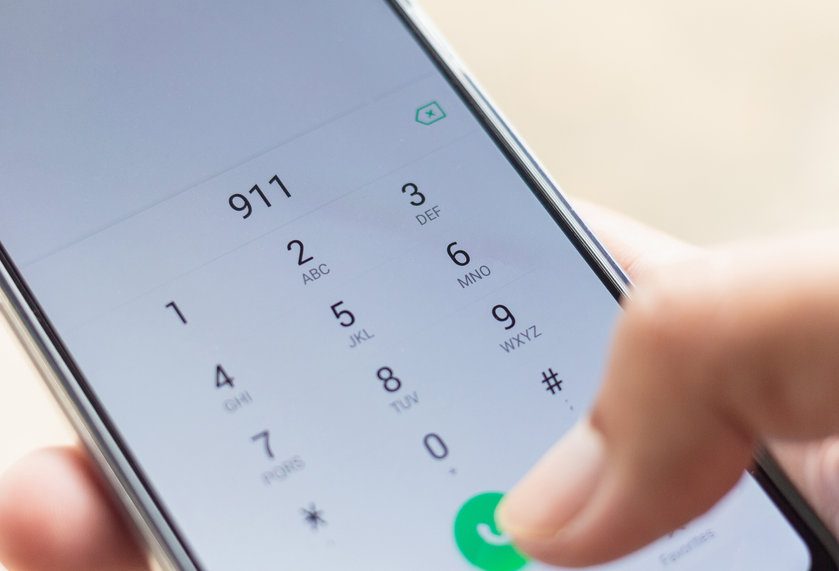
Each year for the past 12 years, the Federal Communications Commission has gathered information from states and territories about their 911 fee collection, distribution and general operations and put it together in a report to Congress. Usually published in early December of each year, the most recently available report from 2020 covers the calendar year from January 1- December 31 of 2019.

Here are some of the key statistics from the 2020 annual 911 fee report, related to 911 funding around the country for the more than 5,300 Public Safety Answering Points (PSAPs) who answered more than 211.1 million 911 calls during the course of 2019.

-States and territories reported collecting more than $3 billion in 911/E911 fees during 2019; however, the total estimated cost to provide service in 39 states and four territories was nearly $5.2 billion (not all jurisdictions gave the FCC an estimate of their total service costs).

-When asked whether 911/E911 fees were combined with other funding sources to provide 911 service, 27 states said they did not, and 12 states plus Guan and Puerto Rico said they relied solely on state 911 fees to cover 911 service costs. Twenty-three states, the District of Columbia and the U.S. Virgin Islands said that they combined the 911/E911 fees with other funding sources in order to provide 911 services.

-The FCC reports that around $200 million in 911/E911 fees were “diverted” away from 911 programs by five states, mostly to other public safety-related programs. Still, the agency called out four states that it felt used funds for non-public safety related programs. One example was the state of West Virginia using 911 funds to build towers to improve cellular coverage; the state argued that this would improve 911 service, but the FCC said that fell outside the bounds of how 911 fees should be spent.

-14 states and one jurisdiction reported changing their funding mechanism during 2019, often to collect additional fees. Kansas, for example, increased the per-device 911 funding fee from 60 cents to 90 cents and bumped up prepaid wireless charges, collected up-front, from 1.2% to 2.06%. Maryland explicitly said that it doubled its State 911 fee from 25 cents to 50 cents, “to offset the increased county costs for Next Generation 9-1-1 migration.”

-Based on responding states’ information in the 2020 report, the average wireline 911 fee is $1.04 per line per month; the average wireless 911 fee is $1.03 per line per month; the average prepaid wireless percentage of retail transaction 911 fee is 2.85%; the average prepaid wireless flat 911 fee per transaction is $0.84; and the average VoIP service 911 fee is $1.05 per line per month.

-Total 911 fees collected grew from $2,527,625,361 in the 2015 report to $3,032,215,008 in the 2020 report – an increase of about 20% over the five-year period.

-However, those fees only cover about 58% of the total cost of providing 911 services across the United States and its territories, which is estimated at nearly $5.2 billion per year.

-Only 15 states and D.C. reported spending funds on 911-related cybersecurity for PSAPs.

-42 states, D.C. and Puerto Rico reported that they were working on Next-Generation 911 (NG911) implementations or planning; a reported 9.2% of 911/E911 fees were spent on NG911 related work, or about $278 million. Among the areas of NG911 spending: 27 states put money into NG911 planning or consulting services; 20 reported spending money on ESInet construction; 11 said that they were investing in NG911 core services; 17 made hardware or software purchases or upgrades; 16 indicated that they were using funds for GIS, five spent money on training and two said that they had put funding into next-generation security planning.

The full estimated cost of NG911 deployment was estimated at somewhere between $9.5 and $12.7 billion in 2018, in a report from NTIA and the National Highway Traffic Safety Administration. A proposed $10 billion in funding in the Biden administration’s Build Back Better plan was pared back to just $470 million as part of negotiations to trim the total cost of the bill.

The full 2020 annual report can be accessed here. Read the previous story on the report, including statistics on the number of 911 calls from wireless devices, here.


You Might Also Like
  • Operators are seeking greater control of NTN: GSMA Intelligence
  • AT&T, AST SpaceMobile get FCC approval for FirstNet Direct-to-Cell trials
  • Behind the signal are the people who show up
  • FirstNet exceeds 7 million subscribers
  • AI infra brief: From Schneider Electric, Oracle, Digital Realty and more
  • AI infra brief: From NVIDIA, Cisco, Equinix and more
Share 0 LinkedinEmail
Kelly Hill

Kelly Hill reports on network test and measurement, AI infrastructure and regulatory issues, including spectrum, for RCR Wireless News. She began covering the wireless industry in 2005, focusing on carriers and MVNOs, then took a few years’ hiatus and returned to RCR Wireless News to write about heterogeneous networks (remember those?) and network infrastructure. Kelly is an Ohio native with a masters degree in journalism from the University of California, Berkeley, where she focused on science writing and multimedia. She has written for the San Francisco Chronicle, The Oregonian and The Canton Repository. She lives in northern Virginia, not far from Data Center Alley.

previous post
Orchestrating and Scaling to the Edge
next post
Why 2022 will be the year of NB-IoT

White Papers

  • Norton eBook: The 2026 Telco Playbook

  • Enea White Paper: Why Intelligent AAA is the Swiss Army Knife of Telecom

  • CSG White Paper: Telco AI Enabler: Mediation’s Defining Role

  • Enea White Paper: Scalable Database Design for 5G and Beyond

  • Supermicro and NVIDIA Whitepaper: Powering sovereign AI at scale

Editorial Reports

  • Market Pulse Report: Telco AI in 2026 – Trends, Challenges and Opportunities

  • Nvidia Report: The State of AI in Telecommunications: 2026 Trends

  • Report: Scaling Optical Networks For The Hyperscale And AI Era

Webinars

  • Webinar: Building 6G — aligning technology, policy and purpose

  • SIMCom Webinar: Scaling your next deployment – from plastic to provisioning

  • Webinar: Rethinking the RAN as AI, cloud and openness converge

  • Webinar: Scale-Up, Scale-Out, Scale-Across – Building AI-Era Network Fabrics

  • Webinar: NTN in motion – evolving standards, expanding services

Since 1982, RCR Wireless News has been providing wireless and mobile industry news, insights, and analysis to mobile and wireless industry professionals, decision makers, policy makers, analysts and investors.

Facebook Twitter Youtube Linkedin Envelope Rss

Useful Links

  • Subscribe
  • About RCR Wireless News
  • Contact Us
  • Advertise
  • Editorial Calendar
  • Archive
  • RSS
  • Wireless News Archive
  • Subscribe
  • About RCR Wireless News
  • Contact Us
  • Advertise
  • Editorial Calendar
  • Archive
  • RSS
  • Wireless News Archive

Edtior's Picks

AT&T says its network is already built for the agentic AI wave
AT&T and Ericsson use network sensing to spot drones with ordinary 5G towers
Huawei sees Mobile AI driving new wave of uplink network investment

Latest Articles

AT&T says its network is already built for the agentic AI wave
AT&T and Ericsson use network sensing to spot drones with ordinary 5G towers
Huawei sees Mobile AI driving new wave of uplink network investment
Spectrum supercycle – US opens floodgates; UK shares it out

© 2026 RCR Wireless News All Right Reserved. Developed by Eight Hats.

Cookie Policy | Privacy Policy

RCR Wireless
  • News
  • Channels
    • 5G
    • 6G
    • BSS OSS
    • Carriers
    • IoT
    • Network Infrastructure
    • Open RAN
    • Private 5G
    • Telco AI
    • Telco Cloud
    • Test & Measurement
  • Resources
    • Reports
    • Webinars
    • White papers
    • AI Fundamentals
    • Analyst Angle
    • Editorial Calendar
    • Fundamentals
      • 5G NR Release 17
      • AI
        • Telco AI in 2025
    • Podcasts
      • Let’s Get Digital with Carrie Charles
      • Wireless Connectivity to Enable Industry 4.0 for the Middleprise
      • Well Technically…
      • Will 5G Change the World
      • Accelerating Industry 4.0 Digitalization
  • AI Infrastructure
  • Programs
  • Events
  • RCRtv
  • Advertise
  • Subscribe
RCR Wireless
  • News
  • Channels
    • 5G
    • 6G
    • BSS OSS
    • Carriers
    • IoT
    • Network Infrastructure
    • Open RAN
    • Private 5G
    • Telco AI
    • Telco Cloud
    • Test & Measurement
  • Resources
    • Reports
    • Webinars
    • White papers
    • AI Fundamentals
    • Analyst Angle
    • Editorial Calendar
    • Fundamentals
      • 5G NR Release 17
      • AI
        • Telco AI in 2025
    • Podcasts
      • Let’s Get Digital with Carrie Charles
      • Wireless Connectivity to Enable Industry 4.0 for the Middleprise
      • Well Technically…
      • Will 5G Change the World
      • Accelerating Industry 4.0 Digitalization
  • AI Infrastructure
  • Programs
  • Events
  • RCRtv
  • Advertise
  • Subscribe
@2020 - All Right Reserved. Designed and Developed by PenciDesign