
Mobile telcos have difficult financial, operational, and logistical challenges balancing the various needs of mobile cellular voice, mobile broadband, and OTT video services. The secret to the mobile carrier’s success has been managing, indeed “multiplying,” capacity for its customers to use. As we move firmly into the 5G era, the deployment and management of the telco’s antenna assets will become an essential element to building not just coverage but also capacity within their networks.
As of April 2020, the GSA reported 73 operators in 41 countries have launched their commercial 5G services. ABI Research anticipates the migration to 5G from mobile operators to end users will accelerate. 5G subscriptions are forecasted to grow from around 0.2 billion in 2020 to 3 billion in 2025, representing a CAGR of 56%. By 2025, the total amount of traffic carried on mobile networks will grow to 4,150 exabytes by 2025, and 58% is likely to come from 5G.
Pressure mounts at the cell site
The macro and roof-top cell-site are the mainstay of the mobile telco network. Despite the often-substantial nature of the installation, the number of antenna mounts are limited at the top of the mast. 6 out of 10 cell-sites now belong to tower management companies that have two, three, or perhaps even four telco tenants per site.
Furthermore, it is not just antennas being fixed to the mast or the cell-site aerial platform. Engineers often need to install diplexers (which serve to reduce the total number of cables, and therefore the subsequent weight on the tower), tower mounted amplifiers (which help to boost the transmit and receive signals from the antenna), and remote radio heads (which reduce the coaxial feed line losses that come from long cable runs). As a result, mobile operators need to consider consolidating standalone antennas to support various existing 2G (900 MHz), 3G (1.8 GHz), 4G (2.6 GHz), and 5G (3.5 GHz) frequency bands into a single antenna unit. Furthermore, these multiband antennas need to keep the main and side lobe coverage within predefined dimensions to reduce interference with other sectors or operators co-located at the cell-site.
Multi-In, multi-out
Both 4G’s LTE and 5G rely on orthogonal frequency division multiplexing (OFDM) modulation. The use of OFDM can be sensitive to multi-path interference, so diversity operation is employed on both transmit and receive sides of the base transceiver station (BTS).
The original LTE deployments relied on two antennas on both the transmitter and the receiver (a 2×2 configuration). To boost data throughputs, antenna engineers have boosted the number of antennas. To deliver gigabit data rates, this has required the deployment of a 4×4 MIMO antenna and 256-QAM in combination with carrier aggregation. In 2020, there is an increasing number of LTE 8×8 MIMO antennas (supported by 3GPP Release 10). In 3GPP Release 11, the nature of antenna functions shifted from passive/fixed to active/adaptive. MIMO is capable of supporting adaption in the vertical plane to ensure better coverage in high-rise residential and business buildings (FD-MIMO).
In 3GPP Release 13, LTE-A Pro brought support up to 64 antennas, as well as multi-user MIMO (MU-MIMO). The addition of MU-MIMO allows the streams from an access point to be distributed to multiple devices at the same time. One consequence of increasingly complex MIMO will be the power draw needed to support transmissions. A 64T64R MIMO integrated active antenna requires more than 800 Watts. Operators will need to carefully manage the power requirements of the most advanced cell-site architectures.
Preparing for 5G with FDD & TDD
Mobile operators are facing a complex amalgam of spectrum and cell-site pole mounting challenges when it comes to managing their FDD/TDD coverage. If the operator only operates an FDD network, they will more than likely need to support 4×4 MIMO on sub-3 GHz frequency bands.
For telcos deploying 5G services with both FDD and TDD, the passive antenna will likely need to integrate 4T4R for both sub-3 GHz bands and the C-band (3.5 GHz). A final challenge will be for dense urban areas where operators have deployed multi-sector (i.e., 4 or even up to 9 sectors) will likely migrate to massive MIMO in the 5G era. By consolidating the sub-3 GHz antenna elements into a smaller form-factor, this frees up space for a massive MIMO antenna array to be co-located, or even housed, in the same antenna unit as a “hybrid” antenna solution.
Massive MIMO, a versatile antenna solution
Massive MIMO antennas, with their high gain capabilities, can help increase the link budget to end users who may be watching videos or playing games online. While high order massive MIMO antennas (i.e., 64T64R or 32T32R) may be deployed in dense urban areas, lower order massive MIMO antennas may be deployed in semi-urban and even rural areas as 8T8R or 16T16R configurations. These lower order MIMO deployments can in fact maximize coverage for the minimum deployment of cell-sites.
While massive MIMO antennas are substantially more expensive than passive antennas, they do recoup costs due to cell-site coverage optimization as well as operating cost management. According to ABI Research, operators have reported greater optimized and more macro BTS deployment, reduced CAPEX & OPEX, and utilization of beamforming to improve coverage and transmissions.
Mobile telcos need a range of antenna solutions
Vendors have started to tackle these cell-site antenna complexities by developing a range of complementary antenna solutions. For the various FDD-only, FDD/TDD combination and multi-sector/MIMO antenna deployment scenarios, mobile operators need a range of solutions such as:
- a sub-3 GHz full-band 4T4R all-in-one antenna design in a side-by-side to minimize the antenna profile.
- a flexible antenna platform that can support either a full range of spectrum options in an FDD 4T4R or a TDD 8T8R antenna which can transmit/receive in the 2.3 GHz to 3.8 GHz range (since these antennas are needed for dense urban scenarios, they must be kept under 2 m).
- an ultra-wideband antenna that can operate between 1.8 GHz to 2.6 GHz that can support 1.8 GHz, 2.1 GHz, and 2.6 GHz 4T4R, or an integrated low-band 2T4R with a high-band 4T4R 3-sector for “all-in-one” configuration, and
- an active 5G AAU and passive 2G/3G/4G antenna with a single antenna housing. Markets such as Europe require the total height is constrained to 2 meters while supporting sub-6 GHz frequency bands (i.e., 2G, 3G, 4G and 5G).
Antenna vendors cannot afford to stand still
Supporting the appropriate spectrum bands and a competitive pricing point do rank high in the minds of mobile telcos, but mobile operators are constantly putting pressure on mobile antenna vendors to innovate on several fronts:
- Augmented high-band coverage for 5G, which requires antenna gains to be significantly increased to provide wide coverage
- Higher output power for 5G multi-band and multi-channel applications
- Implementing new antenna materials and designs to reduce antenna weight to facilitate installation
- Mitigating and reducing passive intermodulation (PIM)
- Migrating to multi-layer interleaved designs to substantially reduce the size of FDD/TDD converged antennas designs
- Implementation of error-free cabling solutions that reduce incorrect cabling at the cell-site
The 5G fanfare is over. Mobile telco RAN departments are very much getting on with the business of upgrading their networks to support 5G. Through the successive generations, 2G to 4G and now 5G, the maturity cycle has been accelerating. 5G is likely to surpass 500 million subscriptions within 3 years; 4G took 5 years to reach this milestone. With operators needing to support at not just the 900 MHz, 1.8 GHz, and 2.3 GHz but also potentially the 700 MHz and 3.5 GHz band*, field engineers will need cost competitive, compact, but also high-performance antenna solutions to meet the expectations of their customers—both consumer and enterprise.
* The actual bands will depend on the region.
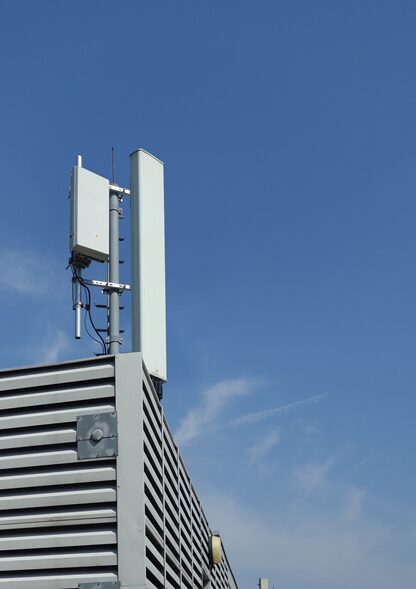
Figure 1. 1+1 Antenna configuration deployed at a cell site
About Jake Saunders:
Jake Saunders, Managing Director and Vice President, Consulting, heads ABI Research’s Asia-Pacific research division. Jake brings highly developed analytical skills to the company, combined with years of expertise in the technology market research business and a proven track record of operations management. He devotes particular attention to the Asia market in relation to its mobile operator strategic positioning, infrastructure vendors, mobile device vendors and chipset manufacturers.
About ABI Research:
ABI Research provides strategic guidance to visionaries, delivering actionable intelligence on the transformative technologies that are dramatically reshaping industries, economies, and workforces across the world. ABI Research’s global team of analysts publish groundbreaking studies often years ahead of other technology advisory firms, empowering our clients to stay ahead of their markets and their competitors.
Table of Contents