

RCR Wireless
  • News
  • Channels
    • 5G
    • 6G
    • BSS OSS
    • Carriers
    • IoT
    • Network Infrastructure
    • Open RAN
    • Private 5G
    • Telco AI
    • Telco Cloud
    • Test & Measurement
  • Resources
    • Reports
    • Webinars
    • White papers
    • AI Fundamentals
    • Analyst Angle
    • Editorial Calendar
    • Fundamentals
      • 5G NR Release 17
      • AI
        • Telco AI in 2025
    • Podcasts
      • Let’s Get Digital with Carrie Charles
      • Wireless Connectivity to Enable Industry 4.0 for the Middleprise
      • Well Technically…
      • Will 5G Change the World
      • Accelerating Industry 4.0 Digitalization
  • AI Infrastructure
  • Programs
  • Events
  • RCRtv
  • Advertise
  • Subscribe
Monday, July 20, 2026
RCR Wireless
  • News
  • Channels
    • 5G
    • 6G
    • BSS OSS
    • Carriers
    • IoT
    • Network Infrastructure
    • Open RAN
    • Private 5G
    • Telco AI
    • Telco Cloud
    • Test & Measurement
  • Resources
    • Reports
    • Webinars
    • White papers
    • AI Fundamentals
    • Analyst Angle
    • Editorial Calendar
    • Fundamentals
      • 5G NR Release 17
      • AI
        • Telco AI in 2025
    • Podcasts
      • Let’s Get Digital with Carrie Charles
      • Wireless Connectivity to Enable Industry 4.0 for the Middleprise
      • Well Technically…
      • Will 5G Change the World
      • Accelerating Industry 4.0 Digitalization
  • AI Infrastructure
  • Programs
  • Events
  • RCRtv
  • Advertise
  • Subscribe
Add RCR Wireless as a preferred source on Google
  • Qualcomm 6G Insights
  • Huawei Content Hub
  • Qualcomm – 6G Vision
  • OSS/BSS Channel
  • RCRTech Roundtable: AI Infrastructure
RCR Wireless
RCR Wireless
  • Advanced Mimo
  • Mobile mmWave
  • 5G Positioning
  • Green Networks
  • Metaverse
  • Automotive
  • Industrial and Wide-area IoT
Copyright 2021 - All Right Reserved
Home - Extending FirstNet coverage indoors
Featured ContentIBW Featured PostsNetwork InfrastructureSponsored

Extending FirstNet coverage indoors

by RCR Wireless News October 2, 2018
written by RCR Wireless News October 2, 2018 Share
LinkedinEmail
Share 0LinkedinEmail
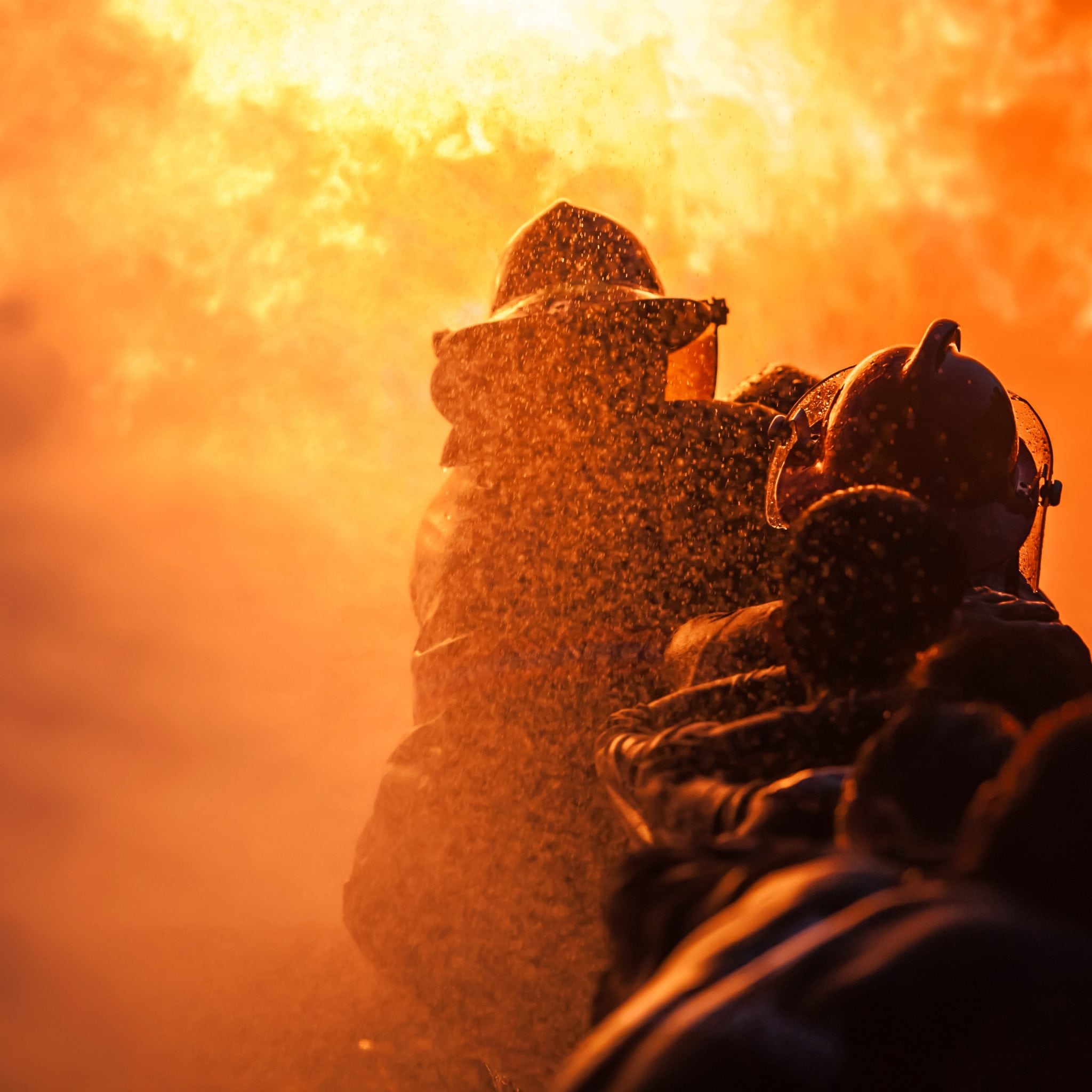
Firefighters training
176


The events that took place on 9/11 revealed a number of holes in America’s emergency communications infrastructure.

On the ground at the World Trade Center that day, first responders from all across the eastern seaboard converged to provide assistance. Cellular and radio communication among emergency personnel was seriously challenged, making it difficult to coordinate rescue and control operations. There were several underlying reasons.

States, counties, cities, municipalities, and even individual police and fire stations within each municipality, had selected their own communications hardware, service configurations, channels, and protocols as a matter of routine. Different jurisdictions had assigned different frequencies and channels to their departments, preventing centralized communications, and central command. Many of the first responders on the scene that day were not on official duty and did not have their public safety radios in their possession. While off duty first responders may have had their personal mobile phones with them, cellular phone service was quickly overwhelmed and incapacitated. According to the New York Times, there were approximately two hundred 911 operators on hand that morning. In the first 18 minutes more than 3,000 calls were received. Nearly 57,000 calls were received within 24 hours. Emergency management had to resort to ad hoc methods (like physical runners) to try to keep the various agencies coordinated.

From the ashes of this tragedy arose the public will to create a better communications network for first responders. That network is FirstNet, a nationwide broadband network that gives first responder communications priority and pre-emption on all bands over the existing AT&T network, with additional high-quality spectrum dedicated to nationwide public safety that has been set aside by the government (Band 14). All 50 states and six U.S. territories including the District of Columbia (DC) have opted to participate in FirstNet as their public safety communications network. As of July this year, Band 14 had been added to more than 2,500 AT&T sites across the country, with the process for 10,000+ more underway.

The FirstNet goal is to provide wireless coverage that will reach more than 99 percent of Americans, extending to 2.74 million square miles, covering 76.2 percent of the continental United States. To deliver on this promise, infrastructure needs to be built-out to accommodate locations where AT&T coverage is spotty, such as in remote rural areas, but also needs to serve heavily populated cities, where congestion can be problematic during an incident. In addition, FirstNet compatible devices need to be purchased by public safety agencies, and those agencies need to subscribe to the FirstNet service.

As of the end of August, 2,500 public safety agencies have subscribed to FirstNet. It has been used by first responders and emergency personnel across the country in critical situations such as the west coast wild fires, severe weather evacuations, to solve crimes, and to find missing children.

First responder priority service is provided to subscribers through intelligence in the network core. FirstNet customers get special SIMs (subscriber identity modules) that inform the core network about the priority of the user and attached device. When an incident occurs, emergency communications – whether on the Band 14 service or on one of AT&T’s commercial bands – are assigned priority.

However, when first responders or other public safety officials respond to an emergency inside a building, even on FirstNet, they may still experience dropped calls, spotty connections, poor voice quality, or black service holes that plague building occupants every day. Interior rooms, rooms surrounded by RF-shielding materials like rebar, thick concrete, energy efficient windows, metal roofs or walls all prevent a strong, clean cellular signal from penetrating a building. It is important to note that communications are two-way – not only does the outside signal need to come in, the inside signal from the first responders has to get out.

To resolve this problem, Nextivity has launched Cel-Fi GO RED, a new smart signal booster that extends FirstNet service into spaces in buildings where cellular signals are weak or non-existent. Whether driven by building construction, a remote rural or congested city location, or other external obstacles such as weather or terrain that prevents a signal from penetrating a building, Cel-Fi GO RED can make the difference in life and death situations when cellular communication over FirstNet is vital. A single Cel-Fi GO RED system is designed to boost FirstNet service in spaces up to 15,000 square feet.

A typical installation consists of an external antenna, located for example on the rooftop, with coaxial cable leading to the Cel-Fi GO RED smart signal booster. GO RED cleans the signal and amplifies it up to 100 dB, then sends the signal along a second coaxial cable to wherever an internal coverage antenna has been placed, like a basement, stairwell, or any interior space. Coverage is broadcast from the internal antenna throughout the space up to 15,000 square feet, providing excellent signal and service to any first responders at that location. For larger spaces, multiple GO RED systems can be layered together, without creating interference. Portable kits developed by partners for GO RED can also be deployed in minutes by first responders in cases when they find they are not able to access FirstNet inside a building.

For more information on Cel-Fi GO RED, visit http://www.cel-fi.com/go-red/.

ABOUT THE AUTHOR

Joe Schmelzer is Senior Director of Products at Nextivity. He has developed a variety of products and industrial devices for chipset vendors, OEMs, and service providers, including products for Sony, Qualcomm, Google, Verizon Wireless, AT&T, Dell and HP. He enjoys speaking opportunities and writing. For more information, contact [email protected] or visit www.cel-fi.com

You Might Also Like
  • When the push becomes the pull – private 5G and physical AI
  • Subsea shift – ITU and FCC redraw rules for global cable resilience
  • Thursday (telco diary) | Satellite versus terrestrial
  • Fast-growing private 5G offers blueprint for AI-era telecoms
  • Wednesday (telco diary) | What telcos want – and why they wait
  • Nokia preps AI-RAN in 2027, promises 100% spectral gain in 2028 – but will operators buy it?
Share 0 LinkedinEmail
RCR Wireless News

previous post
Verizon will be ‘extremely aggressive’ with 5G roll-out
next post
Japan’s e-commerce giant Rakuten completes 5G trial with Nokia

White Papers

  • Norton eBook: The 2026 Telco Playbook

  • Enea White Paper: Why Intelligent AAA is the Swiss Army Knife of Telecom

  • CSG White Paper: Telco AI Enabler: Mediation’s Defining Role

  • Enea White Paper: Scalable Database Design for 5G and Beyond

  • Supermicro and NVIDIA Whitepaper: Powering sovereign AI at scale

Editorial Reports

  • Nvidia Report: The State of AI in Telecommunications: 2026 Trends

  • Report: Scaling Optical Networks For The Hyperscale And AI Era

  • Test And Measurement Market Pulse Report

Webinars

  • Webinar: Building 6G — aligning technology, policy and purpose

  • SIMCom Webinar: Scaling your next deployment – from plastic to provisioning

  • Webinar: Rethinking the RAN as AI, cloud and openness converge

  • Webinar: Scale-Up, Scale-Out, Scale-Across – Building AI-Era Network Fabrics

  • Webinar: NTN in motion – evolving standards, expanding services

Since 1982, RCR Wireless News has been providing wireless and mobile industry news, insights, and analysis to mobile and wireless industry professionals, decision makers, policy makers, analysts and investors.

Facebook Twitter Youtube Linkedin Envelope Rss

Useful Links

  • Subscribe
  • About RCR Wireless News
  • Contact Us
  • Advertise
  • Editorial Calendar
  • Archive
  • RSS
  • Wireless News Archive
  • Subscribe
  • About RCR Wireless News
  • Contact Us
  • Advertise
  • Editorial Calendar
  • Archive
  • RSS
  • Wireless News Archive

Edtior's Picks

When the push becomes the pull – private 5G and physical AI
Elisa targets data center growth through fiber connectivity
Subsea shift – ITU and FCC redraw rules for global cable resilience

Latest Articles

When the push becomes the pull – private 5G and physical AI
Elisa targets data center growth through fiber connectivity
Subsea shift – ITU and FCC redraw rules for global cable resilience
Red Hat outlines AI-RAN roadmap

© 2026 RCR Wireless News All Right Reserved. Developed by Eight Hats.

Cookie Policy | Privacy Policy

RCR Wireless
  • News
  • Channels
    • 5G
    • 6G
    • BSS OSS
    • Carriers
    • IoT
    • Network Infrastructure
    • Open RAN
    • Private 5G
    • Telco AI
    • Telco Cloud
    • Test & Measurement
  • Resources
    • Reports
    • Webinars
    • White papers
    • AI Fundamentals
    • Analyst Angle
    • Editorial Calendar
    • Fundamentals
      • 5G NR Release 17
      • AI
        • Telco AI in 2025
    • Podcasts
      • Let’s Get Digital with Carrie Charles
      • Wireless Connectivity to Enable Industry 4.0 for the Middleprise
      • Well Technically…
      • Will 5G Change the World
      • Accelerating Industry 4.0 Digitalization
  • AI Infrastructure
  • Programs
  • Events
  • RCRtv
  • Advertise
  • Subscribe
RCR Wireless
  • News
  • Channels
    • 5G
    • 6G
    • BSS OSS
    • Carriers
    • IoT
    • Network Infrastructure
    • Open RAN
    • Private 5G
    • Telco AI
    • Telco Cloud
    • Test & Measurement
  • Resources
    • Reports
    • Webinars
    • White papers
    • AI Fundamentals
    • Analyst Angle
    • Editorial Calendar
    • Fundamentals
      • 5G NR Release 17
      • AI
        • Telco AI in 2025
    • Podcasts
      • Let’s Get Digital with Carrie Charles
      • Wireless Connectivity to Enable Industry 4.0 for the Middleprise
      • Well Technically…
      • Will 5G Change the World
      • Accelerating Industry 4.0 Digitalization
  • AI Infrastructure
  • Programs
  • Events
  • RCRtv
  • Advertise
  • Subscribe
@2020 - All Right Reserved. Designed and Developed by PenciDesign
