RCR Wireless
  • News
  • Channels
    • 5G
    • 6G
    • BSS OSS
    • Carriers
    • IoT
    • Network Infrastructure
    • Open RAN
    • Private 5G
    • Telco AI
    • Telco Cloud
    • Test & Measurement
  • Resources
    • Reports
    • Webinars
    • White papers
    • AI Fundamentals
    • Analyst Angle
    • Editorial Calendar
    • Fundamentals
      • 5G NR Release 17
      • AI
        • Telco AI in 2025
    • Podcasts
      • Let’s Get Digital with Carrie Charles
      • Wireless Connectivity to Enable Industry 4.0 for the Middleprise
      • Well Technically…
      • Will 5G Change the World
      • Accelerating Industry 4.0 Digitalization
  • AI Infrastructure
  • Programs
  • Events
  • RCRtv
  • Advertise
  • Subscribe
Wednesday, July 22, 2026
RCR Wireless
  • News
  • Channels
    • 5G
    • 6G
    • BSS OSS
    • Carriers
    • IoT
    • Network Infrastructure
    • Open RAN
    • Private 5G
    • Telco AI
    • Telco Cloud
    • Test & Measurement
  • Resources
    • Reports
    • Webinars
    • White papers
    • AI Fundamentals
    • Analyst Angle
    • Editorial Calendar
    • Fundamentals
      • 5G NR Release 17
      • AI
        • Telco AI in 2025
    • Podcasts
      • Let’s Get Digital with Carrie Charles
      • Wireless Connectivity to Enable Industry 4.0 for the Middleprise
      • Well Technically…
      • Will 5G Change the World
      • Accelerating Industry 4.0 Digitalization
  • AI Infrastructure
  • Programs
  • Events
  • RCRtv
  • Advertise
  • Subscribe
Add RCR Wireless as a preferred source on Google
  • Qualcomm 6G Insights
  • Huawei Content Hub
  • Qualcomm – 6G Vision
  • OSS/BSS Channel
  • RCRTech Roundtable: AI Infrastructure
RCR Wireless
RCR Wireless
  • Advanced Mimo
  • Mobile mmWave
  • 5G Positioning
  • Green Networks
  • Metaverse
  • Automotive
  • Industrial and Wide-area IoT
Copyright 2021 - All Right Reserved
Home - Powering wireless networks: Challenges and solutions (Reader Forum)
Network InfrastructureOpinionReader Forum

Powering wireless networks: Challenges and solutions (Reader Forum)

by RCR Wireless News July 13, 2018
written by RCR Wireless News July 13, 2018 Share
LinkedinEmail
Share 0LinkedinEmail
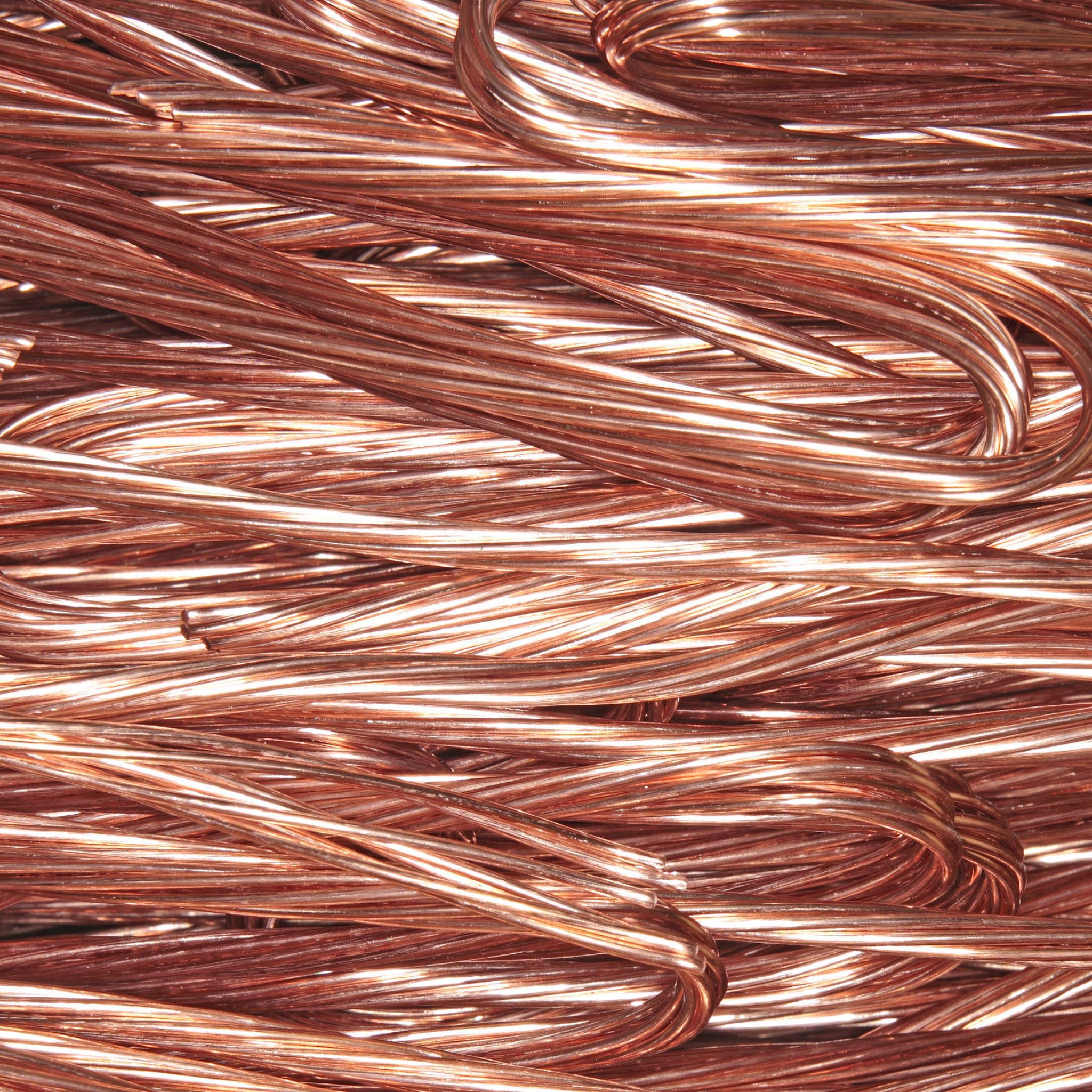
AT&T copper DOCSIS 3.1 g.fast gigabit internet
88

Wireless consumers are demanding more bandwidth, and wireless network operators must increase the density of their networks in order to deliver it. Where one macro cell might serve everyone in a half-mile radius, networks for 4G LTE Advanced and 5G services will require small cells as dense as every 100-200 meters. But in planning to build these new networks, operators often focus on cell placement and connectivity back to the core network, leaving the question of how to power these new small cells as an afterthought. In this article, we’ll look at the challenges of powering small cells (or Wi-Fi access points, remote cameras, or other IoT devices, for that matter), and how telco operators can address them.

Grid power challenges

In the past, wireless network planners have traditionally used grid power from the local utility company to power their network infrastructure. When putting up macro sites or a loose collection of small cells, it’s easy to assume that grid power will be available at the utility pole or tower, or that it can be brought there. To access this power, the telco works with the utility company and gets a permit to bring power to each site and install an electrical meter or through a contract for an agreed-upon monthly fee given average usage and the number of sites. Each site, whether metered or not, can take several months for permitting, and installation can cost from $5,000 to $15,000.

It may make sense to assume the use of grid power in smaller deployments, but in the large, ultra-dense small cell deployments that are now starting to emerge in cities and suburbs, the grid power approach’s time-to-market and cost issues make it impractical. For example, suppose a telco wants to deploy 1,500 small cells in an area: the telco has perhaps 2-3 employees who handle all the permitting, and with the need for an individual permit for each cell, the task becomes a years-long process. Cost is the other challenge: telcos may be willing to spend $5,000-$15,000 per cell in small deployments, but they will balk at spending that much per cell when there are 1,500 cells involved.

Here are three alternatives to grid power for small cell deployments.

Alternative 1: Twisted pair power

Twisted pair networks have powered wireline telco deployments for over a century. These networks can carry 100 watts over several hundred yards. In modern telco networks, a transmitter converts 48-volt power to +/- 190-volt power at the sending end so it can travel long distances over copper, and then a receiver converts the power back to 48 volts to drive small cells or other devices at the other end.

Using twisted pair networks, telcos can use a single power meter on a neighborhood pedestal to drive 20 or more small cells, which slashes costs and time to service. For example, the network operator could power 20 small cells for $5,000 instead of the $100,000 it would take if each cell were metered individually.

And beyond time to service and cost, there are other advantages to using twisted pair. Access is one: because the power is delivered over the telco’s own network, the company can use its own technicians to service small cell power connections rather than having to coordinate with a utility provider. Safety is another: twisted pair networks carry limited wattage compared to grid power. In fact, because grid power has higher voltage and wattage, some cities are mandating installation of cutoff switches for grid-powered small cells, an extra step that increases costs, complexity and time to service.

Alternative 2: Coaxial cable powering

Coaxial cable has been used by the CATV industry for almost 40 years.  The same coaxial cable that is used to transmit television and Internet to the premise is also used to transmit power to CATV equipment.  Although a relatively unknown method for traditional telecom wireline and wireless providers, this is a highly efficient method of energy transmission that is being leveraged in new small cell installations.  Up to 90 volts AC and 15 amps can be placed on the coaxial cable per NESC safety regulations.

Recent implementations of coax powering for small cells deliver significant capex and opex savings.  The coaxial cable in these recent implementations is used purely as a power conduit with optical fiber being used as the backhaul/fronthaul media.

Alternative 3: New higher voltage/wattage copper delivery systems

The need to solve the power delivery problem for small cells is real, to the point where new, innovative systems are being developed to meet the demand.  These include higher voltage, higher power delivery systems that make use of new, higher-gauge copper conductor installation or a daisy chained solution. All are designed with safety in mind.

Getting to the right power solution

As highly dense small cell deployments proliferate in wireless carrier networks, these alternatives make much more sense than grid power. To begin using these solutions, telcos need to improve communications and eliminate legacy thinking in their wireless organizations. Most telco wireless groups never think beyond the traditional grid power approach, and the wireless and wireline sides of the house seldom talk to one another. But in the era of wireless/wireline network convergence, telcos must tear down organizational silos and ensure that the simplest and most cost-effective solutions are used.

Telcos will naturally want to use existing twisted-pair networks, while cable MSOs will leverage their coax cable plants. Other providers will take advantage of new solutions that deliver remote power at a reasonable cost. As telcos deploy small cells and other IoT infrastructure throughout cities and suburbs, their copper and coaxial networks can drive low-power devices like small cells with lower costs, speedier time to service, easier access, and greater safety.  

You Might Also Like
  • Tuesday (telco diary) | Telco agents and outcomes
  • The most expensive wireless system is the one you install twice (Reader Forum)
  • Rakuten Mobile expands O-RAN footprint with 1Finity radios
  • Monday (telco diary) | Sovereign AI for Industry 4.0
  • Friday (telco diary) | Verizon looks to AI horizon
  • Agentic AI – the $60bn opportunity for telecom operators (Reader Forum)

Table of Contents

  • Grid power challenges
  • Alternative 1: Twisted pair power
  • Alternative 2: Coaxial cable powering
  • Alternative 3: New higher voltage/wattage copper delivery systems
  • Getting to the right power solution
Share 0 LinkedinEmail
RCR Wireless News

previous post
AT&T ‘surprised’ by DOJ decision to appeal Time Warner acquisition
next post
Analyst Angle: Rural connectivity hinges on software as much as access

White Papers

  • Norton eBook: The 2026 Telco Playbook

  • Enea White Paper: Why Intelligent AAA is the Swiss Army Knife of Telecom

  • CSG White Paper: Telco AI Enabler: Mediation’s Defining Role

  • Enea White Paper: Scalable Database Design for 5G and Beyond

  • Supermicro and NVIDIA Whitepaper: Powering sovereign AI at scale

Editorial Reports

  • Nvidia Report: The State of AI in Telecommunications: 2026 Trends

  • Report: Scaling Optical Networks For The Hyperscale And AI Era

  • Test And Measurement Market Pulse Report

Webinars

  • Webinar: Building 6G — aligning technology, policy and purpose

  • SIMCom Webinar: Scaling your next deployment – from plastic to provisioning

  • Webinar: Rethinking the RAN as AI, cloud and openness converge

  • Webinar: Scale-Up, Scale-Out, Scale-Across – Building AI-Era Network Fabrics

  • Webinar: NTN in motion – evolving standards, expanding services

Since 1982, RCR Wireless News has been providing wireless and mobile industry news, insights, and analysis to mobile and wireless industry professionals, decision makers, policy makers, analysts and investors.

Facebook Twitter Youtube Linkedin Envelope Rss

Useful Links

  • Subscribe
  • About RCR Wireless News
  • Contact Us
  • Advertise
  • Editorial Calendar
  • Archive
  • RSS
  • Wireless News Archive
  • Subscribe
  • About RCR Wireless News
  • Contact Us
  • Advertise
  • Editorial Calendar
  • Archive
  • RSS
  • Wireless News Archive

Edtior's Picks

South Korea launches AI-RAN project to advance industrial AI
Tuesday (telco diary) | Telco agents and outcomes
AT&T’s bets on “best tech” (fiber) pay off with record adds, improving margins 

Latest Articles

South Korea launches AI-RAN project to advance industrial AI
Tuesday (telco diary) | Telco agents and outcomes
AT&T’s bets on “best tech” (fiber) pay off with record adds, improving margins 
The most expensive wireless system is the one you install twice (Reader Forum)

© 2026 RCR Wireless News All Right Reserved. Developed by Eight Hats.

Cookie Policy | Privacy Policy

RCR Wireless
  • News
  • Channels
    • 5G
    • 6G
    • BSS OSS
    • Carriers
    • IoT
    • Network Infrastructure
    • Open RAN
    • Private 5G
    • Telco AI
    • Telco Cloud
    • Test & Measurement
  • Resources
    • Reports
    • Webinars
    • White papers
    • AI Fundamentals
    • Analyst Angle
    • Editorial Calendar
    • Fundamentals
      • 5G NR Release 17
      • AI
        • Telco AI in 2025
    • Podcasts
      • Let’s Get Digital with Carrie Charles
      • Wireless Connectivity to Enable Industry 4.0 for the Middleprise
      • Well Technically…
      • Will 5G Change the World
      • Accelerating Industry 4.0 Digitalization
  • AI Infrastructure
  • Programs
  • Events
  • RCRtv
  • Advertise
  • Subscribe
RCR Wireless
  • News
  • Channels
    • 5G
    • 6G
    • BSS OSS
    • Carriers
    • IoT
    • Network Infrastructure
    • Open RAN
    • Private 5G
    • Telco AI
    • Telco Cloud
    • Test & Measurement
  • Resources
    • Reports
    • Webinars
    • White papers
    • AI Fundamentals
    • Analyst Angle
    • Editorial Calendar
    • Fundamentals
      • 5G NR Release 17
      • AI
        • Telco AI in 2025
    • Podcasts
      • Let’s Get Digital with Carrie Charles
      • Wireless Connectivity to Enable Industry 4.0 for the Middleprise
      • Well Technically…
      • Will 5G Change the World
      • Accelerating Industry 4.0 Digitalization
  • AI Infrastructure
  • Programs
  • Events
  • RCRtv
  • Advertise
  • Subscribe
@2020 - All Right Reserved. Designed and Developed by PenciDesign