

RCR Wireless
  • News
  • Channels
    • 5G
    • 6G
    • BSS OSS
    • Carriers
    • IoT
    • Network Infrastructure
    • Open RAN
    • Private 5G
    • Telco AI
    • Telco Cloud
    • Test & Measurement
  • Resources
    • Reports
    • Webinars
    • White papers
    • AI Fundamentals
    • Analyst Angle
    • Editorial Calendar
    • Fundamentals
      • 5G NR Release 17
      • AI
        • Telco AI in 2025
    • Podcasts
      • Let’s Get Digital with Carrie Charles
      • Wireless Connectivity to Enable Industry 4.0 for the Middleprise
      • Well Technically…
      • Will 5G Change the World
      • Accelerating Industry 4.0 Digitalization
  • AI Infrastructure
  • Programs
  • Events
  • RCRtv
  • Advertise
  • Subscribe
Friday, July 24, 2026
RCR Wireless
  • News
  • Channels
    • 5G
    • 6G
    • BSS OSS
    • Carriers
    • IoT
    • Network Infrastructure
    • Open RAN
    • Private 5G
    • Telco AI
    • Telco Cloud
    • Test & Measurement
  • Resources
    • Reports
    • Webinars
    • White papers
    • AI Fundamentals
    • Analyst Angle
    • Editorial Calendar
    • Fundamentals
      • 5G NR Release 17
      • AI
        • Telco AI in 2025
    • Podcasts
      • Let’s Get Digital with Carrie Charles
      • Wireless Connectivity to Enable Industry 4.0 for the Middleprise
      • Well Technically…
      • Will 5G Change the World
      • Accelerating Industry 4.0 Digitalization
  • AI Infrastructure
  • Programs
  • Events
  • RCRtv
  • Advertise
  • Subscribe
Add RCR Wireless as a preferred source on Google
  • Qualcomm 6G Insights
  • Huawei Content Hub
  • Qualcomm – 6G Vision
  • OSS/BSS Channel
  • RCRTech Roundtable: AI Infrastructure
RCR Wireless
RCR Wireless
  • Advanced Mimo
  • Mobile mmWave
  • 5G Positioning
  • Green Networks
  • Metaverse
  • Automotive
  • Industrial and Wide-area IoT
Copyright 2021 - All Right Reserved
Home - IoT makes trucking safer for drivers, before potentially replacing them
Connected CarsFeaturedFundamentalsInternet of Things (IoT)public safety

IoT makes trucking safer for drivers, before potentially replacing them

by Phillip Tracy October 6, 2016
written by Phillip Tracy October 6, 2016 Share
LinkedinEmail
Share 0LinkedinEmail
source; Otto/Youtube
147

Current long-haul trucking inefficiencies

We have all stopped at a rest station during a road trip and parked in the small gaps between the 18-wheeled trucks filled with sleeping drivers. Those drivers are often tasked to drive cross country to deliver an order. Because of the risks associated with driving for long periods of time in potentially dangerous conditions, the Federal Motor Carrier Safety Administration has enacted regulations limiting the number of hours a long-haul truck driver can work:

  • 11-hour daily driving limit and 14-hour work day;
  • The maximum average work week for truck drivers is 70 hours, a decrease from the previous maximum of 82 hours;
  • Truck drivers who reach the maximum 70 hours of driving within a week can resume if they rest for 34 consecutive hours, including at least two nights when their body clock demands sleep the most, from 1 to 5 a.m.; and
  • Requires truck drivers to take a 30-minute break during the first eight hours of a shift.

18 wheeler trucking

According to Truckinfo.net, trucking employs around 8.9 million people, and the total value of goods delivered or routed by trucks in the U.S. alone is more than $1 trillion, if you include truck trade with Canada and Mexico. And drivers are increasingly hard to come by. The American Trucking Association reported in 2014 a shortage of truck drivers – especially long-haul, who are often required to spend weeks away from home. Shipping a full truckload from L.A. to New York costs around $4,500 today, with labor representing 75% of that cost, according to TechCrunch.

“Internet of things”-based systems have the potential to provide solutions for the inefficiencies brought on by regulations and a diminishing workforce.

What can truck drivers do with IoT?

The long-haul trucking industry can implement IoT systems in a number of ways to make things easier for both drivers and their shipping companies. Trucks can now use reliable two-way communication between the driver and the dispatcher to reduce costs and delays, and give greater visibility to shippers and trucking companies.

Here are a number of other use cases that can transform the long-haul trucking industry, according to Samsung:

  • Measure real-time fuel efficiency, and how drivers operate their vehicles:Do they brake too late, or waste diesel on lead-foot starts?
  • Cloud-based fleet management systems can recommend the optimal speed for a route and how to get the most mileage out of each gallon of fuel.
  • GPS-equipped systems track driver routes, time spent loading and unloading, and help manage hours of service compliance. User-generated input via smartphones and tablets can help truckers route around construction or congested areas.
  • Load turnarounds can be faster with freight and locations tagged with radio-frequency identification, near-field communication or Bluetooth low-energy devices.
  • Drivers can use tablets for electronic vehicle inspection reports, get basic troubleshooting and service instruction, stay up to date with training and use them for entertainment and communication in their off-duty hours.
  • IoT data can populate a central dashboard that focuses on identifying spare capacity on particular routes or destination pairs and analytics could recommend suggestions for consolidating and optimizing the route.
  • Mobile apps allow managers and drivers to access reporting and management tools via smartphones and tablets. Managers can stay in touch while they’re on the go, with emergency alerts and dashboard reporting.
  • Electronic Logging Devices synchronize with a vehicle engine to automatically record driving time, for easier, more accurate hours-of-service recording.

Making driving a better experience, or not one at all

Instrumenting drivers with sensors that track vital signs and forwarding that data to a cloud-based platform via a cellular network could be another approach to improving safety in the trucking industry.

https://www.youtube.com/watch?v=bK76W1kH4jA

“Think of truck drivers going on long journeys,” said Jason Lynch, Analog Devices’ director of IoT strategy, to IoT Journal. “Tracking each driver’s movements and vital signs could offer fleet managers some insight into that individual’s health or level of fatigue.”

Otto, an autonomous truck company recently purchased by Uber, wants to get rid of the driver altogether. It made a kit used to retrofit semis for autonomous operation. The company believes trucking to be a logical place for autonomous vehicles to take root, given the high cost of the vehicles – around $150,000 apiece, according to Wired. This makes the kit’s $30,000 price tag more palatable – and the proposition of being able to have a “driver” take a nap in the truck’s cab once his or her shift ends.

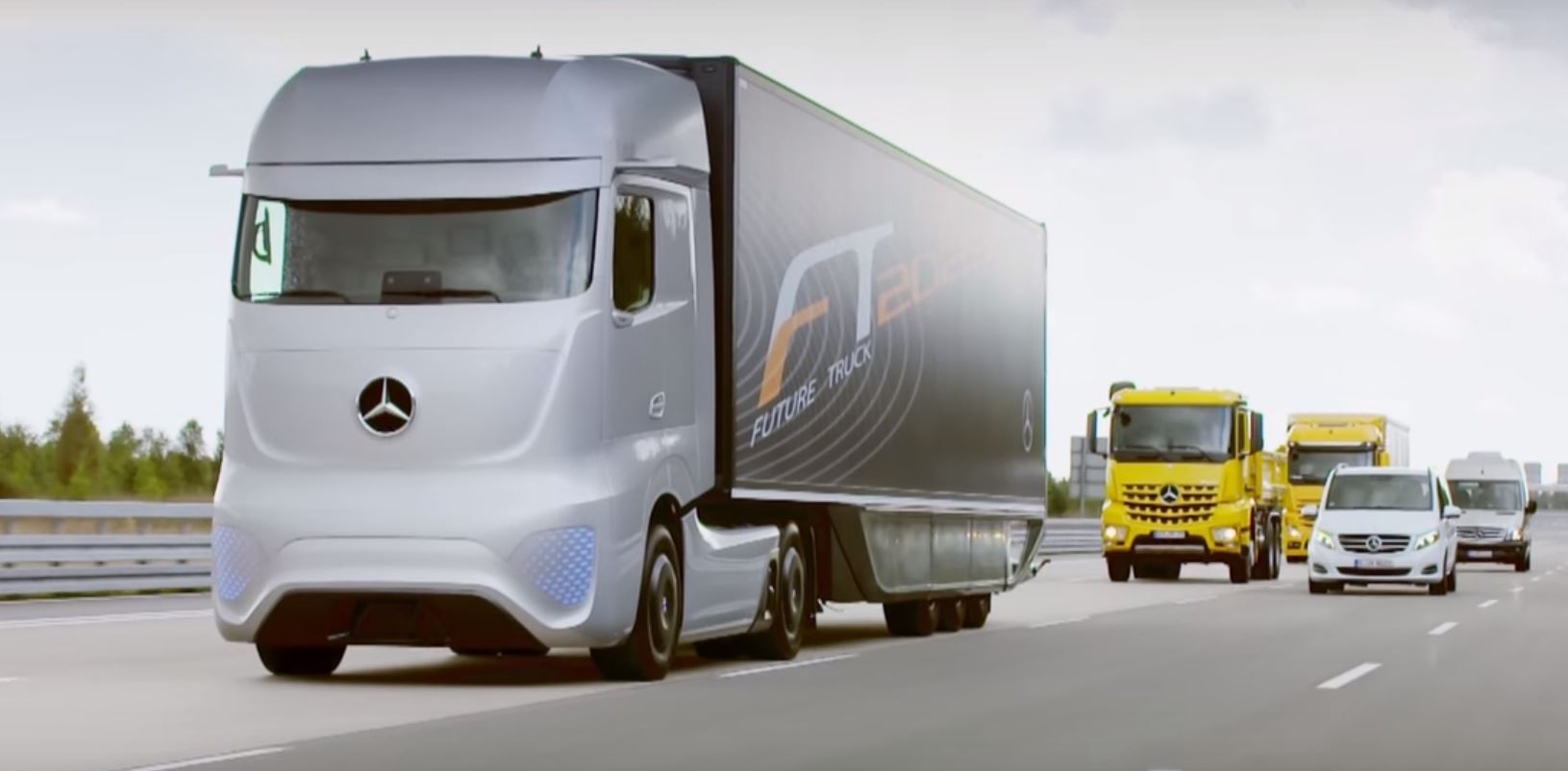
Last year, Daimler demonstrated an autonomously operated 18-wheeler that it predicts could be deployed commercially within a decade. Otto is the first company to offer a retrofitting solution to fleets that already have invested in late-model trucks.

You Might Also Like
  • Monday (telco diary) | Sovereign AI for Industry 4.0
  • When the push becomes the pull – private 5G and physical AI
  • Fast-growing private 5G offers blueprint for AI-era telecoms
  • Monday (telco diary) | Consolidation, orchestration, automation
  • Wireless Logic’s 21st acquisition exposes IoT consolidation paradox
  • Operators are seeking greater control of NTN: GSMA Intelligence

Table of Contents

  • Current long-haul trucking inefficiencies
  • What can truck drivers do with IoT?
  • Making driving a better experience, or not one at all
Share 0 LinkedinEmail
Avatar of Phillip Tracy
Phillip Tracy

previous post
IoT makes trucking safer for drivers, before potentially replacing them
next post
Volvo adding proximity sensors to buses for pedestrian detection

White Papers

  • Norton eBook: The 2026 Telco Playbook

  • Enea White Paper: Why Intelligent AAA is the Swiss Army Knife of Telecom

  • CSG White Paper: Telco AI Enabler: Mediation’s Defining Role

  • Enea White Paper: Scalable Database Design for 5G and Beyond

  • Supermicro and NVIDIA Whitepaper: Powering sovereign AI at scale

Editorial Reports

  • Market Pulse Report: Telco AI in 2026 – Trends, Challenges and Opportunities

  • Nvidia Report: The State of AI in Telecommunications: 2026 Trends

  • Report: Scaling Optical Networks For The Hyperscale And AI Era

Webinars

  • Webinar: Building 6G — aligning technology, policy and purpose

  • SIMCom Webinar: Scaling your next deployment – from plastic to provisioning

  • Webinar: Rethinking the RAN as AI, cloud and openness converge

  • Webinar: Scale-Up, Scale-Out, Scale-Across – Building AI-Era Network Fabrics

  • Webinar: NTN in motion – evolving standards, expanding services

Since 1982, RCR Wireless News has been providing wireless and mobile industry news, insights, and analysis to mobile and wireless industry professionals, decision makers, policy makers, analysts and investors.

Facebook Twitter Youtube Linkedin Envelope Rss

Useful Links

  • Subscribe
  • About RCR Wireless News
  • Contact Us
  • Advertise
  • Editorial Calendar
  • Archive
  • RSS
  • Wireless News Archive
  • Subscribe
  • About RCR Wireless News
  • Contact Us
  • Advertise
  • Editorial Calendar
  • Archive
  • RSS
  • Wireless News Archive

Edtior's Picks

Huawei sees Mobile AI driving new wave of uplink network investment
Spectrum supercycle – US opens floodgates; UK shares it out
Why throwing money at broadband speeds isn’t fixing America’s internet (Reader Forum)

Latest Articles

Huawei sees Mobile AI driving new wave of uplink network investment
Spectrum supercycle – US opens floodgates; UK shares it out
Why throwing money at broadband speeds isn’t fixing America’s internet (Reader Forum)
Thursday (telco diary) | Telco pieces in the AI jigsaw

© 2026 RCR Wireless News All Right Reserved. Developed by Eight Hats.

Cookie Policy | Privacy Policy

RCR Wireless
  • News
  • Channels
    • 5G
    • 6G
    • BSS OSS
    • Carriers
    • IoT
    • Network Infrastructure
    • Open RAN
    • Private 5G
    • Telco AI
    • Telco Cloud
    • Test & Measurement
  • Resources
    • Reports
    • Webinars
    • White papers
    • AI Fundamentals
    • Analyst Angle
    • Editorial Calendar
    • Fundamentals
      • 5G NR Release 17
      • AI
        • Telco AI in 2025
    • Podcasts
      • Let’s Get Digital with Carrie Charles
      • Wireless Connectivity to Enable Industry 4.0 for the Middleprise
      • Well Technically…
      • Will 5G Change the World
      • Accelerating Industry 4.0 Digitalization
  • AI Infrastructure
  • Programs
  • Events
  • RCRtv
  • Advertise
  • Subscribe
RCR Wireless
  • News
  • Channels
    • 5G
    • 6G
    • BSS OSS
    • Carriers
    • IoT
    • Network Infrastructure
    • Open RAN
    • Private 5G
    • Telco AI
    • Telco Cloud
    • Test & Measurement
  • Resources
    • Reports
    • Webinars
    • White papers
    • AI Fundamentals
    • Analyst Angle
    • Editorial Calendar
    • Fundamentals
      • 5G NR Release 17
      • AI
        • Telco AI in 2025
    • Podcasts
      • Let’s Get Digital with Carrie Charles
      • Wireless Connectivity to Enable Industry 4.0 for the Middleprise
      • Well Technically…
      • Will 5G Change the World
      • Accelerating Industry 4.0 Digitalization
  • AI Infrastructure
  • Programs
  • Events
  • RCRtv
  • Advertise
  • Subscribe
@2020 - All Right Reserved. Designed and Developed by PenciDesign
