

RCR Wireless
  • News
  • Channels
    • 5G
    • 6G
    • BSS OSS
    • Carriers
    • IoT
    • Network Infrastructure
    • Open RAN
    • Private 5G
    • Telco AI
    • Telco Cloud
    • Test & Measurement
  • Resources
    • Reports
    • Webinars
    • White papers
    • AI Fundamentals
    • Analyst Angle
    • Editorial Calendar
    • Fundamentals
      • 5G NR Release 17
      • AI
        • Telco AI in 2025
    • Podcasts
      • Let’s Get Digital with Carrie Charles
      • Wireless Connectivity to Enable Industry 4.0 for the Middleprise
      • Well Technically…
      • Will 5G Change the World
      • Accelerating Industry 4.0 Digitalization
  • AI Infrastructure
  • Programs
  • Events
  • RCRtv
  • Advertise
  • Subscribe
Wednesday, July 22, 2026
RCR Wireless
  • News
  • Channels
    • 5G
    • 6G
    • BSS OSS
    • Carriers
    • IoT
    • Network Infrastructure
    • Open RAN
    • Private 5G
    • Telco AI
    • Telco Cloud
    • Test & Measurement
  • Resources
    • Reports
    • Webinars
    • White papers
    • AI Fundamentals
    • Analyst Angle
    • Editorial Calendar
    • Fundamentals
      • 5G NR Release 17
      • AI
        • Telco AI in 2025
    • Podcasts
      • Let’s Get Digital with Carrie Charles
      • Wireless Connectivity to Enable Industry 4.0 for the Middleprise
      • Well Technically…
      • Will 5G Change the World
      • Accelerating Industry 4.0 Digitalization
  • AI Infrastructure
  • Programs
  • Events
  • RCRtv
  • Advertise
  • Subscribe
Add RCR Wireless as a preferred source on Google
  • Qualcomm 6G Insights
  • Huawei Content Hub
  • Qualcomm – 6G Vision
  • OSS/BSS Channel
  • RCRTech Roundtable: AI Infrastructure
RCR Wireless
RCR Wireless
  • Advanced Mimo
  • Mobile mmWave
  • 5G Positioning
  • Green Networks
  • Metaverse
  • Automotive
  • Industrial and Wide-area IoT
Copyright 2021 - All Right Reserved
Home - LatAm: WhatsApp shaking up the Brazilian mobile market
AmericasBusinessChips - SemiconductorFeatured

LatAm: WhatsApp shaking up the Brazilian mobile market

by Roberta Prescott November 5, 2015
written by Roberta Prescott November 5, 2015 Share
LinkedinEmail
Share 0LinkedinEmail
Iconectiv
148

The Brazilian mobile landscape is undergoing a transformation with the potential for heightened competition in the coming years. Driving the market shift is the reduction of a termination rate imposed by telecom regulator Anatel, which wants the discount applied to customers, plus the massive use of instant messaging application WhatsApp. As a result, consumers might prefer to have only one SIM card, and carriers are fighting for customers. In addition, in lieu of market share, the current emphasis is on value-share creation and increasing the average revenue per user.

Two carriers, TIM and Oi, have moved in that direction, with both announcing the end of long-distance calling fees and setting the same rate for both on- and off-net calls. This strategy has already been adopted in several countries, including Chile, which in 2012 mandated the elimination of long-distance rates by 2014. In Brazil, however, the move has just started.

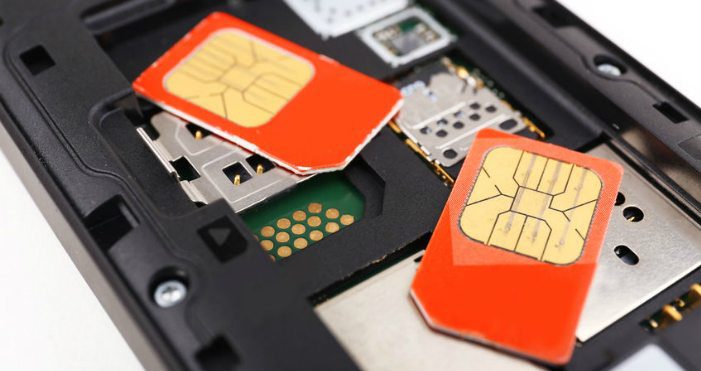
As a result, carriers expect customers will replace multiple SIM cards with just one, a possibly huge transformation in the prepaid-customer dominated Brazilian market. The latest data from Anatel shows 74.29% of all mobile lines in August were prepaid. The reason for prepaid dominance is customers owning more than one SIM card so they can make free on-network calls.

For the past few years, mobile network operator strategy has relied on encouraging customers to bring their friends and family to the same carrier in order to take advantage of free on-network calling. Now, regulators want to change that by setting plans that charge the same for calling between operators.

The WhatsApp effect

The shift would happen at some point due to the reduction of termination rates — the tariff has dropped significantly since 2010, from an average of 0.40 real (11 cents) to 0.15 real with the perspective to reach 0.02 real by 2019. However, with increased adoption of WhatsApp, that change is anticipated to happen within a year.

As people began to use the over-the-top platform to send text and voice messages, the need to communicate with others on the same carrier became unnecessary. The OTT app made communications less costly for those who own a smartphone and have Internet access using both Wi-Fi and data plans.

The decreasing sense of on-network community building, pushed by WhatsApp, along with the reduction of mobile termination rate fees, drove Oi and TIM to set new strategies. The carriers rolled out new structures within three days of one another: TIM announced first, and despite some pricing differences the offerings are essentially the same with the elimination of long-distance fees and charging the same for on- and off-net calls.
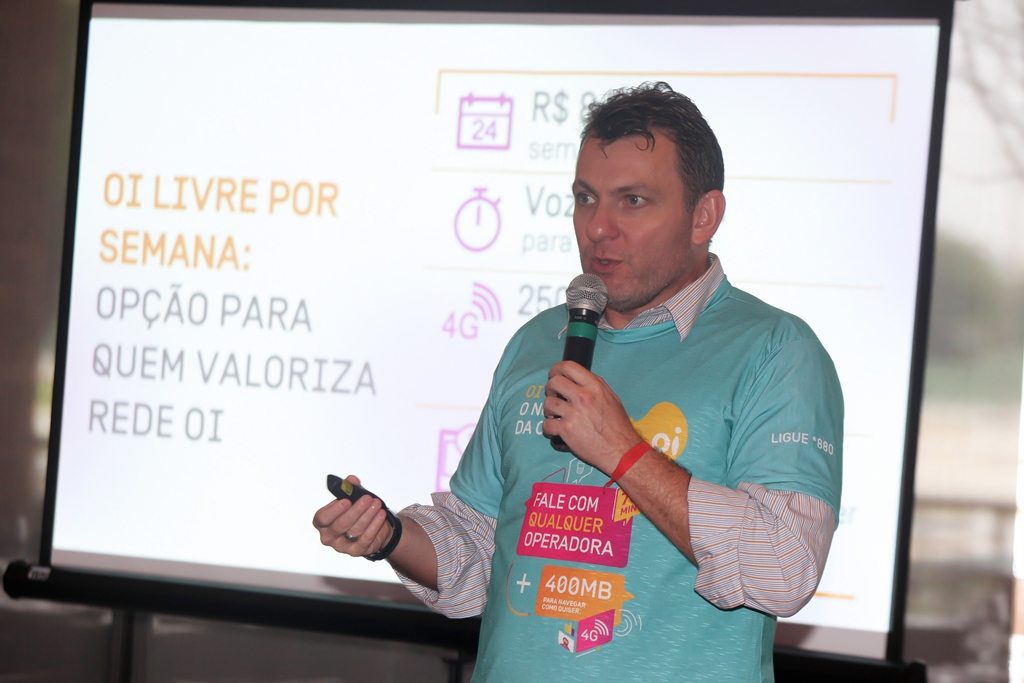
Diretor de Varejo da Oi_Bernardo Winik

Bernardo Winik, Oi’s director: ‘It’s the end of the community effect.’

The battle for being first choice for mobile

“Oi aims at gaining market share with the recently launched offerings. We know that, in the medium term, the number of SIM cards will drop. Mobile active line numbers fall as the sense of community ends. So we want to guarantee our market share,” said Bernardo Winik, director at Oi.

Currently, Oi is the No. 4 carrier with a market share of 17.9%, while TIM ranks No. 2 with 26.2% market share. Vivo is currently the largest carrier in Brazil with 29.1% market share. Since Oi and TIM were the first to announce plan changes, they might have more potential to pick up new customers from competitors.

“Due to our extended base, we are able to know who uses TIM as first or second chip and we can reach out to them to offer new plans,” Rogerio Takayanagi, CMO of TIM Brasil, told RCR Wireless News.

As for Oi, around 30% to 40% of its prepaid base use the carrier as a second SIM card.

“We are second where we have less market share. With the reduction of the termination rate, we believe [those] who [have] less market share tend to gain more clients,” Takayanagi said.

As customers discard multiple SIM cards, the total active lines base in Brazil could decline. Takayanagi forecasts the reduction will be around 20% to 30% of the total market in the coming years. As a consequence, carriers will have their Fistel telecom tax reduced as they pay the tax once a year for each active mobile line.

However, both TIM’s Takayanagi and Oi’s Winik are confident new revenue will come from termination rate payments between telecom operators, since mainly prepaid customers – almost 75% of the total base – don’t make off-net calls, but will start doing so once the rates align.

RCR Wireless News asked Vivo and Claro if they plan to equal rates and eliminate long-distance fees. Vivo declined to comment, and Claro sent a statement only about data plans, not addressing the questions sent.

Wondering what’s going on in Latin America? Why don’t you follow me on Twitter? Also check out all of RCR Wireless News’ Latin American content.

Featured Image Copyright: belchonock / 123RF Stock Photo

You Might Also Like
  • Operators are seeking greater control of NTN: GSMA Intelligence
  • Softbank targets sovereign AI demand in Japan
  • SpaceX brings Xsight Labs onboard ahead of Starlink v3 launch
  • ‘Literally truthful’ claims — T-Mobile US responds to Verizon lawsuit
  • T-Mobile US outpaces rivals as broadband becomes new battleground
  • SoftBank delivers record revenue, maps telco strategy beyond traditional services
Share 0 LinkedinEmail
Roberta Prescott

Editor, [email protected] Roberta Prescott is responsible for Latin America reporting news and analysis, interviewing key stakeholders. Roberta has worked as an IT and telecommunication journalist since March 2005, when she started as a reporter with InformationWeek Brasil magazine and its website IT Web. In July 2006, Prescott was promoted to be the editor-in-chief, and, beyond the magazine and website, was in charge for all ICT products, such as IT events and CIO awards. In mid-2010, she was promoted to the position of executive editor, with responsibility for all the editorial products and content of IT Mídia. Prescott has worked as a journalist since 1998 and has three journalism prizes. In 2009, she won, along with InformationWeek Brasil team, the press prize 11th Prêmio Imprensa Embratel. In 2008, she won the 7th Unisys Journalism Prize and in 2006 was the editor-in-chief when InformationWeek Brasil won the 20th media award Prêmio Veículos de Comunicação. She graduated in Journalism by the Pontifícia Universidade Católica de Campinas, has done specialization in journalism at the Universidad de Navarra (Spain, 2003) and Master in Journalism at IICS – Universidad de Navarra (Brazil, 2010) and MBA – Executive Education at the Getulio Vargas Foundation.

previous post
MNOs need 5M new mobile broadband sites by 2020
next post
GSMA, Huawei report on the use of C-Band spectrum

White Papers

  • Norton eBook: The 2026 Telco Playbook

  • Enea White Paper: Why Intelligent AAA is the Swiss Army Knife of Telecom

  • CSG White Paper: Telco AI Enabler: Mediation’s Defining Role

  • Enea White Paper: Scalable Database Design for 5G and Beyond

  • Supermicro and NVIDIA Whitepaper: Powering sovereign AI at scale

Editorial Reports

  • Nvidia Report: The State of AI in Telecommunications: 2026 Trends

  • Report: Scaling Optical Networks For The Hyperscale And AI Era

  • Test And Measurement Market Pulse Report

Webinars

  • Webinar: Building 6G — aligning technology, policy and purpose

  • SIMCom Webinar: Scaling your next deployment – from plastic to provisioning

  • Webinar: Rethinking the RAN as AI, cloud and openness converge

  • Webinar: Scale-Up, Scale-Out, Scale-Across – Building AI-Era Network Fabrics

  • Webinar: NTN in motion – evolving standards, expanding services

Since 1982, RCR Wireless News has been providing wireless and mobile industry news, insights, and analysis to mobile and wireless industry professionals, decision makers, policy makers, analysts and investors.

Facebook Twitter Youtube Linkedin Envelope Rss

Useful Links

  • Subscribe
  • About RCR Wireless News
  • Contact Us
  • Advertise
  • Editorial Calendar
  • Archive
  • RSS
  • Wireless News Archive
  • Subscribe
  • About RCR Wireless News
  • Contact Us
  • Advertise
  • Editorial Calendar
  • Archive
  • RSS
  • Wireless News Archive

Edtior's Picks

The Agentic Network — Cisco on earning trust in autonomous operations
Blue Planet intros AI agents to fight OSS configuration drift – and stand-up...
Rakuten Mobile expands O-RAN footprint with 1Finity radios

Latest Articles

The Agentic Network — Cisco on earning trust in autonomous operations
Blue Planet intros AI agents to fight OSS configuration drift – and stand-up telco trust
Rakuten Mobile expands O-RAN footprint with 1Finity radios
Monday (telco diary) | Sovereign AI for Industry 4.0

© 2026 RCR Wireless News All Right Reserved. Developed by Eight Hats.

Cookie Policy | Privacy Policy

RCR Wireless
  • News
  • Channels
    • 5G
    • 6G
    • BSS OSS
    • Carriers
    • IoT
    • Network Infrastructure
    • Open RAN
    • Private 5G
    • Telco AI
    • Telco Cloud
    • Test & Measurement
  • Resources
    • Reports
    • Webinars
    • White papers
    • AI Fundamentals
    • Analyst Angle
    • Editorial Calendar
    • Fundamentals
      • 5G NR Release 17
      • AI
        • Telco AI in 2025
    • Podcasts
      • Let’s Get Digital with Carrie Charles
      • Wireless Connectivity to Enable Industry 4.0 for the Middleprise
      • Well Technically…
      • Will 5G Change the World
      • Accelerating Industry 4.0 Digitalization
  • AI Infrastructure
  • Programs
  • Events
  • RCRtv
  • Advertise
  • Subscribe
RCR Wireless
  • News
  • Channels
    • 5G
    • 6G
    • BSS OSS
    • Carriers
    • IoT
    • Network Infrastructure
    • Open RAN
    • Private 5G
    • Telco AI
    • Telco Cloud
    • Test & Measurement
  • Resources
    • Reports
    • Webinars
    • White papers
    • AI Fundamentals
    • Analyst Angle
    • Editorial Calendar
    • Fundamentals
      • 5G NR Release 17
      • AI
        • Telco AI in 2025
    • Podcasts
      • Let’s Get Digital with Carrie Charles
      • Wireless Connectivity to Enable Industry 4.0 for the Middleprise
      • Well Technically…
      • Will 5G Change the World
      • Accelerating Industry 4.0 Digitalization
  • AI Infrastructure
  • Programs
  • Events
  • RCRtv
  • Advertise
  • Subscribe
@2020 - All Right Reserved. Designed and Developed by PenciDesign
