

RCR Wireless
  • News
  • Channels
    • 5G
    • 6G
    • BSS OSS
    • Carriers
    • IoT
    • Network Infrastructure
    • Open RAN
    • Private 5G
    • Telco AI
    • Telco Cloud
    • Test & Measurement
  • Resources
    • Reports
    • Webinars
    • White papers
    • AI Fundamentals
    • Analyst Angle
    • Editorial Calendar
    • Fundamentals
      • 5G NR Release 17
      • AI
        • Telco AI in 2025
    • Podcasts
      • Let’s Get Digital with Carrie Charles
      • Wireless Connectivity to Enable Industry 4.0 for the Middleprise
      • Well Technically…
      • Will 5G Change the World
      • Accelerating Industry 4.0 Digitalization
  • AI Infrastructure
  • Programs
  • Events
  • RCRtv
  • Advertise
  • Subscribe
Thursday, July 2, 2026
RCR Wireless
  • News
  • Channels
    • 5G
    • 6G
    • BSS OSS
    • Carriers
    • IoT
    • Network Infrastructure
    • Open RAN
    • Private 5G
    • Telco AI
    • Telco Cloud
    • Test & Measurement
  • Resources
    • Reports
    • Webinars
    • White papers
    • AI Fundamentals
    • Analyst Angle
    • Editorial Calendar
    • Fundamentals
      • 5G NR Release 17
      • AI
        • Telco AI in 2025
    • Podcasts
      • Let’s Get Digital with Carrie Charles
      • Wireless Connectivity to Enable Industry 4.0 for the Middleprise
      • Well Technically…
      • Will 5G Change the World
      • Accelerating Industry 4.0 Digitalization
  • AI Infrastructure
  • Programs
  • Events
  • RCRtv
  • Advertise
  • Subscribe
Add RCR Wireless as a preferred source on Google
  • Qualcomm 6G Insights
  • Huawei Content Hub
  • Qualcomm – 6G Vision
  • OSS/BSS Channel
RCR Wireless
RCR Wireless
  • Advanced Mimo
  • Mobile mmWave
  • 5G Positioning
  • Green Networks
  • Metaverse
  • Automotive
  • Industrial and Wide-area IoT
Copyright 2021 - All Right Reserved
Home - What happens to deployment TCO when mobile operators deploy OpenRAN only for 5G? (Reader Forum)
Network InfrastructureOpinionReader Forum

What happens to deployment TCO when mobile operators deploy OpenRAN only for 5G? (Reader Forum)

by Reader Forum May 22, 2020
written by Reader Forum May 22, 2020 Share
LinkedinEmail
Share 0LinkedinEmail
OpenRAN
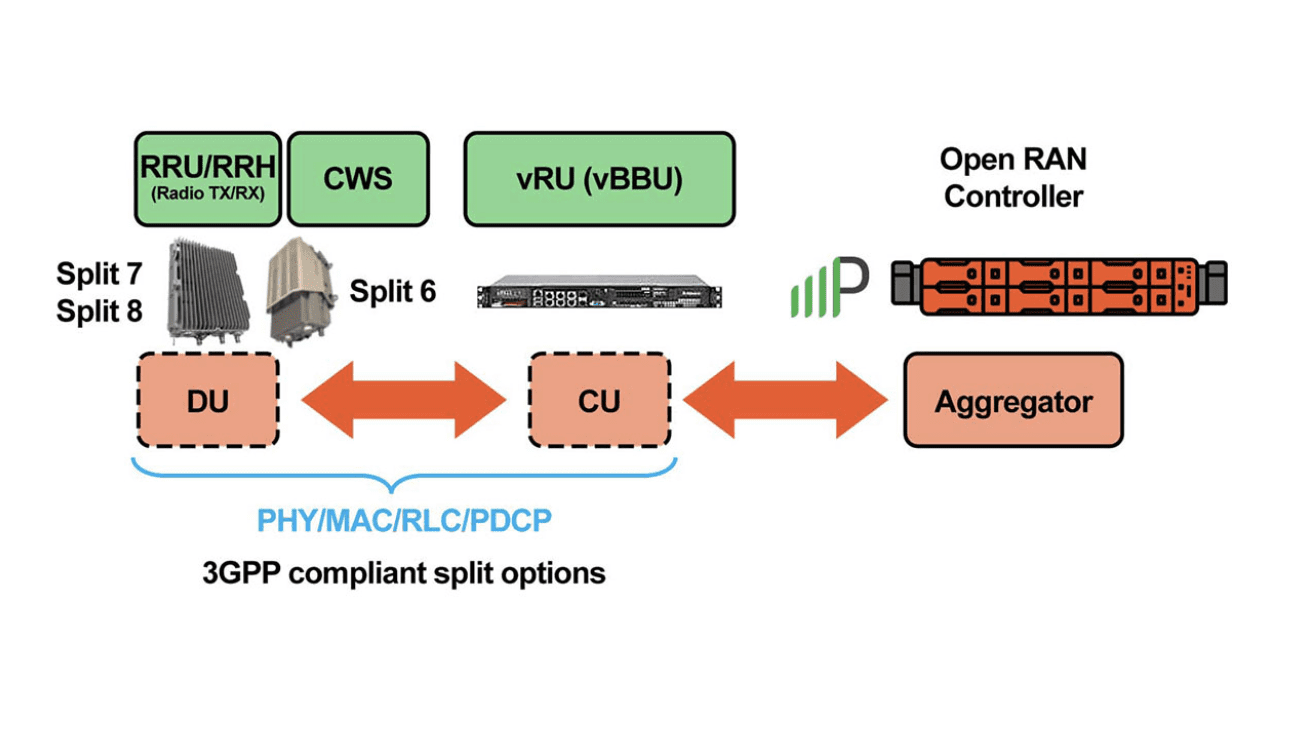
Image courtesy of Parallel Wireless.
125

When you see the many announcements around innovation in OpenRAN for 5G, what you may not realize is that the 4G and 5G-only OpenRAN approach is only suited for greenfield deployments. So, what does that mean for brownfield or existing wireless networks? There are only two prominent greenfield networks in the world: Rakuten and Dish. The rest of the world has legacy 2G, 3G, and even 4G – and as we are aware these legacy deployments are not OpenRAN. The new greenfield deployments are going for the OpenRAN-powered network deployment approach for obvious reasons. The OpenRAN solution is well suited for greenfield 4G or 5G deployments as it leads to faster deployment and, at the same time, allows the operator to future-proof their investment. The software-enabled network simplifies expansions and makes it easy for operators with greenfield networks to scale their new networks. The new network is software upgradeable and does away with the cost and complexity of transitioning the networks to 5G.

But what about all these mobile operators with the legacy 2G, 3G, 4G deployments? What is the best way for them to move to 5G and open up their RAN? They need to look at the overall network TCO across their legacy and 5G deployments and use 5G as an opportunity to improve their TCO. Let us have a look at what happens to a mobile operator’s TCO if they deploy OpenRAN for 5G only alongside their 2G, 3G and even 4G legacy network without considering OpenRAN for legacy or as we say for ALL G …

In a nutshell, if a mobile operator only deploys OpenRAN for 5G, they will have the challenge of managing two networks: a vertical one with legacy equipment and the new one with distributed, OpenRAN architecture. While the operator might have flexibility and will avoid vendor lock-in for 5G, the legacy network will still rely on closed RAN components. How does that approach fit into a promise of OpenRAN avoiding vendor lock-in and reducing cost? It doesn’t, unless OpenRAN can replace legacy Gs as well. This way, ALL the RAN network components for ALL of the Gs will be open and virtualized. Leading global operators using OpenRAN to modernize their legacy networks estimate their return on the modernization investment will be returned in 3 years and will help them to deploy 5G cost-effectively. 

And the ones that only deploy OpenRAN for 5G without rethinking their overall network strategy, including legacy Gs? Though they might see short-term CAPEX savings in deployment of OpenRAN for 4G and 5G compared to the equipment from legacy 4G and 5G vendors, their overall OPEX will be 30-50% higher, as older Gs are not as power-efficient or easy to maintain. Long term gain can be only seen if ALL Gs will become OpenRAN while mobile networks move to 5G.

Let us explain why in more detail. As we know, the service providers adopt a siloed approach of adding a new layer for every new G. Typically, legacy RAN platforms are based on proprietary hardware and depend on prolonged and costly lifecycles in development, deployment, and operation. The siloed approach of adding a new layer for every new technology leads to network complexity and demands high investment in CAPEX and OPEX to maintain. This leads to vendor lock-in and sometimes prevents the mobile operators from keeping pace with the new technology developments. With the launch of the new generation, the radios are replaced with newer versions, which demands substantial investment. 

5G offers service providers an opportunity to reimagine the overall network architecture and deploy cost-effective open networks not just for 5G, but for legacy as well. 

The telecom infrastructures are already undergoing a rapid transformation towards applications running on Network Functions Virtualization (NFV) or containers. Now it is extending further to the RAN to separate functions, where every vendor offering can interoperate with other products. This allows the operators to explore new business models that promote openness and is built on open principles, which enable service providers to benefit from cloud-scale economies and service agility. 

Several global service providers are already opting for OpenRAN architecture across ALL Gs to break from the limitations imposed on them by proprietary radio systems. The OpenRAN network architecture that addresses 2G 3G 4G and 5G, which is programmable, flexible and unbundled, can meet the requirements for improved mobile broadband and extremely low latency for legacy and newer Gs. The new OpenRAN across ALL G approach allows mobile operators to run just one OpenRAN network. The most significant advantage of the ALL G OpenRAN is that it enables service providers to improve network economics by converging all Gs, including 2G, 3G, 4G, and 5G, on one single software platform. It not only helps in enhancing network simplicity but brings down the cost of managing and maintaining the network. This will allow the unification of legacy brownfield with greenfield so it can be managed as one cloud-native ALL IP network.

5G is a technology change that no service provider in any part of the world would like to miss out on. Even if there are challenges in rolling out 5G services, as there are commercial as well as infrastructural issues related to the mass launch of 5G services, there is no denying that the technology would give a massive boost to the world’s economy. 5G technology, owing to its inherent features like high data speed, low latency, effective use of spectrum, and better coverage, supports a larger number of devices and low energy consumption opens up a whole new number of use cases that will benefit the end users and businesses. It enables service providers to offer myriad innovative services like augmented reality, virtual reality, remote surgery, autonomous transport systems, industrial automation and more. These 5G functionalities could help deliver services like healthcare and education on a mass scale by side-stepping infrastructural challenges. 5G enables the mobile network to support services including e-learning and e-health, through digital platforms, which is more cost effective and sustainable, but only if legacy Gs are addressed as a part of the overall network strategy.

Parallel Wireless developed OpenRAN for ALL Gs for just this reason. We listened to our customers and their needs and developed OpenRAN technology that addresses ALL Gs, resulting in overall reduced network TCO. 5G is just another tool in the OpenRAN box, but unless ALL Gs become OpenRAN, the true promise of OpenRAN, or 5G itself for that matter, cannot be realized.


You Might Also Like
  • Wednesday | Telco agents and smash hits (Editorial Diary)
  • Trust you can see – the convergence of voice, messaging, and identity (Reader Forum)
  • Tuesday | Vertical build-outs, horizontal break-ups (Editorial Diary)
  • Monday | Global enterprise reset (Editorial Diary)
  • BT and Verizon merge international arms in $4bn global enterprise JV
  • Friday | Starlink raises the stakes (Editorial Diary)
Share 0 LinkedinEmail
Reader Forum

Submit Reader Forum articles to [email protected]. Articles submitted to RCR Wireless News become property of RCR Wireless News and will be subject to editorial review and copy edit. Posting of submitted Reader Forum articles shall be at RCR Wireless News sole discretion.

previous post
Telekom Slovenije deploys multi-slice 5G network to automate Port of Koper
next post
Will 5G Change the World? Mike Zeto, Boingo Wireless (Bonus Episode)

White Papers

  • CSG White Paper: Telco AI Enabler: Mediation’s Defining Role

  • Enea White Paper: Scalable Database Design for 5G and Beyond

  • Supermicro and NVIDIA Whitepaper: Powering sovereign AI at scale

  • VIAVI Whitepaper: RAN scenario generators and their critical role for future-proofing AI-native RAN in Advanced 5G and 6G networks

  • Emerson/NI White Paper: 2026 Technology Trends Impacting the Wireless Communications Industry

Editorial Reports

  • Report: Scaling Optical Networks For The Hyperscale And AI Era

  • Test And Measurement Market Pulse Report

  • Editorial Report: Securing telecom infrastructure for the quantum era

Webinars

  • Webinar: Rethinking the RAN as AI, cloud and openness converge

  • Webinar: Scale-Up, Scale-Out, Scale-Across – Building AI-Era Network Fabrics

  • Webinar: NTN in motion – evolving standards, expanding services

  • Webinar: Noise-Figure Measurements with RFmx and PXI VSTs

  • Qualcomm Webinar – Building the 6G Standard: Key developments to know

Since 1982, RCR Wireless News has been providing wireless and mobile industry news, insights, and analysis to mobile and wireless industry professionals, decision makers, policy makers, analysts and investors.

Facebook Twitter Youtube Linkedin Envelope Rss

Useful Links

  • Subscribe
  • About RCR Wireless News
  • Contact Us
  • Advertise
  • Editorial Calendar
  • Archive
  • RSS
  • Wireless News Archive
  • Subscribe
  • About RCR Wireless News
  • Contact Us
  • Advertise
  • Editorial Calendar
  • Archive
  • RSS
  • Wireless News Archive

Edtior's Picks

Indosat outlines AI Grid vision as 5G modernization targets nationwide AI-ready network
Wednesday | Telco agents and smash hits (Editorial Diary)
Trust you can see – the convergence of voice, messaging, and identity (Reader...

Latest Articles

Indosat outlines AI Grid vision as 5G modernization targets nationwide AI-ready network
Wednesday | Telco agents and smash hits (Editorial Diary)
Trust you can see – the convergence of voice, messaging, and identity (Reader Forum)
Tencent Cloud used AI agents for XLSMART migration

© 2026 RCR Wireless News All Right Reserved. Developed by Eight Hats.

Cookie Policy | Privacy Policy

RCR Wireless
  • News
  • Channels
    • 5G
    • 6G
    • BSS OSS
    • Carriers
    • IoT
    • Network Infrastructure
    • Open RAN
    • Private 5G
    • Telco AI
    • Telco Cloud
    • Test & Measurement
  • Resources
    • Reports
    • Webinars
    • White papers
    • AI Fundamentals
    • Analyst Angle
    • Editorial Calendar
    • Fundamentals
      • 5G NR Release 17
      • AI
        • Telco AI in 2025
    • Podcasts
      • Let’s Get Digital with Carrie Charles
      • Wireless Connectivity to Enable Industry 4.0 for the Middleprise
      • Well Technically…
      • Will 5G Change the World
      • Accelerating Industry 4.0 Digitalization
  • AI Infrastructure
  • Programs
  • Events
  • RCRtv
  • Advertise
  • Subscribe
RCR Wireless
  • News
  • Channels
    • 5G
    • 6G
    • BSS OSS
    • Carriers
    • IoT
    • Network Infrastructure
    • Open RAN
    • Private 5G
    • Telco AI
    • Telco Cloud
    • Test & Measurement
  • Resources
    • Reports
    • Webinars
    • White papers
    • AI Fundamentals
    • Analyst Angle
    • Editorial Calendar
    • Fundamentals
      • 5G NR Release 17
      • AI
        • Telco AI in 2025
    • Podcasts
      • Let’s Get Digital with Carrie Charles
      • Wireless Connectivity to Enable Industry 4.0 for the Middleprise
      • Well Technically…
      • Will 5G Change the World
      • Accelerating Industry 4.0 Digitalization
  • AI Infrastructure
  • Programs
  • Events
  • RCRtv
  • Advertise
  • Subscribe
@2020 - All Right Reserved. Designed and Developed by PenciDesign