

RCR Wireless
  • News
  • Channels
    • 5G
    • 6G
    • BSS OSS
    • Carriers
    • IoT
    • Network Infrastructure
    • Open RAN
    • Private 5G
    • Telco AI
    • Telco Cloud
    • Test & Measurement
  • Resources
    • Reports
    • Webinars
    • White papers
    • AI Fundamentals
    • Analyst Angle
    • Editorial Calendar
    • Fundamentals
      • 5G NR Release 17
      • AI
        • Telco AI in 2025
    • Podcasts
      • Let’s Get Digital with Carrie Charles
      • Wireless Connectivity to Enable Industry 4.0 for the Middleprise
      • Well Technically…
      • Will 5G Change the World
      • Accelerating Industry 4.0 Digitalization
  • AI Infrastructure
  • Programs
  • Events
  • RCRtv
  • Advertise
  • Subscribe
Thursday, July 16, 2026
RCR Wireless
  • News
  • Channels
    • 5G
    • 6G
    • BSS OSS
    • Carriers
    • IoT
    • Network Infrastructure
    • Open RAN
    • Private 5G
    • Telco AI
    • Telco Cloud
    • Test & Measurement
  • Resources
    • Reports
    • Webinars
    • White papers
    • AI Fundamentals
    • Analyst Angle
    • Editorial Calendar
    • Fundamentals
      • 5G NR Release 17
      • AI
        • Telco AI in 2025
    • Podcasts
      • Let’s Get Digital with Carrie Charles
      • Wireless Connectivity to Enable Industry 4.0 for the Middleprise
      • Well Technically…
      • Will 5G Change the World
      • Accelerating Industry 4.0 Digitalization
  • AI Infrastructure
  • Programs
  • Events
  • RCRtv
  • Advertise
  • Subscribe
Add RCR Wireless as a preferred source on Google
  • Qualcomm 6G Insights
  • Huawei Content Hub
  • Qualcomm – 6G Vision
  • OSS/BSS Channel
  • RCRTech Roundtable: AI Infrastructure
RCR Wireless
RCR Wireless
  • Advanced Mimo
  • Mobile mmWave
  • 5G Positioning
  • Green Networks
  • Metaverse
  • Automotive
  • Industrial and Wide-area IoT
Copyright 2021 - All Right Reserved
Home - FCC moves forward on lower 700 MHz interoperability
Policy

FCC moves forward on lower 700 MHz interoperability

by Dan Meyer October 28, 2013
written by Dan Meyer October 28, 2013 Share
LinkedinEmail
Share 0LinkedinEmail
144

The Federal Communications Commission is taking the next step in insuring interoperability across the lower 700 MHz band, having approved a report and order on the controversial subject.

In a statement this afternoon, the FCC said terms of the order “serve the public interest by encouraging
efficient use of spectrum and enabling consumers to enjoy the benefits of greater competition.”

“The standards developed by several wireless providers, along with the Competitive Carriers Association, will also give consumers more choice in using their devices with large and small carriers alike and will promote widespread deployment of mobile broadband services, especially in rural areas,” the FCC noted.

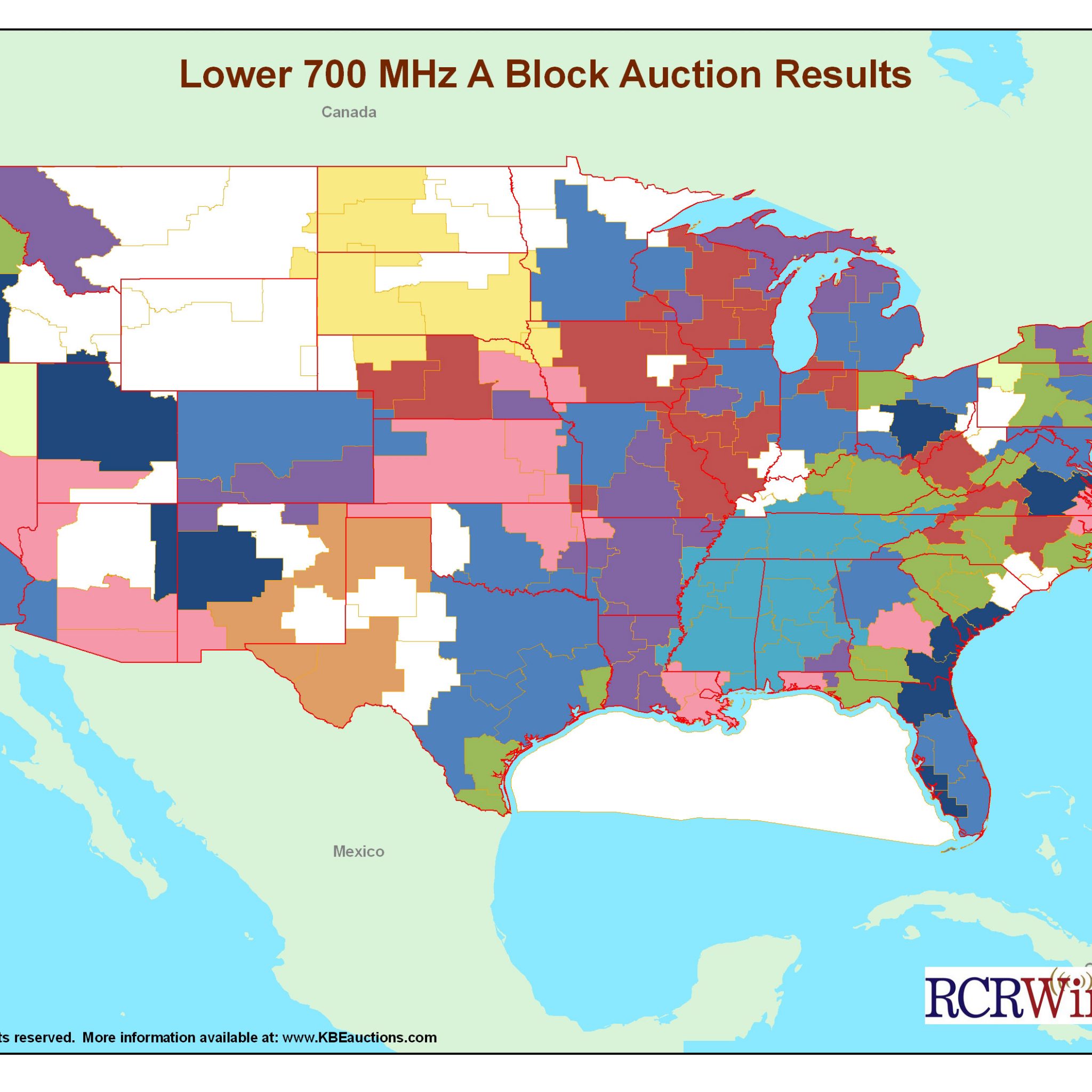
The order will address interference concerns from the D- and E-Block licenses impending on operations in the lower A-Block that a number of rural carriers currently control. The issue was pushed to the forefront by the establishment of the Band Class 17 standard that included spectrum licenses in the lower B- and C-Blocks, but did not include the lower A-Block. AT&T was a major proponent of Band Class 17 noting that interference concerns in the lower A-Block could cause service issues for customers if that band was included in the standard. A separate standard – Band Class 12 – was set up to include the lower A-, B- and C-Blocks.

AT&T last month it would be willing to work the FCC and current lower 700 MHz license holders on a solution to disputed interference concerns. In a filing with the FCC, AT&T said it “is committed to supporting lower 700 MHz interoperability for all paired spectrum in the lower 700 MHz band if certain conditions are met.” Those conditions included harmonization on rules governing maximum signal power for spectrum in the E-Block; and the eventual implementation of network technology allowing for support of both Band Class 12 and Band Class 17.

%7Bf9bdc7c4 60e8 48b4 9e23

The FCC in its latest statement said it would take AT&T up on that offer.

“The order also proposes to modify AT&T’s B- and C-Block licenses to incorporate the commitments of AT&T and makes changes in construction requirements and deadlines for various E-Block licensees in the Lower 700 MHz band,” the FCC stated.

Dish Network, which is a substantial holder of 700 MHz E-Block spectrum licenses, came out in favor of the FCC move.

“We applaud the FCC, under Chairwoman Clyburn’s leadership, for their extraordinary efforts in bringing the industry together to reach a consensus on interoperability, which is reflected in today’s order,” the company noted in a statement. “Dish worked cooperatively with the commission to help achieve the important benefits of interoperability and to unlock additional mobile broadband spectrum for the benefit of all Americans.”

Interoperability in the lower 700 MHz spectrum bands revolves around interference concerns between television transmissions operating in channel 51 adjacent to the A-Block uplink channel and from the unpaired E-Block slice of 700 MHz spectrum operating adjacent to the A-Block downlink channel. AT&T has contended that this interference impacts use of the A-Block license and thus pushed to have the Band Class 17 standard approved that includes just the lower B- and C-Block 700 MHz licenses.

Opponents to AT&T’s plans have noted that interference is not an issue and that the lower A-Block licenses should be included with the B- and C-Block to form Band Class 17. This group includes a number of wireless carriers that acquired A-Block spectrum licenses in 2008, but have been unable to tap into a larger ecosystem to acquire equipment at lower prices as well as have been unable to tap into potential nationwide roaming agreements.

Bored? Why not follow me on Twitter?

You Might Also Like
  • How the FCC can protect IoT innovation and GPS resilience in the 900 MHz band (Reader Forum)
  • India tightens scrutiny of foreign satellite operators as Jio expands space ambitions
  • ASML’s warning for Europe – sovereignty has to move up the AI stack
  • Europe’s new digital statecraft – sovereignty goes from spectrum to cloud to identity
  • The EU AI Act delay buys time – here’s how to use it (Reader Forum)
  • Sovereignty is about resiliency, says BT – and how to kill the foreign kill switch
Share 0 LinkedinEmail
Dan Meyer

Contributor

previous post
Telus gets green light to purchase Public Mobile
next post
Reality Check: A changing telecom ecosystem – competing against non-traditional players

White Papers

  • Norton eBook: The 2026 Telco Playbook

  • Enea White Paper: Why Intelligent AAA is the Swiss Army Knife of Telecom

  • CSG White Paper: Telco AI Enabler: Mediation’s Defining Role

  • Enea White Paper: Scalable Database Design for 5G and Beyond

  • Supermicro and NVIDIA Whitepaper: Powering sovereign AI at scale

Editorial Reports

  • Nvidia Report: The State of AI in Telecommunications: 2026 Trends

  • Report: Scaling Optical Networks For The Hyperscale And AI Era

  • Test And Measurement Market Pulse Report

Webinars

  • Webinar: Building 6G — aligning technology, policy and purpose

  • SIMCom Webinar: Scaling your next deployment – from plastic to provisioning

  • Webinar: Rethinking the RAN as AI, cloud and openness converge

  • Webinar: Scale-Up, Scale-Out, Scale-Across – Building AI-Era Network Fabrics

  • Webinar: NTN in motion – evolving standards, expanding services

Since 1982, RCR Wireless News has been providing wireless and mobile industry news, insights, and analysis to mobile and wireless industry professionals, decision makers, policy makers, analysts and investors.

Facebook Twitter Youtube Linkedin Envelope Rss

Useful Links

  • Subscribe
  • About RCR Wireless News
  • Contact Us
  • Advertise
  • Editorial Calendar
  • Archive
  • RSS
  • Wireless News Archive
  • Subscribe
  • About RCR Wireless News
  • Contact Us
  • Advertise
  • Editorial Calendar
  • Archive
  • RSS
  • Wireless News Archive

Edtior's Picks

Norton eBook: The 2026 Telco Playbook
Nvidia Report: The State of AI in Telecommunications: 2026 Trends
Fast-growing private 5G offers blueprint for AI-era telecoms

Latest Articles

Norton eBook: The 2026 Telco Playbook
Nvidia Report: The State of AI in Telecommunications: 2026 Trends
Fast-growing private 5G offers blueprint for AI-era telecoms
SoftBank is deploying OpenAI-powered security agents across Japan’s critical infrastructure

© 2026 RCR Wireless News All Right Reserved. Developed by Eight Hats.

Cookie Policy | Privacy Policy

RCR Wireless
  • News
  • Channels
    • 5G
    • 6G
    • BSS OSS
    • Carriers
    • IoT
    • Network Infrastructure
    • Open RAN
    • Private 5G
    • Telco AI
    • Telco Cloud
    • Test & Measurement
  • Resources
    • Reports
    • Webinars
    • White papers
    • AI Fundamentals
    • Analyst Angle
    • Editorial Calendar
    • Fundamentals
      • 5G NR Release 17
      • AI
        • Telco AI in 2025
    • Podcasts
      • Let’s Get Digital with Carrie Charles
      • Wireless Connectivity to Enable Industry 4.0 for the Middleprise
      • Well Technically…
      • Will 5G Change the World
      • Accelerating Industry 4.0 Digitalization
  • AI Infrastructure
  • Programs
  • Events
  • RCRtv
  • Advertise
  • Subscribe
RCR Wireless
  • News
  • Channels
    • 5G
    • 6G
    • BSS OSS
    • Carriers
    • IoT
    • Network Infrastructure
    • Open RAN
    • Private 5G
    • Telco AI
    • Telco Cloud
    • Test & Measurement
  • Resources
    • Reports
    • Webinars
    • White papers
    • AI Fundamentals
    • Analyst Angle
    • Editorial Calendar
    • Fundamentals
      • 5G NR Release 17
      • AI
        • Telco AI in 2025
    • Podcasts
      • Let’s Get Digital with Carrie Charles
      • Wireless Connectivity to Enable Industry 4.0 for the Middleprise
      • Well Technically…
      • Will 5G Change the World
      • Accelerating Industry 4.0 Digitalization
  • AI Infrastructure
  • Programs
  • Events
  • RCRtv
  • Advertise
  • Subscribe
@2020 - All Right Reserved. Designed and Developed by PenciDesign
