

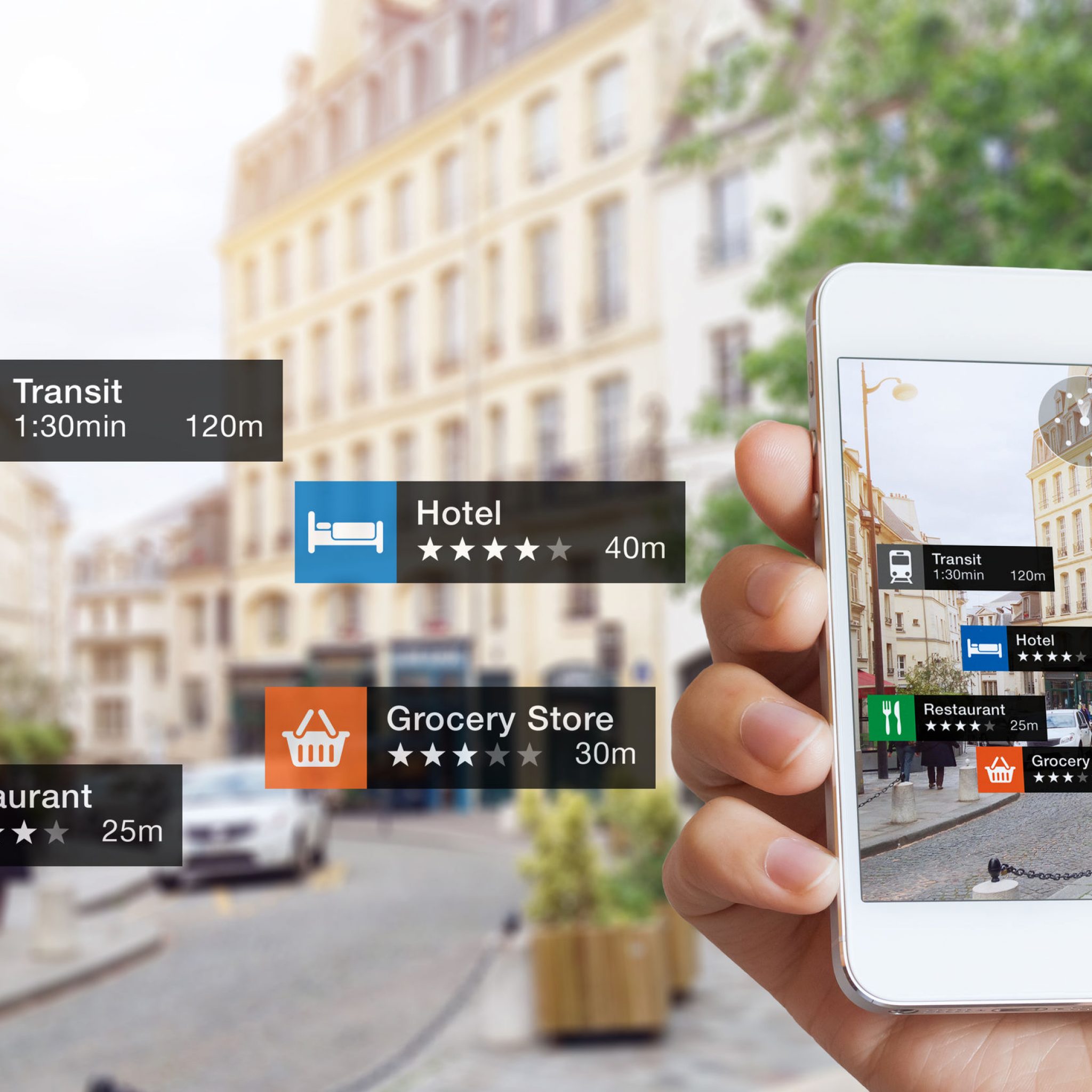
5G hype bounds with the number of networks being deployed and the network operators vying for customer eyes. While consumer growth is important, the network can provide more benefits than high-speed mobile broadband. One of the key use cases that operators and business users are eager to use is augmented reality. You know, the ability to see digital images superimposed on special glasses as you look at the real world around you. Once you have tried it, you can easily get hooked!
The near-term success, however, is not predicated on the use of special wearable devices. The Pokémon Go craze in 2016, proved two important concepts. First, it demonstrated that AR games can inspire people to explore with new technology for fun, competition, and improved health – some users of PG reported their step counts increased to miles per day! Second, PG proved that people are willing to forego expensive headsets and use the cameras on their existing smartphones to get the pseudo-immersive experience that AR provides, which breaks down the proverbial door to many more AR opportunities.
Without the higher costs of special devices, why is AR not taking off? Is it that the immersive experience users expect is not there? Is it that the networks are simply not capable of delivering the types of connectivity that these real-time applications need? Let’s start with understanding the foundational tenants that AR needs.
What are the challenges that 5G must resolve for AR?
That is sort of an easy question to answer: latency, throughput, and number of users…but as with many network-based applications, these challenges really depend on the needs of the application. In the Pokémon Go experience, the lag, jitter, and inconsistent user experiences of open Wi-Fi networks and highly populated commercial 4G networks often failed to meet user expectations. These networks might be fine for searching out and pummeling cartoon monsters, but the slow and intermittent connectivity challenges that Pokémon Go players often experienced confirmed that successful immersive AR applications need networks that can scale capacity and support high device counts with lower latency network connectivity. 5G is surely set to facilitate these important factors in creating the desired AR experience. And with the myriad AR applications that each have their own network connectivity requirements, AR may be the prime use case for network slicing on the 5G network.
Why is network slicing the solution for widespread AR adoption?
With the vast range of AR applications, the range of connectivity requirements is expansive. There are real-time sensitive AR applications that must have fast responses from low-latency connectivity; and there are other applications that simply need high bandwidth to be able to “see” what the user is seeing to determine what images to present. And some applications require both!
Healthcare is of the vertical industries where the wireless industry believes that 5G is a natural fit. After all, 5G can provide both the benefits of low-latency and high throughput for interactive AR. The surgeon using AR can leverage three-dimensional images of a tumor to precisely place the scalpel so that the cuts only remove the offending growth. In this situation, the network must deliver data with very low latency, very high reliability to ensure that the application can properly sense the field of vision and send always-accurate images of the tumor that is being projected “into the field of vision.” With everyone’s view of the operating conditions, the surgeon and surgical staff see the accurate and complete story, which can help all with facilitating positive patient outcomes.
At the other end of criticality lies the use of AR in the repair and maintenance of machinery. Whether it is performing maintenance on components in a smart steel-production plant or repairing a broken component in a jet engine on the tarmac of a busy airport, even experienced technicians benefit from access to checklists, technical diagrams, and recommended procedures where they are when they need them without having to retrace their steps to retrieve a manual. While the connectivity for these applications is not as time-sensitivity as the surgeon’s connection, the high volume of network traffic in these facilities makes prioritizing traffic over dedicated private networks critical for all users. A checklist of steps for verifying the tolerances of rolling plates in the steel plant is very important to the journeyman on the steel plant’s floor, but this request is not as critical as the voice communications between the crane operator and his spotter. Likewise, the high volume of voice and operational data sent over the airport’s 5G network means that the network must have the ability to deliver quickly the current repair protocol needed by the engine technicians to maintain the plane’s flight departure time without impacting the time-critical voice communications to the ground crew guiding a plane as it pushes away from the gate. The ability to optimize access to information while creating safer conditions improves efficiency and the operational impact on a company’s bottom line.
Is 5G up to the challenge?
AR is one of the many services that can benefit from 5G’s network slicing. Yet, end-to-end resource allocation requires the 5G Core (5GC) network, which is not yet part of commercial 5G deployments. Vendors claim that the availability of the 5GC is here, but network operators are not yet deploying the solutions – even when the network operator can deploy it on the exact same infrastructure as their fully operational 4G EPC. The recent news of T-Mobile’s core network struggle with a message storm does not inspire confidence. Their outage happened because of the outage on one fiber link, which snowballed into affecting their 4G Core for voice and message services. T-Mobile indicates that these are not unexpected, even though they are infrequent.
But even if they are infrequent, how can businesses that rely on an MNO for their business trust that they will have the requisite connectivity for their business to operate? How can a surgeon in the middle of a procedure expect to recover if their AR application is not providing high-quality images consistently or stops working completely? Virtually dedicated network paths are sufficient for many services like voice, messaging, and other non-mission-critical applications, but today’s networks are simply not ready to carry traffic for mission-critical applications.
5G is taking its first baby steps; the ability to “run” may still come. We know from watching young children mature into their physical abilities, it takes time to find those with the skills and abilities to be professional-grade athletes. 5G will mature, and it remains to be seen if MNOs will choose to deploy 5G with network slicing that guarantees SLAs for life-or-death scenarios. Only real-world experience will give the network operators the confidence necessary to run that race.
Table of Contents

