

RCR Wireless
  • News
  • Channels
    • 5G
    • 6G
    • BSS OSS
    • Carriers
    • IoT
    • Network Infrastructure
    • Open RAN
    • Private 5G
    • Telco AI
    • Telco Cloud
    • Test & Measurement
  • Resources
    • Reports
    • Webinars
    • White papers
    • AI Fundamentals
    • Analyst Angle
    • Editorial Calendar
    • Fundamentals
      • 5G NR Release 17
      • AI
        • Telco AI in 2025
    • Podcasts
      • Let’s Get Digital with Carrie Charles
      • Wireless Connectivity to Enable Industry 4.0 for the Middleprise
      • Well Technically…
      • Will 5G Change the World
      • Accelerating Industry 4.0 Digitalization
  • AI Infrastructure
  • Programs
  • Events
  • RCRtv
  • Advertise
  • Subscribe
Wednesday, July 22, 2026
RCR Wireless
  • News
  • Channels
    • 5G
    • 6G
    • BSS OSS
    • Carriers
    • IoT
    • Network Infrastructure
    • Open RAN
    • Private 5G
    • Telco AI
    • Telco Cloud
    • Test & Measurement
  • Resources
    • Reports
    • Webinars
    • White papers
    • AI Fundamentals
    • Analyst Angle
    • Editorial Calendar
    • Fundamentals
      • 5G NR Release 17
      • AI
        • Telco AI in 2025
    • Podcasts
      • Let’s Get Digital with Carrie Charles
      • Wireless Connectivity to Enable Industry 4.0 for the Middleprise
      • Well Technically…
      • Will 5G Change the World
      • Accelerating Industry 4.0 Digitalization
  • AI Infrastructure
  • Programs
  • Events
  • RCRtv
  • Advertise
  • Subscribe
Add RCR Wireless as a preferred source on Google
  • Qualcomm 6G Insights
  • Huawei Content Hub
  • Qualcomm – 6G Vision
  • OSS/BSS Channel
  • RCRTech Roundtable: AI Infrastructure
RCR Wireless
RCR Wireless
  • Advanced Mimo
  • Mobile mmWave
  • 5G Positioning
  • Green Networks
  • Metaverse
  • Automotive
  • Industrial and Wide-area IoT
Copyright 2021 - All Right Reserved
Home - Achieving network resiliency: Key recommendations from the IAC
Network InfrastructurePolicy

Achieving network resiliency: Key recommendations from the IAC

by Kelly Hill November 11, 2019
written by Kelly Hill November 11, 2019 Share
LinkedinEmail
Share 0LinkedinEmail
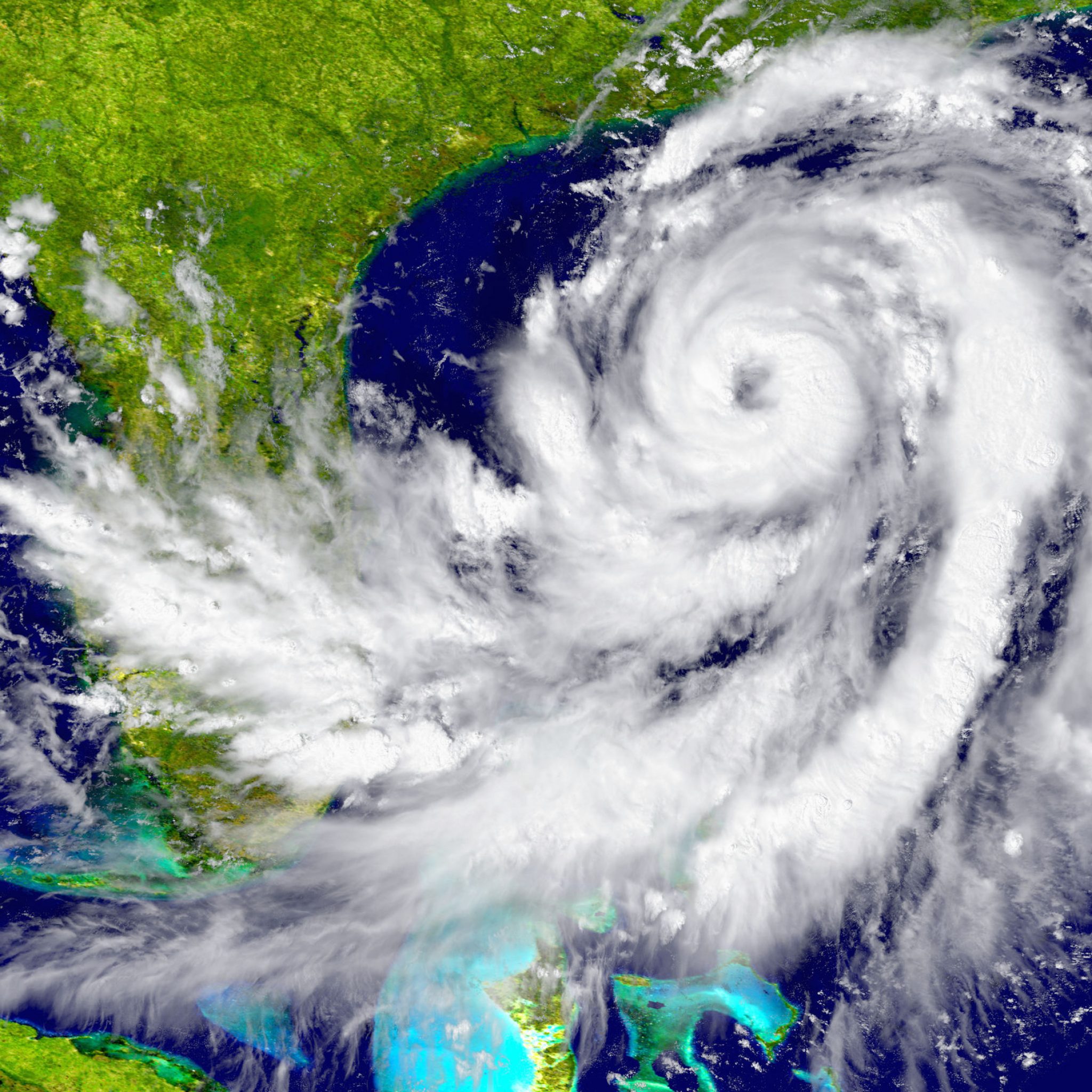
Image: 123RF
72

“Emergency mitigation happens during blue skies, not during the storm.”

What does it take to achieve communications network resilience during a disaster?  In a new report on disaster response coordination, the Intergovernmental Advisory Committee lays out best practices and recommendations on network resiliency to the Federal Communications Commission.

Last fall, the IAC was asked to develop recommendations that would help fine-tune state, local, and tribal coordination on disaster preparation, response and restoration efforts — work that, as the report notes, has to happen before emergencies happen, not while they are in progress. In particular, the IAC was aske for focus on promoting “resilient communications during and after an incident to help ensure first responders and the
public have access to reliable communications when disaster strikes.”

“The importance of maintaining resilient communications during and after a disaster cannot be overstated. Sometimes, the ability to communicate during and after a disaster is a matter of life and death,” the report said.

Recommendations and lessons learned from the report include:

–Establish a telecom Emergency Operations Center. Puerto Rico, after being hit hard by Hurricane Maria in 2017, was a significant source of lessons learned — and one of them was to establish ahead of time a dedicated telecom Emergency Operations Center, or EOC. According to the report, the U.S. territory has now signed a a memorandum of understanding between government, telecommunications providers  and other relevant stakeholders which “establishes, among other things, the clear roles of each party and the obligations of the parties to meet at a previously designated, dedicated telecommunications emergency operations center, before and after the emergency, to deal with all matters relating to (and impacting) telecommunications.”

Having a dedicated EOC in a physically separate room “is extremely effective since all players are within reach,” the report said.

–Map critical communications facilities, plan for their protection, and establish who will have access in a disaster. Among the recommendations was that it should be a high priority to “[remove] all obstacles, whether from federal and state agencies or private owners, so that the telecommunications industry has access to critical communications facilities post-disaster.” The report recommended that “the specific goal of every community during a disaster should be to protect these critical facilities” for telecommunications, and that they should be identified ahead of time. Risk to those facilities can be reduced from initial design all the way to adding redundancy in case of failure — and accessing them should be a priority in the immediate aftermath, so that communications recovery can begin. Once a disaster occurs, “an effective emergency management plan should address the prioritization of the clearance of critical facility roadways, who will be allowed access, who will manage access, and who will make the determination of when it is safe for restoration efforts to begin,” the report says. It also notes that during the recovery phase, communications infrastructure that has survived the initial disaster can sometimes be damaged by restoration crews who aren’t aware of the location of the infrastructure — someone has to be responsible for notifying repair crews of the situation on the ground.

–Roaming agreements can help sustain coverage, if they’re put in place ahead of time. The report noted that in the aftermath of Hurricane Michael in Florida, “some wireless providers did not obtain and implement supplemental roaming agreements in advance of the storm and that providers would have greatly improved the availability of wireless service for their customers had they secured and activated such agreements. In one situation, a wireless service provider neglected to establish and implement roaming agreements prior to the storm, resulting in its customers being without cell service for several days, while neighboring customers on a different network received service.”

–Pre-positioning network deployables and personnel can greatly help in recovery time and responsiveness. Wireless and wireline network operator preparations for recent major disasters have included topping off generators in areas expected to be impacted, increased staffing, fleets of network deployables positioned outside the impact zone which could move in rapidly after a storm, establishing generator re-fueling points, and more.

–Preparation and interagency coordination needs to happen before an emergency occurs. “Most state, local, and tribal governments do not communicate on a regular basis until an emergency or disaster occurs,” the report said. “It is highly unlikely that multiple agencies and organizations will have an efficient and effective working relationship with each other when they are contacting each other for the first time during an actual disaster. … Every day, we must all take steps to ensure that we are prepared to respond to and recover from emergencies and disasters.”

Read the full report here. 

You Might Also Like
  • Rakuten Mobile expands O-RAN footprint with 1Finity radios
  • Monday (telco diary) | Sovereign AI for Industry 4.0
  • Agentic AI – the $60bn opportunity for telecom operators (Reader Forum)
  • When the push becomes the pull – private 5G and physical AI
  • Subsea shift – ITU and FCC redraw rules for global cable resilience
  • Thursday (telco diary) | Satellite versus terrestrial
Share 0 LinkedinEmail
Kelly Hill

Kelly Hill reports on network test and measurement, AI infrastructure and regulatory issues, including spectrum, for RCR Wireless News. She began covering the wireless industry in 2005, focusing on carriers and MVNOs, then took a few years’ hiatus and returned to RCR Wireless News to write about heterogeneous networks (remember those?) and network infrastructure. Kelly is an Ohio native with a masters degree in journalism from the University of California, Berkeley, where she focused on science writing and multimedia. She has written for the San Francisco Chronicle, The Oregonian and The Canton Repository. She lives in northern Virginia, not far from Data Center Alley.

previous post
Ericsson, Nokia land 5G contracts in China
next post
‘5G? My indifference is unbounded’ – IIC on the bigger battles for industrial IoT

White Papers

  • Norton eBook: The 2026 Telco Playbook

  • Enea White Paper: Why Intelligent AAA is the Swiss Army Knife of Telecom

  • CSG White Paper: Telco AI Enabler: Mediation’s Defining Role

  • Enea White Paper: Scalable Database Design for 5G and Beyond

  • Supermicro and NVIDIA Whitepaper: Powering sovereign AI at scale

Editorial Reports

  • Nvidia Report: The State of AI in Telecommunications: 2026 Trends

  • Report: Scaling Optical Networks For The Hyperscale And AI Era

  • Test And Measurement Market Pulse Report

Webinars

  • Webinar: Building 6G — aligning technology, policy and purpose

  • SIMCom Webinar: Scaling your next deployment – from plastic to provisioning

  • Webinar: Rethinking the RAN as AI, cloud and openness converge

  • Webinar: Scale-Up, Scale-Out, Scale-Across – Building AI-Era Network Fabrics

  • Webinar: NTN in motion – evolving standards, expanding services

Since 1982, RCR Wireless News has been providing wireless and mobile industry news, insights, and analysis to mobile and wireless industry professionals, decision makers, policy makers, analysts and investors.

Facebook Twitter Youtube Linkedin Envelope Rss

Useful Links

  • Subscribe
  • About RCR Wireless News
  • Contact Us
  • Advertise
  • Editorial Calendar
  • Archive
  • RSS
  • Wireless News Archive
  • Subscribe
  • About RCR Wireless News
  • Contact Us
  • Advertise
  • Editorial Calendar
  • Archive
  • RSS
  • Wireless News Archive

Edtior's Picks

South Korea launches AI-RAN project to advance industrial AI
Tuesday (telco diary) | Telco agents and outcomes
AT&T’s bets on “best tech” (fiber) pay off with record adds, improving margins 

Latest Articles

South Korea launches AI-RAN project to advance industrial AI
Tuesday (telco diary) | Telco agents and outcomes
AT&T’s bets on “best tech” (fiber) pay off with record adds, improving margins 
The most expensive wireless system is the one you install twice (Reader Forum)

© 2026 RCR Wireless News All Right Reserved. Developed by Eight Hats.

Cookie Policy | Privacy Policy

RCR Wireless
  • News
  • Channels
    • 5G
    • 6G
    • BSS OSS
    • Carriers
    • IoT
    • Network Infrastructure
    • Open RAN
    • Private 5G
    • Telco AI
    • Telco Cloud
    • Test & Measurement
  • Resources
    • Reports
    • Webinars
    • White papers
    • AI Fundamentals
    • Analyst Angle
    • Editorial Calendar
    • Fundamentals
      • 5G NR Release 17
      • AI
        • Telco AI in 2025
    • Podcasts
      • Let’s Get Digital with Carrie Charles
      • Wireless Connectivity to Enable Industry 4.0 for the Middleprise
      • Well Technically…
      • Will 5G Change the World
      • Accelerating Industry 4.0 Digitalization
  • AI Infrastructure
  • Programs
  • Events
  • RCRtv
  • Advertise
  • Subscribe
RCR Wireless
  • News
  • Channels
    • 5G
    • 6G
    • BSS OSS
    • Carriers
    • IoT
    • Network Infrastructure
    • Open RAN
    • Private 5G
    • Telco AI
    • Telco Cloud
    • Test & Measurement
  • Resources
    • Reports
    • Webinars
    • White papers
    • AI Fundamentals
    • Analyst Angle
    • Editorial Calendar
    • Fundamentals
      • 5G NR Release 17
      • AI
        • Telco AI in 2025
    • Podcasts
      • Let’s Get Digital with Carrie Charles
      • Wireless Connectivity to Enable Industry 4.0 for the Middleprise
      • Well Technically…
      • Will 5G Change the World
      • Accelerating Industry 4.0 Digitalization
  • AI Infrastructure
  • Programs
  • Events
  • RCRtv
  • Advertise
  • Subscribe
@2020 - All Right Reserved. Designed and Developed by PenciDesign
