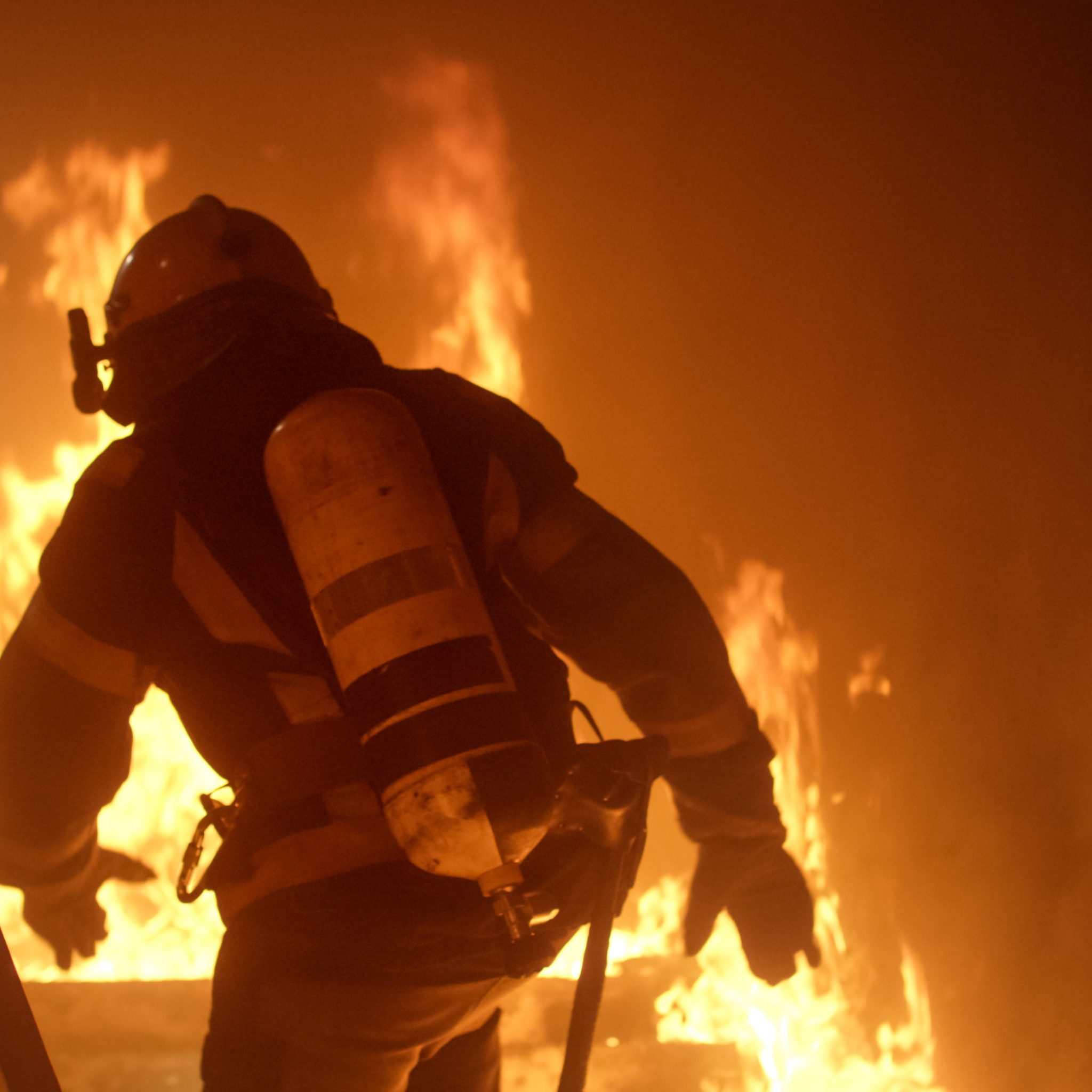
The In-building Public Safety Communications market has been a hot topic of conversation in the United States, and has evolved to become a global topic with the advancement of legislation to require the technology in buildings.
There has also been a push to improve standards on existing technologies, while creating all new cellular based standards with FirstNet. The aim is simple, better communications will save lives in a tragedy. So where are we now, and where are we going? Advancing the concept of Life Safety Solutions is paramount – Alarms, Sprinklers, and now Public Safety Communications.
Life Safety Solutions
The public safety community has relied on Land Mobile Radio (LMR) since the 1930s. LMR has a number of important features in the context of public safety. Push-to-talk broadcast is one, and works quite well. The LMR architecture allows for multiple communication paths, in cases where infrastructure has been compromised, even allowing for point-to-point communications if the infrastructure is completely non-functional. The one-to-many communications available over LMR is highly-valued by first responders, as it gives them some additional situational awareness through audio information about what other team members are dealing with.
Perhaps the most significant limitation to LMR is its inability to carry data. Inability to utilize data-intensive applications has essentially capped LMR’s innovative capacity. In contrast, users of the cellular networks have experienced incredible innovations in the mobile context, and the “appification” of a variety of functions enables LTE as a platform for innovation, offering all kinds of new capabilities to first responders.
FirstNet and Data: Advancing Beyond Voice Communication
Because of the limitations of LMR, many in the public safety community use wireless data services over commercial cellular networks, even for mission-critical functions and data, such as dispatch; local, regional, state, and national and international license, vehicle, wanted person, and criminal history database queries; messaging; and transmission of real-time video and imagery.
Essential public safety LTE applications are also now available on FirstNet, which is rapidly gaining traction across the country. All 50 states, five U.S. territories and Washington, D.C. have opted in to FirstNet, meaning each has accepted its individual state plan detailing how the network will be deployed in their state/territory. As of this writing, over 7,000 agencies have signed on with more than 570,000 subscribers. The network is 53% complete, running ahead of schedule. Some jurisdictions are transitioning from LMR to FirstNet, many have decided to support both, carrying mission-critical voice communications over LMR and data applications over FirstNet.
The net effect of this is that, in the United States, there are now two standard radio communications systems in play in public safety: LMR and FirstNet.
How LMR and LTE Can Work Together
LMR networks and the FirstNet public safety broadband networks are evolving in parallel. As communications evolve, public safety is likely to continue to use the reliable mission-critical voice communications offered by traditional LMR systems. At the same time, agencies will continue to implement emerging wireless broadband services and applications.
Mission-critical voice is coming soon to FirstNet. “If and when the technical and non-technical requirements are met, it is anticipated that some agencies will further integrate FirstNet partially or entirely into their communications network,” per the Department of Homeland Security. This is not to say that LMR solutions are going away, but instead that FirstNet solution requirements have begun to be layered in by jurisdiction. In order for a given building to be deemed safe for occupancy, for sale, rent, or lease, it must be inspected and given a Certificate of Occupancy (CO). Every location has its own rules and regulations that are requirements for the obtaining of a CO. Most of the CO requirements are based on established standards, like NFPA 1221 and IFC 510, but each jurisdiction is free to improvise and interpret.
[pdf-embedder url=”https://www.rcrwireless.com/wp-content/uploads/2019/07/table_Safety_In-Building-Code_v6.pdf” title=”table_Safety_In-Building Code_v6″]
In-building systems: pieces and parts
Because of the great variation from jurisdiction to jurisdiction in radio frequency use, code implementation, code interpretation and equipment availability, most in-building public safety systems are a mish-mash of off-the-shelf components, cobbled together by a systems integrator with a best effort to meet performance, cost, and time-to-market expectations.
When it comes to in-building code compliance, there are a few areas that deserve special attention.
Radios and/or BDA
Every jurisdiction has a set of pre-defined frequencies that will be used. This can encompass LMR bands, FirstNet, or a combination of both. It is important to consider how these have been defined prior to determining any solutions, because not all solutions or vendors support all radio types. The VHF frequencies are not supported by many vendors, for example, which limits options, and FirstNet is newer technology, not available everywhere yet.
Pathway survivability
Pathway survivability defines the duration and requirements for conduits and risers, and system components, to survive a fire. Normally there are specifications for circuit integrity, cable integrity, fire-rated enclosures, and some sort of alternative method approved by the AHJ.
Battery backup
This is an extremely important requirement and where commercial grade and public safety grade systems diverge. The first thing the fire department does in a fire incident is cut building power. Therefore, public safety systems have a requirement for battery backup. Current guidelines and implementations are leaning towards 12-hour backup being the norm. Some jurisdictions/AHJs may require 24 hours. Having a generator on site can provide a waiver, if it’s installed in a manner supporting the spirit of this requirement. Commercial systems will not require or offer (or potentially SUPPORT) battery backup, and therefore may be eliminated as a potential public safety system. Many vendors overlook this requirement and lead system integrators and property technology managers down a misleading path with their commercial gear.
NEMA 4
Public safety equipment is required to be NEMA 4 rated. This is designed to protect in-building public safety gear from the effects of water, via hose or sprinkler system. A lot of “public safety” equipment does not come with a NEMA 4 rating, so the installers are forced to kluge the system together inside NEMA rated off-the-shelf boxes, which can add cost, size, or other negative complexities to the solution.
Monitoring
Given public safety systems are not typically used except during an emergency, they can fall into disrepair. It’s not uncommon for building engineers or maintenance staff to unknowingly and mistakenly break some component of an installed system. It’s easy to cut a cable, unplug a component, or otherwise negatively impact a system. Traditionally these systems were not monitored or maintained with any enthusiasm, so in times of an emergency, it wouldn’t be uncommon for a system to fail or not perform as well as desired. For that reason, many jurisdictions are requiring system monitoring, enabled by alarms and alerts that can be generated and reported by the system in the incident of a failure.
FirstNet and Cellular Solutions
When first responders or other public safety officials respond to an emergency inside a building it is not uncommon to experience the same dropped calls, spotty connections, poor voice quality, or service black holes that plague building occupants. Interior rooms, rooms surrounded by RF-shielding materials like rebar, thick concrete, energy efficient windows, metal roofs or walls all prevent a strong, clean cellular signal from penetrating a building. It is important to note that communications are two-way – not only does the outside signal need to come in, the inside signal from the first responders has to get out. Having antennas in the building’s interior allows for that.
Unfortunately, communication system failures do happen at times when first responders need them most. In a recent survey by the Safer Building Coalition of first responders, more than 65% said they had experienced some sort of communication failure inside a building in the last 24 months. For this reason, a cellular signal booster or repeater solution, such as Cel-Fi GO RED, is essential to public safety inside buildings where there is poor signal. Want to learn more about the Cel-Fi Public Safety product offering, or meet at the APCO event? Contact Nextivity.
About the Author
Joe Schmelzer is Senior Director of Products at Nextivity. He has developed a variety of products and industrial devices for chipset vendors, OEMs, and service providers, including products for Sony, Qualcomm, Google, Verizon Wireless, AT&T, Dell and HP. He was also a founding member of CTIA’s Wireless Internet Caucus. For more information, contact [email protected] or visit www.cel-fi-com
Table of Contents